
Many lifters believe muscle growth comes solely from lifting heavier weights each session. The reality is far more nuanced. Muscle hypertrophy mechanisms involve a complex interplay of mechanical tension, muscle damage, and metabolic stress working together to trigger growth. This guide breaks down what muscle hypertrophy actually is, the science behind how muscles grow, and proven strategies to maximize your gains through smart training and nutrition in 2026.
Table of Contents
- Understanding Muscle Hypertrophy: Mechanisms And Science
- How Training And Nutrition Combine To Drive Muscle Growth
- Training Strategies And Systems For Optimized Hypertrophy In 2026
- Putting It All Together: Applying Hypertrophy Principles For Your Gains
- Get The Gear To Support Your Muscle Growth Journey
- Frequently Asked Questions About Muscle Hypertrophy
Key takeaways
| Point | Details |
|---|---|
| Three mechanisms drive growth | Mechanical tension, muscle damage, and metabolic stress all contribute to muscle hypertrophy during resistance training. |
| Nutrition amplifies training | Protein intake combined with resistance exercise creates the optimal environment for muscle protein synthesis and growth. |
| Training variety matters | Myofibrillar and sarcoplasmic hypertrophy emphasize different adaptations, affecting both strength and size gains. |
| Failure isn’t always required | Stopping one to two reps short of failure can still produce significant muscle growth when volume is adequate. |
| Advanced methods enhance results | Techniques like cluster sets and blood flow restriction training offer additional hypertrophy stimulus for experienced lifters. |
Understanding muscle hypertrophy: mechanisms and science
Muscle hypertrophy refers to the increase in muscle fiber size through cellular growth and protein accumulation. It differs fundamentally from muscle endurance or definition, which involve different physiological adaptations. When you understand hypertrophy, you realize it’s not just about getting bigger, it’s about strategic cellular remodeling.
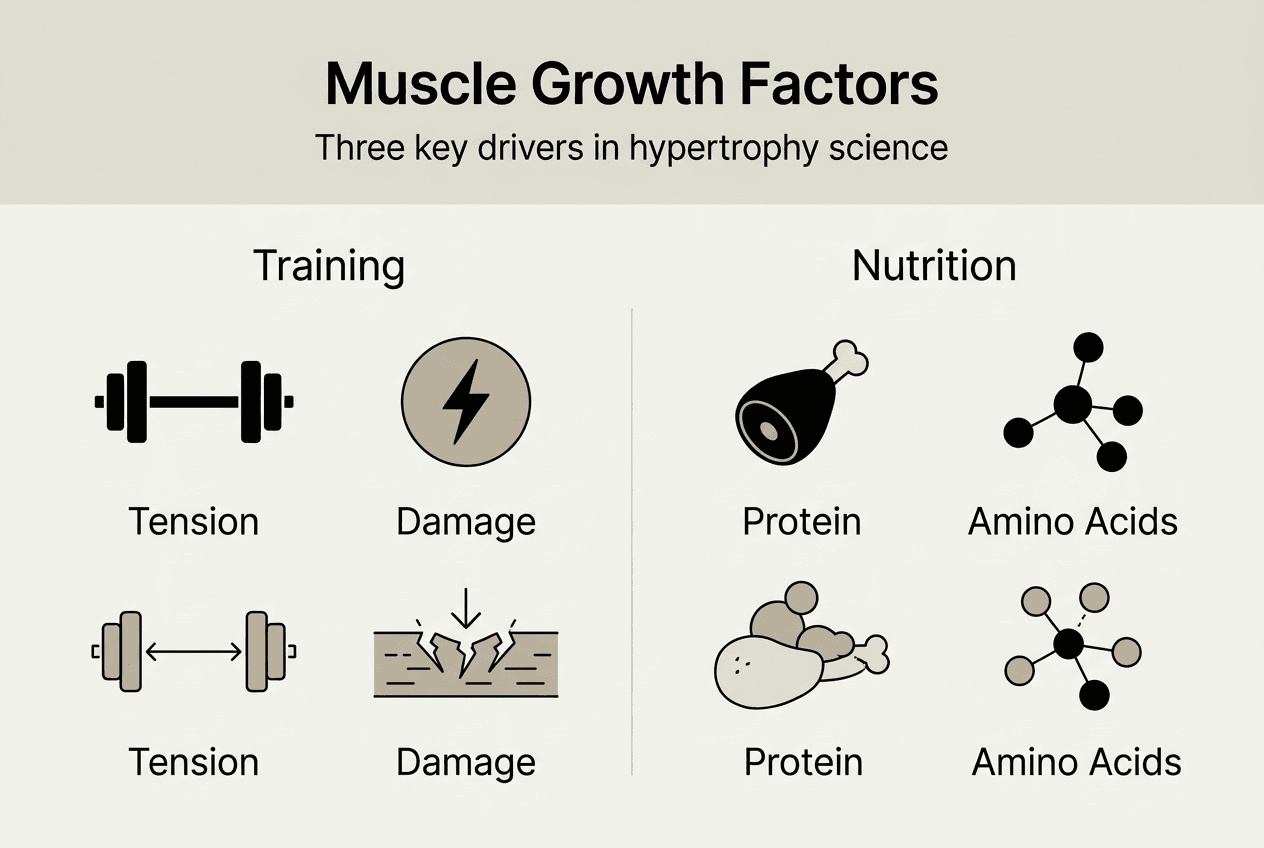
Three primary mechanisms drive muscle growth. Mechanical tension occurs when force is applied to muscle fibers during contraction, particularly under heavy loads or sustained time under tension. This tension triggers mechanoreceptors in muscle cells, initiating signaling cascades that promote protein synthesis. The heavier the load or longer the tension duration, the greater the mechanical stimulus for growth.
Muscle damage from resistance training creates micro-tears in muscle fibers. Your body responds by repairing these tears and adding extra protein to strengthen the area, resulting in larger, more resilient fibers. This damage-repair cycle is why recovery between training sessions is critical. Without adequate rest, you interrupt the growth process.
Metabolic stress builds up during intense exercise when metabolites like lactate, hydrogen ions, and inorganic phosphate accumulate in muscle tissue. This cellular stress triggers hormonal responses and cell swelling that contribute to hypertrophy. You feel this as the burning sensation during high-rep sets or when maintaining constant tension on a muscle.
The mTOR pathway activation serves as a master regulator of muscle protein synthesis. Mechanical load and adequate nutrition, especially amino acids from protein, activate this pathway. When mTOR is active, your cells ramp up protein production, building new contractile proteins that increase muscle fiber size.
Key factors influencing hypertrophy include:
- Progressive overload ensuring continual adaptation stimulus
- Training volume measured in total sets per muscle group weekly
- Exercise selection targeting specific muscle groups effectively
- Rest intervals allowing sufficient recovery between sets
- Nutritional support providing building blocks for growth
Pro Tip: Focus on progressive overload by gradually increasing weight, reps, or time under tension each week to maintain the mechanical tension stimulus your muscles need for continual growth.
How training and nutrition combine to drive muscle growth
Resistance training provides the primary physical stimulus that signals your body to build muscle. When you lift weights or perform bodyweight exercises, you create the mechanical tension and muscle damage that trigger growth pathways. Resistance training effectiveness depends on manipulating variables like intensity, volume, and frequency to optimize this stimulus.

Nutrition, particularly dietary protein, provides the raw materials your muscles need to grow. Amino acids from protein serve as building blocks for new muscle tissue. Protein supplementation combined with resistance training creates the most effective intervention for muscle hypertrophy. Without adequate protein, your body lacks the materials to repair and build muscle tissue, limiting your gains regardless of training quality.
The tripartite model shows how training stimulus, nutritional support, and structural adaptation work together. Training creates the signal for growth, nutrition provides the materials, and your body executes the adaptation by synthesizing new proteins and enlarging muscle fibers. All three components must align for optimal results.
| Protein Source | Leucine Content | Optimal Timing | Hypertrophy Benefit |
|---|---|---|---|
| Whey protein | High (2.5g per 25g) | Post-workout | Rapid absorption for immediate muscle protein synthesis |
| Chicken breast | Moderate (2.2g per 100g) | Any meal | Sustained amino acid release throughout day |
| Eggs | Moderate (1.1g per 2 eggs) | Breakfast or pre-bed | Complete amino acid profile with high bioavailability |
| Greek yogurt | Moderate (1.2g per cup) | Snack or post-workout | Combines fast and slow-digesting proteins |
Common nutritional strategies supporting hypertrophy include:
- Consuming 1.6 to 2.2 grams of protein per kilogram of body weight daily
- Distributing protein intake across four to five meals for sustained amino acid availability
- Timing protein consumption within two hours post-workout for enhanced muscle protein synthesis
- Maintaining a slight caloric surplus of 200 to 500 calories above maintenance to fuel growth
- Staying hydrated with adequate water intake to support cellular processes and nutrient delivery
The synergy between exercise and nutrition explains why progressive overload combined with proper nutrition produces superior results compared to either intervention alone. Your training creates demand for muscle growth, while nutrition supplies the means to meet that demand.
Pro Tip: Combining resistance training with 20 to 40 grams of protein intake within 30 to 120 minutes post-exercise maximizes muscle protein synthesis rates when your muscles are most receptive to nutrient uptake.
Training strategies and systems for optimized hypertrophy in 2026
Myofibrillar hypertrophy involves growth of contractile proteins within muscle fibers, specifically actin and myosin filaments. This type increases both muscle size and strength because you’re adding functional contractile units. Training with heavier loads at lower repetitions typically emphasizes myofibrillar adaptations. Myofibrillar training produces greater hypertrophy and strength compared to other training approaches.
Sarcoplasmic hypertrophy refers to increases in muscle glycogen, water, and other non-contractile elements within muscle cells. This creates size gains with proportionally smaller strength increases. Higher repetition ranges with moderate loads and shorter rest periods favor sarcoplasmic adaptations by maximizing metabolic stress and cellular swelling.
| Hypertrophy Type | Primary Adaptation | Strength Gains | Size Gains | Typical Training Method |
|---|---|---|---|---|
| Myofibrillar | Contractile protein increase | High | Moderate to high | Heavy loads, 3 to 6 reps, longer rest |
| Sarcoplasmic | Glycogen and fluid increase | Moderate | High | Moderate loads, 8 to 15 reps, shorter rest |
Training to failure means performing repetitions until you cannot complete another with proper form. While failure training can maximize muscle fiber recruitment, stopping one to two reps short of failure still yields effective muscle hypertrophy when total training volume is sufficient. This approach reduces fatigue accumulation and injury risk while maintaining growth stimulus.
For beginners, training closer to failure may be necessary to learn proper effort levels and ensure adequate stimulus. Advanced lifters with higher training volumes can often stop short of failure on most sets and still progress. The key is maintaining sufficient total volume through more sets rather than pushing every set to complete failure.
Advanced training systems offer additional hypertrophy stimulus:
- Cluster sets involve short intra-set rest periods allowing heavier loads for more total reps
- Drop sets reduce weight immediately after reaching failure to extend the set and increase metabolic stress
- Blood flow restriction training uses lighter loads with restricted blood flow to create metabolic stress
- Supersets pair exercises back to back increasing training density and metabolic demand
- Tempo training manipulates lifting speed to increase time under tension
Practical hypertrophy training guidelines include:
- Training each muscle group two to three times weekly for optimal frequency
- Performing 10 to 20 sets per muscle group per week depending on training status
- Using loads of 60% to 85% of one-rep max across most training
- Resting 60 to 180 seconds between sets based on exercise complexity and goals
- Incorporating both compound and isolation exercises for complete development
Strength training programs should balance both hypertrophy types for optimal size and performance gains. Periodizing your training to emphasize different adaptations across training blocks prevents plateaus and maximizes long-term progress.
Pro Tip: Incorporate varied training types strategically by using heavier, lower-rep work early in your training week when you’re fresh, then transitioning to higher-rep, metabolic-focused training later to maximize both myofibrillar and sarcoplasmic hypertrophy.
Putting it all together: applying hypertrophy principles for your gains
Designing an effective hypertrophy program requires systematically applying the principles covered. Here’s a step-by-step approach to structure your training week:
- Determine training frequency by selecting how many days weekly you can consistently train, typically three to six sessions
- Assign muscle groups to training days ensuring each major muscle receives adequate volume and recovery time
- Select four to six exercises per session combining compound movements with targeted isolation work
- Program 3 to 5 sets per exercise adjusting based on total weekly volume targets for each muscle group
- Choose appropriate rep ranges mixing 6 to 8 reps for strength emphasis with 10 to 15 reps for metabolic stress
- Schedule rest days strategically allowing 48 to 72 hours between training the same muscle group directly
Progressive overload remains the cornerstone of continued gains. Track your workouts and aim to increase either weight lifted, reps performed, or total sets completed over time. Even small increments of 2.5 to 5 pounds on major lifts or one additional rep per set drive adaptation. Without progression, your muscles have no reason to grow beyond their current capacity.
Recovery strategies supporting muscle growth include:
- Sleeping seven to nine hours nightly when most growth hormone release and muscle repair occur
- Consuming adequate calories and protein as discussed in the nutrition section
- Taking one to two complete rest days weekly to allow systemic recovery
- Managing training stress to avoid overtraining symptoms like persistent fatigue or strength loss
- Using active recovery like walking or light mobility work to enhance blood flow without creating additional fatigue
Nutrition basics to support muscle growth:
- Meeting daily protein targets of 1.6 to 2.2 grams per kilogram body weight
- Drinking adequate water aiming for half your body weight in ounces daily minimum
- Timing meals around training with protein and carbohydrates pre and post-workout
- Including whole food sources providing micronutrients supporting recovery and hormonal health
- Considering creatine supplementation shown to enhance strength and muscle gains
Small practical changes amplify results. Improving grip strength allows you to handle heavier loads on pulling exercises, increasing mechanical tension on back and arm muscles. Better grip means you can focus on the target muscle rather than worrying about dropping the weight.
Advanced lifters can incorporate specialized techniques once basic progression stalls. Advanced resistance training systems enhance muscle hypertrophy and strength in recreational athletes when applied appropriately. Blood flow restriction training, cluster sets, and periodized loading schemes offer novel stimuli when standard progression becomes difficult.
Pro Tip: Adjust training intensity and volume based on recovery indicators like sleep quality, appetite, and performance in the gym, increasing volume gradually when you’re adapting well but reducing it if fatigue accumulates faster than you can recover to avoid overtraining and maintain ongoing gains.
Get the gear to support your muscle growth journey
Optimizing muscle hypertrophy requires more than just knowledge and effort. Quality equipment enhances your training effectiveness and reduces injury risk. Proper lifting straps prevent grip failure on heavy pulls, allowing you to fully tax your target muscles. Supportive belts stabilize your core during compound lifts, enabling heavier loads that create greater mechanical tension.

Explore our fitness accessories to find tools that support your hypertrophy goals. From resistance bands for warm-ups and activation work to foam rollers for recovery, the right accessories make your training more effective. Our lifting gear collection includes straps, belts, and wraps designed for serious lifters pursuing maximum muscle growth. Protect your hands and improve your grip with our fitness gloves engineered for comfort and durability during intense training sessions.
Frequently asked questions about muscle hypertrophy
What are the main types of muscle hypertrophy?
The two primary types are myofibrillar and sarcoplasmic hypertrophy. Myofibrillar hypertrophy increases contractile proteins, enhancing both size and strength through heavier training loads. Sarcoplasmic hypertrophy expands fluid and glycogen stores within muscle cells, creating size gains with moderate strength increases through higher-rep training.
Is training to failure necessary for muscle growth?
No, training to complete failure is not required for effective hypertrophy. Stopping one to two reps short of failure produces significant muscle growth when you maintain adequate training volume. This approach reduces fatigue and injury risk while still providing sufficient stimulus for adaptation.
How much protein should I consume for hypertrophy?
Aim for 1.6 to 2.2 grams of protein per kilogram of body weight daily to optimize muscle protein synthesis. Distribute this intake across four to five meals throughout the day for sustained amino acid availability. Consuming protein within two hours post-workout further enhances muscle recovery and growth.
Can hypertrophy occur without resistance training?
Muscle hypertrophy requires mechanical tension that resistance training provides most effectively. While some growth might occur from other intense activities, resistance training with progressive overload remains the most reliable method for significant muscle hypertrophy. Nutrition alone cannot trigger the cellular signaling pathways necessary for substantial muscle growth.
What role does recovery play in muscle growth?
Recovery is when actual muscle growth occurs after training creates the stimulus. During rest, your body repairs damaged muscle fibers and synthesizes new proteins to increase fiber size. Inadequate recovery from insufficient sleep, poor nutrition, or excessive training frequency limits your hypertrophy potential regardless of training quality.
How long does it take to see muscle hypertrophy results?
Noticeable muscle growth typically appears within four to eight weeks of consistent training and proper nutrition. Initial strength gains in the first two to four weeks primarily reflect neuromuscular adaptations rather than actual muscle growth. Significant visible changes usually require three to six months of dedicated training with progressive overload.
Recommended
- What Is Hypertrophy and Why It Matters for Muscle Growth – Armageddon Sports
- What is progressive overload? A 2026 guide for strength gains – Armageddon Sports
- Body recomposition guide: Build muscle and lose fat in 2026 – Armageddon Sports
- Muscle Stimulator Devices: Boosting Recovery Safely – Armageddon Sports
- What is Muscle Hypertrophy? Understanding Its Importance – MyGymSupplements