
Soreness after a tough session can linger longer than you want, cutting into your next workout and slowing your progress. For athletes pushing beyond basic routines, finding more effective recovery methods becomes a top priority. Muscle stimulators use controlled electrical impulses to activate your muscle fibers directly through the skin, offering an automated way to support faster recovery and keep your training schedule on track without added stress or overuse.
Table of Contents
- What Are Muscle Stimulators And How They Work
- Major Types Of Muscle Stimulator Devices
- Workout And Recovery Benefits For Athletes
- Safety, Risks, And Proper Usage Practices
- Key Features To Compare Before Buying
Key Takeaways
| Point | Details |
|---|---|
| Muscle Stimulators Enhance Recovery | These devices activate muscle fibers to improve blood flow and accelerate recovery without voluntary effort. |
| Types of Devices Serve Different Purposes | TENS units relieve pain, while EMS devices condition muscles; knowing the right type is crucial for your goals. |
| Proper Usage Minimizes Risks | Following guidelines on electrode placement and intensity helps avoid skin irritation and other adverse effects. |
| Consistency is Key | Regular use of muscle stimulators post-workout can lead to better training outcomes and reduced soreness. |
What Are Muscle Stimulators and How They Work
Muscle stimulators are devices that use electrical current to trigger muscle contractions without requiring voluntary effort from you. Think of them as an automated workout tool that activates your muscle fibers directly through your skin using conductive pads.
These devices work by delivering controlled electrical impulses that mimic the signals your nervous system naturally sends to muscles. Electrical stimulation of muscle involves generating action potentials in your muscle fibers using an external current, which produces contractions and impacts how your muscles function and respond.
The Basic Mechanism
When you activate a muscle stimulator, here’s what happens internally:
- Electric current flows through conductive pads placed on your skin
- The current reaches muscle fibers beneath the surface
- Motor neurons fire, creating involuntary muscle contractions
- Your muscles work without you consciously flexing them
This process mimics the natural recruitment order your body uses during regular exercise. The device supplements your voluntary activation, which is especially useful for recovery or targeting specific muscle groups.
Muscle stimulators activate muscle fibers through electrical current, producing the same type of contraction your body creates during weighted training.
How Different Muscle Groups Respond
Muscle stimulators work effectively across your entire body. EMS technology for muscle groups like glutes and abdominals uses the same principles as larger muscle areas like chest or legs.

The key is proper pad placement. The electrical current needs to reach the target muscle fibers directly, which is why positioning matters significantly for results.
Types of Muscle Stimulation
Different devices offer varying stimulation patterns:
- Continuous stimulation: Steady contractions throughout the session
- Burst mode: Alternating periods of stimulation and rest
- Progressive intensity: Gradually increasing electrical output over time
- Targeted protocols: Customized patterns for specific muscle groups
Intermediate athletes typically use burst or progressive modes to mimic the intensity variations found in actual strength training.
Recovery Versus Strength Building
Muscle stimulators serve different purposes depending on how you use them. Recovery-focused sessions use lower intensity and longer duration, while strength-building sessions employ higher intensity with shorter rest periods.
The electrical stimulation itself doesn’t build muscle tissue the way resistance training does. Instead, it enhances blood flow, reduces soreness, and keeps your muscles engaged between workouts.
Pro tip: Start with low intensity settings and gradually increase stimulation strength over multiple sessions to let your body adapt to the electrical current without discomfort.
Major Types of Muscle Stimulator Devices
Not all muscle stimulators work the same way. Different devices target different outcomes, from pain relief to muscle conditioning to functional movement restoration. Understanding which type matches your recovery goals is crucial for getting results.
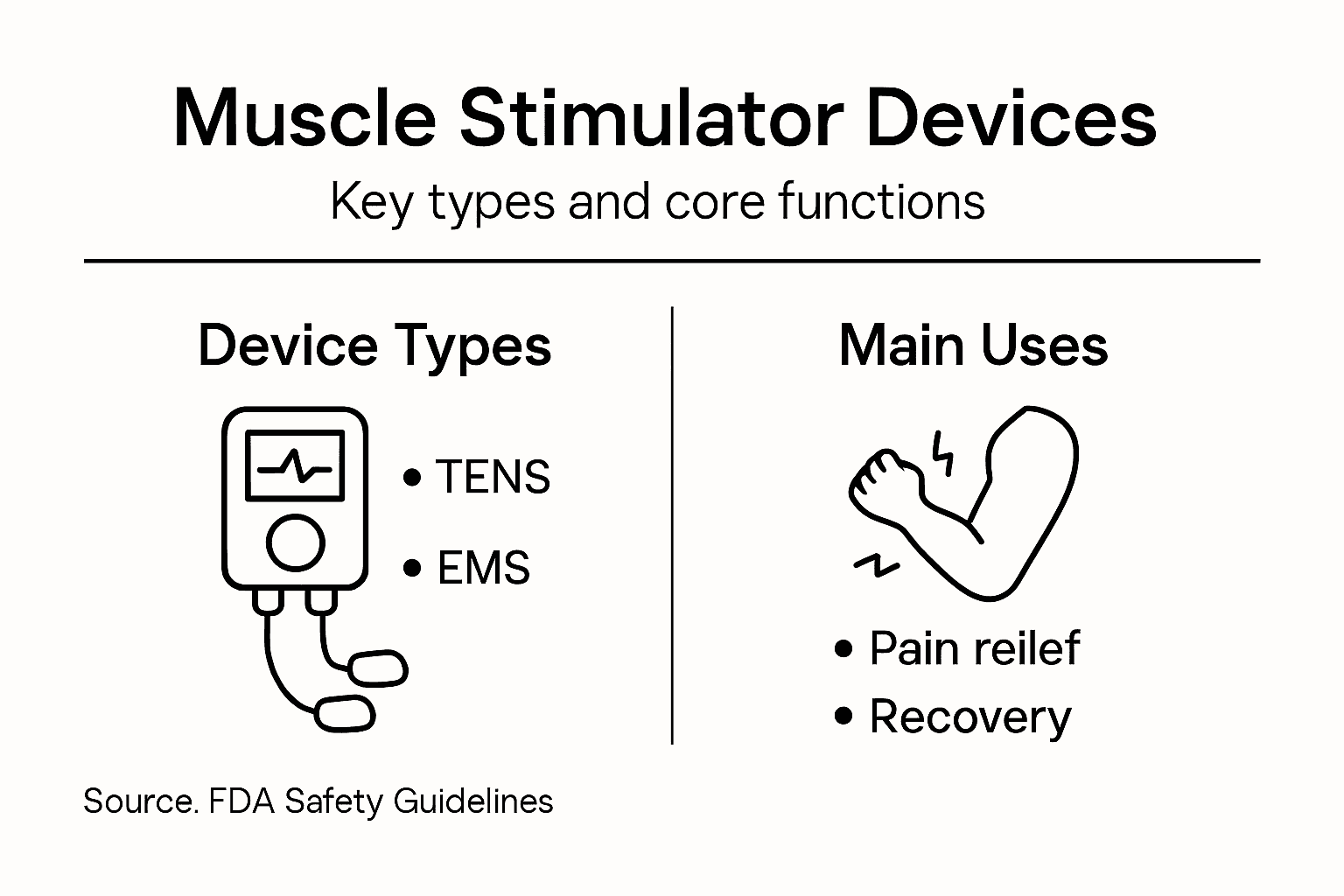
The main categories break down by technology and purpose. Each one uses electrical current differently, producing distinct effects on your muscles and nervous system.
TENS Units for Pain Management
Transcutaneous Electrical Nerve Stimulation (TENS) devices primarily deliver pain relief without inducing muscle contractions. These units work by disrupting pain signals and stimulating endorphin release, your body’s natural painkillers.
TENS units excel at targeting localized pain areas. Athletes often use them post-workout when soreness peaks, or during injury recovery when active muscle work isn’t appropriate.
Key characteristics of TENS devices:
- Lower electrical frequency (typically 50-100 Hz)
- Smaller, portable design for targeted pain zones
- No visible muscle contractions
- Ideal for acute pain management
EMS Devices for Muscle Conditioning
Electrical Muscle Stimulation (EMS) triggers direct muscle contractions, making it the workhorse for conditioning and recovery. Unlike TENS, EMS actively engages your muscle fibers, producing visible twitches and contractions.
Intermediate athletes prefer EMS for between-workout recovery because it maintains muscle engagement without requiring voluntary effort. EMS technology enhances muscle conditioning through targeted contractions across specific body regions.
EMS advantages include:
- Higher electrical frequency (30-150 Hz)
- Visible muscle contractions during use
- Faster muscle fatigue and recovery stimulation
- Effective for both small and large muscle groups
NMES for Rehabilitation
Neuromuscular Electrical Stimulation (NMES) focuses specifically on rehabilitation following injury or surgery. Neuromuscular electrical stimulation targets motor nerves) to restore muscle function and prevent atrophy during recovery periods.
This approach retrains muscles after they’ve been inactive. Physical therapists commonly prescribe NMES when patients can’t perform active exercise safely.
FES for Functional Movement
Functional Electrical Stimulation (FES) coordinates multiple muscle groups simultaneously to restore functional movements. It’s the most advanced category, typically used following neurological injuries.
FES requires precise timing and coordination across several muscle sites. While less common for recreational athletes, it’s transformative for serious injury recovery.
Choosing the right device depends entirely on your specific goal—pain relief, muscle conditioning, rehabilitation, or functional restoration.
Comparing Your Options
Here’s how these technologies stack up for typical athlete recovery:
| Device Type | Best For | Muscle Contraction | Portability |
|---|---|---|---|
| TENS | Pain relief | None | Highly portable |
| EMS | Conditioning & recovery | Yes, visible | Portable |
| NMES | Post-injury rehab | Yes, targeted | Moderate |
| FES | Complex movement restoration | Yes, coordinated | Less portable |
Most home-based athletes gravitate toward EMS devices because they deliver conditioning benefits while remaining user-friendly and affordable.
Here’s how each type of muscle stimulator aligns with athletic and rehabilitation goals:
| Device Type | Main Benefit | Typical User | Limitation |
|---|---|---|---|
| TENS | Pain management | People with acute pain | No muscle strengthening |
| EMS | Muscle recovery & tone | Regular athletes | Not for deep injuries |
| NMES | Rehab after injury/surgery | Recovering patients | Needs supervision |
| FES | Restore movement patterns | Neurological injury cases | Complex setup required |
Pro tip: Start with lower frequency and intensity settings regardless of device type, then gradually increase over several sessions as your nervous system adapts to the electrical stimulation.
Workout and Recovery Benefits for Athletes
Muscle stimulators deliver tangible performance advantages when used strategically alongside your training program. These devices accelerate recovery, enhance blood flow, and prepare your body for the next workout session.
The benefits extend beyond just feeling less sore. You’re actually improving physiological markers that directly impact strength gains and training consistency.
Enhanced Post-Workout Recovery
After intense training, your muscles experience micro-tears and metabolic stress. Muscle stimulators activate your muscle fibers without requiring voluntary effort, accelerating the recovery process.
Neuromuscular electrical stimulation enhances post-exercise recovery through improved blood flow and nutrient delivery to fatigued muscle tissue. This speeds up waste removal and protein synthesis initiation.
Recovery benefits include:
- Faster reduction in delayed-onset muscle soreness (DOMS)
- Shortened recovery windows between intense sessions
- Improved workout consistency without extended downtime
- Better preparation for subsequent training days
Blood Flow and Vascular Function
Muscle contractions naturally pump blood throughout your body. Electrical stimulation replicates this pumping action, increasing venous return to your heart.
Better circulation delivers oxygen and nutrients directly to fatigued muscles. This enhanced vascular function also reduces thrombotic risks—blood clots that can occur during long recovery periods or immobility.
Muscle Maintenance and Atrophy Prevention
Electrical muscle stimulation maintains muscle health and prevents atrophy in healthy individuals, even during lighter training phases or deload weeks. You keep muscle fibers engaged without the joint stress of heavy lifting.
This proves invaluable during injury recovery or planned rest periods. Your muscle mass remains intact while your body heals.
Metabolic and Neural Benefits
Muscle stimulation activates your nervous system in specific ways that improve how your body processes energy. Enhanced metabolic parameters support better body composition outcomes.
Your nervous system also adapts positively to electrical stimulation. This neural adaptation complements your voluntary training and improves overall movement quality.
Key metabolic advantages:
- Improved glucose uptake by muscle tissue
- Enhanced metabolic efficiency
- Better energy utilization during recovery phases
- Increased oxidative capacity in trained muscles
Muscle stimulators work best as complements to your regular training, not replacements for it. The combination produces superior results.
Practical Application for Your Training
Optimal timing matters significantly. Use muscle stimulators immediately post-workout during your cooldown phase when muscles are primed for activation.
Session duration typically ranges from 15 to 30 minutes, depending on device specifications and intensity settings. Consistency across multiple weeks generates cumulative benefits that compound over time.
Pro tip: Apply muscle stimulation within 30 minutes after your workout finishes, when your muscles are metabolically active and most receptive to electrical activation.
Safety, Risks, and Proper Usage Practices
Muscle stimulators are generally safe when used correctly, but misuse carries real risks. Understanding potential hazards and following proper protocols separates effective recovery from uncomfortable mistakes.
The FDA regulates these devices to ensure safety and effectiveness. However, your responsibility starts with understanding how to use them properly and recognizing warning signs.
Understanding Common Risks
Improper use can cause shocks, burns, bruising, skin irritation, and localized pain. These issues typically stem from incorrect electrode placement, excessive intensity, or low-quality unregulated devices.
Optimizing electrode positioning and stimulation parameters enhances comfort and minimizes adverse effects. Poor electrode placement causes the majority of discomfort complaints.
Common risks include:
- Skin irritation from improper electrode contact
- Burns from excessive current intensity
- Bruising from overly aggressive contractions
- Nerve irritation from incorrect pad positioning
- Muscle soreness from overuse
Critical Safety Contraindications
Certain medical conditions make muscle stimulation unsafe or require medical clearance first. If you have any of these situations, consult a healthcare professional before using any device.
Absolute contraindications include:
- Implanted pacemakers or cardiac devices
- Active cancer or tumors in the stimulation area
- Pregnancy, especially around the abdomen
- Open wounds or broken skin at electrode sites
- Metal implants near electrode placement areas
- Epilepsy or seizure disorders
Electrode Placement Best Practices
Proper pad positioning is everything. Never place electrodes directly over your heart, spine, or front of your neck where vital structures lie close to the surface.
Always position pads on muscle bellies, not over bone or sensitive areas. The electrodes should be at least 2 inches apart and on intact, clean skin.
Electrode safety checklist:
- Clean and dry the skin thoroughly before application
- Avoid placement near the heart, neck, or spine
- Never place pads on joints or bony prominences
- Ensure proper pad-to-skin contact across entire surface
- Replace worn electrodes that don’t stick properly
- Remove electrodes immediately if burning sensation occurs
Intensity and Duration Guidelines
Start conservatively and build gradually. Your first sessions should use 20 to 30 percent of maximum intensity, even if the device allows higher settings.
Begin with 10-minute sessions and progress to 20-30 minutes as your body adapts. Limit sessions to once daily on the same muscle group, allowing at least 24 hours between sessions on identical areas.
For quick reference, below is a summary of essential safety tips for new users:
| Safety Tip | Why It Matters | Common Mistake |
|---|---|---|
| Place pads on muscle | Prevents burns and irritation | Placing on joints or bones |
| Start low intensity | Reduces shock and discomfort | Too high at session start |
| Clean skin first | Ensures electrode adhesion | Applying on wet/dirty skin |
| Watch session length | Avoids overuse and soreness | Exceeding recommended time |
Never ignore pain or burning sensations. Stop immediately and reassess electrode placement or reduce intensity.
Device Selection Matters
Buy from reputable manufacturers selling FDA-regulated devices. Cheap, unregulated devices often lack proper safety features and intensity controls.
Look for devices with adjustable intensity settings, clear instructions, and customer support availability. Quality devices include built-in safety limits preventing dangerously high current delivery.
When to Seek Medical Guidance
Consult a healthcare professional if you experience persistent pain, unusual bruising, skin reactions lasting more than a few hours, or if you have any underlying medical conditions.
Therapists and athletic trainers can also demonstrate proper technique and help optimize your setup for maximum safety and effectiveness.
Pro tip: Always do a 24-hour skin patch test with any new device at low intensity on a small area before committing to full training protocols, ensuring your skin tolerates the electrodes without irritation.
Key Features to Compare Before Buying
Not every muscle stimulator offers the same capabilities. Smart buyers compare specific features that directly impact effectiveness, safety, and long-term value. Understanding what matters separates devices that deliver results from expensive paperweights.
Your priorities depend on your goals. Someone recovering from injury needs different features than an athlete seeking performance enhancement.
Technology Type: TENS Versus EMS
This is your first decision point. TENS units deliver low-voltage currents for pain relief without producing visible muscle contractions, while EMS units generate actual contractions for strengthening and conditioning.
Many intermediate athletes prefer devices combining both technologies. Combination units offer versatility for different recovery phases and goals.
Technology comparison:
- TENS: Pain management, sensory nerve stimulation, portable
- EMS: Muscle strengthening, visible contractions, recovery acceleration
- Combo units: Flexibility for multiple training phases and goals
Control and Customization Features
Adjustable intensity levels and multiple pre-set programs distinguish quality devices from basic units. Pre-programmed settings target specific therapeutic needs without requiring manual adjustment each session.
Look for at least 10 intensity levels and 5+ program options. Wireless connectivity adds convenience, eliminating cable tangles during recovery sessions.
Essential control features:
- Independent intensity adjustment per channel
- Pre-programmed protocols for different muscle groups
- LCD display showing current settings
- Wireless remote control option
- Memory function saving your preferred settings
Channel Count and Stimulation Area
Channels determine how many muscle areas you can stimulate simultaneously. Dual-channel devices let you work two body parts at once, while quad-channel units offer maximum flexibility.
More channels mean versatility but also complexity. Single or dual-channel devices suffice for most home use.
Electrode Quality and Reusability
Reusable electrodes save money over time compared to disposable pads. High-quality reusable pads maintain consistent adhesion for 50+ applications with proper care.
Poor electrode contact ruins the entire experience. Check customer reviews specifically mentioning electrode reliability and adhesion longevity.
Battery Life and Portability
Battery capacity matters for convenience. Devices requiring daily charging frustrate users quickly, while units offering 20+ hours per charge support consistent protocols.
Consider your usage pattern. Gym athletes want ultra-portable designs fitting gym bags, while home users can accept larger, more powerful units.
FDA Certification Status
FDA-cleared certification ensures safety and efficacy for legitimate therapeutic use. This certification matters more than marketing claims about effectiveness.
Always verify FDA status before purchasing. Unregulated devices often lack safety limits and quality control.
Value Comparison Table
| Feature | Entry-Level | Mid-Range | Premium |
|---|---|---|---|
| Price | Under $50 | $50-150 | Over $150 |
| Channels | 1-2 | 2-4 | 4+ |
| Programs | 5-10 | 10-20 | 20+ |
| Battery Life | 8 hours | 15 hours | 20+ hours |
| Reusable Pads | Limited | Yes | Premium quality |
| FDA Cleared | Sometimes | Yes | Yes |
Mid-range devices offer the best value for serious athletes. Premium features provide marginal improvements over quality mid-range options.
Pro tip: Read reviews specifically from users matching your fitness level and recovery goals, as their experience better predicts how satisfied you’ll be versus general product ratings.
Enhance Your Recovery with Trusted Muscle Stimulators from Armageddon Sports
Muscle stimulators offer a proven way to boost recovery safely by activating muscles through controlled electrical impulses. If you struggle with delayed-onset muscle soreness or want to maintain muscle tone during rest phases, incorporating an EMS device into your routine is a game changer. Proper pad placement and gradual intensity increase are key to maximizing benefits while avoiding irritation. At Armageddon Sports, we understand your goal to accelerate healing, improve blood flow, and prevent muscle atrophy with quality fitness aids.

Discover our wide selection of muscle stimulators and recovery tools designed for athletes like you. Browse the Home page – Armageddon Sports to explore the latest devices. Complement your recovery with premium Resistance Training Bands that support muscle engagement between sessions. Start today to experience faster recovery and enhanced workout consistency. Visit https://armageddonsports.com now and power your fitness journey safely and effectively.
Frequently Asked Questions
What are muscle stimulators and how do they work?
Muscle stimulators are devices that use electrical current to trigger muscle contractions through conductive pads placed on your skin. They mimic natural signals from your nervous system, activating muscle fibers and promoting involuntary contractions.
What are the different types of muscle stimulators available?
There are several types of muscle stimulators, including TENS units for pain management, EMS devices for muscle conditioning, NMES for rehabilitation, and FES for functional movement restoration. Each type serves different purposes based on user needs.
How do I use a muscle stimulator safely and effectively?
To use a muscle stimulator safely, start with low intensity settings and gradually increase as your body adapts. Proper electrode placement is crucial; never apply pads near the heart or over bones. Always clean the skin before use and monitor for any adverse reactions.
What are the benefits of using a muscle stimulator for recovery?
Using a muscle stimulator can enhance post-workout recovery by accelerating blood flow, reducing muscle soreness, and maintaining muscle engagement during lighter training phases or recovery periods. This can lead to improved training consistency and faster recovery times.