
Competitive athletes and trainers often search for methods that push muscle growth without adding more strain to joints. Blood flow restriction training stands out as a proven way to drive muscle hypertrophy and strength with lighter weights, using cuffs or bands to partially limit blood flow during exercise. This technique is now used by top performers worldwide, thanks to its ability to deliver serious results even under low load. Discover how this strategy can transform muscle gains and recovery.
Table of Contents
- What Is Blood Flow Restriction Training?
- Main Methods and Equipment Options
- How Blood Flow Restriction Triggers Muscle Growth
- Key Benefits and Real-World Applications
- Safety Risks and Common Pitfalls to Avoid
Key Takeaways
| Point | Details |
|---|---|
| Blood Flow Restriction Training Enhances Muscle Growth | BFR training effectively stimulates muscle growth and strength gains using lighter weights by partially restricting blood flow. |
| Precise Equipment Selection is Essential | The effectiveness of BFR training is highly dependent on the quality and precision of the equipment used, necessitating careful selection. |
| Safety Precautions Must Be Observed | Individuals with certain health conditions should avoid BFR training, and proper supervision is critical to minimize risks. |
| Versatile Applications Across Populations | BFR training is beneficial for various groups, including athletes, the elderly, and rehab patients, making it a versatile fitness technique. |
What Is Blood Flow Restriction Training?
Blood Flow Restriction (BFR) training is an advanced exercise technique designed to stimulate muscle growth and strength gains while using significantly lighter weights compared to traditional resistance training. By strategically restricting blood flow to targeted muscle groups, athletes can achieve remarkable physiological adaptations with reduced mechanical stress.
At its core, BFR involves using specialized cuffs or bands placed proximally on limbs to partially restrict arterial circulation during low-intensity exercises. This unique approach creates a localized hypoxic environment that triggers significant metabolic and hormonal responses, promoting muscle hypertrophy and strength development.
The key mechanisms behind BFR training include:
- Metabolic stress accumulation in muscle tissues
- Enhanced muscle protein synthesis
- Increased growth hormone and testosterone release
- Reduced mechanical loading requirements
- Accelerated muscle fatigue and recruitment of fast-twitch muscle fibers
Originally developed in rehabilitation settings, BFR has rapidly expanded into sports medicine and elite athletic performance domains. Athletes and trainers now recognize its potential to:
- Facilitate muscle growth during injury recovery
- Maintain muscle mass during periods of reduced training
- Provide an alternative training method for individuals with joint limitations
- Enhance muscle endurance with lower joint stress
BFR training represents a scientifically validated method of muscle development that challenges traditional high-load resistance training paradigms.
Pro tip: Start with extremely light weights (20-30% of your typical load) and professional guidance when first implementing blood flow restriction techniques to ensure safety and optimal results.
Main Methods and Equipment Options
Blood Flow Restriction (BFR) training encompasses several sophisticated equipment approaches designed to strategically limit blood circulation during exercise. Pneumatic tourniquet systems and elastic compression devices represent the primary technological solutions for implementing this advanced training technique.
The primary equipment categories for BFR training include:
- Pneumatic Cuffs: Sophisticated devices with precise pressure control
- Elastic Bands: More affordable, portable compression options
- Smart Pressure Monitoring Wraps: Advanced systems with digital pressure tracking
- Manual Compression Straps: Basic, manual adjustment compression tools
Pneumatic tourniquet systems offer the most scientifically validated approach to blood flow restriction. Cuff width and pressure management are critical factors in determining the effectiveness and safety of the training method. Wider cuffs require lower pressures to achieve occlusion, which reduces potential risk of tissue damage.

Key considerations when selecting BFR equipment include:
Here’s a comparison of common BFR training equipment options:
| Equipment Type | Pressure Control Precision | Portability | Typical Cost Range |
|---|---|---|---|
| Pneumatic Cuffs | Highly accurate and adjustable | Bulky, less portable | $200-$800 |
| Elastic Bands | Low, manual pressure control | Lightweight, highly portable | $15-$40 |
| Smart Pressure Monitoring Wraps | Digital accuracy, real-time data | Moderately portable | $150-$350 |
| Manual Compression Straps | User-dependent adjustment | Very portable | $10-$30 |
- Precise pressure control capabilities
- Limb circumference compatibility
- Material flexibility and comfort
- Durability of compression mechanisms
- Ease of pressure adjustment
The effectiveness of blood flow restriction training depends significantly on the quality and precision of the equipment used.
Pro tip: Invest in professional-grade BFR equipment with adjustable pressure settings and consult a trained professional to ensure proper technique and safety.
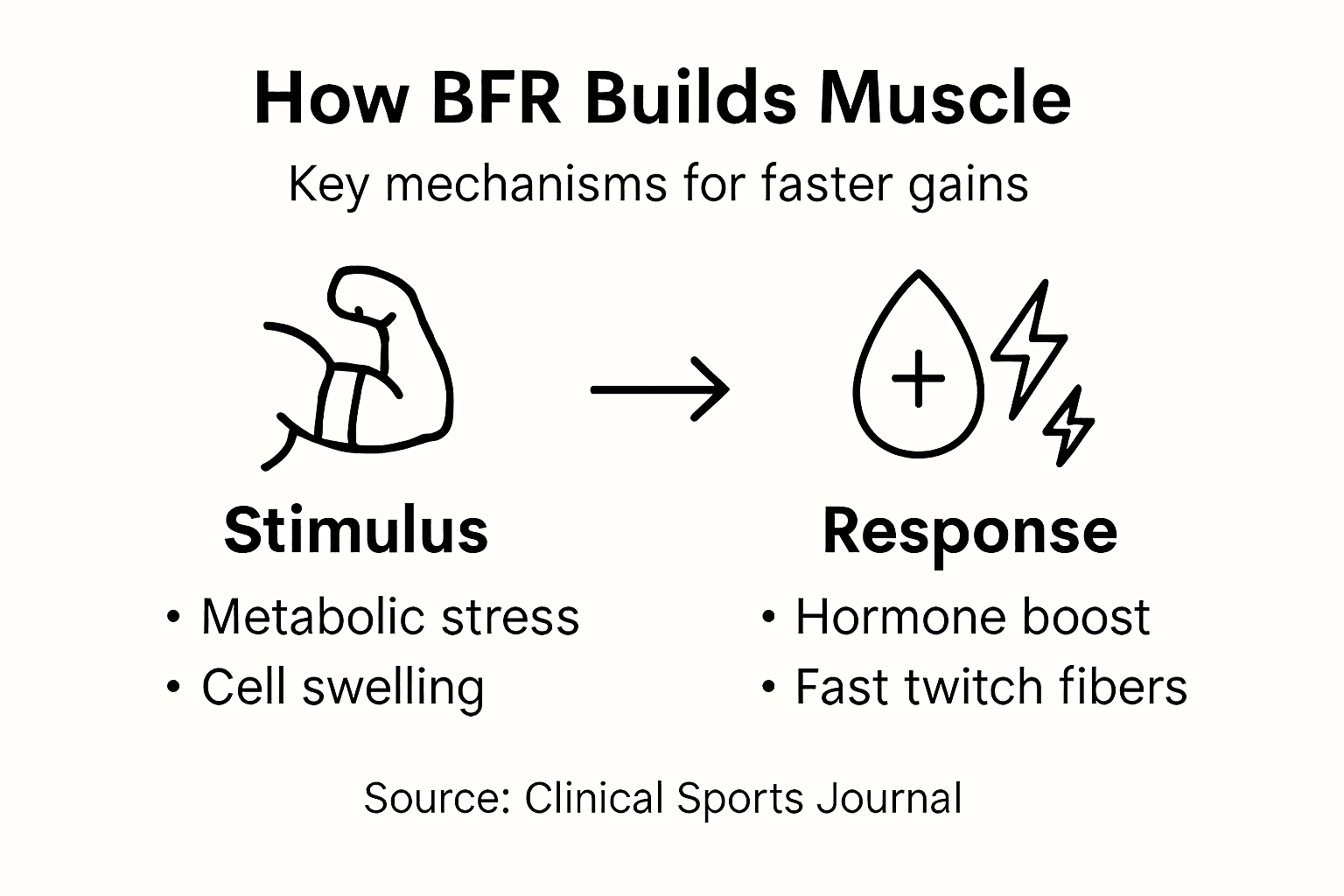
How Blood Flow Restriction Triggers Muscle Growth
Blood Flow Restriction (BFR) training creates a unique physiological environment that stimulates muscle growth through multiple complex mechanisms. Metabolic stress and muscle fiber recruitment play crucial roles in driving hypertrophy, even under low-intensity exercise conditions.
The primary muscle growth mechanisms triggered by BFR include:
- Increased metabolic stress accumulation
- Enhanced fast-twitch muscle fiber activation
- Accelerated protein synthesis pathways
- Hormonal response optimization
- Cell swelling and mechanical tension
Hypoxic conditions created during BFR training force muscles to adapt rapidly. Muscle adaptations through low-intensity exercise stimulate satellite cell activity and myonuclear addition, which are critical processes for muscle growth and strength development.
The scientific process of muscle hypertrophy through BFR involves:
- Restricting venous blood return
- Generating metabolic byproduct accumulation
- Activating growth hormone release
- Stimulating muscle protein synthesis
- Recruiting additional muscle fibers
Blood flow restriction training represents a revolutionary approach to muscle development, challenging traditional high-load resistance training paradigms.
Pro tip: Combine BFR training with proper nutrition and adequate recovery to maximize muscle growth potential and minimize injury risk.
Key Benefits and Real-World Applications
Blood Flow Restriction (BFR) training offers transformative benefits across multiple performance and rehabilitation domains. Muscle mass and strength improvements extend far beyond traditional training methodologies, making it a versatile technique for diverse populations.
The primary real-world applications of BFR training include:
- Athletic performance enhancement
- Rehabilitation and injury recovery
- Age-related muscle preservation
- Surgical recovery support
- Cardiovascular health improvement
Clinical populations particularly benefit from this innovative approach. Training adaptations across diverse populations demonstrate BFR’s potential to combat muscle atrophy, improve cardiopulmonary function, and support recovery in scenarios where traditional high-intensity training is challenging or impossible.
Key performance domains leveraging BFR training encompass:
- Professional athlete conditioning
- Geriatric fitness programs
- Physical therapy protocols
- Post-surgical rehabilitation
- Endurance sports training
Blood flow restriction represents a groundbreaking technique that democratizes muscle development and performance enhancement across fitness spectrums.
Pro tip: Consult a sports medicine professional to develop a personalized BFR training protocol tailored to your specific fitness goals and physical condition.
This table summarizes benefits and specialized use cases for BFR training:
| Benefit Area | Most Beneficial For | Example Application |
|---|---|---|
| Muscle Growth | Injured athletes, elderly | Rehab after knee surgery |
| Strength Maintenance | Athletes during downtime | Off-season fitness |
| Reduced Joint Stress | Those with joint limitations | Arthritis-friendly workouts |
| Cardiovascular Adaptation | Cardiac rehab patients | Post-heart surgery training |
| Athletic Performance | Elite competitors | Speed and power exercises |
Safety Risks and Common Pitfalls to Avoid
Blood Flow Restriction (BFR) training requires meticulous attention to safety protocols to prevent potential physiological complications. Cardiovascular response and risk management are critical considerations for implementing this advanced training technique safely.
Individuals with the following conditions should exercise extreme caution or avoid BFR training entirely:
- Cardiovascular disease
- Uncontrolled hypertension
- Diabetes complications
- Kidney disease
- Impaired coagulation disorders
- Varicose veins
- Recent surgical history
Potential risks associated with improper BFR implementation include blood pressure fluctuations, potential thrombosis, and unexpected cardiovascular responses. Understanding individual physiological limitations becomes paramount when considering this training methodology.
Common pitfalls athletes and fitness enthusiasts must avoid include:
- Neglecting pre-participation medical screening
- Using incorrect pressure settings
- Exceeding recommended training duration
- Ignoring individual pain or discomfort signals
- Training without professional supervision
Proper risk stratification and individualized approach are essential for safe and effective blood flow restriction training.
Pro tip: Consult a sports medicine professional and undergo comprehensive medical screening before initiating any blood flow restriction training program.
Unlock Your Muscle Growth Potential with Safe and Effective Equipment
Blood Flow Restriction training lets you maximize muscle gains while minimizing joint stress and injury risk. If you are striving to achieve strength improvements with light weights or recovering from an injury, having the right gear is essential. This advanced technique demands precision in pressure control to get the full benefits without compromising safety.

Explore our range of premium resistance tools at Buy Resistance Training Bands- Armageddon Sports designed to support low-intensity strength building safely. Combine your BFR routine with trusted workout equipment from Shop Men’s Health & Workout Equipment- Armageddon Sports to optimize muscle activation and recovery. Ready to take control of your fitness journey now? Visit Armageddon Sports for exclusive offers on quality gear that complements blood flow restriction training perfectly.
Frequently Asked Questions
What is Blood Flow Restriction Training?
Blood Flow Restriction (BFR) Training is an advanced exercise technique that stimulates muscle growth and strength gains using lighter weights by partially restricting blood flow to targeted muscle groups.
How does Blood Flow Restriction Training promote muscle growth?
BFR Training promotes muscle growth through mechanisms such as increased metabolic stress, enhanced fast-twitch muscle fiber activation, accelerated protein synthesis, and hormonal optimization.
What types of equipment are used for Blood Flow Restriction Training?
Common equipment options for BFR Training include pneumatic cuffs, elastic bands, smart pressure monitoring wraps, and manual compression straps, each varying in pressure control precision and portability.
What safety precautions should be taken during Blood Flow Restriction Training?
Safety precautions include undergoing pre-participation medical screening, using proper pressure settings, avoiding prolonged training duration, listening to discomfort signals, and training under professional supervision.
Recommended
- Master BFR Training for Rapid Muscle Growth and Recovery – Armageddon Sports
- BFR Bands Blood Flow Restriction Bands Cuffs Occlusion Straps for Arms Biceps Legs Wraps Kaatsu Full Set of 4 – Armageddon Sports
- What Is Hypertrophy and Why It Matters for Muscle Growth – Armageddon Sports
- Strength Training: Transforming Fitness at Home – Armageddon Sports
- 1RM Calculator - One Rep Max Calculator Free | FineGym