
Finding your way through resistance training routines can feel confusing when you are just starting out or trying to take your results to the next level. With so many options for equipment and many beliefs about what works or what is safe, it is easy to get stuck or waste money. Understanding how resistance training builds muscle tone and strength while clearing up common myths gives you the confidence to make smart workout and equipment decisions for your goals.
Table of Contents
- Definition Of Resistance Training And Common Myths
- Major Types Of Resistance Training Explained
- Essential Equipment And How It Works
- Practical Benefits For Muscle And Health
- Key Safety Tips And Common Mistakes
Key Takeaways
| Point | Details |
|---|---|
| Importance of Resistance Training | Engaging in resistance training improves strength, endurance, and overall physical health. It is recommended at least twice weekly for optimal benefits. |
| Myths about Resistance Training | Common misconceptions include the ideas that it leads to bulkiness and is unsafe for all age groups, which are false. Casual resistance work enhances muscle tone without significant bulk. |
| Types of Resistance Training | Various methods like free weights, machines, and bands target muscles differently, allowing for a tailored approach to meet individual goals. Mixing types can prevent workout plateaus. |
| Safety Measures | Proper warm-up, maintaining correct form, and allowing recovery time are crucial to preventing injuries during resistance training. |
Definition Of Resistance Training And Common Myths
Resistance training is a form of physical activity where you work your muscles against an external force to build strength and endurance. That external force can be free weights like dumbbells, weight machines at a gym, resistance bands, your own body weight, or even everyday objects. The key principle is simple: your muscles contract against resistance, and this repeated stress triggers adaptations that make them stronger, more powerful, and more resilient. Unlike cardio where you’re trying to elevate your heart rate for extended periods, resistance training focuses on creating targeted muscular improvements through controlled movements against opposing forces.
When you engage in resistance training exercises, your muscles experience microscopic damage that your body repairs and strengthens over time. This is why consistent effort produces gains in strength, muscle size (hypertrophy), power output, and muscular endurance. The American Heart Association recommends strength training at least twice weekly to enhance your ability to perform everyday activities and protect yourself from injury. Whether you’re a 25-year-old looking to build muscle tone or someone in your 40s wanting to maintain bone density and functional strength, resistance training can be tailored to your specific goals and current fitness level.
Now let’s address the myths that often hold people back. Many believe resistance training will make you bulky or that it’s only for serious bodybuilders. That’s false. Building noticeable muscle mass requires specific programming, nutrition, and years of consistent effort. Casual resistance training improves muscle tone, definition, and strength without creating bulk. Another common misconception is that resistance training is dangerous or inappropriate for certain age groups or those with health conditions. With proper form, appropriate progression, and qualified supervision, people across all ages and ability levels can benefit safely from resistance training. The key is starting with weights or resistance levels that allow you to maintain control, focusing on technique before adding load, and gradually increasing difficulty as your body adapts.
Pro tip: Start with body weight exercises like push-ups, squats, and planks to master proper form before investing in equipment, since technique prevents injury and maximizes the effectiveness of every single repetition.
Major Types Of Resistance Training Explained
Resistance training comes in several distinct flavors, and understanding each type helps you choose what works best for your goals and lifestyle. The main categories include free weights like dumbbells and barbells, weight machines, resistance bands, medicine balls, and bodyweight exercises. Each method works your muscles differently, so mixing them creates a well-rounded program that prevents plateaus and keeps workouts engaging. If you’re building a home setup, free weights offer flexibility and efficiency for targeting multiple muscle groups simultaneously.
Free weights are barbells and dumbbells that require you to stabilize the load yourself, engaging not just your primary muscles but also stabilizer muscles throughout your body. This makes free weight training highly effective for building functional strength. Weight machines guide your movement along a fixed path, reducing the stabilization requirement and allowing you to focus purely on pushing or pulling. This makes machines safer for beginners and useful when recovering from injury. Resistance bands are portable and versatile tools that create tension throughout the entire movement range, making them ideal for home workouts or travel. Medicine balls combine strength training with explosive power development, which is why athletes use them for sports specific conditioning. Bodyweight exercises like push-ups, pull-ups, and squats require zero equipment and scale perfectly as you get stronger by adjusting leverage and angles.
The principle behind all these types is called progressive overload, where you gradually increase resistance to continually challenge your muscles. Healthy adults typically perform resistance training two to three times weekly for optimal results without overtraining. The beauty of having multiple options means you can match your training method to your current situation. Got access to a gym? Use machines and free weights together. Training at home? Bands and bodyweight work brilliantly. Traveling for work? Bands pack into any luggage. The key is consistency with whatever method you choose, combined with progressive increases in difficulty as your strength improves.
Here’s how common resistance training methods compare in terms of effectiveness, convenience, and recommended user experience:
| Method | Best For | Equipment Needed | User Experience |
|---|---|---|---|
| Free Weights | Functional strength | Dumbbells, barbells | Intermediate to advanced |
| Machines | Targeted muscle growth | Weight machines | Beginners and rehab |
| Resistance Bands | Versatile workouts | Elastic bands | Beginners to advanced |
| Medicine Balls | Explosive power | Medicine ball | Athletes and sport training |
| Bodyweight | Mobility and access | None | All levels, especially new |
Pro tip: Combine two different resistance types in the same workout, such as free weights for your primary lift and resistance bands for finishing exercises, to exhaust muscles from multiple angles and accelerate strength gains.
Essential Equipment And How It Works
When you start resistance training, you don’t need a garage full of gear. The most effective equipment addresses one simple principle: creating a load that challenges your muscles to contract against resistance. Understanding how different tools accomplish this helps you make smart purchases and build a functional home setup without wasting money on unnecessary items. The core equipment categories include dumbbells and barbells, weight machines, resistance bands, lifting accessories, and your own bodyweight.
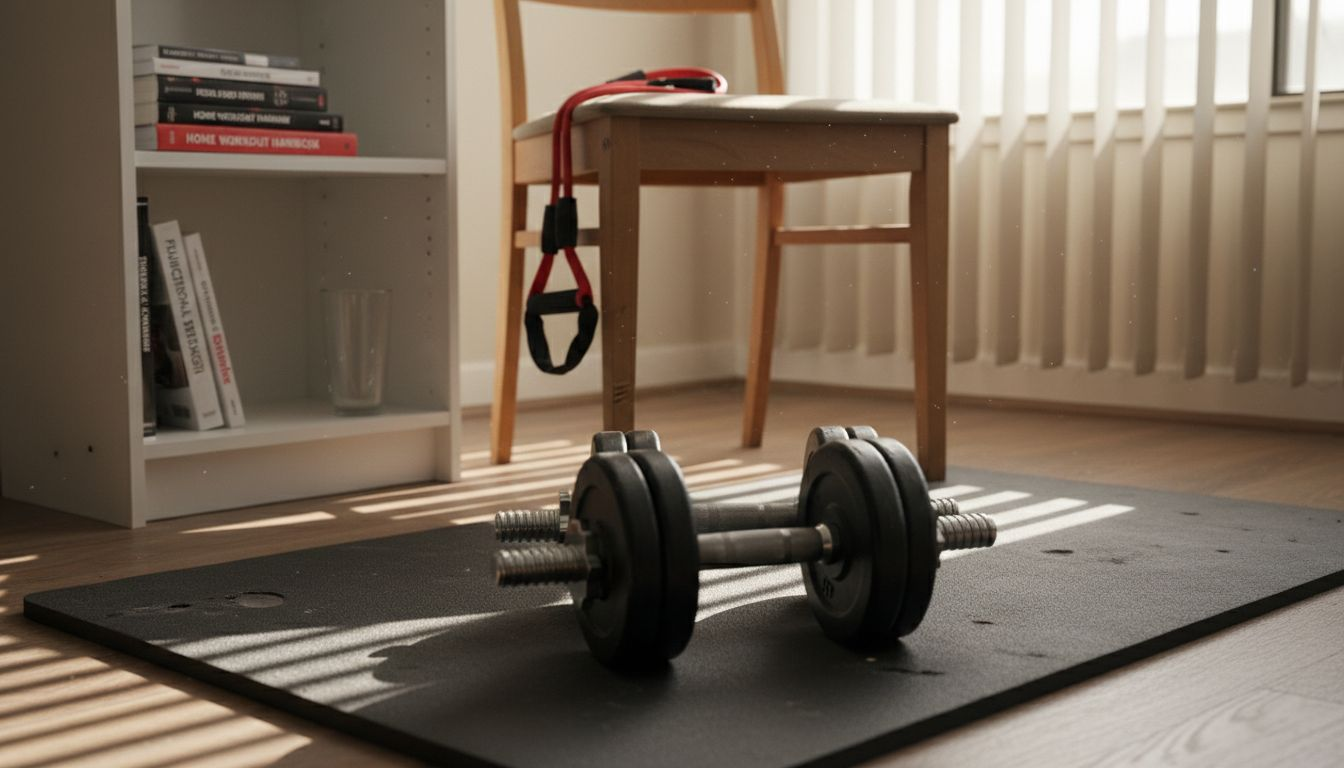
Dumbbells and barbells work by providing a fixed weight that you must lift, lower, and control through each repetition. This weight creates tension in your muscles, forcing them to adapt and grow stronger. Barbells allow you to load more weight because you’re gripping one bar with both hands, making them ideal for compound movements like squats and deadlifts. Dumbbells require each arm to work independently, which builds balanced strength and engages stabilizer muscles more intensely. Weight machines guide your movement along a predetermined path, reducing the stabilization demand and allowing you to focus purely on moving weight. This makes machines safer when learning proper form and excellent for isolating specific muscle groups. Resistance bands are elastic tools that create continuous tension throughout your entire range of motion, unlike free weights where tension varies at different angles. They’re affordable, portable, and perfect for home workouts. Lifting accessories like belts, straps, and weighted vests enhance your training by providing support, improving grip, or adding external load to bodyweight exercises.
The fundamental mechanism behind all this equipment is straightforward: muscles contract against resistance, triggering the growth response. Your muscles don’t know if they’re fighting a 25-pound dumbbell or a resistance band at maximum stretch, they just know they’re working hard. Beginners should prioritize technique over equipment fancy, which means adjustable dumbbells and resistance bands deliver exceptional results at lower costs than full machine setups. As you progress, adding specialized tools like lifting straps and belts improves performance and safety during heavy lifts. The best equipment is the equipment you’ll actually use consistently, whether that’s a single pair of dumbbells at home or a full commercial gym.
Pro tip: Invest in adjustable dumbbells first because they save space, reduce cost, and let you progress through progressive overload without purchasing multiple sets as you get stronger.
Practical Benefits For Muscle And Health
Resistance training delivers far more than just bigger muscles. The practical benefits extend into almost every area of your physical health, transforming how your body functions at a cellular level. When you engage in regular resistance exercise, you’re not simply building muscle tissue, you’re activating a cascade of physiological improvements that affect metabolism, bone density, cardiovascular health, and long-term quality of life. These changes compound over time, making resistance training one of the most efficient health investments you can make.
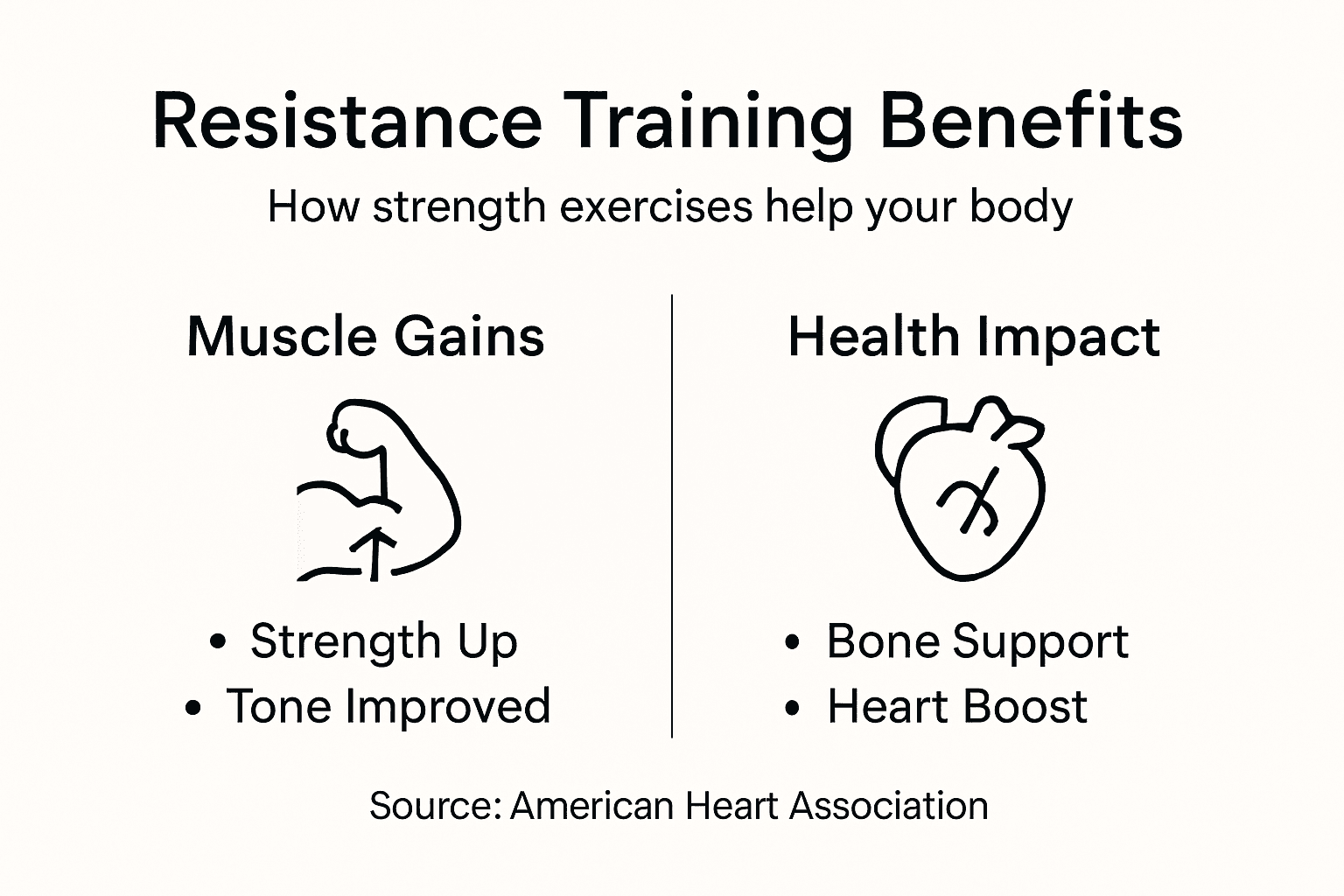
Muscle maintenance and metabolism form the foundation of these benefits. Your muscles are metabolically active tissue, meaning they burn calories even at rest. As you age, muscle mass naturally declines through a process called sarcopenia, but resistance training actively slows and sometimes reverses this age-related muscle loss. More muscle mass translates to a higher resting metabolic rate, making weight management significantly easier. Beyond metabolism, resistance training improves blood sugar regulation by enhancing your muscles’ ability to absorb glucose, which reduces insulin resistance and lowers your risk of developing type 2 diabetes. This single benefit alone impacts millions of people struggling with metabolic health.
Your bones and cardiovascular system also benefit substantially. Weight-bearing resistance exercises stimulate bone cells to become denser and stronger, reducing osteoporosis risk, especially important as you approach 40 and beyond. The cardiovascular improvements are equally compelling: resistance training reduces risk factors for heart disease, improves blood pressure regulation, and enhances overall physical function. When combined with efficient workout strategies, you maximize these benefits without excessive time commitment. Beyond the physical metrics, resistance training improves cognitive function, enhances mood through endorphin release, and contributes to longevity by helping prevent or manage chronic conditions like diabetes, osteoporosis, and cardiovascular disease.
Below is a summary of major muscle and health benefits gained from regular resistance training:
| Benefit | How It Helps | Long-Term Impact |
|---|---|---|
| Increased Muscle Mass | Higher daily calorie burn | Aids weight management |
| Improved Metabolism | Better blood sugar control | Reduces diabetes risk |
| Stronger Bones | Greater bone density | Lowers osteoporosis odds |
| Cardiovascular Health | Improved heart function | Lowers heart disease risk |
| Enhanced Mood | Higher endorphin release | Reduces stress and anxiety |
Pro tip: Schedule resistance training sessions on non-consecutive days to allow muscle recovery while maintaining consistency, since the adaptations that create health benefits occur during recovery periods, not just during the workout itself.
Key Safety Tips And Common Mistakes
Injury is the biggest obstacle preventing people from building consistent resistance training habits. The good news is that most injuries result from preventable mistakes rather than inherent dangers of the activity itself. Understanding the critical safety principles and recognizing common pitfalls puts you in control of your training outcomes. Your body’s ability to adapt and grow depends on smart progression, not heroic effort or ego-driven decisions at the gym.
Start every session with a proper warmup. This doesn’t mean sitting on a stationary bike for 30 minutes. A 5 to 10-minute warmup using light cardio followed by dynamic stretching and a few submaximal sets of your first exercise prepares your nervous system, increases body temperature, and lubricates your joints. Then focus relentlessly on proper form before adding weight. Poor technique with heavy loads is the fastest path to injury. Begin with weights light enough that you can complete all repetitions with control, maintaining constant tension on the target muscle. As form becomes automatic, gradually increase resistance. Rushing exercises and using improper form create injury risk that no amount of progress is worth. Equally important is breathing correctly during lifts. Never hold your breath. Exhale during the difficult portion of the movement and inhale during the easier portion.
Avoid training the same muscle groups on consecutive days. Your muscles grow during recovery, not during the workout. Training the same muscles back-to-back prevents adequate recovery and increases injury risk while reducing gains. Wear appropriate footwear with good ankle support and avoid loose clothing that could catch on equipment. Common mistakes also include skipping cooldowns, neglecting hydration and nutrition, and overtraining without listening to your body. If something hurts in a sharp, acute way, stop immediately. Muscle soreness is normal; sharp pain is a warning signal. Balance your training by working all major muscle groups rather than obsessing over favorite exercises. Many beginners over-develop chest and arms while neglecting back and legs, creating muscular imbalances that lead to poor posture and injury.
Pro tip: Keep a simple notebook tracking your weights, sets, and reps for each exercise because consistent data reveals whether you’re making actual progress and helps you catch form breakdowns before they cause injury.
Strengthen Your Journey with the Right Tools and Guidance
Building strength safely through resistance training means mastering progressive overload and proper form while avoiding injury. Whether you are starting with bodyweight exercises or ready to add resistance bands, the right equipment can make all the difference in preventing injury and accelerating your fitness goals. Armageddon Sports understands these challenges and provides a carefully selected range of fitness accessories designed to support your strength journey at every level.

Explore our premium collection of Resistance Training Bands to add versatile resistance that suits any home or travel workout. Combine these with our quality weightlifting gear and accessories to create a safe and effective routine that fits your lifestyle. Visit Armageddon Sports today and invest in equipment that supports consistent progress, proper technique, and long-term muscle health. Start turning your resistance training knowledge into real, safe gains now.
Frequently Asked Questions
What is resistance training?
Resistance training is a form of exercise that involves working your muscles against an external force, such as free weights, machines, resistance bands, or your body weight, to build strength and endurance.
How often should I perform resistance training for optimal results?
The American Heart Association recommends engaging in resistance training at least twice per week for healthy adults to maximize benefits, including muscle strength and overall fitness.
Will resistance training make me bulky?
No, casual resistance training primarily improves muscle tone and strength without leading to significant muscle bulk. Building noticeable muscle mass requires specific programming, nutrition, and consistent effort over time.
What are the safety tips I should follow for resistance training?
To ensure safety, always warm up before exercising, prioritize proper form over heavy weights, avoid training the same muscle group on consecutive days, and listen to your body to prevent injuries.


