
You step on the scale after weeks of training and see the same number staring back. Frustrating, right? Here’s what most people miss: your body composition can transform dramatically while the scale barely budges. Gaining muscle while losing fat simultaneously, a process called body recomposition, changes how your body looks and performs without necessarily changing what you weigh. This comprehensive guide breaks down the science, strategies, and equipment that make effective body recomposition possible for fitness enthusiasts and athletes in 2026.
Table of Contents
- What Is Body Recomposition? Understanding The Basics
- The Science Behind Body Recomposition: Fat Loss And Muscle Gain
- Approaches And Strategies For Effective Body Recomposition
- Essential Training Equipment And Accessories For Body Recomposition
- Optimize Your Body Recomposition With The Right Gear
- Frequently Asked Questions
Key takeaways
| Point | Details |
|---|---|
| Recomposition changes ratios | Body recomposition focuses on altering fat to muscle ratios rather than total weight loss |
| Resistance training wins | Studies show resistance training produces superior fat loss compared to aerobic exercise or no training |
| Patience drives results | Successful body recomposition requires consistent effort over months, not weeks |
| Equipment enhances outcomes | Quality fitness accessories improve training safety and effectiveness for better composition changes |
What is body recomposition? Understanding the basics
Body recomposition is the process of simultaneously gaining muscle and losing fat mass. Unlike traditional weight loss programs that focus solely on reducing scale numbers, recomposition prioritizes changing your body’s internal makeup. This distinction matters because two people at identical weights can look completely different based on their muscle and fat distribution.
Understanding key terms helps clarify the process. Fat mass refers to all adipose tissue in your body, including essential fat needed for organ function and stored fat. Lean mass encompasses everything else: muscle, bone, water, and connective tissue. Body fat percentage represents the proportion of your total weight that comes from fat, offering a more accurate health indicator than weight alone.
The scale becomes misleading during recomposition because muscle tissue is denser than fat. You might lose three pounds of fat while gaining two pounds of muscle, seeing only a one pound drop despite dramatic visual changes. Your clothes fit differently, strength increases, and definition improves, yet the bathroom scale suggests minimal progress.

Resistance training and strategic nutrition drive recomposition outcomes by creating an environment where your body builds new muscle tissue while mobilizing stored fat for energy. This dual process requires careful balance. Too large a calorie deficit prevents muscle growth, while excessive calories slow fat loss.
Common misconceptions plague body recomposition discussions:
- Believing rapid weight loss equals better results
- Assuming cardio alone produces optimal body composition
- Thinking recomposition only works for beginners
- Expecting visible changes within days or weeks
- Focusing exclusively on scale weight rather than measurements and photos
These misunderstandings cause many people to abandon effective recomposition strategies prematurely. The process demands patience, but the results create lasting changes in both appearance and athletic performance.
The science behind body recomposition: fat loss and muscle gain
Research reveals striking differences in how exercise types affect body composition during weight loss. A 2026 study analyzing fat mass to weight loss ratios found that resistance training leads to a higher fat mass loss ratio compared to aerobic exercise or no exercise, even when total weight loss remains similar across groups. The numbers tell a compelling story.
| Exercise Type | Fat Loss Ratio | Muscle Preservation |
|---|---|---|
| No exercise | 0.70 | Poor |
| Aerobic only | 0.86 | Moderate |
| Resistance training | 1.10 | Excellent |
These ratios demonstrate why resistance training produces superior recomposition results. A ratio above 1.0 means you lose more fat mass than total weight, indicating muscle gain occurs simultaneously. Aerobic exercise and diet alone show ratios below 1.0, suggesting muscle loss accompanies fat reduction.
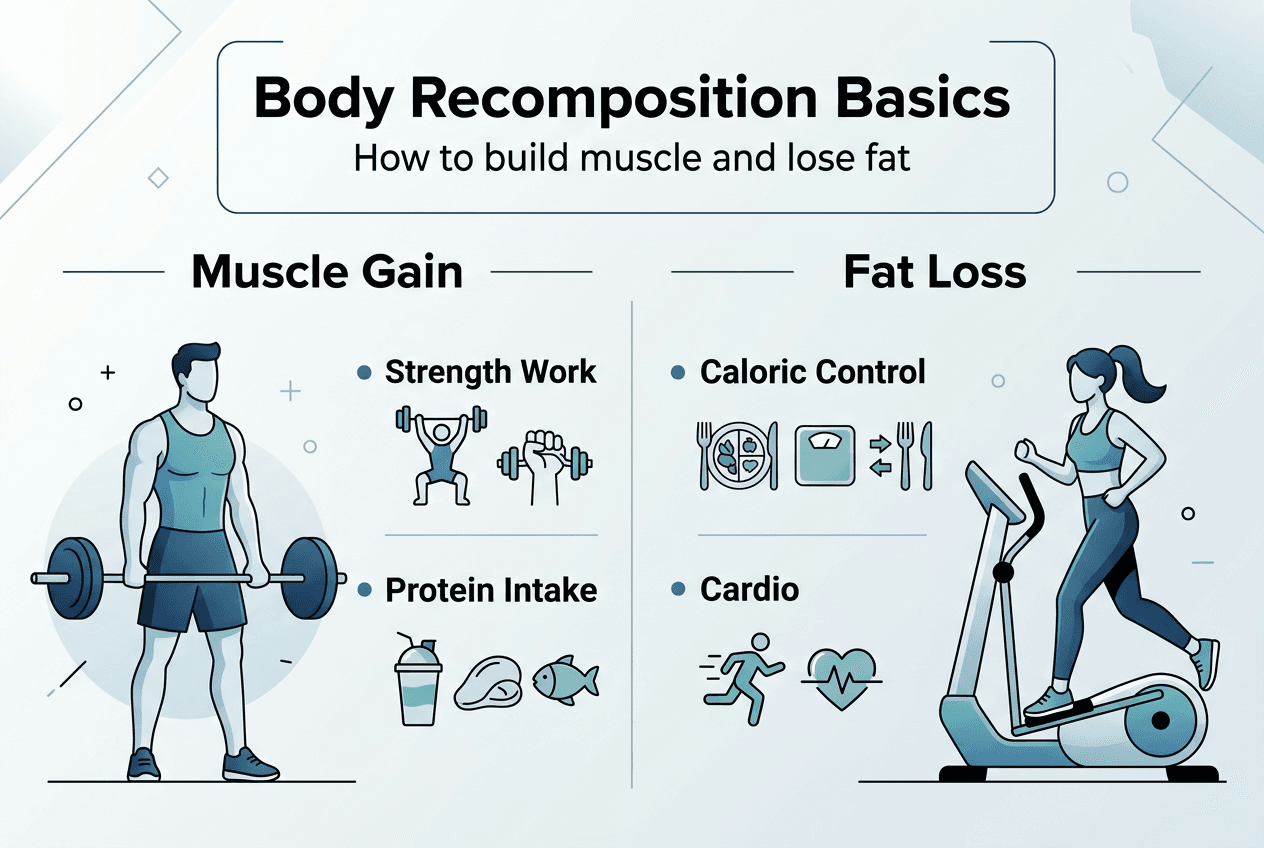
The physiological mechanisms behind these differences involve multiple systems. Resistance training triggers muscle protein synthesis, the process where cells build new muscle fibers in response to mechanical stress. This anabolic response continues for 24 to 48 hours after training, elevating metabolism and creating demand for amino acids. Your body preferentially preserves and builds muscle tissue when regularly challenged with progressive loads.
Hormonal adaptations further support recomposition during strength training. Testosterone and growth hormone levels spike following intense resistance work, promoting muscle growth and fat mobilization. Insulin sensitivity improves, allowing better nutrient partitioning where calories fuel muscle recovery rather than fat storage. Cortisol management becomes easier with consistent training schedules and adequate recovery.
Metabolic changes compound these benefits over time. Greater muscle mass increases resting metabolic rate, burning more calories around the clock. Each pound of muscle tissue requires energy for maintenance, creating a favorable environment for continued fat loss without severe calorie restriction.
Key factors influencing recomposition success include:
- Training type and frequency with emphasis on progressive overload
- Protein intake adequacy for muscle repair and growth
- Overall calorie balance allowing simultaneous muscle building and fat loss
- Recovery quality including sleep duration and stress management
- Individual genetics affecting muscle building potential and fat distribution
- Training experience level and current body composition starting point
Pro Tip: Structure your training around compound movements like squats, deadlifts, and presses with gradually increasing weight or volume each week. This progressive overload principle ensures continuous adaptation, maximizing both muscle gain and fat loss throughout your recomposition journey.
The science clearly favors resistance training for body recomposition, but application matters more than theory. Understanding these mechanisms helps you make informed decisions about efficient workout strategies that align with your composition goals.
Approaches and strategies for effective body recomposition
Transforming your body composition requires a systematic approach combining training, nutrition, and recovery. Successful body recomposition requires intention, patience, and consistency rather than quick fixes or extreme measures. Follow this proven framework:
- Establish a consistent resistance training schedule with three to five sessions weekly, focusing on progressive overload through increased weight, reps, or volume
- Maintain a slight calorie deficit or maintenance level with protein intake between 0.7 to 1.0 grams per pound of body weight daily
- Prioritize seven to nine hours of quality sleep nightly and schedule rest days between intense training sessions for optimal recovery
- Gradually progress training intensity and volume every two to four weeks, avoiding plateaus while preventing overtraining
- Track body measurements, progress photos, and strength gains monthly rather than obsessing over daily scale fluctuations
Nutrition strategies make or break recomposition efforts regardless of training quality. Consider these dietary guidelines:
- Consume protein at every meal, distributing intake evenly throughout the day for sustained muscle protein synthesis
- Time carbohydrate intake around training sessions when insulin sensitivity peaks and glycogen replenishment matters most
- Include healthy fats for hormone production and nutrient absorption without excessive calorie density
- Maintain a modest deficit of 200 to 300 calories below maintenance for fat loss while supporting muscle growth
- Stay hydrated with half your body weight in ounces of water daily, more during intense training periods
- Avoid extreme restriction or prolonged aggressive cuts that compromise muscle retention and metabolic health
Recovery often gets overlooked despite its critical role in recomposition success. Sleep deprivation elevates cortisol, reduces testosterone, and impairs insulin sensitivity, creating an environment hostile to muscle growth and favorable to fat storage. Stress management through meditation, leisure activities, or social connection supports hormonal balance necessary for body composition changes.
Pro Tip: Measure progress using multiple data points including waist circumference, hip measurements, progress photos from consistent angles, and strength benchmarks. Scale weight alone provides incomplete information and can discourage you during periods when muscle gain offsets fat loss.
Common pitfalls derail many recomposition attempts before results materialize. Inconsistent training schedules prevent the cumulative adaptations needed for composition changes. Poor dietary adherence, especially inadequate protein or excessive calorie swings, sabotages progress despite perfect training. Unrealistic expectations about speed and magnitude of changes lead to premature abandonment of effective strategies.
Equipment and accessories enhance training effectiveness when used strategically. Quality gym accessories improve exercise execution, reduce injury risk, and allow progressive overload with better form. Lifting straps enable heavier deadlifts without grip failure limiting back development. Weightlifting belts provide core stability during heavy squats and presses. Resistance bands add variable tension for muscle activation and convenient home training options.
The right tools support consistent, effective training that drives recomposition results. Investing in equipment suited to your training style removes barriers and enhances the quality of each workout session, compounding benefits over months of consistent effort.
Essential training equipment and accessories for body recomposition
Strategic equipment choices amplify your recomposition efforts by improving workout quality, safety, and consistency. Using proper training equipment can maximize strength gains and workout efficiency, supporting better body composition outcomes. Consider these essential accessories:
- Lifting gloves protect hands during high volume training while improving grip on bars and dumbbells
- Weightlifting belts increase intra abdominal pressure for spinal stability during heavy compound movements
- Resistance bands provide variable resistance and enable effective training anywhere without bulky equipment
- Ab toners and EMS devices enhance muscle activation and support recovery between intense training sessions
- Lifting straps eliminate grip as a limiting factor during pulling exercises, allowing better back and trap development
- Knee sleeves offer joint support and warmth during squats and lunges, reducing injury risk
Different accessories serve specific purposes in your training arsenal. Understanding these distinctions helps you invest wisely:
| Accessory Type | Primary Benefit | Best Use Case |
|---|---|---|
| Fitness gloves | Hand protection and grip | High rep training and pull exercises |
| Lifting belts | Core stability and safety | Heavy squats, deadlifts, overhead press |
| Muscle stimulators | Recovery and activation | Between workouts and targeting weak areas |
| Resistance bands | Portable resistance | Home workouts and warm up activation |
Fitness gloves deserve special attention for recomposition focused training. Extended sessions with high volume work can tear calluses and limit training consistency. Quality fitness gloves prevent these issues while maintaining tactile feedback needed for proper bar positioning. Look for gloves with reinforced palms, breathable materials, and wrist support for compound movements.
Weightlifting belts provide mechanical advantage during maximal efforts. The belt gives your core muscles something to push against, creating greater intra abdominal pressure that stabilizes your spine under heavy loads. This stability allows you to lift heavier weights safely, providing the progressive overload stimulus essential for muscle growth. Belts work best for sets in the one to six rep range where loads approach your maximum capacity.
Muscle stimulators and EMS devices offer unique benefits for recomposition. These tools use electrical impulses to contract muscles, enhancing activation patterns and supporting recovery. While not replacements for actual training, they complement your program by maintaining muscle engagement on rest days and targeting stubborn areas that need extra attention.
Pro Tip: Start with basics like quality gloves and a belt before expanding your accessory collection. Master proper exercise technique without equipment first, then add tools that address specific limitations or enhance exercises you perform regularly.
Home gym enthusiasts benefit from space efficient, multi functional equipment. Adjustable dumbbells replace entire rack systems. Resistance band sets provide progressive resistance in a small bag. Pull up bars mount in doorways for upper body work. These solutions enable consistent training regardless of gym access, a crucial factor for long term recomposition success.
Browse the full range of fitness accessories and lifting equipment to find tools matching your training style and goals. The right gear removes obstacles and enhances every workout, compounding small improvements into dramatic body composition changes over time.
Optimize your body recomposition with the right gear
Your body recomposition journey demands consistent, intelligent training supported by equipment that enhances performance and safety. Quality fitness accessories eliminate common barriers that interrupt training schedules and limit progressive overload. Whether you need fitness gloves for hand protection during high volume sessions, lifting equipment for spinal stability during heavy compounds, or recovery tools for between workout maintenance, the right gear accelerates your progress.

Armageddon Sports offers comprehensive fitness accessories designed for serious athletes and fitness enthusiasts pursuing body recomposition goals. From basic essentials to advanced training tools, you’ll find equipment suited to your current fitness level and future ambitions. Investing in quality gear that matches your training style pays dividends through reduced injury risk, better exercise execution, and the confidence to push harder each session. Explore the collection today and equip yourself for sustainable body composition transformation.
Frequently asked questions
What is the difference between body recomposition and weight loss?
Body recomposition focuses on changing the ratio of muscle to fat in your body, often with minimal scale weight change. Traditional weight loss simply reduces total body mass without distinguishing between fat and muscle loss. Recomposition produces better visual results and metabolic improvements because you preserve or build muscle while losing fat, whereas generic weight loss often sacrifices muscle tissue along with fat.
Can beginners achieve body recomposition?
Beginners actually have the greatest potential for rapid body recomposition due to newbie gains, where untrained individuals build muscle quickly while losing fat. Advanced athletes face slower progress because they’ve already captured most easy gains. However, both groups can successfully recomp with proper training and nutrition, just at different rates.
How long does body recomposition take to show results?
Noticeable changes typically appear within eight to twelve weeks of consistent training and nutrition adherence. Significant transformation requires six months to a year for most people. Progress speed depends on training experience, starting body composition, genetics, and adherence quality. Track measurements and photos monthly rather than expecting daily visible changes, as recomposition occurs gradually.
What tools help track body recomposition progress?
Body fat calipers measure skinfold thickness at multiple sites for body fat percentage estimates. Bioimpedance scales use electrical signals to estimate body composition, though accuracy varies. Progress photos from consistent angles and lighting reveal visual changes the mirror misses. Circumference measurements of waist, hips, chest, arms, and thighs track size changes independent of scale weight. Refer to this body composition guide for detailed tracking strategies.
How do diet and exercise intensity impact recomposition speed?
Higher protein intake and moderate calorie deficits accelerate fat loss while supporting muscle growth. Training intensity matters more than volume, with heavier loads and progressive overload driving better adaptations than endless high rep work. Insufficient protein or excessive calorie restriction slows recomposition by limiting muscle building capacity. Inadequate training intensity fails to provide the stimulus needed for muscle growth, reducing recomposition effectiveness regardless of diet quality.
Recommended
- Understanding body composition: a 2026 fitness guide – Armageddon Sports
- Master BFR Training for Rapid Muscle Growth and Recovery – Armageddon Sports
- Home workout equipment ideas 2026: save 85% space – Armageddon Sports
- Home Gym Essentials 2026: Save 70% Space & Cut Costs – Armageddon Sports
- Muscle Gain Nutrition Guide for Optimal Results in 2025 – MyGymSupplements