
Most strength myths still influence how people plan their home workouts, despite clear guidance from American and international health experts. Confusion about who benefits from resistance training leads many fitness enthusiasts and beginners to overlook simple, proven methods for building strength safely. Unpacking these common misconceptions and understanding the basics can help you create a more effective workout space using only the equipment you truly need. Studies show nearly every age group can benefit from well-structured strength routines.
Table of Contents
- Strength Training Basics And Common Myths
- Major Types Of Strength Training Methods
- How Muscles Grow Through Resistance
- Essential Equipment For Effective Home Workouts
- Avoiding Injuries And Common Mistakes
Key Takeaways
| Point | Details |
|---|---|
| Strength Training is for Everyone | Strength training benefits individuals of all ages and fitness levels, contrary to myths that it is only for athletes or bodybuilders. |
| Proper Technique is Crucial | Ensuring correct form and gradual progression during workouts is key to maximizing effectiveness and preventing injuries. |
| Varied Training Methods Enhance Results | Combining different strength training methods—like free weights, machines, and bodyweight exercises—tailors workouts to individual goals and improves overall fitness. |
| Injury Prevention through Awareness | Adhering to safe practices, such as proper warm-ups and listening to your body, significantly reduces the risk of injury during strength training. |
Strength Training Basics and Common Myths
Strength training involves systematic resistance exercises designed to build muscle strength, improve body composition, and enhance overall physical performance. Contrary to popular misconceptions, this fitness approach is accessible to individuals across different ages and fitness levels. Evidence from the American Academy of Pediatrics confirms that supervised strength training programs can be safe and effective even for youth populations.
Many people mistakenly believe strength training is exclusively for young athletes or bodybuilders. However, research demonstrates that resistance exercises provide significant benefits for everyone, regardless of age or gender. Debunking common fitness myths, experts emphasize that proper technique and gradual progression are more important than age or initial fitness level. The key benefits include:
- Increased muscle mass
- Enhanced bone density
- Improved metabolic rate
- Better joint stability
- Reduced risk of chronic health conditions
Another prevalent myth suggests strength training causes injury or stunts growth. Scientific evidence refutes these claims, showing that structured resistance training actually promotes healthier muscle and skeletal development when performed correctly. Proper form, appropriate weight selection, and professional guidance are crucial for preventing potential injuries and maximizing workout effectiveness.
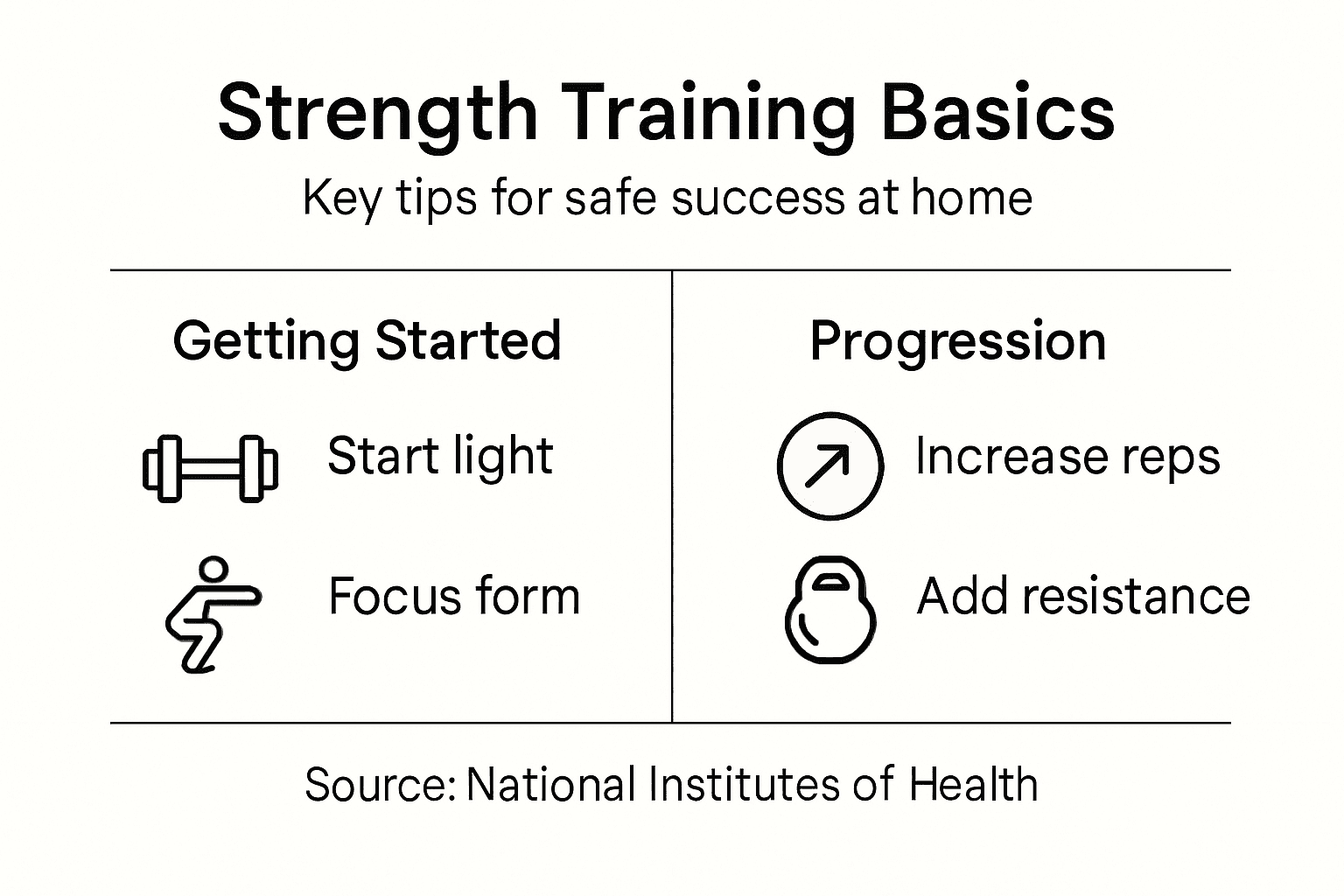
Pro tip: Start with bodyweight exercises and light resistance to develop proper form and technique before progressively increasing workout intensity and complexity.
Major Types of Strength Training Methods
Strength training encompasses multiple methods designed to increase muscle strength, enhance physical performance, and improve overall fitness. Scientific research from the American College of Sports Medicine identifies several primary approaches that cater to different fitness goals and individual capabilities.
The major types of strength training methods include:
- Free Weight Training
- Uses dumbbells, barbells, and kettlebells
- Provides maximum range of motion
- Requires significant muscle stabilization
- Excellent for developing functional strength
- Resistance Machine Training
- Provides guided movement patterns
- Ideal for beginners
- Reduces risk of improper form
- Allows targeted muscle group isolation
- Bodyweight Exercises
- Uses individual’s body weight as resistance
- Requires minimal equipment
- Highly adaptable to fitness levels
- Includes push-ups, squats, lunges
- Resistance Band Training
- Portable and versatile
- Provides consistent muscle tension
- Low impact on joints
- Suitable for rehabilitation and strength building
National Institutes of Health research emphasizes the importance of progressive overload across these methods. This principle involves gradually increasing weight, frequency, or repetitions to continually challenge muscles and promote consistent strength gains.
Each strength training method offers unique advantages, and the most effective approach often combines multiple techniques. Personal fitness goals, available equipment, and individual physical conditions should guide method selection.
Here’s how the main strength training methods compare for different fitness goals:
| Method | Best For | Equipment Needed | Adaptability |
|---|---|---|---|
| Free Weights | Building raw strength | Dumbbells, barbells | Highly customizable |
| Resistance Machines | Isolating muscles | Gym machines | Limited to equipment |
| Bodyweight Exercises | Functional movement | None | Excellent for all levels |
| Resistance Bands | Rehabilitation, travel | Bands of various tension | Easily adjusted |
Pro tip: Rotate between different strength training methods every 4-6 weeks to prevent plateaus and maintain muscle adaptation.
How Muscles Grow Through Resistance
Muscle growth is a complex biological process triggered by strategic resistance training. Physiological research reveals that muscles adapt to progressive overload through intricate cellular mechanisms involving both structural and neurological changes.
When muscles experience resistance, they undergo microscopic damage during exercise. This intentional stress initiates a sophisticated repair process called hypertrophy, where muscle fibers reconstruct themselves to become larger and stronger. Cellular adaptation mechanisms demonstrate that this process requires three critical components:
- Mechanical stress from resistance
- Adequate protein intake
- Sufficient recovery time
The muscle growth process involves two primary adaptation pathways:
- Myofibrillar Hypertrophy
- Increases muscle fiber size
- Enhances muscle strength
- Develops dense, powerful muscle tissue
- Sarcoplasmic Hypertrophy
- Increases muscle cell fluid volume
- Improves muscle endurance
- Creates larger, more voluminous muscles
Neurological adaptations also play a crucial role in muscle development. As you consistently train, your nervous system becomes more efficient at recruiting muscle fibers, improving overall muscle activation and coordination. This means strength gains occur not just through muscle size increase, but also through enhanced neural communication.
Pro tip: Vary your resistance training techniques and progressively increase weight or repetitions to continuously challenge muscle groups and optimize growth potential.

Essential Equipment for Effective Home Workouts
Home strength training requires strategic equipment selection that maximizes workout potential without overwhelming space or budget. Mayo Clinic experts recommend focusing on versatile, affordable tools that support progressive fitness development.
Essential home workout equipment can be categorized into several key groups:
- Bodyweight Training Essentials
- No equipment required
- Uses personal body weight as resistance
- Includes push-ups, squats, lunges
- Highly adaptable for all fitness levels
- Resistance Training Tools
- Resistance bands
- Lightweight and portable
- Adjustable tension levels
- Supports full-body workout routines
- Weight Training Equipment
- Dumbbells
- Kettlebells
- Adjustable weight sets
- Provides progressive overload options
- Supplementary Training Gear
- Exercise mat
- Foam roller
- Pull-up bar
- Stability ball
University of Washington research emphasizes that effective home workouts do not require extensive investments. Beginners can start with bodyweight exercises and resistance bands, gradually introducing weights as strength and technique improve.
The key is selecting equipment that matches individual fitness goals, available space, and budget constraints. Multipurpose tools like resistance bands offer exceptional flexibility, allowing users to target multiple muscle groups with a single affordable accessory.
Use this quick reference table to match equipment to your space and budget:
| Equipment Type | Space Needed | Budget Impact | Progression Options |
|---|---|---|---|
| Bodyweight Only | Minimal | No additional cost | Add sets or reps |
| Resistance Bands | Very compact | Low | Increase band tension |
| Dumbbells/Kettlebells | Moderate | Medium to high | Use heavier weights |
| Machines | Large | High | Adjust weight stacks |
Pro tip: Invest in adjustable equipment that can grow with your fitness level, avoiding the need to repeatedly purchase new gear as you become stronger.
Avoiding Injuries and Common Mistakes
Strength training demands careful attention to technique and body awareness to prevent potential injuries. American Academy of Pediatrics research emphasizes that most training injuries result from preventable mistakes in form, progression, and preparation.
The most critical areas for injury prevention include:
- Proper Form and Technique
- Maintain correct body alignment
- Use controlled, deliberate movements
- Focus on muscle engagement, not momentum
- Prioritize quality over quantity
- Gradual Progressive Overload
- Increase weight incrementally
- Avoid sudden dramatic weight jumps
- Listen to your body’s response
- Allow adequate recovery between intense sessions
- Common Mistake Areas
- Skipping warm-up routines
- Lifting weights beyond current capability
- Ignoring pain signals
- Neglecting rest and recovery periods
- Inconsistent breathing techniques
Mass General experts warn that misconceptions about training can significantly increase injury risk. Many individuals mistakenly believe that intense soreness indicates an effective workout or that pushing through pain demonstrates commitment. In reality, these approaches can lead to serious physical setbacks.
Understanding your body’s limits and maintaining a balanced, informed approach to strength training is crucial for long-term fitness success and injury prevention.
Pro tip: Record your workouts using video to critically analyze and improve your form, helping prevent technique-related injuries before they occur.
Elevate Your Strength Training with the Right Home Workout Gear
Struggling to find effective strength training equipment that fits your home workout needs? This article highlights the importance of proper tools like resistance bands, dumbbells, and bodyweight accessories to maximize muscle growth safely and avoid injury. Whether you want to build muscle, improve endurance, or maintain joint stability, selecting versatile and reliable fitness gear is key to achieving your goals and sustaining progress through gradual overload.

Unlock your full potential with quality strength training products from Armageddon Sports. Explore our wide range of weightlifting gear, fitness accessories, and wellness devices that enhance workout efficiency and recovery. Don’t wait until your motivation fades or injuries slow you down. Shop now at Armageddon Sports to get the equipment you need to train smarter, stronger, and safer today.
Frequently Asked Questions
What are the benefits of strength training at home?
Strength training at home can lead to increased muscle mass, improved bone density, enhanced metabolic rate, better joint stability, and a reduced risk of chronic health conditions. It is also convenient and customizable to fit your schedule and space.
What equipment do I need for strength training at home?
Essential equipment for home workouts includes bodyweight exercises, resistance bands, dumbbells, kettlebells, and adjustable weight sets. A foam roller, exercise mat, and stability ball can also enhance your training experience.
How can I avoid injuries while strength training?
To avoid injuries, focus on maintaining proper form and technique, gradually increase weights, and listen to your body’s signals. Ensure you warm up before workouts and allow for adequate rest and recovery.
How does muscle growth occur during resistance training?
Muscle growth occurs through a process called hypertrophy, where muscles adapt to resistance by repairing and increasing in size following microscopic damage. This process requires mechanical stress from resistance, proper nutrition, and sufficient recovery time.
Recommended
- Home Workout vs. Training at the Gym – Where and How to Exercise? – Armageddon Sports
- 20 Pieces of Home Workout Equipment You Need in Your Home Gym – Armageddon Sports
- The Best Free Workout and Fitness Apps – Armageddon Sports
- Hacks and Tips for Efficient Workouts – Armageddon Sports
- How to Set Fitness Goals for Maximum Results – MyGymSupplements
- Complete Guide to Climbing Training at Home - Gripnatic


