
Stepping on a scale tells you one number, but it reveals almost nothing about your actual fitness or health. You could weigh the same as someone else yet have completely different muscle mass, body fat, and performance potential. Understanding body composition gives you the complete picture, helping you make smarter decisions about training, nutrition, and long term wellness in 2026.
Table of Contents
- What Is Body Composition And Why Does It Matter?
- How Body Composition Affects Fitness, Health, And Athletic Performance
- Measuring Body Composition: Methods, Challenges, And Accuracy
- Optimizing Body Composition For Your Fitness Goals
- Enhance Your Fitness Journey With The Right Equipment
- FAQ
Key takeaways
| Point | Details |
|---|---|
| Body composition reveals what makes up your weight | It separates fat mass, muscle mass, bone, and water instead of just showing total pounds. |
| Muscle mass drives metabolism and strength | More muscle burns more calories at rest and powers athletic performance. |
| Healthy body fat ranges vary by individual | Optimal levels differ between men and women and affect hormones and disease risk. |
| Multiple measurement methods improve accuracy | Combining DEXA, calipers, and visual tracking gives better insights than any single test. |
| Focusing on composition beats chasing weight loss | Preserving muscle while reducing fat creates lasting fitness improvements. |
What is body composition and why does it matter?
Body composition refers to the proportions of different tissue types that make up your total body weight, including muscle mass, fat mass, bone mass, organs, and water. Unlike the single number on your bathroom scale, it tells you exactly what you’re made of and how those components affect your health and performance.
Each component plays a distinct role in your body. Muscle mass typically accounts for 30 to 40% of body weight and drives your metabolism, strength output, and insulin sensitivity. Bone mass makes up 12 to 15% and provides structural support while storing minerals. Fat mass varies widely between individuals and serves essential functions like hormone production and energy storage. Water and organs round out the remaining percentages, each contributing to vital bodily processes.
Understanding these proportions matters far more than knowing your total weight. Two people weighing 180 pounds can look and perform completely differently based on their muscle to fat ratios. A bodybuilder at 180 pounds with high muscle mass and low body fat will have better strength, faster metabolism, and lower disease risk compared to someone at the same weight carrying excess fat and minimal muscle.
For gym goers, bodybuilders, and personal trainers, body composition provides actionable data for program design and progress tracking. It reveals whether you’re building muscle, losing fat, or both. This clarity allows you to adjust training volume, nutrition timing, and recovery strategies to match specific goals. Unlike body weight tracking, composition analysis shows what’s actually changing inside your body.
The key components include:
- Fat mass: Essential and storage fat combined, affecting hormones and energy reserves
- Muscle mass: Metabolically active tissue driving strength and calorie burn
- Bone mass: Structural framework supporting movement and protecting organs
- Water: Intracellular and extracellular fluid critical for all physiological functions
- Organs: Heart, lungs, liver, and other vital systems maintaining life
Tracking these elements separately gives you control over your fitness outcomes in ways that simple weight monitoring never could.
How body composition affects fitness, health, and athletic performance
Your body composition directly influences every aspect of physical performance and long term health. Higher muscle mass increases metabolism, improves strength and power, enhances insulin sensitivity, and supports healthy aging. More muscle means your body burns more calories at rest, making weight management easier and more sustainable.

Body fat levels create a delicate balance. Too much body fat increases health risks while too little disrupts hormonal function. Excessive adipose tissue contributes to inflammation, insulin resistance, cardiovascular disease, and joint stress. Insufficient body fat in women can halt menstrual cycles and reduce bone density. In men, extremely low fat percentages impair testosterone production and immune function.
Research shows that high fat free mass combined with lower fat mass correlates with reduced all cause mortality, better insulin sensitivity, and enhanced athletic performance. Athletes with optimized composition ratios generate more power, recover faster between training sessions, and sustain effort longer during competition. Strength athletes benefit from maximum muscle mass, while endurance competitors balance muscle with lower body weight for efficiency.
Bone mass becomes increasingly important as you age. Adequate bone density protects against fractures and supports the mechanical loads of resistance training. Weight bearing exercises combined with sufficient protein and calcium intake maintain bone strength throughout life. For muscle building goals, strong bones provide the foundation for progressive overload and heavy lifting.
Metabolic advantages extend beyond the gym:
- Enhanced glucose disposal reducing diabetes risk
- Improved lipid profiles lowering heart disease markers
- Better hormonal balance supporting reproduction and mood
- Increased resting energy expenditure simplifying body weight control
- Superior thermoregulation during exercise and daily activities
Pro Tip: During any weight management phase, prioritize preserving muscle mass through adequate protein intake and progressive resistance training. Losing muscle tanks your metabolism and undermines long term results.
Measuring body composition: methods, challenges, and accuracy
Multiple technologies exist for assessing body composition, each with distinct advantages and limitations. DEXA scans use low dose X rays to differentiate bone, fat, and lean tissue throughout your body. Skinfold calipers measure subcutaneous fat thickness at specific sites. Bioelectrical impedance sends weak electrical currents through tissue to estimate fat based on resistance. Anthropometric equations calculate composition from body measurements and demographic data.
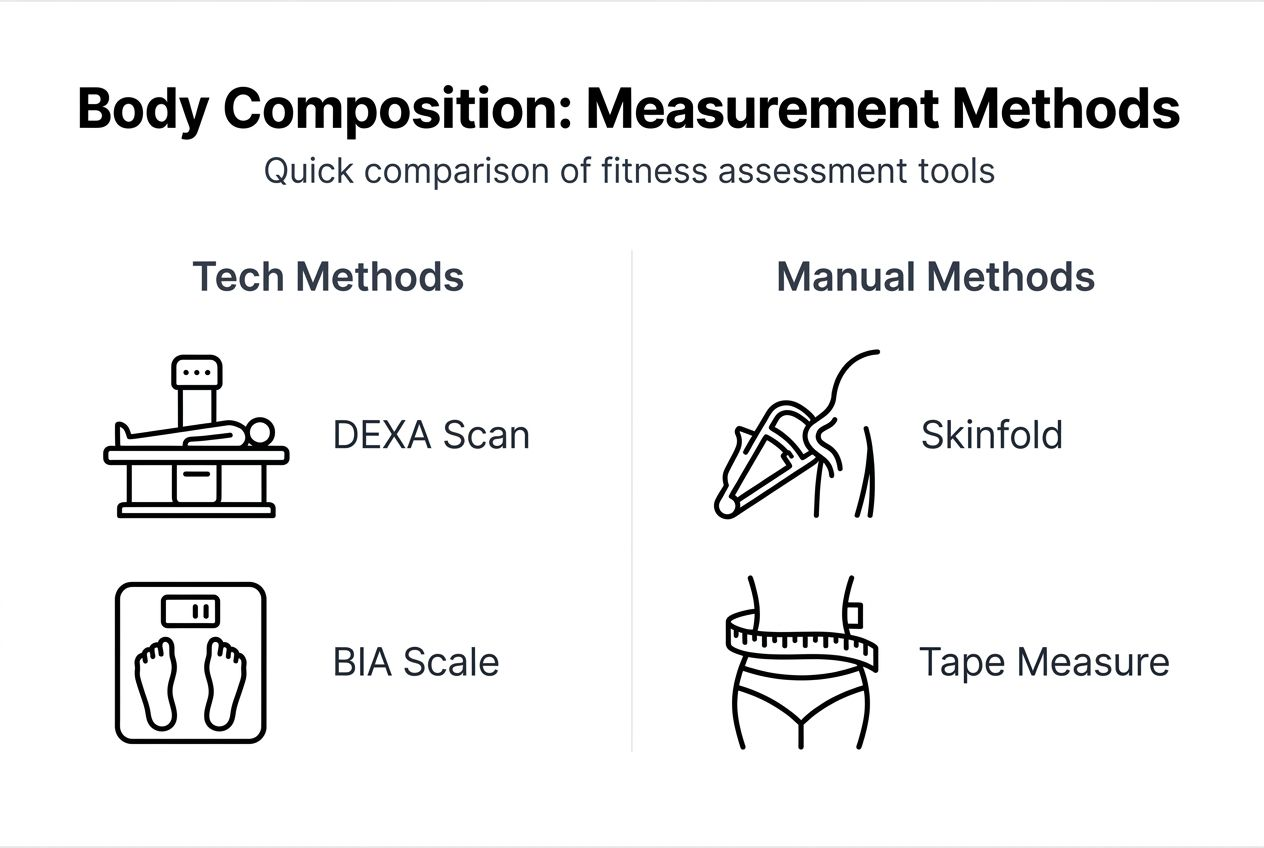
Despite its reputation, DEXA accuracy varies due to algorithm interpretation, hydration levels, software updates, and calibration issues. The same person scanned on different machines or at different hydration states can receive body fat estimates varying by several percentage points. Manufacturers use proprietary algorithms that classify tissue differently, leading to inconsistent results across brands and software versions.
No single method provides perfect accuracy. Combining multiple approaches gives you the most reliable picture of your composition and its changes over time. Visual progress photos, circumference measurements, performance metrics, and body weight trends together paint a complete picture that any isolated test cannot.
| Method | Accuracy | Cost | Ease of Use | Best For |
|---|---|---|---|---|
| DEXA Scan | ±3-5% body fat | $50-150 per scan | Requires appointment | Baseline assessment and major milestones |
| Skinfold Calipers | ±3-5% body fat | $5-30 one time | Requires skill and consistency | Frequent tracking when technique is mastered |
| Bioelectrical Impedance | ±5-8% body fat | $25-200 for device | Very easy | Home monitoring with consistent conditions |
| Anthropometric Equations | ±4-6% body fat | Free | Easy with tape measure | Quick estimates without equipment |
Hydration status affects every measurement method except DEXA to some degree, and even DEXA shows variation based on water distribution. Test yourself under consistent conditions: same time of day, similar hydration, comparable food intake, and matching training status. Morning measurements after using the bathroom but before eating provide the most stable baseline.
Explore various measurement tools to find what works for your budget and tracking preferences. The best method is the one you’ll actually use consistently.
Pro Tip: Track trends over 8 to 12 weeks rather than obsessing over single measurements. Week to week fluctuations mean little, but multi month patterns reveal true composition changes.
Optimizing body composition for your fitness goals
Improving your body composition requires a strategic approach tailored to your specific objectives. Optimizing body composition should be the primary goal rather than simply losing or gaining weight. Whether you want to build maximum muscle, reduce body fat for definition, or enhance athletic performance, the same principles apply with different emphasis.
Nutrition forms the foundation of any composition improvement plan. Protein intake between 0.7 to 1.0 grams per pound of body weight preserves muscle during fat loss and supports growth during bulking phases. Total calorie intake determines whether you lose, maintain, or gain weight, while macronutrient ratios influence what type of tissue changes. A moderate calorie deficit of 300 to 500 calories daily allows fat loss while minimizing muscle loss when combined with adequate protein.
Muscle loss accelerates dramatically during caloric restriction without protein and resistance training. Your body will sacrifice muscle tissue for energy unless you give it reasons to keep that muscle. Progressive resistance training signals your body to maintain strength and muscle mass even when calories are reduced. Training each muscle group at least twice weekly with sufficient volume and intensity preserves lean tissue during cuts.
Bodybuilders strategically manipulate body fat levels throughout the year, maintaining higher percentages in off season for muscle growth and reducing to extremely low levels for competitions. This cyclical approach recognizes that different composition targets serve different purposes. Most fitness enthusiasts benefit from finding a sustainable middle ground rather than extreme fluctuations.
Follow these steps to create your personalized composition plan:
- Assess your current body composition using multiple methods for baseline data
- Define specific goals with realistic timelines based on your starting point
- Calculate nutrition targets including calories, protein, carbohydrates, and fats
- Design a training program emphasizing progressive overload and adequate volume
- Implement tracking systems for weight, measurements, photos, and performance
- Review progress every 4 weeks and adjust variables as needed
- Incorporate advanced techniques like blood flow restriction when appropriate
Recovery and sleep impact composition outcomes as much as training and nutrition. Insufficient sleep elevates cortisol, reduces testosterone, increases hunger, and impairs recovery. Aim for 7 to 9 hours nightly to optimize hormonal environment for muscle growth and fat loss.
Pro Tip: During calorie deficits, prioritize maintaining strength levels on core compound movements. If your squat, deadlift, and bench press numbers hold steady, you’re likely preserving muscle mass even as body weight drops.
Enhance your fitness journey with the right equipment
Achieving your body composition goals becomes easier with proper fitness accessories supporting your training. Quality lifting gear like belts and straps allows you to train heavier and more safely, creating the mechanical tension needed for muscle growth. Better equipment means more effective workouts, which translates directly to improved composition outcomes.

Grip strength often limits your ability to fully challenge larger muscle groups during pulling exercises. Fitness gloves and lifting straps eliminate this bottleneck, letting your back and legs receive adequate stimulus without your forearms giving out first. This targeted support ensures every muscle gets the work it needs for growth and development. Investing in the right tools removes common training barriers and accelerates your progress toward optimal body composition.
FAQ
What is the difference between body composition and BMI?
BMI calculates a ratio of weight to height but cannot distinguish between muscle and fat mass. Military body fat screening relies primarily on body mass index to predict percentage body fat, yet this approach misclassifies muscular individuals as overweight or obese. Body composition directly measures fat, muscle, and bone proportions, providing accurate insights that BMI cannot offer.
How often should I measure my body composition?
Measure every 4 to 6 weeks to identify meaningful trends without getting distracted by normal daily fluctuations. Water retention, food intake, training status, and hormonal cycles create short term variations that don’t reflect actual tissue changes. Combining multiple assessment methods with performance benchmarks like strength gains confirms whether your program is working.
Can body composition affect athletic performance?
Absolutely. More muscle mass directly supports strength and power outputs across all athletic endeavors, while high fat free mass combined with lower fat mass correlates with reduced all cause mortality, better insulin sensitivity, and enhanced athletic performance. Optimal body fat levels reduce disease risk and improve endurance capacity. Athletes tailor their composition to match sport specific demands, with powerlifters favoring maximum muscle and marathoners balancing muscle with lower total weight.
What are the limitations of DEXA scans for body composition?
DEXA scans can produce inaccurate results due to algorithm interpretation, hydration levels, software updates, and calibration issues. Different machines and software versions yield varying body fat estimates for the same person. Algorithms sometimes misclassify lean tissue as fat or vice versa, particularly in highly muscular individuals. Use DEXA as one data point within a broader assessment strategy rather than treating it as absolute truth.