
Building a home gym sounds expensive and space consuming, right? Many assume you need bulky machines and thousands of dollars. Reality check: adjustable dumbbells reduce storage needs by about 70% compared to fixed weights, and budget friendly versatile equipment delivers serious results. This guide shows you how to select affordable, effective gear optimized for strength training at home in 2026.
Table of Contents
- How to Choose Home Gym Equipment: Key Selection Criteria
- Essential Strength Training Equipment for a Home Gym
- Adjustable Dumbbells: Space-Saving and Versatile Weights
- Benches and Racks: Foundation for Safe and Effective Training
- Resistance Bands and Accessories: Complementary Tools for Full-Body Training
- Comparing Popular Home Gym Equipment: Price, Space, and Use Case
- Choosing Equipment for Your Space and Goals: Situational Recommendations
- Build Your Home Gym with Armageddon Sports Essentials
Key Takeaways
| Point | Details |
|---|---|
| Space efficiency matters | Adjustable dumbbells save approximately 70% storage space versus fixed weight sets. |
| Budget meets quality | Budget flat benches support up to 800 lbs, proving affordability doesn’t sacrifice safety. |
| Versatility drives value | Multi-function equipment like power racks and adjustable benches maximize exercise variety. |
| Safety is non-negotiable | Squat racks with safety catches enable heavy lifts without a spotter at home. |
| Accessories enhance training | Resistance bands and small tools complement weights for full body conditioning. |
How to Choose Home Gym Equipment: Key Selection Criteria
Selecting the right equipment starts with honest assessment. Measure your available space before buying anything. A crowded gym kills motivation fast.
Budget constraints shape every decision, but don’t sacrifice quality for a lower price tag. Cheap equipment breaks quickly, costing more long term. Budget flat benches support up to 800 lbs load, proving you can find cost effective stable options. Balance initial investment with longevity and warranty coverage.
Versatility amplifies your investment. Equipment supporting multiple exercises eliminates the need for redundant pieces. A quality adjustable bench transforms from flat to incline to decline, covering dozens of movements. Prioritize gear that adapts as your strength progresses.
Safety features become crucial without gym staff nearby. Look for stable bases, secure locking mechanisms, and high weight ratings. Durability matters equally. Steel frames outlast plastic components, and textured grips prevent slippage during heavy lifts.
Pro Tip: Create a priority list ranking space, budget, and training goals. This clarifies which compromises you can accept and which features remain essential.
Key factors to evaluate:
- Available floor space and ceiling height for racks
- Total budget including accessories and safety mats
- Primary training focus (strength, hypertrophy, conditioning)
- Progressive overload potential as you advance
- Warranty coverage and customer support quality
Explore detailed guidance on home gym equipment essentials to refine your selection process. Compare budget bench options to see how affordable quality gear performs.
Essential Strength Training Equipment for a Home Gym
Every effective home gym builds on four foundational pieces. These aren’t optional luxuries but training necessities.
Squat racks typically support over 700 lbs with safety catches and include pull-up bars. This equipment enables squats, bench presses, overhead presses, and pull-ups safely. Safety catches catch the barbell if you fail a rep, replacing the spotter you lack at home. Many models include J-hooks at adjustable heights for different exercises.
Adjustable dumbbells deliver incredible versatility in minimal space. Quality sets range from 5 to 50 lbs with small increments, replacing about 15 pairs of fixed dumbbells. You can perform rows, presses, curls, lunges, and isolation movements with one compact system.
Adjustable benches support multiple training angles and heavy loads. Look for models with backrest adjustments from flat to 90 degrees and seat incline options. These benches accommodate chest presses, shoulder work, rows, and core exercises. Weight capacity matters here too.
Resistance bands add mobility work, warm-ups, and assistance exercises without occupying storage space. They’re perfect for activation drills before heavy lifts and for targeting smaller stabilizing muscles weights miss.
Pro Tip: Start with the rack and bench. Add dumbbells next, then bands. This sequence builds your training capacity progressively while spreading costs.
Core equipment advantages:
- Power racks create a complete strength station in 4 square feet
- Adjustable dumbbells eliminate clutter from multiple weight pairs
- Quality benches last decades with proper maintenance
- Bands cost under $50 but unlock hundreds of exercise variations
Discover more about strength training equipment options and review high-rated squat racks for your setup.
Adjustable Dumbbells: Space-Saving and Versatile Weights
Adjustable dumbbells solve the biggest home gym problem: space. Adjustable dumbbells reduce storage space by approximately 70% compared to fixed dumbbells. Instead of a rack holding 15 pairs, you need room for two handles.
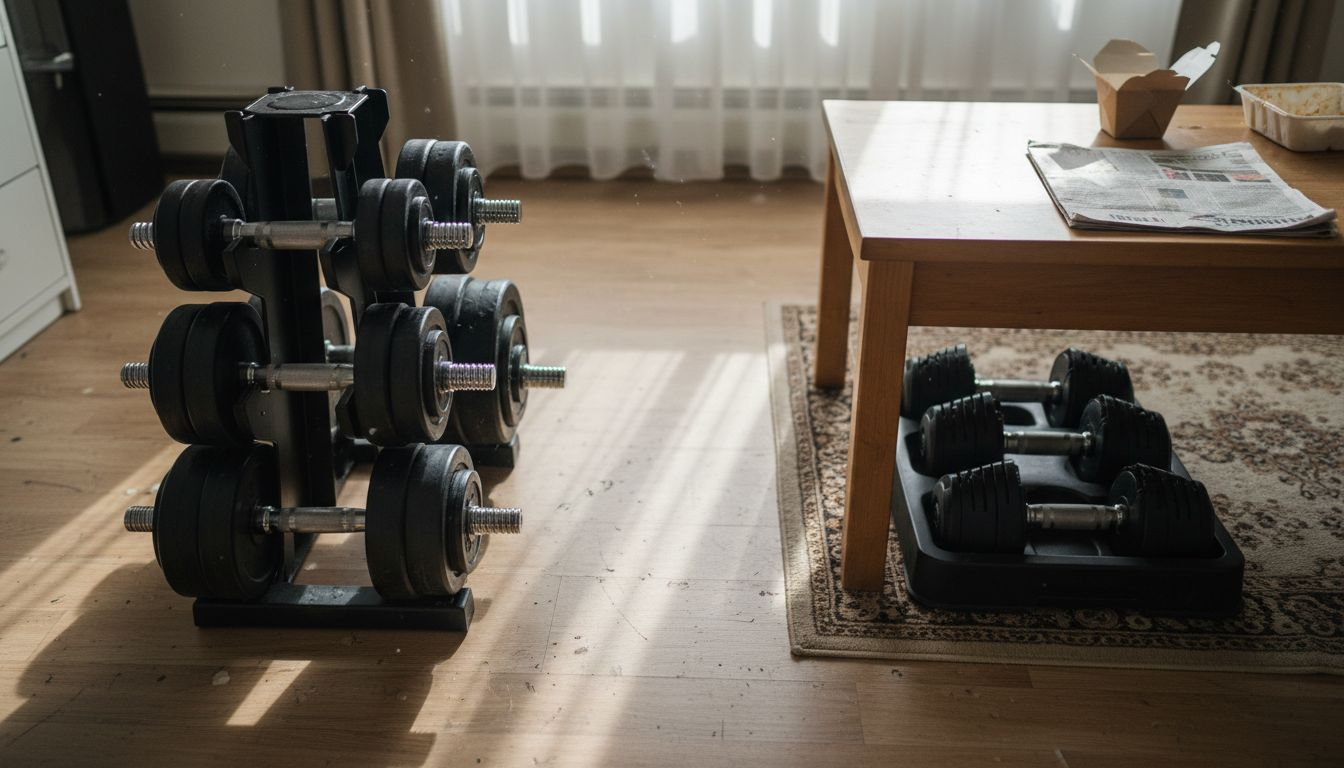
Most quality sets adjust from 5 to 50 lbs in 2.5 or 5 lb increments. This range covers beginner through intermediate training needs. Advanced lifters might need heavier options, but these handle 90% of dumbbell exercises effectively.
The mechanism matters significantly. Dial systems let you twist a selector to change weight instantly. Pin systems require inserting a pin through weight plates. Dial systems adjust faster but cost more. Pin systems prove more durable under heavy use.
Typical pricing ranges from $300 to $500 for reputable brands. That matches buying just three or four pairs of fixed dumbbells, yet you get the full range. The return on investment becomes obvious fast.
Pro Tip: Test the adjustment mechanism before buying if possible. Smooth, secure changes matter during supersets when you need quick weight transitions.
| Feature | Budget Sets | Premium Sets |
|---|---|---|
| Weight Range | 5 to 40 lbs | 5 to 50+ lbs |
| Adjustment Type | Pin selector | Dial or automatic |
| Price Range | $250 to $350 | $400 to $600 |
| Durability Rating | 2 to 3 years | 5+ years |
| Increment Options | 5 lb jumps | 2.5 lb jumps |
Dumbbell advantages you’ll notice immediately:
- Perform unilateral exercises to fix strength imbalances
- Greater range of motion than barbells for chest and shoulder work
- Safer for solo training without spotters
- Easy to store in closets or under furniture
Learn about adjustable dumbbell benefits and compare models with this adjustable dumbbells comparison guide.
Benches and Racks: Foundation for Safe and Effective Training
Benches and racks form the structural backbone of home strength training. Without them, you’re limited to floor exercises and standing movements.
Adjustable benches feature backrest angles from flat to 90 degrees and seat inclines. This versatility supports flat bench presses, incline presses targeting upper chest, decline work for lower chest, and seated shoulder presses. Budget flat benches support up to 800 lbs and offer essential stable platforms. Check weight capacity carefully, accounting for your body weight plus the barbell load.
Power racks deliver comprehensive training stations. They typically hold 700+ lbs, include safety catches at multiple heights, and feature pull-up bars. Safety catches catch failed lifts, crucial when training alone. Many racks accept attachments like dip stations, lat pulldown systems, and landmine pivots, expanding exercise options without buying separate machines.
Budget racks start around $300 and provide solid basic functionality. Premium models costing $800 to $1,200 add commercial grade construction, wider bases for stability, and more attachment compatibility. For most home users, mid-range options around $500 balance quality and affordability perfectly.
Pro Tip: Prioritize racks with safety catches over cosmetic features. Paint color matters less than the equipment catching a 300 lb barbell you can’t lift.
| Feature | Budget Option | Premium Option |
|---|---|---|
| Load Capacity | 500 to 700 lbs | 800 to 1,000+ lbs |
| Frame Gauge | 2 inch steel | 3 inch steel |
| Safety Features | Basic catches | Multi-position catches |
| Attachment Compatibility | Limited | Extensive |
| Price Range | $300 to $500 | $800 to $1,200 |
| Warranty | 1 year | 5 to 10 years |
Critical bench and rack features:
- Stable base preventing tipping during heavy lifts
- Multiple J-hook positions for different exercise heights
- Comfortable padding that resists tearing and moisture
- Easy assembly with clear instructions and quality hardware
Check weightlifting bench and rack options and explore budget benches and racks for your home gym.
Resistance Bands and Accessories: Complementary Tools for Full-Body Training
Resistance bands punch above their weight class in training value. These simple tools enhance warm-ups, enable mobility work, and add variety to strength routines.
Bands excel at activation exercises before heavy lifts. Banded clamshells wake up glutes, face pulls activate rear delts, and band pull-aparts prep shoulders for pressing. These movements increase blood flow and neuromuscular readiness without causing fatigue.
They engage stabilizing muscles differently than free weights. Variable resistance throughout the movement pattern challenges muscles in ways barbells can’t replicate. Wrapping bands around dumbbells or barbells adds accommodating resistance, increasing difficulty at the top of movements where you’re strongest.
Portability makes bands perfect for travel or outdoor workouts. A set of five bands costs $30 to $50 and fits in a backpack. You can maintain training consistency anywhere.
Bands integrate seamlessly with free weight exercises. Attach them to racks for assisted pull-ups or add them to squats for extra resistance at lockout. This versatility extends your equipment’s training applications significantly.
Key band and accessory uses:
- Dynamic stretching and mobility routines
- Muscle activation before compound lifts
- Assistance for difficult bodyweight movements
- Added resistance for isolation exercises
- Rehabilitation and injury prevention work
Explore fitness accessories comparison for detailed options. Browse fitness accessories for home gyms and learn how these tools enhance strength training benefits with accessories.
Comparing Popular Home Gym Equipment: Price, Space, and Use Case
Understanding tradeoffs between equipment types helps you invest wisely. Different pieces serve different training philosophies and space constraints.
Cost varies dramatically across categories. Resistance bands start under $50 while quality power racks range from $300 to over $1,000. Adjustable dumbbells typically cost $300 to $500, positioning them as mid-range investments. Cardio equipment like the Rogue Echo Bike rated 4.8/5 for durability adds another dimension if you blend strength and conditioning.
Space requirements differ equally. Bands need negligible storage. Adjustable dumbbells occupy about the same footprint as two shoeboxes. Benches require 2 by 5 feet when stored upright. Power racks demand 4 by 6 feet of floor space permanently.
Durability ratings and warranties signal quality. Budget equipment might last 2 to 3 years with regular use. Premium gear includes 5 to 10 year warranties, reflecting confidence in construction. Steel frames outlive plastic components consistently.
User suitability depends on training goals and experience. Beginners benefit most from adjustable dumbbells and benches. Advanced lifters need racks enabling progressive overload with barbells. Combined setups serve users wanting strength and cardio conditioning equally.
| Equipment Type | Price Range | Space Needed | Best For | Durability |
|---|---|---|---|---|
| Resistance Bands | $30 to $80 | Minimal | Warm-ups, mobility, travel | 1 to 2 years |
| Adjustable Dumbbells | $300 to $500 | 2 sq ft | Versatile strength training | 3 to 5 years |
| Adjustable Bench | $150 to $400 | 10 sq ft | Multi-angle pressing movements | 5 to 10 years |
| Power Rack | $400 to $1,200 | 24 sq ft | Heavy compound lifts | 10+ years |
| Cardio Equipment | $500 to $1,500 | 12 sq ft | Conditioning, endurance | 5 to 8 years |
Equipment comparison insights:
- Adjustable dumbbells deliver the best versatility per square foot
- Racks require the largest footprint but enable the heaviest loads
- Bands offer the lowest entry cost with surprising training applications
- Quality benches last longest relative to their price point
Review differences between home gym vs commercial gym setups and check durable home gym equipment reviews for detailed comparisons.
Choosing Equipment for Your Space and Goals: Situational Recommendations
Your unique situation determines the ideal equipment combination. Budget, space, and training focus create different optimal setups.
Budget setup under $500: Start with adjustable dumbbells ($350), a budget power rack ($300), and a flat bench ($150). This totals around $800, but prioritize dumbbells and bench first if funds are tighter. Add the rack when budget allows. This combination covers pressing, pulling, squatting, and isolation work effectively.
Small space essentials: Prioritize adjustable dumbbells, a folding bench, and resistance bands. This setup requires under 15 square feet of permanent space. Store dumbbells in a closet and fold the bench against a wall when not training. Bands hang on hooks or fit in drawers.
Combined strength and cardio: Add cardio equipment like an Echo Bike to core strength gear. Position the bike near a window for ventilation during intervals. This setup serves users wanting complete fitness development, not just strength gains.
Progressive training requires modular, expandable equipment. Choose racks accepting attachments and dumbbells with expansion options. As you advance, add specialized bars, heavier weight plates, or cable systems without replacing foundational pieces.
Beginner kit (under $600):
- Adjustable dumbbells 5 to 40 lbs
- Flat bench with 500+ lb capacity
- Resistance band set
- Exercise mat for floor work
Advanced kit ($1,200 to $1,800):
- Adjustable dumbbells 5 to 50+ lbs
- Power rack with safety catches
- Adjustable bench with incline options
- Barbell and weight plates
- Pull-up bar or dip station attachment
Situational recommendations:
- Apartment dwellers: Focus on quiet equipment like dumbbells and bands
- Garage gyms: Invest in climate resistant steel frames and protective mats
- Shared spaces: Choose easily movable pieces and compact storage solutions
- Long term training: Prioritize quality over quantity for lasting value
Find home gym essentials for small spaces and review a comprehensive home gym equipment list to plan your setup.
Build Your Home Gym with Armageddon Sports Essentials
Ready to transform your training space? Armageddon Sports offers versatile home gym essentials including adjustable dumbbells, benches, and racks tailored for strength enthusiasts. You’ll find quality accessories like resistance bands and gloves to complement your core equipment.
Competitive pricing meets reliable construction across the product range. Browse curated collections designed specifically for home workout enthusiasts building effective training environments. Whether you’re starting fresh or upgrading existing gear, you’ll discover equipment matching your identified needs.
Pro Tip: Explore bundled deals combining complementary items for cost efficiency and faster gym setup.
Shop the fitness accessories collection for bands, grips, and training tools. Check out quality lifting equipment including belts and straps. Protect your hands with durable fitness gloves during heavy sessions.
Frequently Asked Questions
What are the must-have items for a basic home gym?
Must-haves include adjustable dumbbells, a sturdy adjustable bench, and a power or squat rack for safety. These three pieces enable pressing, pulling, and squatting movements covering all major muscle groups. Resistance bands add versatility for warm-ups and accessory exercises without requiring additional space. Start with these foundational items, then expand based on training progress and specific goals. This core setup costs $600 to $1,000 depending on quality levels chosen. Review home workout equipment essentials for detailed guidance.
How do I save space when building a home gym in limited areas?
Use adjustable dumbbells to replace multiple fixed weights, saving approximately 70% storage space. Choose folding benches that stand upright against walls when not in use. Resistance bands hang on hooks or fit in drawers, requiring virtually no permanent floor space. Wall mounted racks for storing bands, bars, and accessories keep equipment organized vertically. Prioritize multi-function pieces over single-purpose machines to maximize training variety per square foot. Explore home gym space-saving tips for layout strategies.
Are smart home gym devices worth the investment?
Smart equipment offers tracking, coaching, and motivation features appealing to tech enthusiasts. These devices monitor reps, sets, heart rate, and calories burned automatically. Built-in screens provide guided workouts and virtual training sessions. However, they cost significantly more than traditional equipment, often $1,500 to $3,000. Best for users with flexible budgets wanting enhanced engagement and data driven progress tracking. Traditional equipment builds strength equally well without the technology premium. Learn about smart home gym equipment benefits to decide if features justify costs for your training style.
How much weight capacity should I look for in home gym equipment?
Benches should support at least 600 to 800 lbs combined load, accounting for your body weight plus the weights lifted. Power racks need 700+ lb capacity for safe heavy squats and bench presses. These ratings provide adequate safety margins for progressive training. Quality construction matters as much as advertised capacity. Steel frames with thick gauge tubing prove more reliable than thin metal or plastic components. Higher capacity equipment lasts longer and maintains stability during intense sessions.
Can I build an effective home gym for under $500?
Yes, with strategic choices. Invest $300 to $350 in adjustable dumbbells as your primary equipment. Add a budget flat bench for $100 to $150. Purchase a resistance band set for $30 to $50. This combination totals around $500 and enables comprehensive upper body, lower body, and core training. You’ll miss some exercises requiring racks, but this setup covers most strength building movements. Upgrade to a power rack later when budget allows, building your gym progressively rather than waiting until you can afford everything at once.