
Many people think functional strength training is only for elite athletes or specialized sports performance. In reality, functional strength benefits everyone from weekend warriors to office workers recovering from desk posture. It improves how you move through daily activities while reducing injury risk and enhancing athletic performance. This guide explains what functional strength actually means, how it differs from traditional training methods, and how you can build it effectively in 2026.
Table of Contents
- Understanding Functional Strength And Its Benefits
- How Functional Strength Training Differs From Traditional Methods
- Scientific Evidence Supporting Functional Strength Training
- Practical Application: Building Functional Strength Effectively
- Build Your Functional Strength With The Right Gear
- Frequently Asked Questions About Functional Strength
Key takeaways
| Point | Details |
|---|---|
| Movement efficiency | Functional strength prioritizes multi-joint movements that mirror real-world activities and reduce injury risk. |
| Neuromuscular benefits | Training improves coordination, balance, joint stability, and movement quality across all age groups. |
| Time efficiency | Functional workouts often deliver similar or better strength gains in less time than isolated exercises. |
| Practical application | Focus on core patterns like squatting, hinging, pushing, pulling, and rotating for comprehensive strength. |
| Injury prevention | Studies show 20-40% lower injury rates compared to traditional strength training methods. |
Understanding functional strength and its benefits
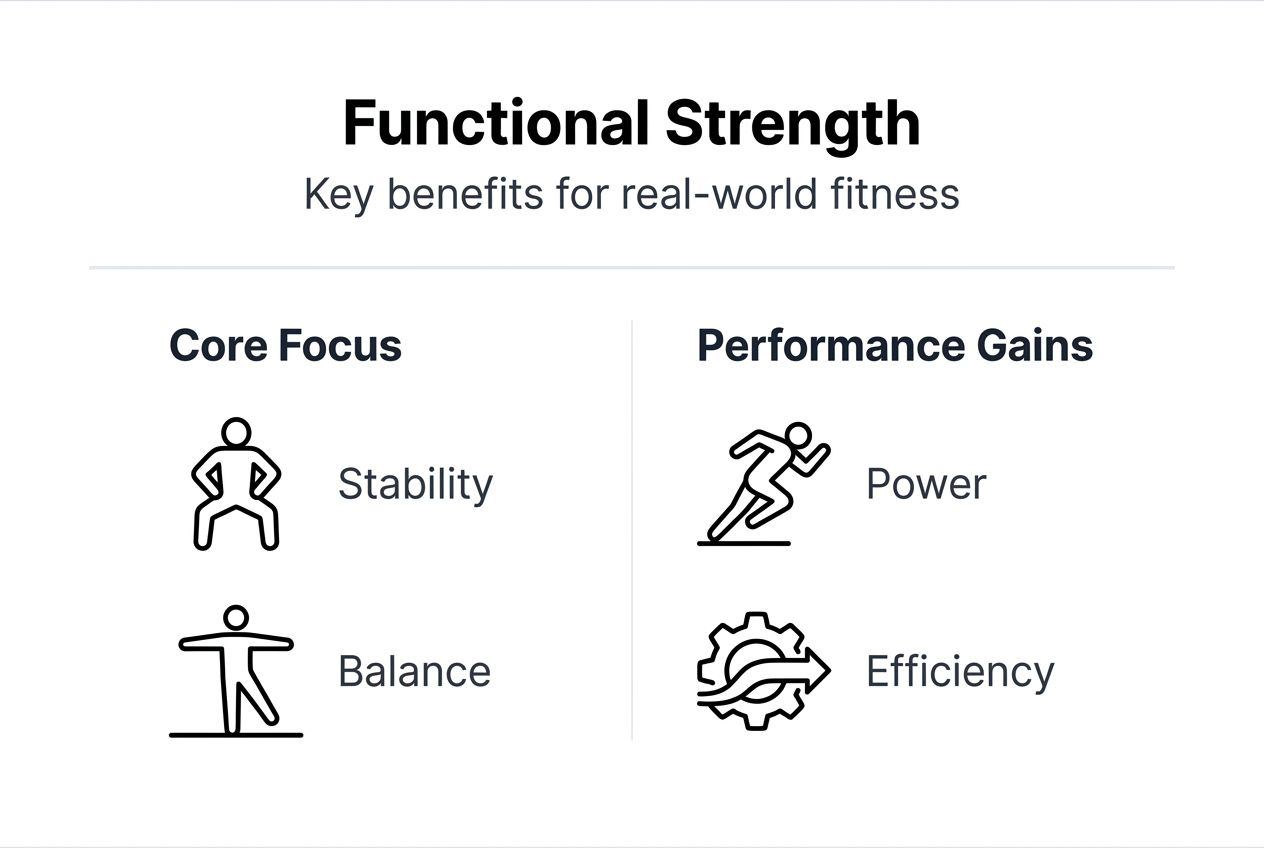
Functional strength focuses on coordinated multi-joint movements that simulate real-life tasks rather than isolating individual muscles. When you pick up groceries, climb stairs, or play with your kids, you engage multiple muscle groups simultaneously in complex movement patterns. Functional strength training enhances real-world movement efficiency and reduces injury risk by focusing on compound, multi-joint movement patterns.
This approach contrasts sharply with traditional strength training, which often isolates specific muscles using machines or single-joint exercises. While isolated work builds muscle size, functional training develops the neuromuscular coordination needed for actual physical tasks. You gain practical strength that translates directly to activities outside the gym.
The benefits extend well beyond athletic performance. Functional training helps maintain independence as clients age by strengthening the posterior chain, grip, and core. These improvements preserve quality of life and reduce fall risk in older adults. For younger individuals, functional strength creates a resilient foundation that supports both daily movements and sports-specific skills.
Key benefits include:
- Improved balance and coordination during dynamic movements
- Enhanced joint stability that protects against injury
- Better posture and movement efficiency in daily activities
- Increased neuromuscular control across multiple planes of motion
- Greater physical resilience for both planned and unexpected movements
“Functional training transforms how your body moves by building strength in patterns you actually use, not just muscles you can see.”
This philosophy aligns perfectly with strength training home fitness goals, where practical results matter more than aesthetic achievements alone.
How functional strength training differs from traditional methods
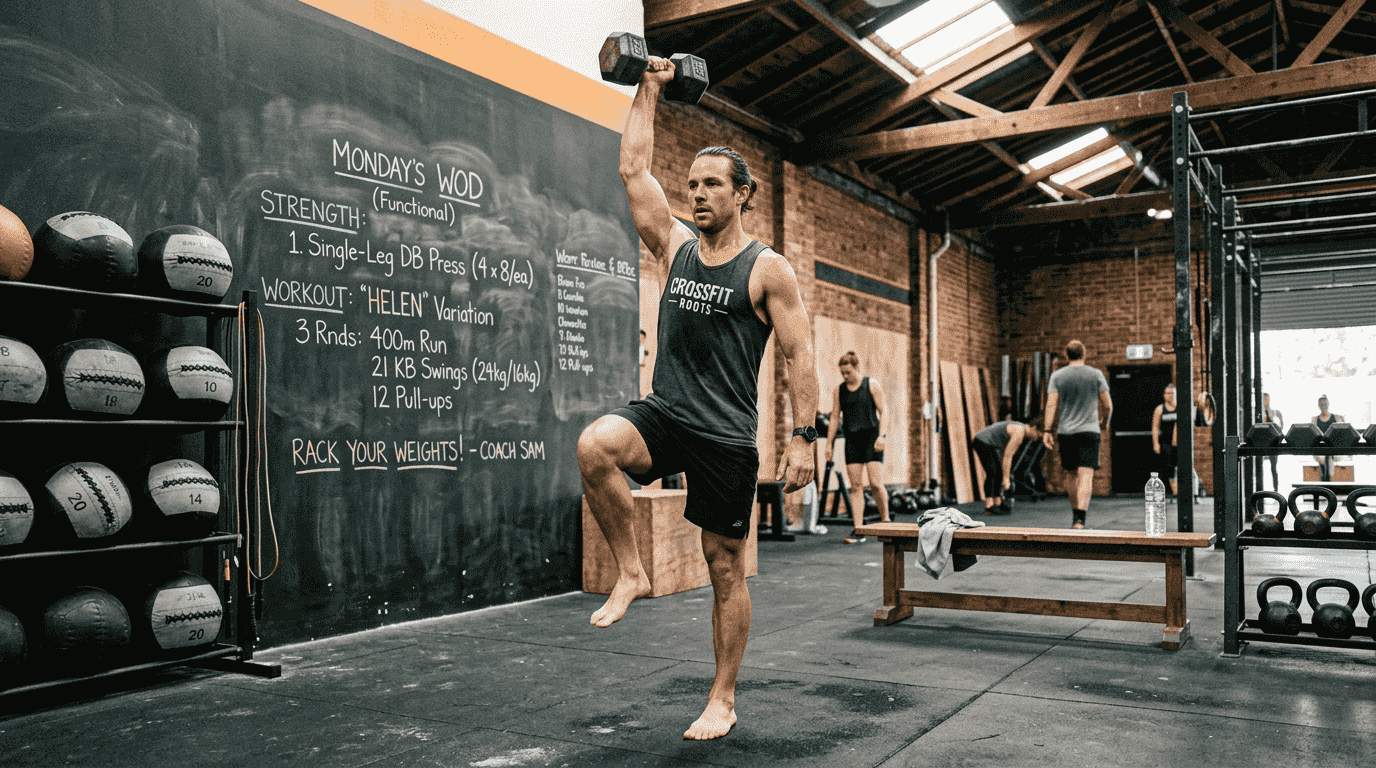
The distinction between functional and traditional training comes down to movement philosophy and application. Functional training contrasts with traditional training by utilizing multi-planar movements, free weights, and integrated muscle chains, challenging stability. Instead of sitting on a leg extension machine, you might perform lunges that require balance, core stability, and coordination.
Traditional strength training typically emphasizes progressive overload on isolated muscle groups using controlled environments like machines. You sit, stabilize yourself against a pad, and move weight through a fixed path. This builds muscle effectively but doesn’t teach your body how to coordinate multiple joints under dynamic conditions.
Functional training takes the opposite approach. You stand, balance, and control weights through space while your stabilizer muscles work constantly. Exercises like deadlifts, overhead presses, and rotational movements force your nervous system to coordinate complex motor patterns. Functional strength training reduces the risk of overuse injuries and helps protect joints under load.
| Aspect | Functional Training | Traditional Training |
|---|---|---|
| Movement patterns | Multi-planar, compound movements | Single-plane, isolated exercises |
| Stability demand | High (requires active stabilization) | Low (machine-supported) |
| Equipment | Free weights, bands, bodyweight | Machines, fixed equipment |
| Injury prevention | Builds joint stability and coordination | May create imbalances if done exclusively |
| Real-world transfer | Direct application to daily tasks | Limited movement pattern transfer |
Key differences in practice:
- Functional training engages core muscles constantly for stabilization
- Traditional methods allow higher loads through mechanical support
- Functional exercises challenge balance and proprioception simultaneously
- Traditional training isolates specific muscles for hypertrophy focus
Pro Tip: Prioritize movement quality and stability over just lifting heavier isolated weights to prevent injury and improve function. Master bodyweight patterns before adding significant external load.
This distinction matters especially for joint health. Poor posture corrector shoulder benefits often result from muscular imbalances created by isolated training without functional stability work.
Scientific evidence supporting functional strength training
Research consistently validates functional training’s effectiveness across multiple performance markers. An 8-week functional training program significantly improved functional movement patterns, dynamic stability, core control, and overall fitness indicators in university students. Participants showed measurable gains in movement quality that directly translated to better athletic performance and reduced injury risk.
Youth athletes experience particularly impressive results. Functional training enhances lower-limb explosive power in adolescent volleyball players compared to traditional resistance training. The study demonstrated superior improvements in jump height, sprint speed, and agility when athletes trained with functional patterns versus isolated strength exercises.
Time efficiency represents another significant advantage. Functional training can be more time-efficient than traditional workouts while achieving similar or better strength gains. By working multiple muscle groups simultaneously, you accomplish more adaptation in less training time.
| Research Finding | Improvement | Study Duration |
|---|---|---|
| Dynamic stability and core control | Significant gains in movement quality | 8 weeks |
| Lower-limb explosive power | Superior to traditional resistance training | 12 weeks |
| Overall fitness markers | Strength, speed, flexibility, endurance all improved | 8 weeks |
| Injury incidence | 20-40% reduction compared to traditional methods | Various studies |
| Training efficiency | Similar gains in 30% less time | 10 weeks |
Additional research highlights:
- Functional training improves proprioception and body awareness more than machine-based exercises
- Multi-planar movements create better neural adaptations for sport-specific skills
- Compound exercises elevate metabolic response, supporting body composition goals
- Functional patterns reduce compensation patterns that lead to chronic pain
These benefits support the equipment choices athletes make when maximizing strength gains with gym accessories designed for free-weight and functional training applications.
Practical application: building functional strength effectively
Building functional strength starts with mastering fundamental movement patterns. Training core patterns like squatting, hinging, pulling, pushing, and rotating builds a resilient and coordinated body. These patterns form the foundation of virtually every physical activity you perform.
Begin with bodyweight variations to establish proper mechanics:
- Squat pattern: Bodyweight squats, goblet squats, split squats
- Hinge pattern: Hip hinges, deadlift variations, single-leg deadlifts
- Push pattern: Push-ups, overhead presses, landmine presses
- Pull pattern: Rows, pull-ups, face pulls
- Rotation pattern: Wood chops, anti-rotation holds, rotational throws
- Carry pattern: Farmer’s walks, suitcase carries, overhead carries
Once you establish solid movement quality, progressively add resistance and complexity. Start with resistance bands, then progress to dumbbells, kettlebells, and barbells as your stability and coordination improve. Functional exposure in pressing movements challenges shoulder stability due to muscular coordination demands in extreme ranges.
Pro Tip: Emphasize training pressing movements through full ranges for shoulder stability and balanced strength. Partial ranges might allow heavier loads but sacrifice functional joint control.
Incorporate mobility and stability drills alongside strength work:
- Dynamic stretching before workouts to prepare joints for loaded movement
- Stability exercises like single-leg balance and anti-rotation planks
- Movement quality assessments to identify and correct compensation patterns
- Recovery practices including foam rolling and targeted mobility work
Regularly assess your movement quality to prevent injury. If you notice yourself compensating during exercises, reduce load and refocus on proper mechanics. Quality always trumps quantity in functional training.
Adapt training to your current fitness level. Beginners might use only bodyweight or light bands, while advanced athletes can handle complex loaded patterns. A proper resistance band abdominal workout builds core stability that transfers to all functional movements.
Don’t neglect foundational support structures. Strong pelvic floor muscles fitness recovery capabilities support heavy lifting and explosive movements while preventing injury during training.
Build your functional strength with the right gear
Equipping yourself properly makes functional training safer and more effective. Quality lifting gear supports your body during compound movements while allowing the natural movement patterns that functional training requires.

Weightlifting belts provide essential core support during heavy squats, deadlifts, and overhead presses. They create intra-abdominal pressure that stabilizes your spine while you move through complex patterns. Meanwhile, fitness gloves improve grip security during pulls, carries, and pressing movements, allowing you to focus on movement quality rather than worrying about your hands slipping.
Explore the full range of training accessories designed specifically for functional strength development. From resistance bands to stability tools, the right equipment helps you progress safely while maximizing results from every workout.
Frequently asked questions about functional strength
Who benefits from functional strength training?
Everyone benefits from functional strength training, not just athletes. Office workers improve posture and reduce back pain, older adults maintain independence and prevent falls, and parents gain the strength needed for active parenting. The movement patterns you train directly transfer to daily activities regardless of your fitness background.
How should beginners start functional strength training safely?
Start with bodyweight exercises focusing on proper movement patterns before adding external resistance. Master basic squats, hinges, pushes, and pulls with perfect form. Consider working with a qualified trainer initially to establish good habits. Progress gradually by adding light resistance bands or dumbbells only after demonstrating consistent movement quality.
Does functional strength training actually prevent injuries in daily life?
Yes, research shows functional training reduces injury risk by 20-40% compared to traditional methods. By training your body to coordinate multiple joints and stabilize through complex movements, you prepare for the unpredictable demands of daily life. Improved balance, coordination, and joint stability directly translate to fewer falls, strains, and overuse injuries.
What makes functional strength different from aesthetic training?
Functional training prioritizes movement quality and real-world performance over muscle appearance. Aesthetic training typically isolates muscles using machines to maximize hypertrophy in specific areas. Functional training uses compound movements that build coordinated strength across multiple muscle groups simultaneously. Both approaches build muscle, but functional training emphasizes how that muscle performs during actual activities.
Can I combine functional training with traditional strength work?
Absolutely. Many effective programs blend both approaches for comprehensive fitness. Use functional movements as your foundation, then add isolated exercises to address specific weaknesses or aesthetic goals. For example, build your program around squats, deadlifts, and presses, then supplement with targeted isolation work. This balanced approach from strength training home fitness programming delivers both performance and physique benefits.
Recommended
- Strength Training: Transforming Fitness at Home – Armageddon Sports
- Maximize strength gains with the right gym accessories – Armageddon Sports
- What Is Resistance Training: Building Strength Safely – Armageddon Sports
- What is progressive overload? A 2026 guide for strength gains – Armageddon Sports
- GolfForever Swing Trainer Plus Review: Strength, Mobility & Pro Workou – Aiming Fluid Golf
- Modern Basketball Training Methods: Elevate Player Growth – Hoop Mentality