
Many people dismiss plyometric exercise as nothing more than random jumping around, assuming it lacks the structure and measurable benefits of traditional strength training. This misconception couldn’t be further from the truth. Plyometric training is a scientifically backed method that dramatically enhances explosive power, agility, and athletic performance through precise biomechanical principles. This guide will explain the science behind plyometrics, reveal compelling research on its effectiveness, and show you exactly how to implement these powerful exercises safely into your training routine for maximum performance gains.
Table of Contents
- Understanding Plyometric Exercise: Definitions And Core Principles
- Scientific Evidence On Plyometric Training Effectiveness
- How Plyometrics Improve Athletic Skills: Agility, Power, And Efficiency
- Implementing Plyometric Exercises Safely And Effectively
- Enhance Your Plyometric Workout With Quality Gear From Armageddon Sports
- Frequently Asked Questions
Key takeaways
| Point | Details |
|---|---|
| Explosive power boost | Plyometric training significantly increases vertical jump performance and power output through targeted neuromuscular adaptations. |
| Stretch shortening cycle | The SSC mechanism stores and releases elastic energy in tendons, making movements more explosive and efficient than traditional training alone. |
| Scientific validation | Research demonstrates substantial performance improvements with proper plyometric programming, outperforming conventional strength methods for power development. |
| Rapid muscle actions | Plyometrics involve quick transitions from eccentric to concentric contractions, training muscles to generate force faster. |
| Technique matters | Proper form and progressive overload maximize benefits while reducing injury risk in plyometric exercise. |
Understanding plyometric exercise: definitions and core principles
Plyometric exercise represents a specialized training method characterized by rapid, explosive movements that leverage the stretch shortening cycle to generate maximum power output. Unlike traditional strength training that focuses on slow, controlled movements, plyometrics demand quick transitions between muscle lengthening and shortening phases.
The foundation of plyometric training lies in the stretch shortening cycle, a biomechanical phenomenon where muscles and tendons store elastic energy during the eccentric phase and explosively release it during the concentric phase. The SSC enhances force and power output, making movements more explosive and efficient. This mechanism allows athletes to generate significantly more force than they could through concentric contractions alone.
During the eccentric phase, your muscles lengthen under tension while tendons stretch like rubber bands, storing mechanical energy. The amortization phase, the critical transition period between eccentric and concentric actions, must be extremely brief for optimal power transfer. A longer pause allows stored energy to dissipate as heat, reducing the explosive benefit. The concentric phase then releases this stored energy combined with active muscle contraction, producing powerful movement.
Typical plyometric exercises include:
- Box jumps and depth jumps
- Bounding and hopping variations
- Medicine ball throws
- Clap pushups and plyometric pullups
- Sprint starts and acceleration drills
These movements share common characteristics: they involve rapid ground contact times, maximal effort, and explosive intent. The key distinguishing factor separating plyometrics from regular jumping or throwing is the deliberate emphasis on minimizing ground contact time while maximizing force production. This creates the specific neuromuscular adaptations that improve athletic performance beyond what traditional functional strength training alone can achieve.
The rapid transition from eccentric to concentric contraction is the defining characteristic of effective plyometric training, separating it from standard resistance exercises.
Understanding these principles helps you recognize true plyometric movements and apply them correctly for maximum benefit.
Scientific evidence on plyometric training effectiveness
Recent research provides compelling evidence for plyometric training’s effectiveness in enhancing athletic performance. A comprehensive meta-analysis examining multiple studies found that plyometric training significantly improved vertical jump performance with a standardized mean difference of 3.20 and statistical significance below 0.001 after removing outlier data.
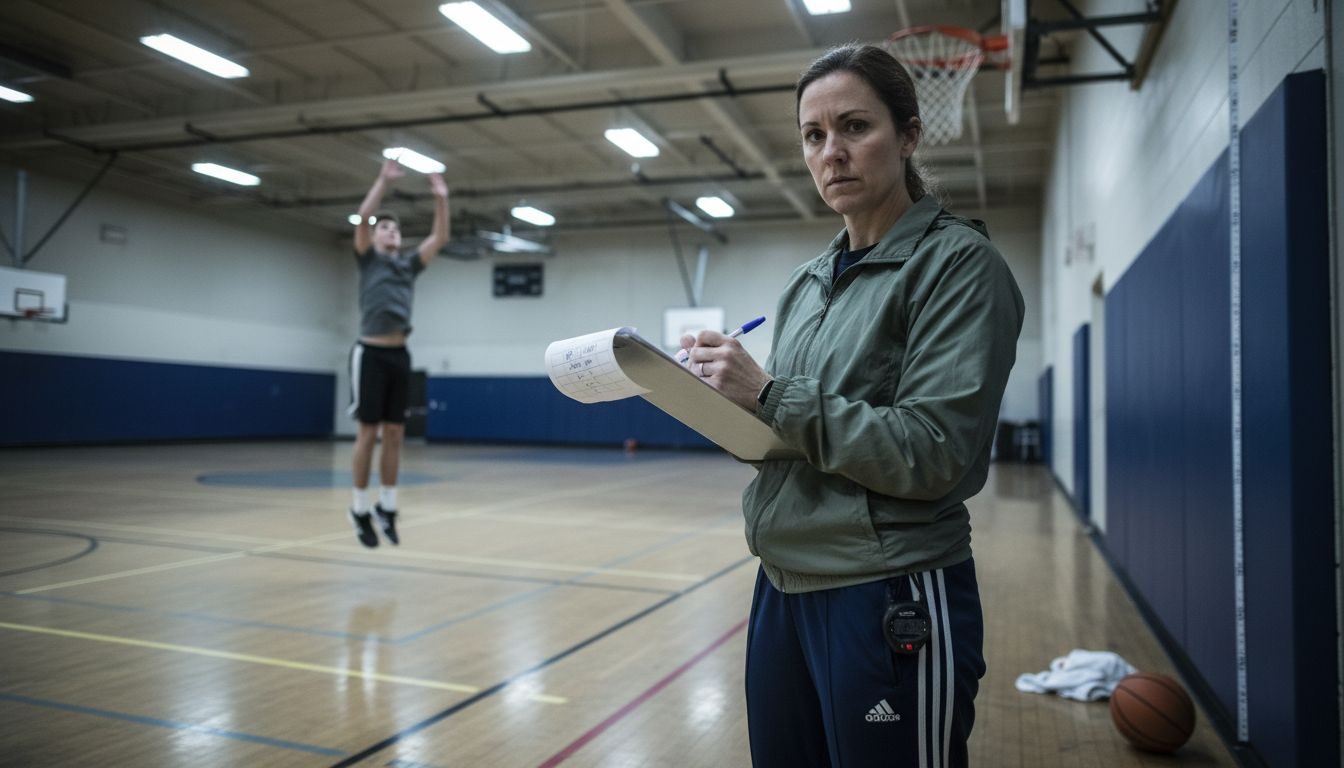
To understand these numbers, the standardized mean difference measures effect size across different studies using various measurement scales. An SMD of 3.20 represents an extraordinarily large effect, meaning plyometric training produced dramatic improvements compared to control groups. The p value below 0.001 indicates less than 0.1% probability these results occurred by chance, establishing strong statistical confidence.
Comparing plyometric training to traditional strength methods reveals distinct advantages for explosive power development. While conventional resistance training excels at building maximum strength and muscle size, plyometrics specifically target rate of force development and power output. Athletes combining both methods typically achieve superior results compared to either approach alone.
| Study Parameter | Before Training | After 8 Weeks | Improvement |
|---|---|---|---|
| Vertical jump height | 45 cm | 58 cm | 28.9% |
| Countermovement jump | 42 cm | 54 cm | 28.6% |
| Squat jump | 38 cm | 48 cm | 26.3% |
| Reactive strength index | 1.8 | 2.6 | 44.4% |
These improvements translate directly to enhanced athletic performance across multiple sports. Basketball players jump higher for rebounds, sprinters explode faster from starting blocks, and soccer players change direction more quickly. The neuromuscular system learns to recruit muscle fibers more rapidly and coordinate movement patterns more efficiently.
Pro Tip: Consistency matters more than intensity when starting plyometric training. Begin with two sessions weekly for 6 to 8 weeks before increasing volume, allowing your nervous system to adapt properly.
The research also reveals that plyometric benefits extend beyond just jumping ability. Studies document improvements in sprint speed, agility performance, and even endurance running economy. These diverse benefits stem from enhanced neuromuscular coordination and improved elastic energy utilization during the stretch shortening cycle.
Another crucial finding shows that plyometric training produces results relatively quickly compared to traditional strength training at home. Significant improvements often appear within 4 to 6 weeks, though continued progression requires ongoing training stimulus. This rapid adaptation makes plyometrics particularly valuable during pre-season preparation when athletes need quick performance gains.
How plyometrics improve athletic skills: agility, power, and efficiency
Plyometric training creates specific neuromuscular adaptations that directly enhance athletic performance across multiple domains. Your nervous system learns to activate muscle fibers more synchronously, recruiting a higher percentage of available motor units in shorter timeframes. This improved neural drive translates to greater force production and faster movement execution.
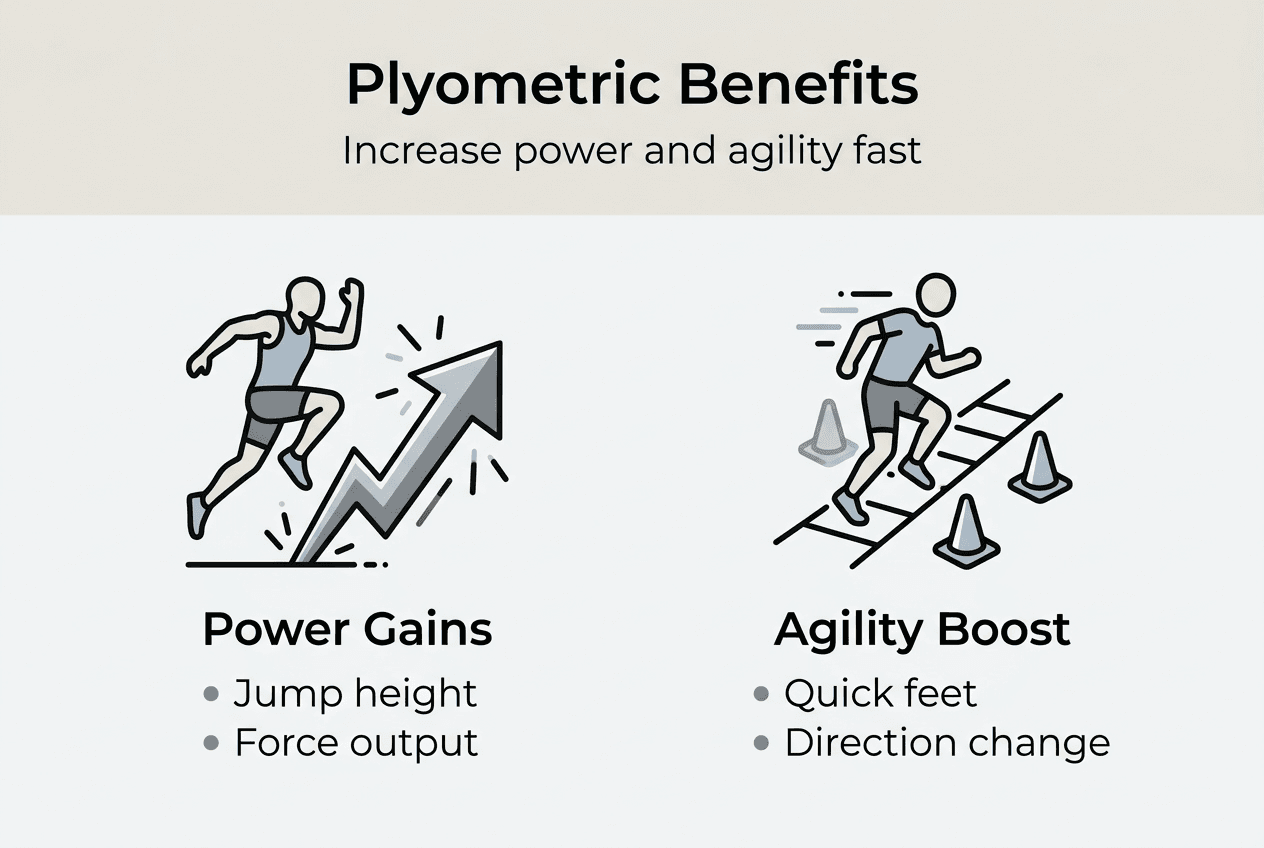
The stretch shortening cycle optimizes energy utilization by capturing and redirecting forces that would otherwise be absorbed and wasted. Rapid transitions from eccentric to concentric contractions are crucial for the SSC, allowing athletes to move more efficiently. This efficiency becomes particularly valuable during repetitive movements like running, where small improvements in energy return compound over thousands of ground contacts.
| Training Type | Power Output | Agility | Endurance Impact |
|---|---|---|---|
| Plyometric training | Very high | Very high | Moderate |
| Traditional strength | High | Low | Low |
| Combined approach | Highest | High | Moderate |
Agility improvements from plyometric training stem from enhanced reactive strength, the ability to quickly switch from eccentric to concentric muscle actions. Sports requiring rapid direction changes, such as basketball, tennis, and soccer, benefit tremendously from this adaptation. Athletes develop better body control and can decelerate and reaccelerate more effectively.
Sports and movements benefiting from plyometric training include:
- Court sports requiring quick lateral movements and jumps
- Track and field events emphasizing explosive starts and jumps
- Team sports with frequent acceleration and deceleration patterns
- Martial arts demanding rapid striking and evasive movements
- Obstacle course racing and parkour activities
The neuromuscular system also develops improved proprioception and kinesthetic awareness through plyometric training. You become more attuned to body position and movement quality, reducing injury risk while enhancing performance. This heightened awareness allows for better movement adjustments during dynamic athletic situations.
Pro Tip: Combine agility drills using resistance bands with plyometric exercises to maximize sport-specific performance gains and challenge your neuromuscular system in multiple planes of movement.
Plyometric adaptations differ significantly from those produced by traditional powerlifting programs. While maximal strength training increases force production capacity, plyometrics teach your body to express that force rapidly. The combination creates athletes who are both strong and explosive, a crucial distinction for competitive performance.
Tendons also adapt to plyometric training by becoming stiffer and more responsive, improving elastic energy storage and return. This adaptation takes longer than neural changes, typically requiring 8 to 12 weeks of consistent training. Patience during this adaptation period prevents overuse injuries while building the foundation for advanced plyometric progressions.
Implementing plyometric exercises safely and effectively
Starting plyometric training requires careful progression to build the necessary strength, coordination, and tissue resilience for advanced exercises. Follow these steps for safe implementation:
- Assess your baseline strength by ensuring you can squat 1.5 times your bodyweight and perform single leg exercises with control.
- Master landing mechanics with both feet, focusing on soft, quiet landings that distribute force evenly.
- Begin with low intensity bilateral jumps like squat jumps and progress to higher boxes only after perfecting technique.
- Introduce unilateral exercises gradually, starting with split jumps before advancing to single leg hops.
- Increase volume slowly, adding no more than 10% additional ground contacts per week.
- Monitor recovery carefully, ensuring at least 48 hours between intense plyometric sessions.
Proper landing technique forms the foundation of safe plyometric training. Land on the balls of your feet with knees tracking over toes, hips back, and core engaged. Your landing should be nearly silent, indicating proper force absorption through the entire kinetic chain rather than jarring impact on joints.
Equipment and surface considerations include:
- Cushioned athletic shoes with responsive midsoles for shock absorption
- Firm but slightly yielding surfaces like rubber gym flooring or grass
- Stable boxes or platforms with non-slip surfaces for jump training
- Adequate ceiling height and open space for unrestricted movement
- Medicine balls or plyometric balls for upper body explosive exercises
Pro Tip: Perfect your landing mechanics by practicing proper form whether training at home or in the gym, focusing on absorbing force through your entire lower body rather than just your knees.
Beginners should limit plyometric sessions to 40 to 60 total ground contacts per workout, performed twice weekly. This conservative approach allows tissue adaptation while preventing overtraining. Intermediate athletes can progress to 80 to 100 contacts, while advanced practitioners may perform 120 to 140 contacts across two to three weekly sessions.
Rest intervals between sets should be generous, typically 2 to 3 minutes for maximal effort exercises. Plyometric training targets the nervous system and power output, not metabolic conditioning. Insufficient rest compromises technique and reduces the training stimulus for explosive power development.
The mechanisms of SSC performance enhancement are still debated, underscoring importance of proper technique and gradual progression. Rushing advancement or using poor form negates benefits and increases injury risk. Patience and attention to movement quality produce better long-term results than aggressive progression.
Common mistakes to avoid include excessive training volume, inadequate rest between sessions, progressing too quickly to advanced variations, neglecting strength training foundations, and performing plyometrics while fatigued. Each of these errors increases injury risk while reducing training effectiveness.
Enhance your plyometric workout with quality gear from Armageddon Sports
Maximizing your plyometric training results requires more than just proper technique and programming. The right equipment provides crucial support, stability, and safety during explosive movements. Quality gear helps you maintain proper form, protects vulnerable joints, and allows you to train with confidence and intensity.

Armageddon Sports offers specialized equipment designed for serious athletes pursuing peak performance. Our lifting gear collection includes items that support explosive movements and heavy training, while our fitness accessories provide the tools you need for comprehensive athletic development. For athletes combining plyometrics with strength work, our weightlifting belts offer essential core support during heavy lifts that build the strength foundation necessary for advanced plyometric progressions. Explore our complete range to find equipment that matches your training goals and takes your performance to the next level.
Frequently asked questions
What exactly is plyometric exercise?
Plyometric exercise involves rapid, explosive movements that use the stretch shortening cycle to generate maximum power. These exercises require quick transitions from muscle lengthening to shortening, storing and releasing elastic energy for enhanced force production. Common examples include box jumps, depth jumps, and medicine ball throws that emphasize minimal ground contact time with maximal effort.
Who benefits most from plyometric training?
Athletes in sports requiring explosive power, quick direction changes, and reactive strength gain the most from plyometric training. Basketball players, sprinters, soccer players, volleyball athletes, and martial artists see substantial performance improvements. However, recreational fitness enthusiasts also benefit from enhanced power, agility, and functional movement capacity. Anyone with adequate baseline strength and no contraindicated injuries can safely incorporate plyometrics.
How often should I perform plyometric exercises?
Beginners should start with two plyometric sessions per week, allowing 48 to 72 hours recovery between workouts. Each session should last 20 to 30 minutes including warm-up, focusing on quality over quantity. Intermediate and advanced athletes may progress to three sessions weekly with higher volumes, but adequate recovery remains essential. Never perform intense plyometrics on consecutive days, as the nervous system requires substantial recovery time.
What precautions should I take with plyometric training?
Ensure you have adequate baseline strength, typically the ability to squat 1.5 times bodyweight, before starting intense plyometrics. Always perform thorough dynamic warm-ups emphasizing movement preparation and muscle activation. Master landing mechanics with bilateral exercises before progressing to single leg variations. Start with low boxes and progress height gradually. Avoid plyometrics when fatigued, as technique deteriorates and injury risk increases substantially.
How does plyometric training differ from traditional strength training?
Traditional strength training focuses on developing maximal force production through slow, controlled movements with heavy resistance. Plyometric training emphasizes rate of force development and power output through rapid, explosive movements with lighter loads. Strength training builds the force capacity, while plyometrics teach your body to express that force quickly. Combining both methods produces superior athletic performance compared to either approach alone, creating athletes who are both strong and explosive.
Can plyometric exercises help with weight loss?
While plyometric training primarily targets power development and athletic performance, it does burn significant calories due to high intensity efforts. The explosive nature elevates heart rate quickly and creates substantial metabolic demand. However, plyometrics should not be your primary weight loss tool, as the limited volume and emphasis on recovery between sets reduces total caloric expenditure compared to sustained cardiovascular exercise. Use plyometrics for performance enhancement while relying on nutrition and other exercise modalities for weight management.
Recommended
- Speed Leg Bands Running Sprint Kinetic Agility Lateral Resistance Football Mobility – Armageddon Sports
- What Is Powerlifting and How It Transforms Strength – Armageddon Sports
- Muscle Stimulator Devices: Boosting Recovery Safely – Armageddon Sports
- Pelvic Floor Muscles: Boosting Workout Recovery – Armageddon Sports
- Revitalize Your Athletic Performance With Chiropractic Care