
Struggling with nagging shoulder tension and inconsistent workout results is a common challenge for fitness enthusiasts from the United States to Australia. Poor posture can quietly sabotage your strength training by triggering muscle imbalances and leaving you open to injury. If you are searching for practical tools to reinforce shoulder alignment and protect your gains, understanding the truth about awareness and rehabilitation tools like posture correctors will help you make smarter decisions for long-term performance and safety.
Table of Contents
- Posture Corrector Shoulder Basics And Misconceptions
- Popular Types And Their Unique Features
- How Posture Correctors Improve Workout Safety
- Real-World Use During Weightlifting And Fitness
- Common Mistakes And How To Avoid Them
Key Takeaways
| Point | Details |
|---|---|
| Posture Correctors Are Tools, Not Solutions | Posture correctors provide awareness and feedback for alignment but require consistent exercise and adjustments for lasting improvements. |
| Choosing the Right Device | Select a posture corrector based on individual needs, focusing on comfort and targeted support for optimal results. |
| Integration with Training is Key | Combine the use of posture correctors with strength training for effective corrections in muscle imbalances and movement patterns. |
| Avoid Common Usage Mistakes | Ensure proper fitting, limit overuse, and maintain realistic expectations to maximize the effectiveness of posture correctors. |
Posture corrector shoulder basics and misconceptions
Poor shoulder posture affects millions of fitness enthusiasts, creating painful muscle imbalances and performance limitations. Posture correctors work through proprioceptive feedback by helping your body recognize proper shoulder and spine alignment during training and daily activities.
Understanding how posture correctors function requires recognizing their primary purpose: not as permanent solutions, but as awareness and rehabilitation tools. These devices serve multiple critical functions:
- Provide immediate postural alignment feedback
- Retract shoulders to reduce muscle strain
- Create muscle memory for correct positioning
- Reduce neck and shoulder tension
- Support mild postural misalignments
Contrary to popular misconceptions, posture correctors do not permanently fix posture by themselves. Proprioceptive devices help reset muscle patterns temporarily, requiring consistent exercise and ergonomic adjustments for long-term improvements.
Most athletes misunderstand posture correction, believing tighter devices automatically produce better results. In reality, the most effective approach combines gentle corrective devices with targeted strength training and mobility exercises that address underlying muscular weaknesses.
Pro Tip: Select a posture corrector that allows gradual muscle retraining without overconstrictive pressure, focusing on comfort and progressive postural improvement.
Popular types and their unique features
Fitness enthusiasts have multiple posture corrector options designed to address specific shoulder and spinal alignment challenges. Postural support devices range from minimalist to comprehensive designs, each targeting different muscular imbalances and movement restrictions.
The primary categories of posture correctors include:
-
Clavicle Braces:
- Figure-eight or Y-shaped strap design
- Targets mild to moderate forward shoulder posture
- Lightweight and minimally intrusive
- Ideal for initial posture correction
-
Shoulder Back Braces:
- Wider back panel for enhanced support
- Addresses upper back rounding
- Provides moderate shoulder stability
- Suitable for more advanced postural issues
-
Full Spinal Support Braces:
- Extended coverage from upper to lower back
- Comprehensive spinal alignment
- Maximum rigidity and support
- Recommended for significant postural misalignments
Posture correction technologies have evolved to include innovative solutions beyond traditional braces. Modern devices now incorporate sensor technologies that provide real-time biofeedback, alerting users when they deviate from optimal posture alignment.
Choosing the right posture corrector depends on individual needs, severity of postural issues, and specific physical requirements. Athletes and fitness enthusiasts should consider factors like comfort, flexibility, and targeted muscle support when selecting their ideal device.
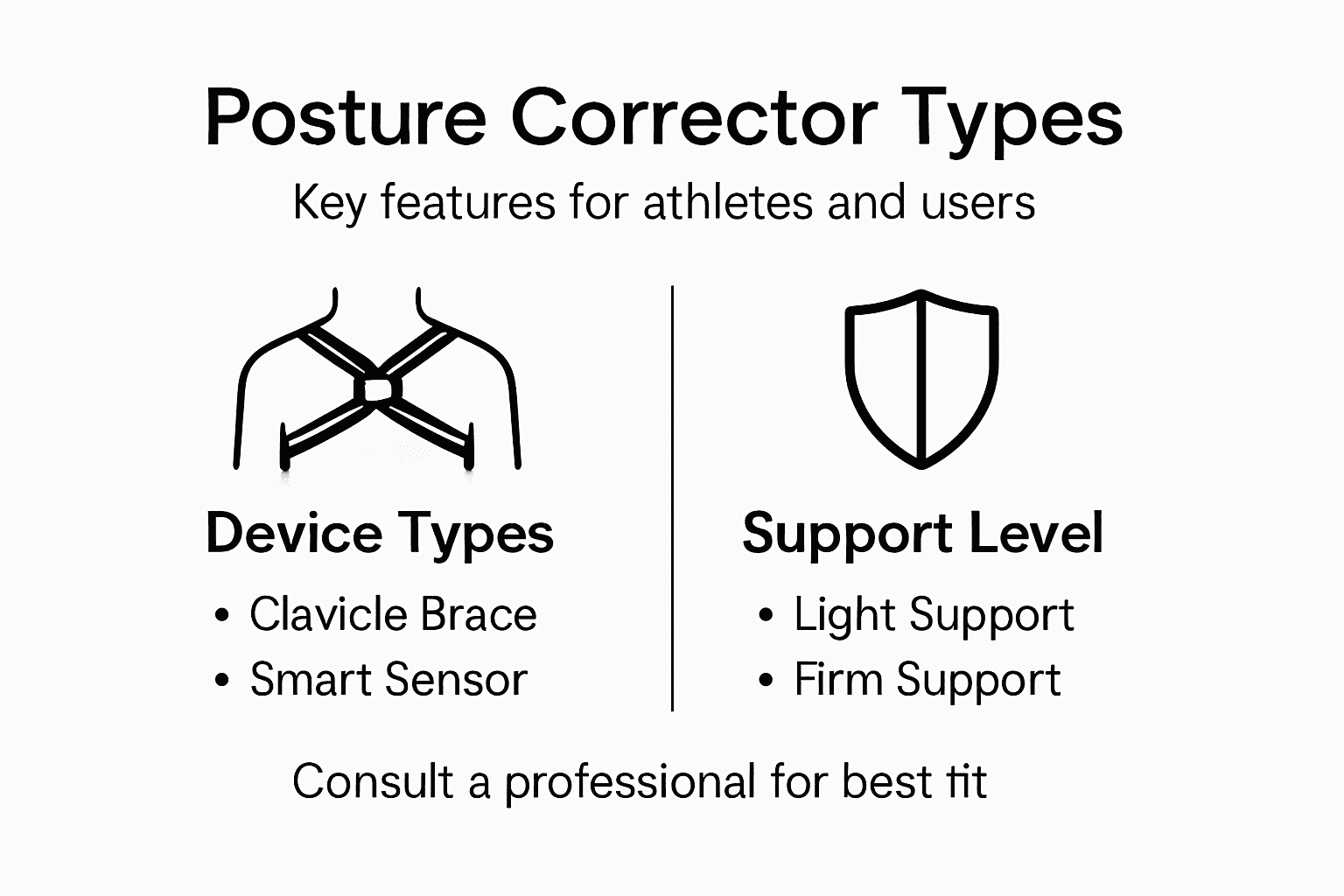
Here’s a comparison of common posture corrector types and their recommended use cases:
| Device Type | Best For | Support Level | Typical User |
|---|---|---|---|
| Clavicle Brace | Initial correction, mild issues | Minimal | Beginners |
| Shoulder Back Brace | Upper back rounding | Moderate | Intermediate users |
| Full Spinal Support | Significant misalignment | Maximum | Advanced/post-injury |
| Smart Sensor Device | Real-time feedback, tech-driven | Variable | Tech enthusiasts |
Pro Tip: Match your posture corrector type to your specific body mechanics and movement patterns, prioritizing devices that offer both support and gradual muscle retraining.
How posture correctors improve workout safety
Workout safety begins with understanding how body alignment directly impacts performance and injury prevention. Muscle imbalances significantly contribute to workout-related injuries, making posture correctors a critical tool for athletes and fitness enthusiasts seeking to optimize their training.
Posture correctors enhance workout safety through several key mechanisms:
-
Proprioceptive Awareness:
- Activate underused muscle groups
- Improve body position recognition
- Reduce unconscious compensatory movements
- Enhance overall movement precision
-
Injury Prevention Strategies:
- Realign spine during complex movements
- Distribute muscular load more evenly
- Minimize strain on vulnerable joints
- Support proper biomechanical positioning
-
Performance Optimization:
- Increase exercise efficiency
- Reduce energy wastage from incorrect form
- Enhance muscle engagement patterns
- Promote more controlled workout execution
Shoulder retraction and upper back muscle activation play crucial roles in maintaining correct exercise form. By gently guiding the body into optimal alignment, posture correctors help athletes develop muscle memory and reduce the risk of strain during intense training sessions.
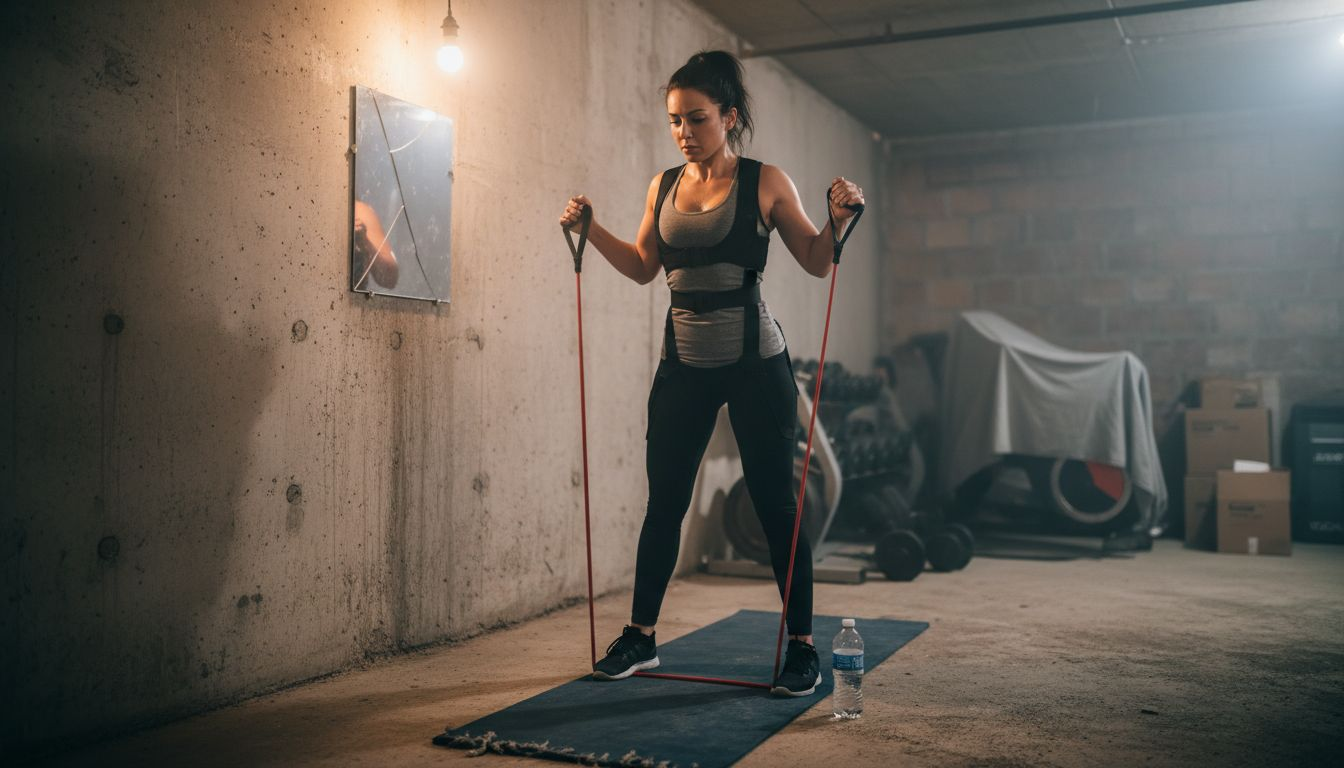
Effective posture correction requires a holistic approach that combines device support with targeted strength training and body awareness. Fitness enthusiasts should view posture correctors as training tools that complement, rather than replace, proper exercise technique and consistent muscular development.
Pro Tip: Integrate posture corrector use with progressive strength training, gradually reducing device dependency as your natural alignment improves.
Real-world use during weightlifting and fitness
Weightlifting performance demands precise body mechanics and structural alignment. Shoulder positioning critically impacts exercise effectiveness, making posture correctors an essential tool for athletes seeking optimal training outcomes.
In practical weightlifting scenarios, posture correctors serve multiple critical functions:
-
Biomechanical Optimization:
- Stabilize shoulder joint during complex lifts
- Reduce unnecessary muscular compensation
- Minimize risk of strain and overextension
- Enhance overall lifting technique
-
Technical Performance Improvements:
- Promote more efficient movement patterns
- Distribute muscular load more evenly
- Increase proprioceptive awareness
- Support consistent exercise execution
-
Injury Prevention Strategies:
- Counteract forward shoulder rounding
- Provide structural support during heavy lifts
- Reinforce proper spinal alignment
- Mitigate long-term postural degradation
Modern fitness technologies are transforming posture correction, introducing advanced biomechanical tracking systems that provide real-time feedback during workouts. These innovations help athletes understand and immediately correct their body positioning, creating a more intelligent approach to strength training.
Successful posture corrector implementation requires strategic integration with existing training protocols. Athletes should view these devices as supplementary tools that enhance, rather than replace, fundamental strength training techniques and personal body awareness.
Pro Tip: Start with short, controlled training sessions using your posture corrector, gradually increasing duration and intensity as your body adapts to the new alignment.
Common mistakes and how to avoid them
Most fitness enthusiasts inadvertently compromise their posture corrector effectiveness by making critical errors that can diminish their training results. Common mistakes often stem from misunderstanding device functionality, potentially leading to discomfort and reduced performance gains.
The most prevalent mistakes in posture corrector usage include:
-
Overuse and Dependency:
- Wearing device excessively throughout the day
- Creating muscle weakness through constant external support
- Neglecting independent muscle strength development
- Failing to progressively reduce device reliance
-
Improper Fitting Techniques:
- Selecting incorrect size or design
- Incorrect strap adjustment causing skin irritation
- Inconsistent positioning during different activities
- Ignoring individual body mechanics
-
Unrealistic Performance Expectations:
- Expecting immediate permanent posture correction
- Viewing device as a standalone solution
- Neglecting complementary strength training
- Assuming technology replaces physical conditioning
Professional guidance remains crucial for effective posture correction, emphasizing the importance of combining device usage with targeted physical therapy and targeted exercises. Successful implementation requires a holistic approach that addresses underlying muscular imbalances and movement patterns.
Effective posture corrector usage demands strategic, gradual integration into your fitness routine. Athletes should view these devices as precision tools that supplement, not replace, comprehensive strength training and body awareness techniques.
The table below summarizes key factors to ensure effective, safe posture corrector use:
| Factor | Why It Matters | Guidance |
|---|---|---|
| Fit and Design | Prevents discomfort/injury | Choose size for your body |
| Duration of Use | Avoids muscle weakening | Limit to training periods |
| Integration with Training | Supports long-term improvement | Combine with exercises |
| Professional Support | Enhances strategy | Seek expert advice |
Pro Tip: Consult a physical therapist or qualified fitness professional to develop a personalized posture correction strategy tailored to your specific biomechanical needs.
Improve Your Shoulder Posture and Strength with the Right Support
Poor shoulder posture creates painful muscle imbalances and limits your workout performance. The article highlights the importance of gentle proprioceptive feedback and gradual muscle retraining to enhance shoulder alignment safely. If you struggle with forward shoulder rounding or want to prevent injuries during weightlifting, selecting the correct posture support combined with strength training is essential.
Discover high-quality fitness accessories designed to support proper posture and optimize your training. Explore our wide selection of Health & Fitness Equipment that help you maintain correct alignment and reduce strain. For athletes focused on lifting, pairing posture correction with the right Weight Lifting Belts provides stability and safety during complex lifts.
Take control of your posture and strength today. Visit Armageddon Sports to find supportive gear tailored for your fitness goals. Start using effective posture correctors along with specialized workout equipment to enhance your alignment safely and power your way to better results.
Frequently Asked Questions
What are the primary functions of a posture corrector for shoulders?
Posture correctors provide immediate feedback on postural alignment, help retract shoulders to reduce muscle strain, create muscle memory for proper positioning, reduce neck and shoulder tension, and support mild postural misalignments.
How do posture correctors improve workout safety?
Posture correctors enhance workout safety by increasing proprioceptive awareness, helping to realign the spine during complex movements, distributing muscular load evenly, and minimizing strain on vulnerable joints, which ultimately supports proper biomechanical positioning.
Can I rely solely on a posture corrector to fix my posture?
No, posture correctors are not permanent solutions. They serve as awareness and rehabilitation tools that require consistent exercise and ergonomic adjustments for long-term improvements in posture.
What are the different types of posture correctors and their uses?
Posture correctors include clavicle braces for mild issues, shoulder back braces for upper back rounding, and full spinal support braces for significant misalignments. Each type targets different muscular imbalances and is suited for various levels of postural correction.
Recommended
- Posture Corrector Brace for Upper Back Rounder Shoulders Men and Women Anti Slouch – Armageddon Sports
- Magnetic Posture Corrector Men/Women Corset Back Brace Back Belt Lumbar Support – Armageddon Sports
- Women Posture Corrector Bra Push UP Support Back Pain Body Shaper Corset Shoulder Brace – Armageddon Sports
- Posture Correctors – Armageddon Sports