
Most fitness enthusiasts believe the best way to recover after an intense workout is to rest completely, but this approach may actually slow down your muscle repair process. Active recovery, a method involving low-intensity movement after exercise, has been shown to accelerate healing and reduce soreness more effectively than passive rest. By keeping blood flowing to fatigued muscles, you can clear metabolic waste faster and prepare your body for the next training session. This article explores what active recovery is, how it works, and why it should be a core part of your fitness routine to optimize performance and enhance muscle health.
Table of Contents
- Key takeaways
- What active recovery is and how it works
- Types and methods of active recovery
- How to safely incorporate active recovery into your routine
- Benefits of active recovery for performance and muscle health
- Enhance your recovery with Armageddon Sports gear
- FAQ
Key Takeaways
| Point | Details |
|---|---|
| Speeds muscle recovery | Low intensity movement after exercise accelerates healing and reduces soreness compared to complete rest. |
| Maintains circulation | Active recovery keeps blood flowing to fatigued muscles, speeding waste removal and nutrient delivery. |
| Prevents stiffness | Gentle movement improves lymphatic flow and reduces inflammation to prevent stiffness after intense workouts. |
| Customizable strategies | Choose low intensity activities that fit your goals and preferences to optimize recovery. |
What active recovery is and how it works
Active recovery refers to low-intensity exercise performed after a workout or on rest days to promote healing without adding stress to already fatigued muscles. Unlike passive rest, where you sit or lie down completely, active recovery keeps your body moving at a gentle pace. This approach leverages the body’s natural healing mechanisms by maintaining circulation to tired muscle groups.
When you exercise intensely, your muscles accumulate metabolic byproducts like lactic acid and experience micro-tears that need repair. Active recovery promotes blood circulation which accelerates the removal of metabolic waste and reduces fatigue. The increased blood flow delivers oxygen and nutrients directly to damaged tissue, speeding up the repair process significantly compared to lying still.
The physiological benefits extend beyond waste removal. Gentle movement stimulates the lymphatic system, which helps reduce inflammation and swelling in overworked muscles. This process also prevents blood from pooling in your extremities, which can happen during complete inactivity and lead to stiffness. By keeping your cardiovascular system engaged at a low level, you maintain metabolic activity that supports overall recovery.
Typical active recovery activities include:
- Light walking or slow jogging at conversational pace
- Easy cycling on flat terrain or stationary bike
- Swimming or water aerobics with minimal resistance
- Dynamic stretching routines and mobility work
- Gentle yoga flows focusing on flexibility
- Low-intensity rowing or elliptical sessions
These activities should feel easy and never push you toward exhaustion. The goal is to move your body through comfortable ranges of motion while maintaining a heart rate well below your training intensity. Many athletes also incorporate techniques like reflexology fitness recovery to complement their active recovery sessions and address specific muscle tension points.
Active recovery supports fitness consistency by allowing you to train more frequently without accumulating excessive fatigue. When you replace some passive rest days with light movement, you maintain your exercise habit while still giving your body the recovery it needs. This balance helps you avoid the deconditioning that can occur during extended periods of complete inactivity.
Types and methods of active recovery
Choosing the right active recovery method depends on your workout intensity, fitness goals, and personal preferences. Different active recovery methods suit varying fitness goals and athlete needs to optimize performance and recovery. Understanding the options available helps you create a recovery plan that fits seamlessly into your training schedule.
Popular active recovery activities include light cardio exercises like walking, which requires no equipment and can be done anywhere. Swimming provides excellent full-body movement with zero impact on joints, making it ideal after leg-intensive workouts. Cycling at low resistance keeps your legs moving without the pounding stress of running. Dynamic stretching routines improve flexibility while promoting blood flow to specific muscle groups you targeted during training.

Yoga deserves special mention as an active recovery tool because it combines gentle movement with breath work and mental relaxation. The flowing poses stretch tight muscles while building body awareness that helps you recognize early signs of overtraining. Pool exercises add buoyancy that reduces gravitational stress on your body, allowing movement patterns that might be too demanding on land.
Modern recovery also incorporates technology and accessories. Devices like muscle stimulators use electrical impulses to promote circulation and reduce soreness in targeted areas. These tools work well alongside traditional active recovery methods, especially when you want to focus on specific muscle groups that feel particularly fatigued. Quality workout accessories can enhance both your training sessions and recovery periods.
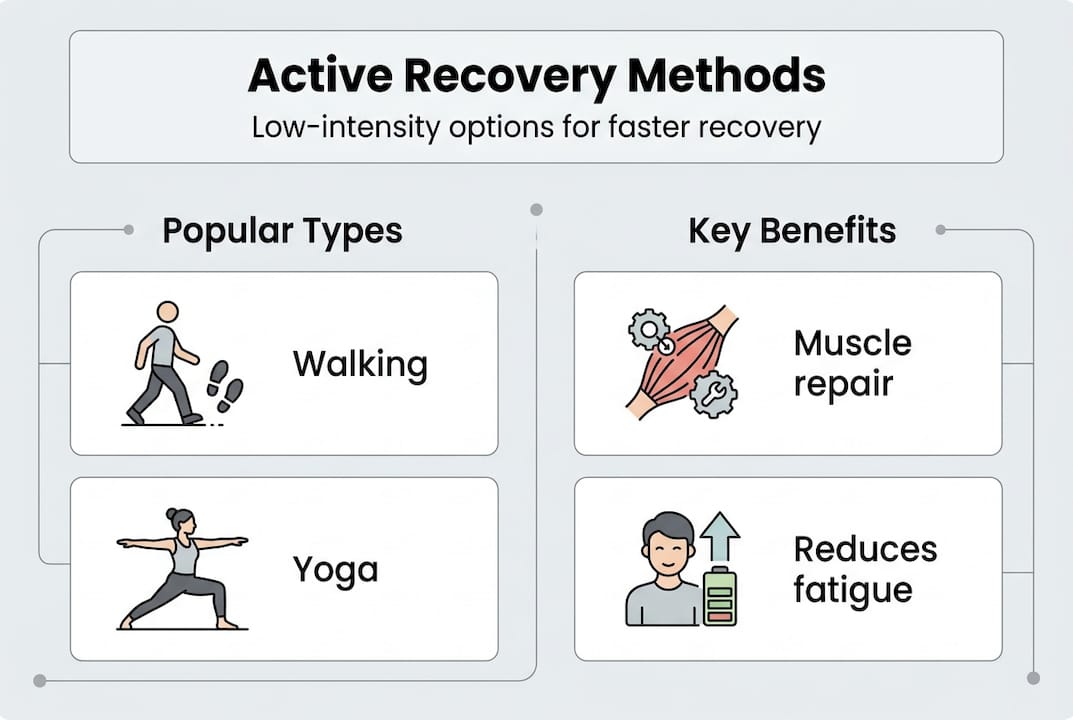
Here’s a comparison of common active recovery methods:
| Method | Intensity Level | Equipment Needed | Best For | Primary Benefits |
|---|---|---|---|---|
| Light walking | Very low | None | All fitness levels | Improves circulation, easy to do anywhere |
| Swimming | Low | Pool access | Joint-friendly recovery | Full-body movement, zero impact |
| Cycling | Low to moderate | Bike | Leg recovery | Maintains cardiovascular fitness |
| Yoga | Low | Mat | Flexibility and stress relief | Combines stretching with mental relaxation |
| Dynamic stretching | Low | None | Targeted muscle groups | Increases range of motion, reduces stiffness |
| Muscle stimulation | Passive-active | EMS device | Localized soreness | Enhances circulation to specific areas |
Pro Tip: Match your active recovery intensity to your workout difficulty. After extremely demanding sessions like heavy squats or sprint intervals, stick to very light activities like slow walking or gentle stretching. Following moderate workouts, you can handle slightly more intense recovery like easy cycling or pool exercises. Listen to your body and reduce intensity if you feel more tired rather than refreshed.
The key to successful active recovery is variety. Rotating between different methods prevents boredom and addresses recovery from multiple angles. Some days you might prefer the meditative quality of a slow walk, while other times a pool session feels more appealing. This flexibility keeps your recovery routine sustainable long term.
How to safely incorporate active recovery into your routine
Implementing active recovery requires a strategic approach to avoid turning recovery sessions into additional training stress. Following safety guidelines ensures active recovery practices enhance recovery without causing injury or overtraining. Here’s a step-by-step approach to add active recovery to your fitness program:
- Schedule active recovery on the day after your most intense workouts, when muscle soreness typically peaks
- Begin with just 15-20 minutes of light movement and gradually increase to 30-45 minutes as your body adapts
- Keep your heart rate below 60% of your maximum, which should allow you to hold a conversation easily throughout the activity
- Choose activities that use the same muscle groups you trained but at dramatically reduced intensity
- Monitor how you feel during and after each session, adjusting duration and intensity based on your energy levels
- Include at least one complete rest day per week where you do minimal physical activity
- Track your recovery sessions in a training log to identify patterns in what works best for your body
Timing matters significantly for active recovery effectiveness. The ideal window is 12-24 hours after your intense workout, when inflammation peaks and circulation can provide the most benefit. Some athletes prefer morning active recovery sessions to start their day feeling energized, while others find evening sessions help them unwind and sleep better.
Duration guidelines depend on your fitness level and workout intensity. Beginners should start with 15-20 minute sessions and focus on mastering proper form and breathing. Intermediate athletes can extend sessions to 30 minutes, while advanced trainers might benefit from 45-minute active recovery workouts that incorporate multiple modalities. Never extend active recovery beyond an hour, as longer sessions risk becoming additional training stress rather than recovery.
Pro Tip: Combine active recovery with proper hydration and nutrition to maximize benefits. Drink water before, during, and after your recovery session to support circulation and waste removal. Consume a light snack with protein and carbohydrates within an hour of finishing to provide your muscles with repair materials. This combination amplifies the recovery effects beyond movement alone.
Recognizing fatigue signs helps you avoid overuse injuries during active recovery. Warning signals include increased muscle soreness rather than relief, persistent tiredness that doesn’t improve with rest, elevated resting heart rate, difficulty sleeping, or decreased motivation to exercise. If you notice these symptoms, replace active recovery with complete rest until your body rebounds. Pushing through genuine fatigue defeats the purpose of recovery work.
Consider incorporating neck pain relief techniques if you experience upper body tension, and pay attention to often-neglected areas like pelvic floor muscles that contribute to core stability and overall recovery. These targeted approaches complement general active recovery practices and address specific problem areas that might limit your training progress.
Benefits of active recovery for performance and muscle health
The advantages of active recovery extend far beyond simply feeling less sore. Active recovery significantly reduces muscle soreness and improves readiness for subsequent training sessions. Understanding these benefits helps you appreciate why top athletes prioritize recovery as seriously as their training sessions.
Key benefits include:
- Reduced delayed onset muscle soreness (DOMS): Light movement prevents the stiffness that develops when muscles remain immobile after intense exercise
- Improved circulation: Increased blood flow delivers oxygen and nutrients while removing waste products more efficiently than passive rest
- Enhanced metabolic waste removal: Active recovery accelerates the clearance of lactic acid and other byproducts that contribute to fatigue
- Quicker muscle repair: The combination of circulation and nutrient delivery speeds up the healing of micro-tears in muscle fibers
- Maintained cardiovascular fitness: Low-intensity movement keeps your aerobic system active without adding training stress
- Reduced injury risk: Better circulation and muscle pliability decrease the likelihood of strains and overuse injuries
- Improved flexibility and range of motion: Gentle movement during recovery prevents the tightness that can limit your next workout
Performance consistency represents one of the most valuable benefits for serious athletes. Athletes practicing active recovery report better performance consistency and reduced injury risk. When you recover faster between sessions, you can train more frequently at higher quality. This consistency compounds over weeks and months, leading to greater fitness gains than sporadic high-intensity training interrupted by extended recovery periods.
“Recovery is not about doing nothing. It’s about doing the right things at the right intensity to prepare your body for the next challenge. Active recovery bridges the gap between training and rest, allowing athletes to maintain momentum without burning out.”
The psychological benefits deserve equal attention to physical improvements. Active recovery sessions provide mental breaks from intense training while maintaining your exercise routine and identity as an athlete. This middle ground prevents the restlessness that many fitness enthusiasts feel on complete rest days while still giving your nervous system a break from high-stress workouts. You finish active recovery feeling energized and motivated rather than depleted.
Many athletes notice improved sleep quality when incorporating regular active recovery. The gentle movement helps regulate circadian rhythms and reduces the muscle tension that can interfere with deep sleep. Better sleep, in turn, enhances all aspects of recovery, creating a positive cycle that elevates your overall fitness trajectory. Some individuals also benefit from tools like CPAP machines that optimize breathing during sleep to support workout recovery.
Active recovery should be a regular part of your fitness routine because it transforms recovery from passive downtime into an active process that accelerates your progress. By dedicating time to strategic low-intensity movement, you invest in your long-term athletic development and reduce the risk of burnout that derails many training programs.
Enhance your recovery with Armageddon Sports gear
Optimizing your active recovery routine becomes easier with the right equipment supporting your efforts. Armageddon Sports offers a comprehensive selection of fitness accessories designed to enhance both your training sessions and recovery periods. From supportive gear that protects your joints during light movement to tools that aid muscle relaxation, having quality equipment makes active recovery more effective and enjoyable.

Our range of lifting equipment helps you maintain proper form during recovery exercises, reducing injury risk even during low-intensity sessions. Quality fitness gloves provide grip and comfort for activities like light resistance work or yoga poses that require hand support. Explore our collection to find products that complement your recovery routine and help you achieve consistent fitness progress.
FAQ
What is active recovery?
Active recovery is low-intensity exercise performed after workouts to speed muscle recovery and reduce fatigue. It contrasts with passive rest by keeping blood flowing to aid healing. Common activities include light walking, easy cycling, swimming, or gentle stretching that maintains movement without adding training stress.
How often should I do active recovery?
Active recovery can be done 1-3 times per week, depending on workout intensity and individual recovery needs. Most athletes benefit from active recovery the day after their hardest training sessions. Listen to your body and adjust frequency to avoid overtraining, ensuring you still include at least one complete rest day weekly.
What are some examples of active recovery exercises?
Examples include light walking, swimming, low-intensity cycling, yoga, and dynamic stretching. These activities promote blood flow without stressing muscles. Water-based exercises work particularly well because buoyancy reduces joint impact while still providing resistance. The key is keeping intensity low enough that you feel refreshed rather than fatigued afterward.
Can active recovery prevent injuries?
Active recovery helps reduce injury risk by improving circulation and muscle repair, supporting overall fitness health. It maintains muscle pliability and joint mobility, which decreases the likelihood of strains during subsequent workouts. When combined with proper warm-ups and progressive training loads, active recovery becomes an effective component of a balanced fitness program to maintain long-term health.
Recommended
- Reflexology: Boosting Fitness Recovery Naturally – Armageddon Sports
- Muscle Stimulator Devices: Boosting Recovery Safely – Armageddon Sports
- Pelvic Floor Muscles: Boosting Workout Recovery – Armageddon Sports
- Neck Traction Device: Enhancing Fitness Recovery – Armageddon Sports
- Essentielle Rolle von Regeneration im Training!