
Choosing workout accessories can feel overwhelming with countless products promising better results. The truth is, the right accessories do improve strength, stability, and recovery when matched to your specific training goals. This guide cuts through the noise by providing clear criteria to help you select accessories that deliver real performance gains and faster recovery.
Table of Contents
- How To Choose The Right Workout Accessories
- Weightlifting Belts: Enhance Power And Protect Your Back
- Wrist Wraps: Stability For Pressing Movements
- Chalk And Grip Enhancers: Maximize Grip Strength And Endurance
- Compression Sleeves: Boost Recovery And Reduce Soreness
- Weightlifting Gloves: Protection Versus Grip Trade-Off
- Resistance Bands: Versatile And Injury-Friendly Strength Training
- Muscle Stimulators And Ab Toners: Tech Enhanced Recovery And Core Training
- Price And Accessibility: Finding Value In Workout Accessories
- Comparison Summary: Choosing Accessories Based On Your Needs
- Explore Workout Accessories At Armageddon Sports
- Frequently Asked Questions
Key takeaways
| Point | Details |
|---|---|
| Effective accessories improve performance and speed recovery | Choose based on proven benefits backed by research and user experience. |
| Selection criteria include function, quality, comfort, and budget | Match accessories to your specific training goals and physical needs. |
| Weightlifting belts and wrist wraps enhance strength and stability | Support for heavy lifts and pressing movements reduces injury risk. |
| Chalk and gloves affect grip differently | Choose based on whether you prioritize maximum grip strength or hand protection. |
| Compression sleeves and muscle stimulators support faster recovery | Technology and compression improve blood flow and reduce muscle soreness. |
How to choose the right workout accessories
Selecting workout accessories requires evaluating how each item supports your specific training goals. Whether you’re focused on building strength, improving endurance, or speeding recovery, the right accessory should address a clear need in your routine.
Start by assessing functionality relative to your workout style. A powerlifter needs different support than a CrossFit athlete or marathon runner. Fitness accessories should solve specific problems you encounter during training, not just look impressive in your gym bag.
Material quality and durability determine whether an accessory lasts months or years. Check construction details like stitching, buckles, and fabric density. High quality materials withstand repeated stress from heavy training sessions without degrading.
Comfort and ergonomic fit prevent injury and ensure you’ll actually use the accessory consistently. An uncomfortable belt or poorly fitting gloves can distract from your workout or cause new problems. Try before buying when possible, or choose brands with flexible return policies.
Balance price against proven effectiveness rather than buying the cheapest option available. Research whether an accessory delivers measurable benefits backed by studies or strong user consensus. Verify evidence supporting claims before purchase, especially for newer technologies.
Pro Tip: Avoid choosing based purely on appearance or brand hype. Prioritize function over fashion, and remember that accessories support proper technique but never replace it. Choosing weightlifting gear with the right fit boosts both safety and performance outcomes.
- Evaluate functionality relative to your specific workout goals
- Consider material quality and durability for long term use
- Assess comfort and ergonomic fit to prevent injury
- Balance price against proven effectiveness
- Verify evidence supporting the accessory’s benefits
- Use accessories to support but not replace proper technique
Weightlifting belts: enhance power and protect your back
Weightlifting belts increase intra-abdominal pressure, creating a rigid cylinder around your spine during heavy lifts. This added stability allows you to lift more weight safely while reducing injury risk.
Research shows weightlifting belts increase lifting capacity by up to 15% while supporting proper spinal alignment. The belt gives your core muscles something to brace against, generating more force through your entire kinetic chain. This mechanical advantage translates directly to bigger numbers on squats, deadlifts, and overhead presses.
Use belts strategically during maximal or near maximal lifting sessions rather than for every set. Save them for your heaviest working sets to maximize the performance boost. Many lifters find belts most beneficial when handling 80% or more of their one rep max.
Choose quality weightlifting belts made from thick leather or durable synthetic materials. Width should be consistent around the entire belt for uniform support. A proper fit allows you to breathe comfortably between reps while still providing rigid support under load.
Pro Tip: Break in a new leather belt by wearing it around the house or during warm up sets. Stiff new belts can be uncomfortable until the leather molds to your body shape.
- Belts improve intra-abdominal pressure for spinal stability
- Can increase max lift weight by 10 to 15 percent
- Ideal for heavy compound lifts like squats and deadlifts
- Use during maximal or near maximal lifting sessions
- Choose quality materials for durability and proper fit
Belt Performance Impact: Weightlifting belts can boost maximum lift capacity by 10 to 15 percent while significantly reducing spinal stress during heavy compound movements.
Wrist wraps: stability for pressing movements
Wrist wraps stabilize the wrist joint during pressing exercises, keeping your wrist in proper alignment under heavy loads. This support reduces pain and prevents hyperextension injuries that sideline many lifters.
Studies demonstrate that 70% of athletes using wrist wraps report reduced wrist discomfort during heavy bench press sessions. The compression and rigid support prevent excessive backward bending of the wrist, distributing force more evenly across the joint. This mechanical advantage lets you press heavier weights with less joint stress.
Wrist wraps prove most useful during bench press, overhead press, and other pushing movements where wrist position affects performance. Wrap tightly enough to feel secure support but not so tight that circulation is restricted. You should maintain full finger mobility and feeling.
These accessories are affordable and easy to use, making them accessible to lifters at all levels. Quality wraps with thumb loops stay in place better during sets. Choose length based on how much support you need, with longer wraps providing more stability for very heavy pressing.
Top gym accessories like wrist wraps deliver disproportionate value relative to their low cost. Understanding wrist wraps for lifting helps you select the right stiffness and length for your training style.
- Wrist wraps stabilize wrist joint during pressing exercises
- 70% of users experience reduced wrist pain during heavy lifts
- Useful for bench press, overhead press, and push movements
- Support proper wrist alignment to prevent injury
- Affordable and easy to use accessory
Wrist Pain Reduction: Seven out of ten athletes using wrist wraps report significantly reduced wrist discomfort during heavy pressing movements.
Chalk and grip enhancers: maximize grip strength and endurance
Chalk absorbs moisture from your hands, dramatically improving your ability to hold onto bars, dumbbells, and pull up grips. Dry hands create more friction, letting you maintain grip longer during high rep sets or max effort lifts.
Research confirms chalk improves grip endurance by 25% by reducing moisture on hands. This seemingly simple benefit can make the difference between completing your target reps and failing early due to grip fatigue. Improved grip also enhances safety by reducing the chance of dropping weights.
Weightlifters, gymnasts, and rock climbers have relied on chalk for decades because it works consistently. Unlike liquid grip enhancers that can feel tacky or wear off quickly, traditional chalk provides reliable friction throughout your workout. It’s also reusable and extremely cost effective.
Use chalk for high rep pulling movements, heavy deadlifts, farmer carries, and any exercise where grip limits your performance. Apply a light coating rather than caking it on. Too much chalk actually reduces friction and creates a slippery powder layer.
Top fitness accessories often include chalk because it solves a universal problem all lifters face. Keep a chalk block or ball in your gym bag for instant grip improvement.
- Chalk absorbs moisture and improves hand dryness
- Enhances grip endurance by approximately 25 percent
- Widely used in weightlifting, gymnastics, climbing
- Low cost, reusable accessory
- Ideal for high rep or heavy grip training sessions
Grip Endurance Boost: Chalk increases grip endurance by roughly 25% by eliminating moisture that causes slipping during intense training sessions.
Compression sleeves: boost recovery and reduce soreness
Compression sleeves increase blood circulation to muscles, delivering more oxygen and nutrients while removing metabolic waste products faster. This enhanced circulation supports quicker recovery between training sessions.
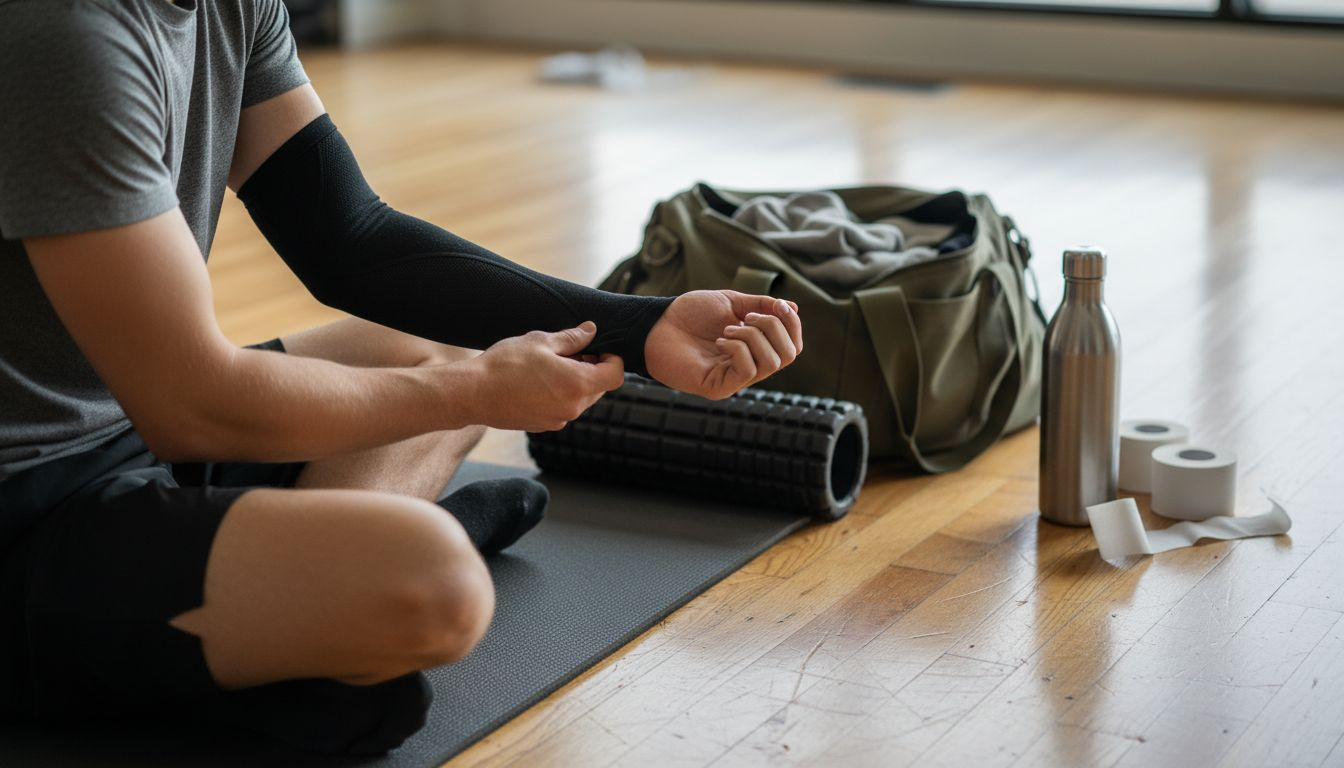
Studies show compression sleeves reduce delayed onset muscle soreness by up to 18% following intense exercise. Less soreness means you can train hard more frequently without extended recovery periods. The gentle pressure also reduces inflammation and swelling that contribute to post workout discomfort.
Wear compression sleeves during workouts for support or immediately after training to maximize recovery benefits. Many athletes wear them overnight following particularly demanding sessions. The sleeves are comfortable enough for extended wear while providing therapeutic compression.
Compression gear works for all muscle groups, with popular options including calf sleeves, arm sleeves, and full leg compression tights. Choose graduated compression that’s tighter at the extremities and gradually loosens toward the torso. This design promotes blood flow back toward the heart.
Effective inflammation management post exercise keeps you training consistently rather than taking unplanned rest days. Combined with proper nutrition and sleep, compression technology gives you an edge in recovery capacity. Muscle stimulator recovery devices offer similar benefits through different mechanisms.
- Compression increases blood circulation to muscles
- Reduces muscle soreness after workouts by 18 percent
- Speeds recovery allowing more frequent training
- Effective for inflammation management post exercise
- Comfortable and supportive during and after workouts
Soreness Reduction: Compression sleeves decrease delayed onset muscle soreness by nearly one fifth, helping athletes return to intense training faster.
Weightlifting gloves: protection versus grip trade-off
Weightlifting gloves protect your hands from calluses and blisters that develop from repeated friction against bars and handles. This protection keeps your hands smooth and comfortable, particularly important if your job requires frequent hand use.
However, research indicates weightlifting gloves reduce grip strength by 5 to 10% compared to bare hands or chalk alone. The padded material creates a thicker barrier between your hand and the bar, forcing your fingers to work harder to maintain the same grip security. This reduction can impact performance on maximal lifts where every advantage matters.
Gloves improve comfort during moderate intensity or longer training sessions where hand fatigue becomes an issue. They’re popular among casual gym goers and those focused on general fitness rather than competitive lifting. Quality gloves cost between $15 and $40, offering reasonable value for the protection they provide.
Decide based on your priorities. If you’re chasing personal records and maximum strength, bare hands with chalk will serve you better. If hand appearance and comfort matter more than squeezing out every last percentage point of grip strength, gloves make sense.
Top weight lifting gloves vary in padding thickness and material quality. Thinner gloves sacrifice some protection but maintain better bar feel and grip strength.
Pro Tip: Try training without gloves first to build natural calluses, then add gloves only if hand damage becomes problematic. Natural calluses actually improve grip over time.
- Gloves protect hands from calluses and blisters
- May reduce grip strength by 5 to 10 percent
- Improve comfort for moderate or longer sessions
- Best for those prioritizing hand care over max grip
- Price varies between $15 and $40 for quality gloves
| Feature | With Gloves | Without Gloves |
|---|---|---|
| Hand protection | Excellent | Minimal |
| Grip strength | Reduced 5 to 10% | Maximum |
| Bar feel | Diminished | Direct |
| Best for | Hand comfort | Performance |
Resistance bands: versatile and injury-friendly strength training
Resistance bands activate 40 to 60 percent of muscle compared to free weights, making them excellent for warm ups, rehabilitation, and accessory work. The variable resistance they provide challenges muscles differently than constant weight, creating unique training stimulus.
Bands are safe and low impact, ideal for injury prone individuals or those returning from time off. The elastic resistance is forgiving on joints while still building strength and muscle endurance effectively. You can easily adjust difficulty by changing band tension or your distance from the anchor point.
Portability is a major advantage. Bands weigh almost nothing and pack into small spaces, letting you maintain training consistency when traveling or working out at home. This convenience factor alone makes them valuable for busy athletes.
Use bands for full body workouts beyond traditional gym settings. They work well for exercises like banded squats, rows, chest presses, and shoulder work. Quality resistance band sets cost just $10 to $25, making them one of the most affordable accessories available.
Bands complement free weights rather than replacing them entirely. Add them to your warm up routine to activate muscles before heavy lifting. Use them on rest days for active recovery that promotes blood flow without creating additional fatigue. Buy resistance bands from reputable retailers to ensure proper latex quality and durability.
- Activate 40 to 60 percent of muscle compared to free weights
- Safe and low impact, ideal for injury prone individuals
- Portable, affordable option for warm ups, rehab, and strength training
- Useful for full body workouts beyond gym settings
- Affordable range around $10 to $25
- Highly versatile accessory for all training levels
Muscle stimulators and ab toners: tech enhanced recovery and core training
Electrical muscle stimulators increase blood flow and reduce muscle fatigue by causing involuntary muscle contractions. This technology has moved from physical therapy clinics into mainstream fitness for recovery and supplemental training.
Data shows muscle stimulators shorten recovery by 15% while improving abdominal endurance by approximately 10 percent. The electrical impulses mimic neural signals, forcing muscles to contract without voluntary effort. This passive stimulation promotes recovery without adding training stress.
Use stimulators on rest days or immediately after intense workouts when muscles are fatigued. The devices work best for recovery rather than primary strength building. Some athletes use them during long flights or car rides to prevent muscle stiffness.
Ab toners specifically target core muscles with focused electrical stimulation. While they won’t give you six pack abs alone, they can improve muscular endurance when combined with proper training and nutrition. These devices supplement rather than replace conventional core work like planks and crunches.
Advanced users focused on recovery and core strength get the most value from this technology. Beginners should establish solid training fundamentals first before investing in electrical stimulation devices. Muscle stimulator devices range widely in price and features, with quality units starting around $50.
- Increase blood flow and reduce muscle fatigue
- Can shorten recovery times by up to 15 percent
- Improve abdominal muscle endurance by about 10 percent
- Best used to supplement, not replace, conventional training
- Ideal for advanced users focused on recovery and core strength
Recovery Technology: Electrical muscle stimulators can reduce recovery time by 15% and enhance abdominal muscle endurance by 10% when used consistently.
Price and accessibility: finding value in workout accessories
Workout accessory prices range from $10 for basic wrist wraps to $200 for advanced muscle stimulators. Understanding this spectrum helps you budget effectively and prioritize purchases based on your specific needs.
Durability and proven benefits justify mid range pricing rather than always choosing the cheapest option. A $40 quality weightlifting belt lasts years and improves every heavy training session. A $15 inferior belt might break within months, costing you more long term. Calculate total cost of ownership including maintenance and replacement frequency.
Most accessories are available online and in specialty fitness stores, giving you plenty of purchasing options. Online shopping provides better price comparison and customer reviews, while physical stores let you check fit and quality firsthand. Retailers like fitness accessories collections offer curated selections that simplify decision making.
Budget conscious options exist without major quality compromise. Generic wrist wraps perform nearly as well as premium brands. Resistance bands from reputable manufacturers deliver excellent value regardless of price point. Focus spending on items where quality dramatically affects performance or safety, like weightlifting belts.
Pro Tip: Investing a bit more in durability saves money long term by eliminating frequent replacements. Buy once, cry once applies to workout accessories just like other equipment.
- Price ranges vary from $10 for wraps to $200 for stimulators
- Durability and proven benefits justify mid range pricing
- Most accessories available online and in specialty fitness stores
- Budget conscious options exist without major quality compromise
- Consider total cost of ownership including replacement
| Accessory | Price Range | Durability | Key Benefit |
|---|---|---|---|
| Wrist wraps | $10 to $25 | 1 to 2 years | Wrist stability |
| Chalk | $5 to $15 | 6 to 12 months | Grip improvement |
| Weightlifting belt | $30 to $100 | 3 to 10 years | Spinal support |
| Compression sleeves | $15 to $40 | 1 to 2 years | Faster recovery |
| Gloves | $15 to $40 | 6 to 18 months | Hand protection |
| Resistance bands | $10 to $25 | 1 to 3 years | Versatility |
| Muscle stimulator | $50 to $200 | 2 to 5 years | Recovery boost |
Comparison summary: choosing accessories based on your needs
Matching accessories to your specific training goals ensures you invest in items that deliver measurable benefits. Three main categories organize most needs: strength enhancement, stability and pain reduction, and recovery support.
For maximum strength and spinal support during heavy lifts, weightlifting belts are the clear choice. The 10 to 15 percent capacity increase and injury prevention make belts essential for serious strength athletes. Prioritize belt quality and fit above nearly all other accessories.
Wrist wraps provide optimal joint stability and reduce pain during pressing movements. If wrist discomfort limits your bench press or overhead work, wraps should be your first purchase. Chalk improves grip during intense training sessions where hand moisture causes early failure. Together, wraps and chalk address the most common performance limiters in the gym.
Compression sleeves and muscle stimulators excel at recovery and soreness reduction. The 18 percent decrease in delayed onset muscle soreness from compression lets you train hard more frequently. Recovery focused accessories pay dividends by maintaining training consistency over months and years.
Gloves provide hand protection at some grip strength cost, making them situation specific. Resistance bands work well for rehabilitation and versatile training when equipment access is limited. Top fitness accessories comparison guides help you weigh options systematically.
- Weightlifting belts best for max strength and spinal support
- Wrist wraps optimal for joint stability and reducing pain
- Chalk ideal for improving grip during intense training
- Compression sleeves and muscle stimulators best for recovery
- Gloves provide hand protection at some grip strength cost
- Resistance bands recommended for rehab and versatile training
| Training Goal | Recommended Accessory | Primary Benefit |
|---|---|---|
| Maximum strength | Weightlifting belt | 10 to 15% capacity increase |
| Joint stability | Wrist wraps | 70% pain reduction |
| Grip improvement | Chalk | 25% endurance boost |
| Faster recovery | Compression sleeves | 18% soreness reduction |
| Hand protection | Gloves | Callus prevention |
| Rehabilitation | Resistance bands | Low impact strength |
Explore workout accessories at Armageddon Sports
Armageddon Sports offers a comprehensive selection of workout accessories tailored to every training need. Whether you’re building strength, improving stability, or accelerating recovery, you’ll find quality equipment backed by expert curation.
Browse the complete fitness accessories collection to discover durable and effective tools that match your goals. Find everything from supportive weightlifting belts to protective workout gloves, all selected for proven performance. Shop with confidence knowing each product meets rigorous quality standards. The right accessories transform your training efficiency and help you reach new performance levels faster.
Frequently asked questions
What are the best workout accessories for beginners?
Beginners should focus on versatile, easy to use accessories like resistance bands and wrist wraps. These items improve performance and minimize injury risk without requiring advanced technique knowledge. Start with basics that address common pain points like grip strength and joint stability before moving to specialized equipment. Avoid complicated or high tech devices until you’ve established solid foundational training habits. Top gym accessories guides help beginners prioritize purchases based on training frequency and goals.
Can weightlifting gloves negatively affect performance?
Yes, weightlifting gloves reduce grip strength by 5 to 10% compared to bare hands or chalk. The padding creates a thicker barrier between your hand and the bar, forcing your grip to work harder. Gloves excel at protecting hands from calluses and improving comfort during moderate intensity sessions. Choose gloves if you prioritize hand care and appearance over maximizing absolute grip strength. Competitive lifters typically avoid gloves for this reason. Weight lifting gloves guide resources explain the trade-offs in detail.
How do compression sleeves help muscle recovery?
Compression sleeves improve blood flow to muscles, delivering more oxygen and nutrients while removing metabolic waste faster. Research demonstrates compression sleeves reduce delayed onset muscle soreness by up to 18% following intense workouts. This significant reduction allows faster return to training with less discomfort. Wear sleeves during workouts for support or immediately after training to maximize recovery benefits. The gentle pressure also reduces inflammation that contributes to prolonged soreness. Muscle stimulator recovery technology offers complementary benefits through different mechanisms.
Do I need a weightlifting belt for every workout?
No, reserve weightlifting belts for maximal or near maximal lifting sessions rather than every set. Use belts when handling 80% or more of your one rep max on heavy compound lifts like squats and deadlifts. Training without a belt during lighter sessions builds natural core strength and stability. Overusing belts can create dependency and prevent your core from developing proper bracing patterns. Strategic belt use maximizes the performance boost while maintaining strong fundamental movement patterns. Save the belt for when you need that extra 10 to 15 percent capacity increase.
Are expensive workout accessories worth the extra cost?
Expensive accessories are worth the cost when they offer significantly better durability or proven performance benefits. A quality weightlifting belt lasting 5 to 10 years justifies higher initial cost compared to cheap alternatives needing replacement annually. However, not all expensive items deliver proportional value. Research specific products and read user reviews to identify where premium pricing reflects genuine quality versus marketing. Mid range options often provide the best value, balancing affordability with durability and effectiveness. Calculate total cost of ownership including replacement frequency before making price based decisions.