
Neck pain after a tough gym session is more than just a minor annoyance. It can sideline your progress, disrupt recovery, and even hold back performance if ignored. Whether you are benching heavy or grinding through high-intensity pulls, muscle strain from poor form or overuse is a leading trigger for post-workout discomfort. This guide reveals proven relief strategies that help you stay consistent, pain-free, and ready to push your limits.
Table of Contents
- What Causes Neck Pain After Workouts
- Common Types of Athletic Neck Injuries
- How Neck Pain Affects Performance
- Proven Strategies for Neck Pain Relief
- Preventing Neck Pain in Fitness Training
Key Takeaways
| Point | Details |
|---|---|
| Muscle Strain Causes Neck Pain | Neck pain typically results from muscle strain due to poor form during heavy lifting and overuse of neck muscles. Proper technique is crucial to prevent discomfort and injury. |
| Posture and Recovery Matter | Maintaining good posture in daily activities and during workouts, along with adequate recovery, can significantly reduce neck pain. Addressing these aspects proactively prevents future issues. |
| Understand Injury Types | Recognizing the distinction between acute injuries and overuse conditions is essential for effective treatment and recovery strategies. Immediate evaluation is crucial for severe cases. |
| Effective Relief Requires Multi-Layered Approach | Combining physical therapy techniques, targeted stretching, and strength training creates a comprehensive strategy for managing neck pain and enhancing performance. |
What Causes Neck Pain After Workouts
Neck pain after intense training sessions isn’t just uncomfortable. It can derail your recovery and limit future workouts if left unaddressed. Understanding what triggers this pain helps you prevent it and train smarter.
The main culprit is muscle strain from poor form or overuse. When you lift heavy or perform high-volume exercises, your neck muscles—especially the upper trapezius and levator scapulae—work harder than you realize. Improper technique during compound movements like bench press, rows, or overhead work forces these muscles to compensate, leading to microtrauma.
Posture during exercise matters tremendously. Many lifters round their shoulders or jut their chins forward during heavy lifts. This places abnormal stress on cervical vertebrae and surrounding soft tissue. The problem compounds when you combine bad form with fatigue, as your stabilizer muscles fatigue and form breaks down.
Beyond acute strain, several underlying conditions contribute to neck pain:
- Muscle inflammation from repetitive movements and microscopic tissue damage
- Disc degeneration or herniation that compresses nerves in your cervical spine
- Bone spurs and arthritis that develop from wear over time
- Nerve compression from structural issues or tight muscles pinching nerves
- Repetitive strain injuries from consistent overuse without adequate recovery
Muscle strains from repetitive movements are the most common reason bodybuilders experience post-workout neck discomfort. These typically develop gradually rather than from a single event.
Your training volume and intensity directly affect your risk. If you suddenly increase weight, reps, or frequency without letting your neck adapt, you’ll trigger inflammation. Neck muscles recover slower than larger muscle groups, yet many lifters neglect neck-specific training entirely—leaving these stabilizers underdeveloped and vulnerable.
Environmental factors play a role too. Poor sleep quality, stress, and inadequate hydration slow recovery and increase pain perception. Tight hip flexors or limited thoracic mobility force your neck to compensate during overhead movements, creating additional strain.
Neck pain after workouts rarely appears without reason. Most cases stem from form breakdown, insufficient recovery, or underdeveloped stabilizer strength combined with heavy training demands.
Severe pain accompanied by numbness, tingling, or weakness signals potential nerve involvement and requires medical evaluation. However, most post-workout neck soreness stems from muscle strain that responds well to targeted recovery strategies and form corrections.
Understanding cervical neck health for fitness training helps you recognize early warning signs before minor discomfort becomes a serious problem affecting your training.
Pro tip: Review your form on pressing movements using video footage. Film yourself from the side and front to spot common issues like forward head posture or uneven shoulder positioning that create asymmetric neck stress.
Common Types of Athletic Neck Injuries
Neck injuries in athletes span a wide spectrum, from minor muscle pulls to severe spinal damage. Knowing which type you’re dealing with helps determine treatment and return-to-training timelines. Most bodybuilders and fitness enthusiasts encounter the milder end of this spectrum, but understanding the full range protects you from pushing through serious conditions.
Acute injuries happen suddenly during workouts or contact situations. These include muscle strains, ligament sprains, and in severe cases, fractures or dislocations. Acute sprains and strains are the most common types athletes experience, typically from sudden movements or impacts.
Here are the main injury categories you should recognize:
- Muscle strains from overstretching or tearing neck muscle fibers during heavy lifting
- Ligament sprains when supporting tissues around vertebrae stretch beyond their limits
- Nerve injuries including nerve root compression or brachial plexus damage causing radiating pain
- Disc injuries where intervertebral discs herniate or degenerate, pressing on nerves
- Cervical stenosis narrowing of the spinal canal that compresses the spinal cord
- Whiplash injuries from rapid acceleration-deceleration movements of the head
Overuse injuries develop gradually and plague lifters who train heavy without adequate recovery. Tendinitis, chronic inflammation, and degenerative changes accumulate over months or years. You won’t feel dramatic pain initially, but the damage compounds silently until function declines.
Here’s a quick comparison of acute and overuse neck injuries in fitness training:
| Injury Type | Onset Speed | Common Triggers | Typical Symptoms |
|---|---|---|---|
| Acute | Sudden | Heavy lifts, quick twists | Sharp pain, limited motion |
| Overuse | Gradual, builds up | Repetitive stress, fatigue | Dull ache, stiffness |
Severe injuries require immediate attention. Cervical fractures, dislocations, and transient quadriplegia are rare but catastrophic. Signs include severe pain, inability to move limbs, numbness, or weakness. Stop training immediately and seek medical evaluation if you experience these symptoms.
Most bodybuilders deal with minor strains and sprains that respond to rest, targeted stretching, and progressive strength work. Understanding effective neck training strategies helps prevent both acute and chronic injuries before they develop.
Recognizing injury types early determines whether you need rest days or emergency care. Minor strain feels like muscle soreness; serious injury feels like dysfunction.
The key distinction is functionality. Can you move your neck normally? Is pain isolated to muscle, or does it radiate down your arm? Muscle-only pain typically responds to self-care, while nerve involvement or loss of strength demands professional evaluation.
Factors increasing your injury risk include inadequate neck strength, poor form, sudden volume increases, and insufficient recovery between sessions. Addressing these proactively prevents most common injuries from ever occurring.
Pro tip: If you experience sharp pain, radiating numbness, or weakness during workouts, stop immediately and avoid that movement for at least one week before attempting modified versions.
How Neck Pain Affects Performance
Neck pain doesn’t just hurt. It actively sabotages your strength gains, endurance, and lifting mechanics in ways you might not immediately notice. Understanding this connection helps you prioritize recovery before pain costs you weeks of training.

Pain disrupts neural signaling to your muscles. When neck pain flares, your nervous system prioritizes protection over performance. This means reduced muscle recruitment, weaker contractions, and compromised power output. You’ll feel weaker even if your muscles haven’t actually lost strength.
Neck pain impairs muscle control and coordination, directly affecting how effectively you execute lifts. Your stabilizer muscles underfire, forcing larger prime movers to compensate inefficiently. This compensation creates muscle imbalances and increases injury risk during subsequent workouts.
Neck issues create multiple performance bottlenecks:
- Reduced range of motion limiting your ability to achieve proper depth in squats, bench pressing, or rows
- Decreased cervical strength weakening your foundation for heavy upper body work
- Altered movement patterns compensating for pain, creating asymmetric loading and joint stress
- Headaches and referred pain distracting your focus and disrupting concentration during sets
- Endurance decline from constant muscle tension consuming energy that should fuel performance
Chronic neck pain creates a vicious cycle. Pain causes you to move differently, which reinforces muscle imbalances, which perpetuates pain. Physical limitations from neck pain accumulate over weeks, turning minor discomfort into significant performance drops.
Your overhead pressing suffers immediately. Neck pain limits cervical extension and rotation, both critical for pressing mechanics. You’ll notice your bench press stalls, shoulder press feels awkward, and you avoid movements that previously felt strong.
Back work gets equally compromised. Pull-ups, rows, and lat pulldowns all require neck flexibility and stability. Pain-driven compensation patterns reduce range of motion and engagement of target muscles, making workouts feel inefficient.
Neck pain doesn’t reduce muscle size or strength directly. It reduces your ability to use the strength you have, creating a performance deficit that compounds across all training days.
The mental game suffers too. Persistent pain creates anxiety about injury, causing you to subconsciously limit intensity. This psychological brake limits progressive overload, stalling gains even when tissue damage is minor.
Fortunately, addressing neck pain early prevents these cascading effects. Strategic neck strengthening directly improves performance by restoring full range of motion and muscular control.
Pro tip: Before assuming your weak performance is a strength problem, assess whether neck pain is limiting your range of motion or causing compensatory movement patterns that reduce leverage and muscle engagement.
Proven Strategies for Neck Pain Relief
Effective neck pain relief requires a multi-layered approach, not just reaching for painkillers. The best results combine immediate pain control with active rehabilitation that addresses root causes. Most bodybuilders see significant improvement within 2-3 weeks by implementing these evidence-based strategies consistently.
Start with immediate pain management. Physical therapy and posture correction exercises form the foundation of lasting relief. These address the underlying mechanical issues causing pain rather than masking symptoms temporarily.
Your relief toolkit includes:
- Heat and ice application to reduce inflammation and muscle tension
- NSAIDs like ibuprofen to control pain and swelling during acute phases
- Targeted stretching addressing tight upper trapezius and levator scapulae muscles
- Neck strengthening exercises building stabilizer endurance and resilience
- Posture adjustments eliminating forward head posture and rounded shoulders
- Ergonomic modifications reducing daily stress on cervical structures
Heat works best for chronic stiffness and muscle tension. Cold helps when inflammation dominates. Most lifters benefit from alternating between them, using heat before training and ice post-workout for 15 minutes at a time.
Active recovery beats passive rest. Gentle movement maintains blood flow and prevents deconditioning. Complete immobilization through soft collars should be temporary only, reserved for acute injuries. Instead, perform pain-free range of motion exercises multiple times daily to maintain mobility and speed healing.
Multimodal treatment combining physical therapy and self-management produces superior outcomes compared to single-intervention approaches. This means blending multiple strategies: stretching, strengthening, postural work, and ergonomic fixes working together.
Neck stretches deserve daily attention. Gentle lateral neck flexion, rotation, and extension stretches reduce tightness. Hold each stretch 20-30 seconds and repeat 3 times per side, twice daily. Avoid aggressive stretching that increases pain.
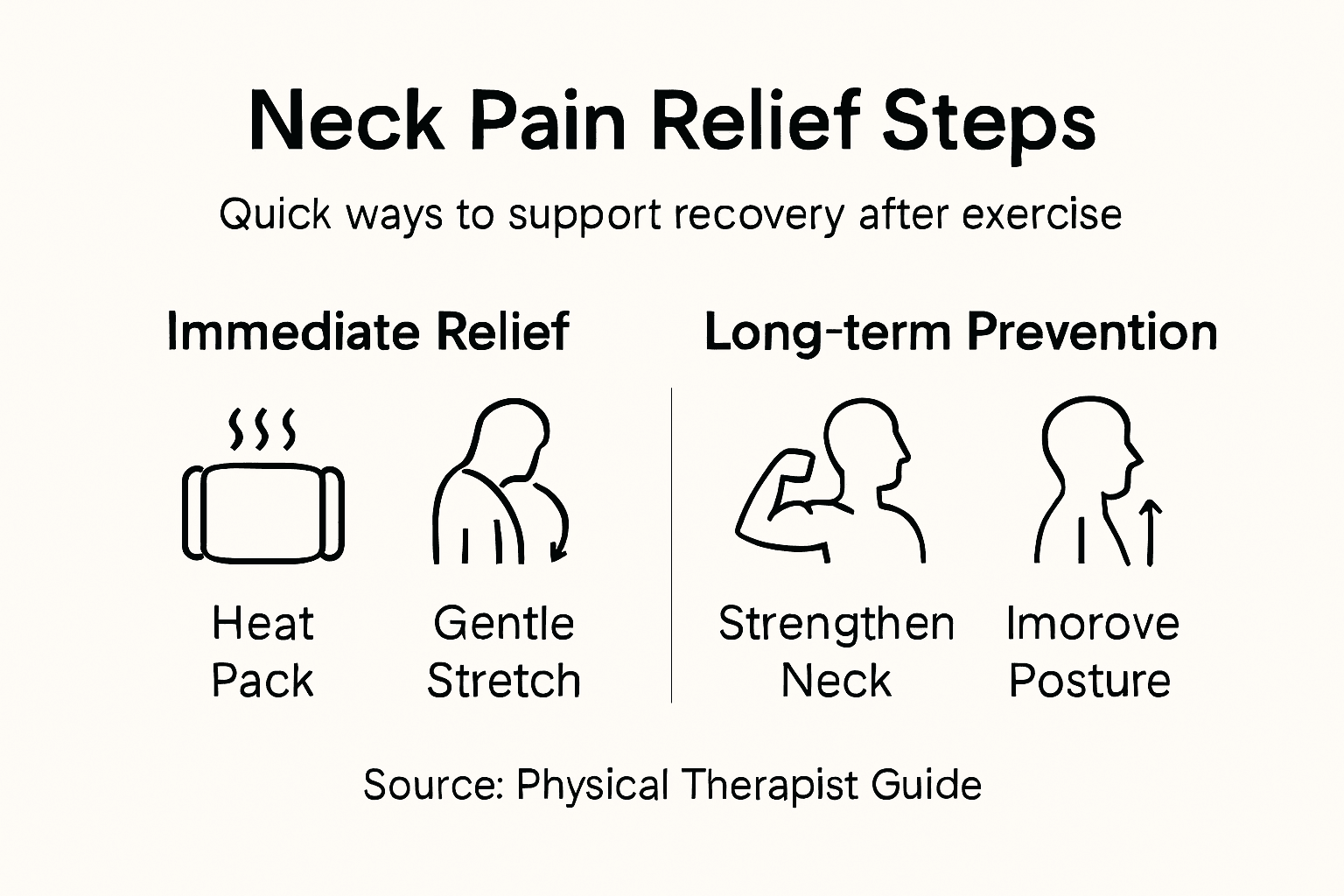
Strengthening exercises rebuild muscular resilience. Isometric neck exercises against manual resistance or resistance bands gradually restore strength without high joint stress. Progress to dynamic movements only after pain resolves.
Posture correction matters more than most lifters realize. Forward head posture increases cervical compression by 10 pounds per inch of forward head position. Retracting your chin and rolling shoulders back distributes forces more evenly across vertebrae.
Multi-strategy approaches combining heat, stretching, strengthening, and posture correction produce faster, more lasting relief than any single intervention alone.
Ergonomic adjustments prevent pain recurrence. If you spend hours at a desk, adjust your monitor to eye level, keep shoulders relaxed, and take frequent breaks. During workouts, focus on maintaining neutral head position with eyes forward rather than looking up or down excessively.
Below is a summary of neck pain relief strategies and their primary benefits:
| Relief Strategy | Main Benefit | Typical Use Case |
|---|---|---|
| Heat application | Reduces stiffness | Chronic muscle tension |
| Ice application | Minimizes inflammation | Recent or acute pain episodes |
| Neck strengthening | Improves resilience | Prevents future strains |
| Posture correction | Lowers cervical stress | Desk work and exercise sessions |
Neck stretchers and traction devices provide supplemental support for stubborn cases, offering gentle decompression that reduces disc pressure and nerve irritation when used correctly.
Pro tip: Consistency beats intensity. Performing gentle stretches and strengthening exercises 2-3 times daily for 5 minutes each produces better results than one aggressive 20-minute session that irritates tissues.
Preventing Neck Pain in Fitness Training
Prevention beats treatment every time. Building neck resilience before pain develops keeps you training consistently and progressing steadily. The good news: preventing neck pain requires nothing exotic, just smart training habits applied consistently.
Proper form during compound movements matters most. Heavy bench press, rows, and overhead work place significant stress on your cervical spine. Maintain a neutral head position with eyes forward, avoid excessive extension or flexion, and keep your shoulders packed. Poor form compounds the damage across dozens of sets weekly.
Here’s your prevention foundation:
- Regular neck stretching maintaining mobility and reducing chronic tension
- Balanced strengthening of neck stabilizers alongside upper body training
- Form assessments identifying and correcting movement compensation patterns
- Posture maintenance throughout the day, not just during workouts
- Progressive volume increases avoiding sudden jumps in training stress
- Adequate recovery between intense upper body sessions
Mobility work prevents pain before it starts. Gentle daily stretches for lateral flexion, rotation, and extension maintain your cervical range of motion. Regular stretching and strengthening exercises combined with good posture reduce recurrence and prevent initial injury.
Neck-specific strength prevents future problems. Your neck stabilizers support heavy loads from pressing and pulling. Underdeveloped stabilizers force compensation patterns that create dysfunction. Isometric neck exercises using manual resistance or bands take only 5 minutes but build foundational strength that protects against strain.
Posture away from the gym matters equally. Forward head posture from desk work accumulates stress that carries into training. Cervical mobility and strength assessments help identify imbalances before they cause problems. Adjust your workspace so your monitor sits at eye level, shoulders stay relaxed, and you take frequent movement breaks.
Volume progression demands respect. If you jump from 10 sets to 20 sets weekly without gradual progression, your neck stabilizers can’t adapt. Increase training stress by 10 percent weekly maximum, giving tissues time to strengthen alongside your lifting.
Sleep position and pillow support affect daily neck health. Avoid sleeping on your stomach, which forces your neck into rotation. Use a pillow that maintains neutral cervical alignment, neither too high nor too flat.
Preventing neck pain requires consistency with the basics: good form, adequate neck strength, proper posture, and progressive overload. None require equipment or complicated protocols.
Neck traction devices provide supplemental support for maintaining cervical health, offering preventative decompression that reduces daily stress accumulation.
Assess your current neck health honestly. Can you rotate your neck fully? Do you experience tightness after workouts? Do you maintain neutral head position throughout heavy lifts? Address any deficits now before they develop into pain that derails training.
Pro tip: Film yourself performing pressing and pulling movements from multiple angles weekly. Most form breakdowns happen gradually and invisibly. Video catches compensations immediately, allowing real-time corrections before they become ingrained patterns.
Take Control of Neck Pain and Enhance Your Workout Recovery Today
Neck pain after workouts can feel like a roadblock to your fitness goals. This discomfort often stems from muscle strain, poor form, or underdeveloped neck stabilizers making every session more challenging. The key to overcoming this is combining effective pain relief with targeted recovery tools that support your neck’s strength and mobility. At Armageddon Sports, we understand how vital neck health is for maintaining consistent performance and avoiding injury.

Discover high-quality solutions tailored for workout recovery and injury prevention. Explore our extensive range of wellness devices, supportive gear, and fitness accessories designed to reduce inflammation and rebuild resilience. Whether you need muscle stimulators, compression supports, or ergonomic aids, our Buy Health & Fitness Equipment Online - Armageddon Sports collection offers durable and effective products to help you train smarter, recover faster, and prevent future neck pain. Don’t wait for pain to worsen—visit Armageddon Sports now and equip yourself for success with gear that protects your cervical health and enhances your workouts.
Frequently Asked Questions
What are common causes of neck pain after workouts?
Common causes of neck pain after workouts include muscle strain from poor form or overuse, improper technique during lifting, and inadequate recovery due to fatigue. Additionally, conditions like muscle inflammation, disc degeneration, and nerve compression can contribute to neck discomfort.
How can I effectively relieve neck pain after intense training sessions?
Effective neck pain relief includes a combination of immediate pain management techniques like heat and ice application, stretching tight muscles, and strengthening neck stabilizers. Engaging in physical therapy and correcting posture during workouts also play a crucial role.
What role does posture play in preventing neck pain during workouts?
Proper posture is essential for preventing neck pain. Maintaining a neutral head position, avoiding excessive neck flexion or extension, and keeping shoulders relaxed during lifts can help distribute forces evenly across the cervical spine, reducing the risk of injury.
How can I incorporate neck strengthening exercises into my routine?
Incorporating neck strengthening exercises can be done through isometric movements against resistance, using bands, or manual resistance. Aim to perform these exercises 2-3 times a week, starting gently and progressively increasing intensity as your strength improves.