
TL;DR:
- Choosing durable, adjustable, and safe equipment is essential for effective training and injury prevention.
- Core gym essentials include barbells, dumbbells, adjustable benches, power racks, and machines for comprehensive workouts.
- Free weights are best for early workout efforts, while machines are suitable for isolation and finishing exercises.
Choosing the wrong bodybuilding equipment doesn’t just waste money. It stalls progress, increases injury risk, and makes every training session harder than it needs to be. Whether you’re building a home gym from scratch or upgrading a commercial setup, the gear you select directly shapes your results. This guide gives you a clear, expert-backed framework for evaluating, comparing, and selecting bodybuilding equipment across every category. From barbells and power racks to accessories like belts and resistance bands, you’ll walk away knowing exactly what to buy, why it matters, and how to get the most out of every piece.
Table of Contents
- What matters most: Key criteria for evaluating bodybuilding equipment
- The big five: Essential bodybuilding equipment for every level
- Free weights or machines? Side-by-side comparison for muscle growth
- Specialized equipment and must-have accessories: Customizing your setup
- The truth most lifters miss: Why context matters more than the gear
- Ready to build your best gym? Explore the top gear
- Frequently asked questions
Key Takeaways
| Point | Details |
|---|---|
| Know your criteria | Assess durability, safety, adjustability, and space needs before buying. |
| Focus on essentials | Start with barbells, dumbbells, a quality bench, and a power rack for full-body training. |
| Mix tools for growth | Use both free weights and machines to maximize gains and minimize risk of fatigue or injury. |
| Customize with accessories | Select gloves, belts, and bands to fine-tune comfort, safety, and variety in your workouts. |
| Context is key | Your training approach and consistency are more important than the brand of your equipment. |
What matters most: Key criteria for evaluating bodybuilding equipment
Before you spend a dollar, you need a filter. Not every piece of equipment deserves space in your gym, and not every “best seller” actually fits your training goals. Smart selecting gym equipment starts with understanding the criteria that separate useful gear from expensive clutter.
Here are the core factors every lifter should evaluate:
- Durability and build quality: Look for steel frames, reinforced welds, and materials rated for repeated heavy use. Cheap equipment fails under load, and that’s a safety risk, not just an inconvenience.
- Load capacity: Always check the maximum weight rating. A bench rated for 600 lbs gives you room to grow. One rated for 300 lbs caps your progress.
- Adjustability: Equipment that grows with your strength and adapts to different exercises delivers far more value per dollar.
- Safety features: Spotter arms, locking collars, and non-slip feet aren’t optional. They’re essential, especially for solo training.
- Ergonomics: Handles, pad angles, and grip width affect how well the equipment fits your body. Poor ergonomics leads to compensations and injuries over time.
One of the most overlooked factors is the stimulus-to-fatigue ratio, which influences whether free weights or machines are the better choice for a given exercise. Free weights demand more stabilizer muscle activation, which increases overall fatigue. Machines isolate target muscles more efficiently but generate less total stimulus. Neither is universally superior. The right choice depends on where you are in your workout and your specific training goals.
Space and budget also matter more than most people admit. The best gym equipment for a 500-square-foot home gym looks very different from what belongs in a commercial facility. Be honest about your footprint before you commit to anything large or fixed.
Pro Tip: Before buying, measure your available space with tape and mark it on the floor. Then research the exact dimensions of any equipment you’re considering. This one step prevents the most common and costly gym setup mistakes.
The big five: Essential bodybuilding equipment for every level
Every serious bodybuilding setup is built on a core group of equipment categories. These five pieces cover the widest range of movements, muscle groups, and training styles. Get these right, and you have a foundation that supports years of progressive training.
1. Barbells The barbell is the backbone of bodybuilding. For heavy compound lifts like squats, deadlifts, and bench press, 190,000+ PSI tensile strength is essential for both durability and safety under load. Knurled grip patterns matter too. Medium knurl suits most lifters, while aggressive knurl is preferred for powerlifting-style work. Look for a standard 20 kg Olympic barbell with a 28-29mm shaft diameter for the best combination of whip and control.
2. Dumbbells Adjustable dumbbell sets are the smartest investment for space and budget. A quality adjustable set can replace 10 to 15 pairs of fixed dumbbells. For home setups, check out these home workout essentials that cover the full range of dumbbell options. Fixed hex dumbbells are more durable for commercial use but require significantly more floor space.
3. Adjustable bench Stability is non-negotiable. A bench that wobbles under a heavy press is dangerous. Look for a weight capacity above 1,000 lbs, pad thickness of at least 2.5 inches, and multiple incline settings. A flat-to-incline-to-decline range gives you access to the full spectrum of chest, shoulder, and tricep movements.
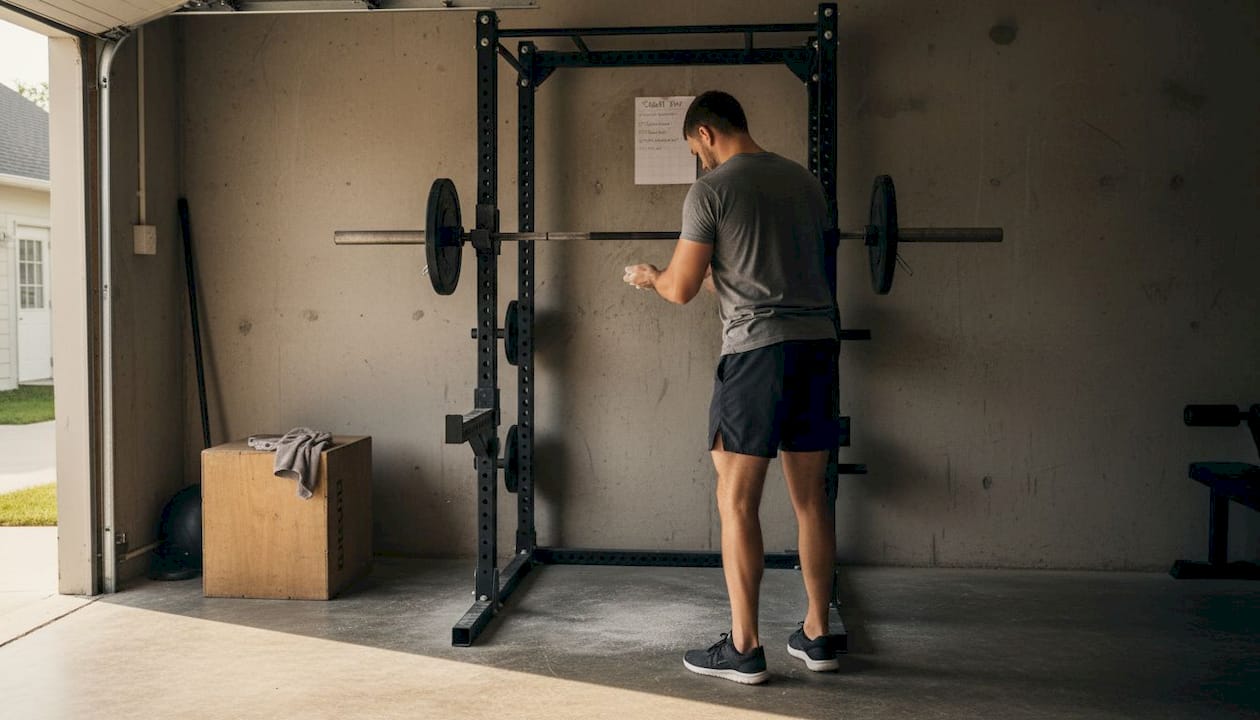
4. Power rack The power rack is the single most versatile piece of equipment in any gym. It enables safe solo training on squats, bench press, and overhead press. Spotter arms are critical. A rack with a pull-up bar and band pegs adds even more exercise variety without taking up additional floor space. These are covered in detail in the home gym essentials guide.
5. Machines Cable machines and selectorized machines shine for isolation work and finishing movements. They’re ideal later in a workout when fatigue is high and form on free weights can break down.
“The best gym is the one you actually use consistently. Build around the equipment that fits your space, your body, and your training style, not around what looks impressive.”
Pro Tip: If you can only buy one machine, a cable column with a high and low pulley gives you the most exercise variety per square foot of any machine category.
Free weights or machines? Side-by-side comparison for muscle growth
This debate never fully goes away, and for good reason. Both tools have legitimate places in a bodybuilding program. The real question is when and how to use each one.
| Factor | Free weights | Machines |
|---|---|---|
| Muscle activation | Higher (stabilizers included) | Lower (isolated target muscle) |
| Learning curve | Steeper | Easier |
| Injury risk | Higher if form breaks | Lower (guided movement) |
| Functional strength | Strong carryover | Limited carryover |
| Space required | Moderate | High |
| Best use timing | Early in workout | Later in workout |
| Ideal for | Compound movements | Isolation and finishing |
The stimulus-to-fatigue ratio favors free weights earlier in workouts and machines later. This is why most elite programs open with barbell squats or bench press and finish with machine leg extensions or cable flyes. The logic is simple: use your best energy for the movements that return the most muscle stimulus.
For beginners, machines offer a safer entry point. Guided movement patterns reduce the risk of injury while motor patterns are still developing. For advanced lifters, free weights remain the primary driver of strength and hypertrophy.
Here’s how to structure a smart upper body day using both:
- Free weight block: Barbell bench press, dumbbell rows, overhead press
- Machine block: Cable flyes, lat pulldown, machine rear delt fly
Explore compact equipment ideas if you’re working with limited space and need to prioritize one category. For those building a full setup, home strength training resources can help you plan a balanced program around both.
Combining both approaches consistently produces better long-term results than committing exclusively to one. The variety also reduces overuse injuries and keeps training mentally engaging.
Specialized equipment and must-have accessories: Customizing your setup
Once your foundation is in place, accessories are what turn a functional gym into a personalized training environment. The right accessories enhance safety, extend exercise variety, and protect your body over the long haul.
Here’s a prioritized list for building out your accessory kit:
- Weightlifting belt: Use for heavy compound lifts above 85% of your max. A 4-inch leather or nylon belt increases intra-abdominal pressure and protects the lower back.
- Lifting gloves or straps: Gloves protect the palms during high-volume work. Straps shift grip fatigue away from the hands during deadlifts and rows, letting you focus on the target muscle.
- Resistance bands: Lightweight, versatile, and useful for warm-ups, mobility work, and adding accommodating resistance to barbell lifts.
- Foam roller: Essential for myofascial release and recovery. Use it before and after training to reduce soreness and improve tissue quality.
- Ab stimulator: Devices like EMS-based ab stimulators activate core muscles during recovery periods, making them a useful supplement to direct ab training.
Accessory selection can optimize ergonomics, safety, and exercise variety for any gym setup, whether you’re training at home or in a commercial facility.
| Accessory | Best for | Key feature to check |
|---|---|---|
| Weightlifting belt | Heavy compound lifts | Width, stiffness, closure type |
| Lifting gloves | High-rep pulling work | Grip texture, wrist support |
| Resistance bands | Warm-ups, mobility, assistance | Resistance range, durability |
| Foam roller | Recovery and mobility | Density, length |
| Ab stimulator | Core activation, recovery | EMS intensity settings |
For a full breakdown of top workout accessories and a detailed look at ab stimulator options, both resources offer side-by-side comparisons that make selection straightforward.
Pro Tip: Don’t buy every accessory at once. Add one item at a time based on a specific training need. This keeps your setup purposeful and prevents you from accumulating gear you never actually use.
The truth most lifters miss: Why context matters more than the gear
Here’s something the fitness industry rarely admits: most training plateaus have nothing to do with equipment. They’re caused by inconsistent programming, poor recovery, or a lack of progressive overload. Yet the default response is always to buy something new.
We’ve seen lifters with fully loaded home gyms who haven’t made progress in two years, and beginners with a single barbell and a set of plates who add strength every week. The difference isn’t the gear. It’s the discipline behind the training.
Obsessing over marginal equipment differences, like whether one barbell is slightly better than another, distracts from what actually drives results. Consistency, progressive overload, sleep, and nutrition move the needle. Gear just provides the environment.
That said, the right setup does matter. A poorly equipped gym creates friction that erodes motivation over time. The goal is to build a setup that removes barriers, not one that becomes the focus itself. Comparing home vs. gym workouts can help you identify which environment actually supports your habits best.
Buy smart. Set it up well. Then get out of your own way and train.
Ready to build your best gym? Explore the top gear
You now have the framework to make confident, informed decisions about every piece of equipment in your gym. The next step is putting that knowledge to work with gear that’s built to perform.
At Armageddon Sports, you’ll find a curated selection of lifting gear selection designed for serious bodybuilders and fitness enthusiasts at every level. Whether you need workout gloves for high-volume training or weightlifting belts for your heaviest compound sets, every product is chosen with the criteria in this guide in mind. Shop with confidence knowing your setup is built for real, lasting results.
Frequently asked questions
How do I choose between free weights and machines for bodybuilding?
Use free weights for functional strength and maximal muscle activation early in your workout. The stimulus-to-fatigue ratio favors machines for isolation work and reducing fatigue later in your session.
What is the most important feature to look for in a barbell?
Prioritize tensile strength above all else. Barbells rated at 190,000+ PSI handle heavy loads safely and resist permanent bending under repeated use.
Which accessories make the biggest difference in my bodybuilding results?
Weightlifting belts, gloves, and resistance bands deliver the most immediate impact. Accessory selection that targets ergonomics and safety also reduces injury risk and extends your training longevity.
How can I equip my home gym for bodybuilding on a budget?
Start with adjustable dumbbells, a sturdy flat-to-incline bench, and a set of resistance bands. These three items cover the widest range of exercises at the lowest combined cost.
Should I prioritize brand name or technical specs in equipment?
Always prioritize technical specs. Load rating, material quality, and build tolerances tell you far more about real-world performance than a brand name ever will.