
Walk into any gym or scroll through any fitness site and you’ll face hundreds of accessories promising to transform your results. The reality is that most gear delivers marginal or purely psychological benefits, while a small selection genuinely moves the needle on strength, speed, and recovery. Research separates the hype from the hardware, and knowing which accessories target your real limitations makes all the difference. This article breaks down the most effective fitness accessories by category, backed by evidence and practical insight, so you can spend smarter and train harder.
Table of Contents
- How to choose fitness accessories for performance
- Top accessory: Lifting straps, wraps, and gloves
- Footwear innovations: Shoes for support and speed
- Recovery essentials: Foam rollers, massage guns, and more
- Comparison: Which accessories suit different training styles?
- An expert’s take: What really matters for lasting progress
- Explore high-performance fitness accessories
- Frequently asked questions
Key Takeaways
| Point | Details |
|---|---|
| Prioritize science-backed gear | Choose accessories with proven benefits for your training goals rather than hype alone. |
| Balance support and skill | Combine supportive accessories with natural training for long-term progress. |
| Invest in recovery tools | Effective recovery gear accelerates muscle repair and sustains high performance. |
| Match accessories to your needs | Select specific gear for your main limitation—grip, stability, recovery, or biomechanics. |
How to choose fitness accessories for performance
To make sense of the options, let’s explore how to evaluate which accessories actually help. The first question to ask is simple: does this tool address a specific weakness in your training? Accessories that fix a real limitation, like grip failure on heavy deadlifts or ankle instability during squats, deliver measurable results. Accessories that just feel good often stay in the gym bag unused after a few weeks.
Research confirms that some accessories measurably boost performance while others mainly affect perceived comfort or stability. That distinction matters when you’re building a toolkit on a budget. Spend on what changes your numbers, not what changes your look.
Here’s a practical checklist for evaluating any new accessory:
- Does it target a measurable limitation? Grip, stability, biomechanics, or recovery speed.
- Is it backed by evidence or just marketing? Look for peer-reviewed support or at minimum expert consensus.
- Will it become a crutch? Some tools, if overused, prevent your body from developing the intrinsic strength it needs.
- Does it fit your training phase? Strength blocks, endurance cycles, and recovery weeks each call for different tools.
- Is the investment proportional to the benefit? A $15 pair of lifting straps can outperform a $200 gadget for the right athlete.
Recovery tools are one of the most underrated categories. Most athletes focus on what they add to their workout and ignore what helps them bounce back faster. Exploring training accessories for recovery is often where the biggest gains hide for athletes who already train hard.
Pro Tip: Before buying anything new, write down the specific problem you’re trying to solve. If you can’t name it clearly, you probably don’t need the accessory yet.
Finally, balance is key. Rotate accessory-supported sessions with raw, unassisted training. Your body adapts to what it’s exposed to, and foam roller reviews from physical therapists consistently emphasize that tools work best as supplements to, not replacements for, foundational movement quality.
Top accessory: Lifting straps, wraps, and gloves
Now that you know what to look for, let’s break down some of the most effective accessories starting with those supporting grip and wrist integrity. Grip failure is one of the most common limiters in pulling movements. Your back and legs can handle more load than your hands can hold, and that’s where lifting straps close the gap.
Lifting straps increase load capacity on deadlifts and rows by bypassing grip fatigue entirely. This lets you train the target muscles closer to their true capacity. For strength athletes in high-volume blocks, that’s a genuine performance edge. You can explore more about lifting straps and wraps to find options suited to your training style.
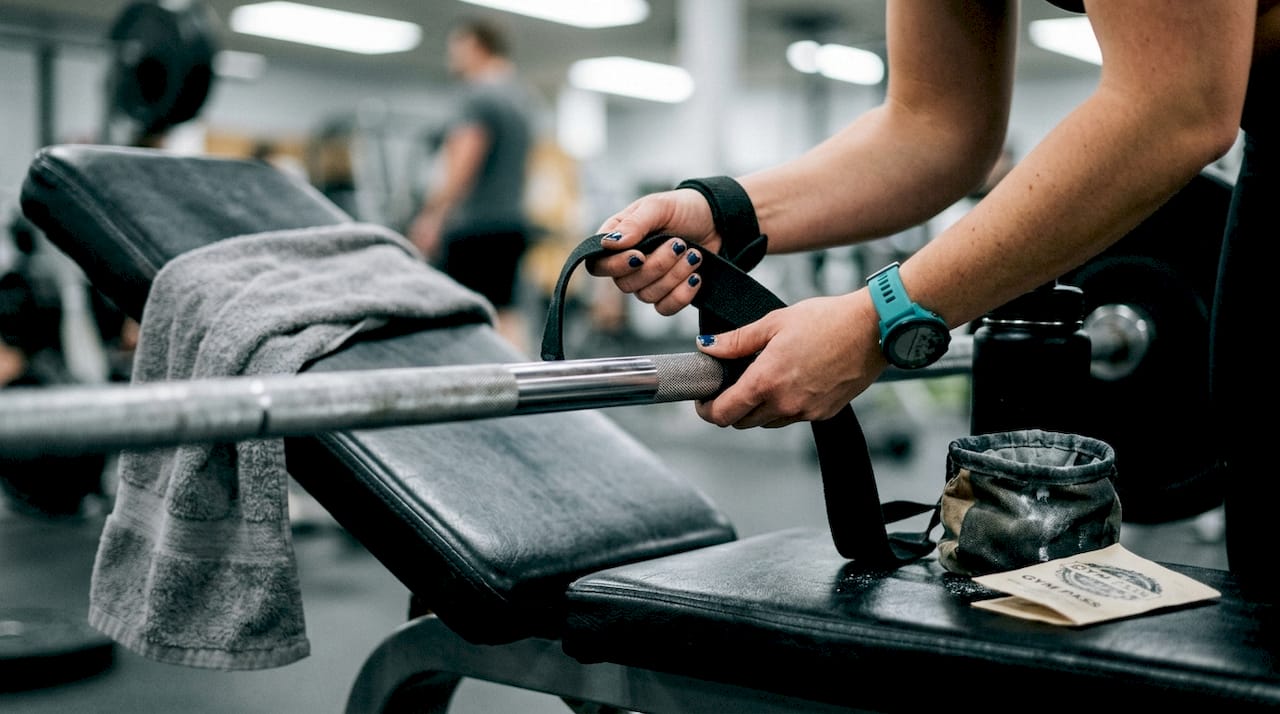
Wrist wraps serve a different purpose. They add external stability to the wrist joint during pressing and overhead movements. Research shows that wrist wraps improve perceived stability but may not directly increase your rep count. That said, confidence under a heavy bar is a real factor, and reducing wrist discomfort lets you focus on the lift itself. Check out best wrist wraps for a breakdown of styles and stiffness levels.
Lifting gloves round out this category. They prevent callus buildup and allow longer sessions without skin discomfort. They’re not for everyone, but for athletes training five or more days per week, gloves can extend session quality.
Key use cases for grip and wrist accessories:
- Lifting straps: Heavy deadlifts, barbell rows, rack pulls, and shrugs.
- Wrist wraps: Heavy bench press, overhead press, and push press.
- Lifting gloves: High-frequency training where skin integrity becomes a limiting factor.
“Don’t let support gear become your default. Mix in raw grip sessions at least twice per week to keep your foundational strength growing.” This is especially important for athletes working on improving grip strength over the long term.
Pro Tip: Use straps only on your final heaviest sets. Build raw grip strength on warm-up sets and accessory work, then strap in when the weight demands it.
Footwear innovations: Shoes for support and speed
Beyond the hands, your feet can be your most essential performance driver. Here’s how modern footwear can boost results. Specialized shoes are not a luxury for elite athletes only. The right shoe changes your mechanics, your efficiency, and in some cases, your race time.
For runners, advanced footwear technology spikes can make a real difference. AFT spikes increase step length, making middle-distance runners 1.6 to 2.1% faster. That might sound small, but at competitive levels it’s the difference between a podium finish and fourth place.
For strength athletes, Olympic lifting shoes with an elevated heel shift your center of mass forward, improving squat depth and torso position. Cross-trainers offer a middle ground for functional fitness athletes who mix lifting, running, and bodyweight work.
| Shoe type | Best for | Key benefit |
|---|---|---|
| Olympic lifting shoes | Squats, cleans, snatches | Elevated heel improves depth and posture |
| Running spikes (AFT) | Middle-distance track events | Increased step length and race pace |
| Minimalist shoes | Functional training, mobility work | Proprioceptive feedback and foot strength |
| Cross-trainers | HIIT, mixed training | Lateral support and versatility |
| Flat-soled shoes | Deadlifts, powerlifting | Stable base, minimal energy loss |
Key things to prioritize when choosing training footwear:
- Match the shoe to your primary training mode, not your secondary one.
- Check for lateral stability if you do any cutting or lateral movement.
- Prioritize heel-to-toe drop based on your squat mechanics and mobility.
- Replace shoes every 400 to 500 miles for running, or when sole compression is visible.
Browsing home gym accessories can also help you identify complementary gear that pairs with the right footwear for your setup.
Recovery essentials: Foam rollers, massage guns, and more
No matter how advanced your workout gear, sustained gains hinge on strategic recovery. Training breaks tissue down. Recovery is where your body rebuilds it stronger. Skip recovery tools and you’re leaving adaptation on the table.
Foam rollers and massage guns relieve muscle tension and improve blood flow after high-volume sessions. Used consistently, they reduce delayed onset muscle soreness and help you show up to the next session ready to perform. The best foam rollers vary by density and texture, so match your choice to your sensitivity and the muscle groups you target most.
| Recovery tool | Primary benefit | Best timing |
|---|---|---|
| Foam roller | Myofascial release, blood flow | Post-workout, rest days |
| Massage gun | Deep tissue tension relief | Post-workout, before sleep |
| EMS device | Muscle activation and recovery | Rest days, injury prevention |
| Compression gear | Circulation, swelling reduction | During and after long sessions |
Key benefits of consistent recovery tool use:
- Faster reduction of muscle soreness between sessions.
- Improved range of motion over time.
- Better sleep quality due to reduced physical tension.
- Lower risk of overuse injuries during high-frequency training blocks.
For athletes interested in electrical muscle stimulation, exploring muscle stimulator options can open up a recovery approach that goes beyond manual tools. EMS devices activate muscle fibers passively, which is especially useful during deload weeks or injury recovery. Pairing these with other recovery accessories for athletes creates a complete post-training system.
Comparison: Which accessories suit different training styles?
With the evidence and examples in hand, let’s match accessories to specific training goals and athlete types. Not every accessory serves every athlete. The best toolkit is the most targeted one.
Research consistently shows that accessories should match your primary limitation, whether that’s grip, stability, biomechanics, or recovery speed. Buying broadly without a plan leads to a cluttered gym bag and no real progress.
| Training style | Top accessories | What to avoid |
|---|---|---|
| Maximum strength | Lifting straps, wrist wraps, flat shoes | Over-relying on belt for every set |
| Endurance/running | AFT spikes, compression socks, foam roller | Heavy cushioning that masks feedback |
| Functional fitness | Cross-trainers, resistance bands, massage gun | Excessive strapping on moderate loads |
| Bodybuilding | Lifting gloves, straps, EMS recovery | Skipping raw grip and unassisted sets |
Here’s a step-by-step process for building a smart accessory kit:
- Identify your primary training goal. Strength, speed, hypertrophy, or endurance.
- List your current limiters. What stops you from hitting new PRs or completing sessions strong?
- Match one accessory to each limiter. Don’t buy five solutions for one problem.
- Test for four weeks. Track performance with and without the accessory.
- Rotate in accessory-free sessions. Prevent dependence and develop foundational capacity.
Using accessory selection tips from experienced coaches can also help you skip the trial-and-error phase and go straight to what works for your specific goals.
An expert’s take: What really matters for lasting progress
Before you click “add to cart,” here’s what experienced athletes and coaches know about gear, habits, and sustainable results. The fitness industry profits from convincing you that the right accessory unlocks the next level. The truth is more uncomfortable: most of your results come from consistent programming, sound technique, and adequate sleep. Gear is a multiplier, not a foundation.
Research confirms that perceived benefits often exceed real gains, and that accessory-free sessions remain vital for building true strength and control. Athletes who train exclusively with wraps, straps, and belts often discover that their raw numbers stagnate. The support gear was compensating for weaknesses instead of developing them.
The smarter approach is to use accessories strategically and deliberately. Strap in for your heaviest sets. Wrap your wrists when the load demands it. Then strip it all back and do the hard, unglamorous work of grip training without accessories to build what the gear was covering up. That’s how you create durable, transferable strength.
Gear should reveal your ceiling, not become it.
Explore high-performance fitness accessories
Ready to upgrade your gear? Here are our top picks to help you train smarter and recover stronger.
At Armageddon Sports, we’ve curated a full range of accessories built for athletes who take their training seriously. Whether you need grip support for heavy pulls, wrist stability for pressing days, or recovery tools to keep you consistent week after week, we have the gear to match your goals.
Browse our complete fitness accessories collection to find everything from straps and wraps to recovery devices, all in one place. If you’re focused on the platform, our lifting gear section covers every tool a serious strength athlete needs. No filler, no gimmicks. Just gear that works.
Frequently asked questions
Do lifting straps and wrist wraps improve gym performance?
Lifting straps enable heavier deadlifts by improving grip under load, while wrist wraps primarily boost perceived stability during heavy pressing movements rather than directly increasing rep counts.
Are advanced footwear upgrades worth it for runners?
Yes, for competitive runners. AFT spikes increase pace by 1.6 to 2.1% through greater step length, which translates to meaningful time improvements in middle-distance events.
What are must-have recovery accessories for post-workout muscle care?
Foam rollers and massage guns lead the category by easing tension and blood flow after intense sessions, making them essential for athletes training multiple days per week.
How do I prevent over-reliance on accessories?
Alternate supported and unsupported sessions so your body continues developing foundational grip and control, which prevents long-term dependence on any single piece of gear.
Recommended
- Fitness Accessories - Home Gym Equipment for Workout and Exercise | Armageddon Sports
- Top workout accessories for training efficiency and recovery – Armageddon Sports
- Maximize strength gains with the right gym accessories – Armageddon Sports
- How to choose fitness accessories for better workouts 2026 – Armageddon Sports