
Strength training isn’t just for bodybuilders chasing massive biceps or athletes preparing for competition. This powerful form of exercise delivers health benefits beyond muscle size, including reduced mortality risk, improved metabolic function, and enhanced cognitive performance. Whether you’re a fitness enthusiast looking to optimize your routine or a complete novice wondering where to start, understanding the comprehensive advantages of resistance training will transform how you approach your wellness journey. This article breaks down the science-backed benefits, compares strength work to cardio, and gives you practical strategies to train safely and effectively.
Table of Contents
- Understanding The Comprehensive Health Benefits Of Strength Training
- How Strength Training Compares To Aerobic Exercise For Health And Longevity
- Strength Training For Functional Fitness And Aging: Preserving Mobility And Independence
- Preventing Injuries And Maximizing Benefits: Best Practices For Safe Strength Training
- Gear Up For Effective Strength Training With Armageddon Sports
- Frequently Asked Questions
Key takeaways
| Point | Details |
|---|---|
| Longevity boost | Resistance training reduces all-cause mortality and extends healthspan through metabolic and cognitive improvements. |
| Combined approach wins | Pairing strength and aerobic training cuts mortality risk by up to 47%, outperforming either method alone. |
| Functional fitness matters | Strength work preserves mobility and independence in older adults by improving grip strength and gait speed. |
| Injury prevention is key | Proper technique and progressive overload minimize common injuries to shoulders, back, and knees. |
| Light loads work | Beginners gain significant health and strength benefits even with lighter weights and proper form. |
Understanding the comprehensive health benefits of strength training
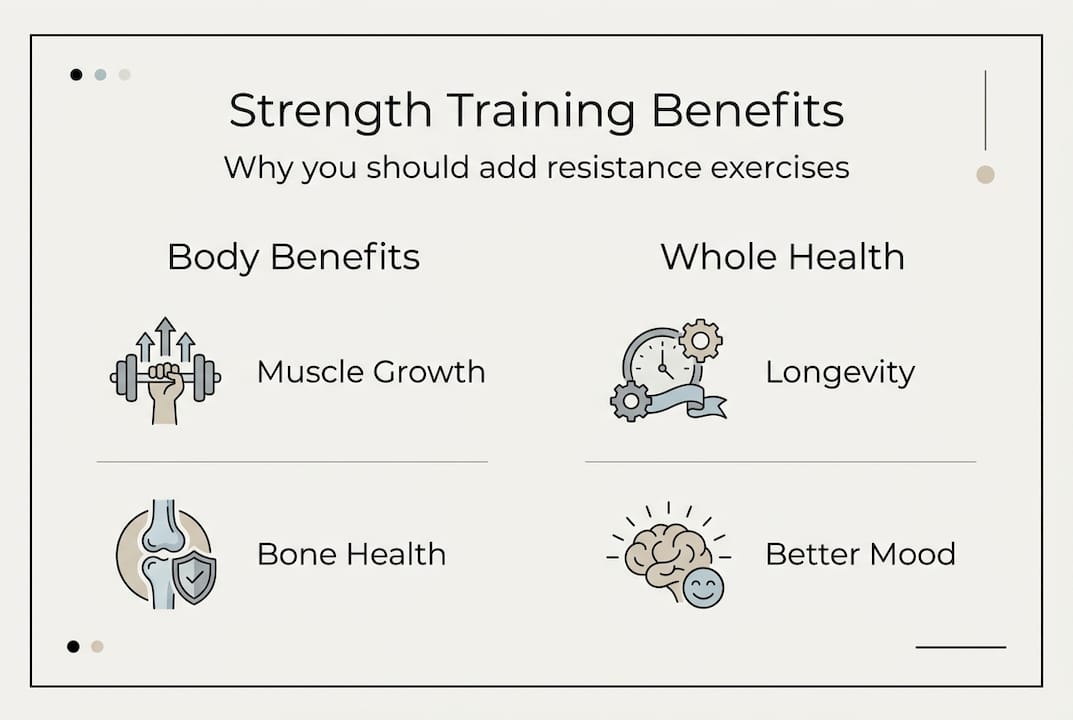
Resistance training (RT) extends far beyond the mirror. While many people associate lifting weights with bigger muscles, the real magic happens inside your body at the cellular and systemic levels. Resistance training provides health benefits beyond muscle hypertrophy, including reduced all-cause mortality and improved cognitive function. These effects make RT an essential component of any holistic fitness strategy, regardless of your age or current fitness level.
Your metabolic health receives a massive upgrade from regular strength work. RT improves insulin sensitivity, helping your body manage blood sugar more effectively. This makes resistance training particularly valuable for preventing and managing type 2 diabetes and obesity. Unlike temporary fixes, these metabolic improvements compound over time, creating a foundation for long-term health.
Cognitive benefits represent another surprising advantage of what is resistance training. Regular strength sessions support brain health through increased blood flow, reduced inflammation, and enhanced neuroplasticity. Studies show RT contributes to healthier aging by preserving memory and executive function. For older adults, this translates to maintained independence and quality of life.
RT also supports cancer survivorship and functional independence in later life. The adaptations your body makes during strength training create resilience against age-related decline. Consider these key benefits:
- Reduced risk of cardiovascular disease through improved blood pressure and lipid profiles
- Enhanced bone density, protecting against osteoporosis and fractures
- Better balance and coordination, reducing fall risk
- Improved mental health through stress reduction and mood regulation
“The evidence is clear: resistance training should be considered essential medicine, not optional exercise. Its impact on longevity and quality of life rivals or exceeds many pharmaceutical interventions.”
These wide-ranging effects make RT an essential part of your fitness toolkit. The beauty lies in accessibility. You don’t need to lift heavy barbells or spend hours in the gym to reap these rewards. Consistent, progressive resistance work at any intensity level triggers these beneficial adaptations.
How strength training compares to aerobic exercise for health and longevity
The debate between weights and cardio misses the point entirely. Both resistance training and aerobic training offer unique benefits, but the real winner is combining them strategically. Resistance training is superior or equal to aerobic training for many health outcomes, and combined RT plus AT can reduce mortality risk by up to 47%.
RT excels in building maximal strength, the foundation for all physical performance. This strength proves crucial for daily activities like carrying groceries, climbing stairs, or playing with your kids. Athletic performance demands maximal strength too. Without adequate strength reserves, you can’t generate power, maintain proper form during long efforts, or recover effectively between training sessions.
Aerobic training shines in cardiovascular endurance and immediate calorie expenditure. Running, cycling, and swimming improve your heart’s efficiency and lung capacity. However, AT alone doesn’t build significant muscle mass or bone density. This is where the synergy becomes powerful.
| Training Type | Primary Benefits | Mortality Reduction | Best For |
|---|---|---|---|
| Resistance Training | Muscle mass, bone density, metabolic health, maximal strength | Moderate | Strength, body composition, functional fitness |
| Aerobic Training | Cardiovascular health, endurance, immediate calorie burn | Moderate | Heart health, stamina, weight management |
| Combined RT+AT | All benefits from both modalities with synergistic effects | Up to 47% | Overall health, longevity, comprehensive fitness |
The combined approach delivers results neither method achieves alone. Your weekly routine should include both strength training home fitness sessions and aerobic work. This doesn’t mean doubling your training time. Strategic programming allows you to hit both systems efficiently.
Pro Tip: Structure your week with 2-3 resistance sessions and 2-3 aerobic sessions, allowing at least one full rest day. You can combine lighter RT with moderate cardio on the same day if time is limited, but keep intense sessions separate for optimal recovery and adaptation.
The metabolic improvements from RT complement AT’s cardiovascular benefits. Together, they create a robust defense against chronic disease. Your insulin sensitivity improves, inflammation decreases, and your body becomes more efficient at using fuel. These adaptations explain the dramatic mortality reduction seen in people who do both.
Consider your goals when balancing RT and AT. If functional strength and body composition matter most, weight RT more heavily. If you’re training for endurance events, prioritize AT but maintain RT to prevent muscle loss and injury. Most people benefit from roughly equal emphasis, adjusted based on personal preferences and lifestyle constraints.
Strength training for functional fitness and aging: preserving mobility and independence
Aging brings inevitable muscle loss called sarcopenia, but this decline isn’t a life sentence. Sarcopenia impairs mobility, increases fall risk, and threatens independence. The good news? RT improves handgrip, gait speed, knee extension strength in older adults with sarcopenia, with an optimal exercise dose around 1220 MET-minutes per week.

Functional fitness measures predict real-world capability better than appearance or even traditional strength tests. Handgrip strength correlates with overall vitality and longevity. Gait speed indicates fall risk and cardiovascular health. Knee extension strength determines your ability to stand from chairs, climb stairs, and maintain balance. RT targets all these metrics directly.
The recommended dose translates to practical programming. A MET-minute represents metabolic equivalent of task multiplied by duration. For resistance training for aging adults, this might mean three 40-minute sessions weekly at moderate intensity. You don’t need to train like a competitive athlete to see dramatic improvements.
| Functional Test | What It Measures | RT Improvement | Clinical Significance |
|---|---|---|---|
| Handgrip Strength | Overall muscle quality and vitality | 15-25% increase | Predicts mortality and disability risk |
| Gait Speed | Walking efficiency and fall risk | 10-20% faster | Each 0.1 m/s increase reduces fall risk significantly |
| Timed Up and Go (TUG) | Mobility and balance | 20-30% faster | Under 12 seconds indicates low fall risk |
| Five Times Sit-to-Stand (5STS) | Lower body strength and power | 25-35% faster | Reflects ability to perform daily activities independently |
These improvements translate directly to quality of life. Imagine maintaining the ability to garden, travel, and live independently well into your 80s and beyond. RT makes this possible by preserving the physical capacity required for daily tasks.
Pro Tip: Older adults should focus on compound movements that mimic daily activities. Squats, step-ups, and rows build functional strength more effectively than isolated exercises. Start with bodyweight or light resistance, emphasizing control and full range of motion over heavy loads.
Even light RT loads performed regularly benefit older adults’ physical function. This challenges the outdated belief that you must lift heavy to see results. Research shows that lighter weights with proper technique and consistency produce significant functional gains. The key is progressive overload, gradually increasing difficulty over time through added weight, repetitions, or movement complexity.
The psychological benefits deserve mention too. Maintaining physical capability builds confidence and reduces anxiety about falling or losing independence. This mental boost often motivates better nutrition, social engagement, and overall self-care. The compound effects create an upward spiral of improved health and vitality.
Preventing injuries and maximizing benefits: best practices for safe strength training
Injury risk represents the biggest concern for RT newcomers, but most problems are preventable. Common injuries from RT arise from improper technique and excessive load, while prevention includes progressive overload and supervision. Understanding injury mechanisms and prevention strategies keeps you training consistently for years.
Poor technique causes most strength training injuries. When you compromise form to lift heavier weights, stress shifts from target muscles to vulnerable joints and connective tissue. Your shoulder, back, and knees bear the brunt of this misplaced stress. Rotator cuff strains, lower back pain, and knee tendinitis plague lifters who prioritize ego over execution.
Beginners often benefit from machine weights initially to build confidence and strength safely. Machines guide movement patterns and reduce stabilization demands, allowing you to focus on the primary muscle action. This controlled environment helps you learn proper muscle engagement before progressing to free weights. There’s no shame in starting with machines, they’re tools designed to build a solid foundation.
Essential preventive strategies center on smart progression and quality coaching:
- Start with loads you can control for 10-15 repetitions with perfect form
- Increase weight only after mastering current loads for prescribed repetitions
- Learn proper breathing patterns to stabilize your spine during lifts
- Warm up thoroughly with dynamic movements before training
- Include mobility work to maintain healthy range of motion
- Listen to your body and distinguish between productive discomfort and pain signals
Progressive overload drives adaptation without overwhelming your body’s recovery capacity. Add small increments weekly or biweekly rather than jumping weight dramatically. A 5-pound increase might seem insignificant, but consistency compounds into major strength gains over months. Patience protects you from the setbacks that derail ambitious but reckless progression.
Pro Tip: Always prioritize form over weight and consider professional guidance for program design. A qualified trainer can identify movement compensations you don’t notice and provide individualized modifications based on your body’s unique mechanics and injury history. Even a few sessions create awareness that protects you long-term.
Supervision matters especially when learning new exercises or pushing intensity. A training partner or coach provides external feedback and safety spotting on heavy lifts. They catch form breakdowns before they become injuries. If solo training is your only option, video your sets periodically to self-assess technique.
Recognize the difference between muscle fatigue and joint pain. Muscle burn and fatigue during sets indicate productive work. Sharp, localized pain in joints signals a problem requiring immediate attention. Never push through joint pain. Stop, assess your form, reduce load, or modify the exercise. Strength training injury prevention requires this body awareness.
Rest and recovery prevent overuse injuries that develop gradually from accumulated stress. Your muscles need 48-72 hours between training the same muscle groups. Sleep, nutrition, and stress management support this recovery process. Chronic under-recovery leaves tissues vulnerable to strains and tears.
Gear up for effective strength training with Armageddon Sports
Now that you understand the transformative benefits of resistance training, having the right equipment makes all the difference. Quality gear supports proper form, protects vulnerable areas, and boosts your confidence during training sessions.

Armageddon Sports offers premium lifting equipment designed for both novices building their first home gym and experienced lifters refining their setup. From supportive weight lifting belts that stabilize your core during heavy compounds to grip-enhancing gloves and straps, every product serves a functional purpose. The fitness accessories collection includes everything you need to train safely and effectively, whether you’re working out at home or supplementing your gym routine. Equip yourself properly to maximize gains while minimizing injury risk, turning the knowledge you’ve gained here into consistent results.
Frequently asked questions
How often should a beginner start strength training?
Begin with two sessions per week, focusing on full-body routines that teach fundamental movement patterns. This frequency allows adequate recovery while building the habit and neural adaptations that precede visible strength gains. After 4-6 weeks of consistent training, you can add a third session if recovery permits.
What benefits does strength training offer beyond muscle growth?
Strength training reduces mortality risk by up to 47% when combined with aerobic exercise, improves insulin sensitivity and metabolic health, enhances cognitive function and memory, and increases bone density. These systemic benefits impact your entire body, creating resilience against chronic disease and age-related decline. The functional improvements extend to daily activities, making life easier and more enjoyable.
Is strength training safe for older adults?
When performed with proper technique and appropriate loads, strength training is exceptionally safe and beneficial for older adults. Research shows significant improvements in handgrip strength, gait speed, and functional mobility with minimal injury risk. Starting with supervised sessions or machine-based exercises builds confidence and competence before progressing to more complex movements.
Can I build strength with light weights?
Yes, lighter weights produce significant strength and health benefits, especially for beginners and older adults. The key is training close to muscular fatigue with controlled tempo and proper form. While heavier loads build maximal strength more efficiently, lighter resistance still triggers beneficial adaptations in muscle quality, metabolic health, and functional capacity.
How long before I see results from strength training?
Neural adaptations produce strength gains within 2-4 weeks, even before visible muscle growth. You’ll notice improved movement control, reduced fatigue during daily activities, and better exercise performance. Visible muscle changes typically appear after 6-8 weeks of consistent training. Metabolic and health benefits begin immediately but become measurable after several months of regular training.
Recommended
- Strength Training: Transforming Fitness at Home – Armageddon Sports
- What Is Resistance Training: Building Strength Safely – Armageddon Sports
- What is functional strength? Guide to effective training – Armageddon Sports
- Types of gym equipment: choose the best in 2026 – Armageddon Sports
- GolfForever Swing Trainer Plus Review: Strength, Mobility & Pro Workou – Aiming Fluid Golf