
Pushing through intense training sessions, competitive athletes know that a strong neck is more than just aesthetics—it is a safeguard against injury and a driver of performance. For bodybuilders and strength trainers seeking results, accurate neck strength measurement is widely recognized as the foundation for effective routines. This guide walks you through essential steps for assessing your strength, selecting premium equipment from Armageddon Sports, and mastering specialized neck workouts that build stability, resilience, and power.
Table of Contents
- Step 1: Assess Current Neck Strength And Mobility
- Step 2: Select Proper Neck Workout Equipment
- Step 3: Warm Up Neck Muscles Safely
- Step 4: Perform Key Neck Strengthening Exercises
- Step 5: Monitor Progress And Adjust Routine
Quick Summary
| Key Insight | Explanation |
|---|---|
| 1. Assess Your Neck Strength First | Understanding your current neck strength and mobility is essential for creating an effective training program. |
| 2. Choose Appropriate Equipment | Using well-designed neck workout equipment helps ensure effectiveness and safety during training routines. |
| 3. Warm Up Before Training | Proper warm-up techniques prepare your neck muscles and reduce the risk of injury before workouts. |
| 4. Incorporate Targeted Exercises | Focus on specific neck strengthening exercises to enhance muscle stability and prevent injuries. |
| 5. Monitor Progress Regularly | Consistent tracking of your progress helps refine routines and address any emerging discomfort during exercises. |
Step 1: Assess Current Neck Strength and Mobility
Before diving into a targeted neck workout routine, you need to understand your current neck strength and mobility baseline. Accurate neck strength measurement is crucial for developing an effective and safe training program.
To properly assess your neck strength and mobility, follow these strategic steps:
- Static Strength Test: Perform isometric neck holds against manual resistance
- Range of Motion Assessment: Measure flexibility in all neck movement directions
- Weakness Identification: Note any limitations or discomfort during testing
Professional clinicians recommend using standardized protocols that evaluate both strength and mobility comprehensively. This means testing neck muscle groups in multiple planes - flexion, extension, lateral flexion, and rotation. By understanding your specific neck muscle capabilities, you can design a personalized workout targeting precise areas of improvement.
Strategic neck assessment prevents potential injuries and optimizes performance gains.
Pro tip: Always perform strength assessments with a trained professional or experienced fitness coach to ensure proper technique and minimize injury risk.
Step 2: Select Proper Neck Workout Equipment
Choosing the right neck workout equipment is critical for safe and effective strength training. Targeted neck strengthening devices can help you develop muscle stability, improve posture, and prevent potential injuries.
When selecting neck workout equipment, consider these key factors:
- Resistance Range: Look for adjustable equipment that allows progressive overload
- Ergonomic Design: Prioritize gear with comfortable padding and secure fit
- Versatility: Select equipment enabling multi-plane movement and controlled resistance
Professional athletes and fitness experts recommend using specialized equipment like weighted harnesses, resistance bands, and isometric training devices. These tools provide targeted muscle engagement while minimizing strain risk. Clinically recommended neck strengthening tools focus on controlled, precise movements that support muscle development and joint stability.
Proper equipment selection is the foundation of an effective and safe neck training program.
Pro tip: Invest in high-quality, adjustable neck training equipment from reputable manufacturers to ensure safety and long-term performance gains.
Here’s a comparison of common neck workout equipment and their unique benefits:
| Equipment Type | Targeted Benefits | Ideal User |
|---|---|---|
| Weighted Harness | Builds mass and endurance | Athletes and lifters |
| Resistance Bands | Improves flexibility and control | Beginners and rehab patients |
| Isometric Devices | Enhances muscle activation | Those recovering from injury |
| Manual Resistance | Improves coordination | Advanced trainees or therapists |
Step 3: Warm Up Neck Muscles Safely
Preparing your neck muscles for intense training requires a strategic and controlled warm-up approach. Isometric neck warm-up techniques can significantly enhance muscle performance and reduce injury risks during your workout.
To warm up your neck muscles effectively, follow these critical steps:
- Dynamic Movement: Perform gentle, controlled rotations and tilts
- Isometric Holds: Practice static contractions in different neck positions
- Gradual Intensity: Start with low resistance and increase progressively
Professional athletes understand that neck warm-ups are not just about movement, but about preparing the neuromuscular system for activity. Neck muscle activation strategies focus on increasing muscle temperature, improving blood flow, and enhancing overall muscle readiness. This approach helps prevent potential strains and supports optimal performance during your neck strength training.
A proper warm-up transforms your neck muscles from cold and stiff to flexible and responsive.
Pro tip: Spend at least 5-7 minutes on your neck warm-up, focusing on slow, controlled movements that mimic your upcoming workout intensity.

Step 4: Perform Key Neck Strengthening Exercises
Developing a robust neck strength training program requires understanding and implementing targeted exercises that enhance muscle stability and prevent potential injuries. Deep cervical muscle strengthening is crucial for building a foundation of neck resilience and functional mobility.
Incorporate these essential neck strengthening exercises into your routine:
- Craniocervical Flexion: Practice controlled head nods with minimal movement
- Isometric Neck Holds: Maintain static positions against gentle resistance
- Chin Tucks: Activate deep neck flexors with precise, controlled movements
- Rotational Resistance: Perform gentle turns against manual or band resistance
Professional rehabilitation specialists recommend specific neck muscle exercises that target deep cervical muscles to improve endurance and strength. These techniques focus on re-educating muscle groups, reducing compensatory tension, and correcting postural imbalances. By systematically engaging these muscles, you can develop a more stable and resilient neck structure.
Consistent, precise neck exercises are your best defense against potential injuries and performance limitations.
Pro tip: Start with low resistance and prioritize perfect form, gradually increasing intensity as your neck muscle control and strength improve.
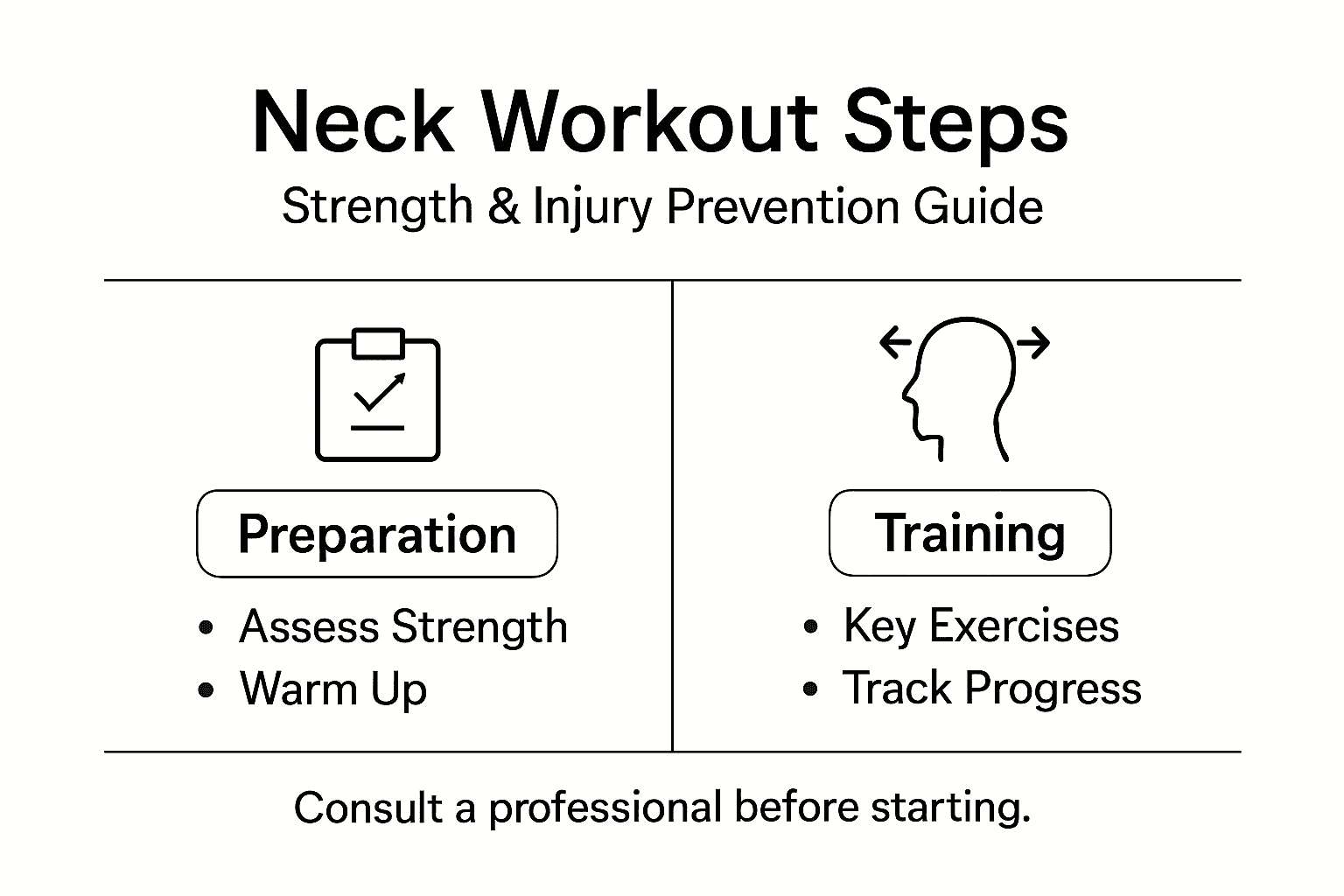
Below is a summary of key neck muscle exercises and their primary focus:
| Exercise Name | Main Focus | Recommended Frequency |
|---|---|---|
| Craniocervical Flexion | Deep flexor strength | 3-5 times per week |
| Isometric Neck Hold | Stability and endurance | 2-4 times per week |
| Chin Tuck | Posture correction | Daily |
| Rotational Resistance | Range of motion | 2-3 times per week |
Step 5: Monitor Progress and Adjust Routine
Successful neck strength training requires consistent evaluation and strategic modifications to your workout plan. Exercise intervention monitoring plays a critical role in preventing neck pain and optimizing muscle performance.
To effectively track and improve your neck workout routine, implement these key strategies:
- Performance Tracking: Record strength measurements and range of motion
- Regular Assessments: Conduct biweekly or monthly strength evaluations
- Pain and Discomfort Monitoring: Note any unusual sensations during exercises
- Progression Metrics: Measure improvements in resistance, duration, and technique
Professional athletes and rehabilitation specialists understand that systematic program adaptation is crucial for long-term neck muscle development. By maintaining a dynamic approach to your training, you can continuously refine your technique, prevent plateaus, and reduce injury risks.
Consistent monitoring transforms your neck workout from a static routine to an evolving performance strategy.
Pro tip: Create a detailed workout journal to track your progress, including specific exercise variations, resistance levels, and any physical sensations experienced during training.
Build Stronger Neck Muscles with the Right Gear and Support
Struggling with neck strength and injury prevention is common among fitness enthusiasts and athletes. This guide highlights key challenges like assessing neck strength, improving mobility, and choosing the right equipment to avoid injury while maximizing gains. If your goal is to safely enhance neck stability and posture through controlled, progressive workouts, having quality gear makes all the difference. Whether you need adjustable resistance tools or supportive training accessories, the right equipment ensures you train effectively without risking strain or discomfort.

Explore our wide selection of durable lifting gear designed to support your strength training efforts at Buy Lifting Equipment- Armageddon Sports. For targeted muscle activation and improved workout control, check out our specialized options at Shop Arm Workout Equipment -Armageddon Sports. Start building neck resilience today with premium gear that meets your training needs. Visit Armageddon Sports now and take the first step toward safer, more effective neck workouts.
Frequently Asked Questions
How can I assess my current neck strength and mobility?
To assess your neck strength and mobility, perform isometric neck holds against manual resistance and measure your range of motion in all directions. Take notes on any limitations or discomfort during these tests to establish a baseline for your training.
What equipment do I need for a neck workout?
You will need equipment that provides adjustable resistance, ergonomic design, and versatility for multi-plane movement. Consider using weighted harnesses, resistance bands, or isometric training devices to target your neck muscles safely and effectively.
What are some effective warm-up exercises for my neck?
Effective warm-up exercises for your neck include controlled rotations, gentle tilts, and isometric holds. Spend at least 5-7 minutes on these movements to increase muscle temperature and blood flow, preparing your neck for the workout ahead.
What key exercises should I include in my neck strengthening routine?
In your neck strengthening routine, include Craniocervical Flexion, Isometric Neck Holds, Chin Tucks, and Rotational Resistance exercises. Aim to perform these exercises 2-5 times per week, starting with low resistance to prioritize form and technique.
How do I monitor my progress in neck workouts?
Monitor your progress by keeping track of strength measurements, range of motion, and any discomfort experienced during exercises. Regularly assess your performance every two weeks to make adjustments to your routine and continue making improvements.
How often should I perform neck strengthening exercises?
Aim to perform neck strengthening exercises 2-5 times per week, focusing on different exercises to avoid muscle fatigue. Adjust your routine based on your progress and comfort levels, and include daily posture correction exercises like Chin Tucks.