
Stepping onto the platform for your first big lift brings a rush of excitement mixed with nerves. For many beginners and intermediate lifters, understanding the divisions and rules of powerlifting is the starting point for real progress. By learning about key categories, equipment, and training principles, you can transform your workouts into focused sessions that build consistent strength and confidence on meet day. Get ready to see how a structured approach can turn effort into lasting results.
Table of Contents
- Major Powerlifting Divisions And Rules
- Essential Equipment And Safety Guidelines
- Training Methods For Maximum Strength
- Common Mistakes And How To Avoid Them
Key Takeaways
| Point | Details |
|---|---|
| Powerlifting Divisions | Athletes compete in specific divisions based on weight and age, ensuring fair competition and personalized records. |
| Standardized Rules | Competition rules are uniform globally, including lift order and judging criteria, promoting consistency across events. |
| Equipment Importance | Proper equipment, such as lifting shoes and weight belts, enhances performance and helps prevent injuries during training and competitions. |
| Training Strategies | Focus on progressive overload and recovery; structured training weeks yield better strength gains and minimize injury risks. |
…
Major Powerlifting Divisions and Rules
Powerlifting competitions organize athletes into specific categories to ensure fair competition. The sport uses weight classes as the primary division method, allowing lifters of similar body weight to compete against each other. This approach prevents heavier athletes from having an automatic advantage over smaller competitors. Beyond weight classes, athletes are divided into age divisions such as Open (typically 18-65 years old), Junior (13-23 years old), Masters (40+), and Para divisions for athletes with physical impairments. Each division has its own records and rankings, meaning a 45-year-old Masters competitor and a 25-year-old Open lifter compete separately despite potentially lifting similar weights.
The rules governing powerlifting competitions are standardized across most federations worldwide. Competitions follow a strict order: squat, bench press, then deadlift. Competition rules and equipment standards specify exactly how each lift must be executed, what equipment is allowed, and how judges determine if a lift is successful or failed. Weigh-in protocols are meticulously controlled to prevent athletes from gaining unfair advantages through dehydration tactics or equipment manipulation. Judging criteria remain consistent across federations, with three judges evaluating each attempt and determining whether lifters meet the technical requirements for a valid lift. Athletes are ranked by their total weight lifted across all three lifts, and ties are broken by body weight (lighter athletes rank higher). These standardized rules apply whether you compete at a local gym meet or an international championship.
Para Powerlifting represents a specialized division within the sport, designed specifically for athletes with physical impairments. This division follows detailed guidelines that account for different disability classifications, ensuring athletes compete fairly within their respective categories. Para powerlifting uses body weight and impairment-based classifications to create equitable competition groups. The bench press serves as the primary lift in Para Powerlifting, though some formats incorporate other movements depending on athlete capabilities. This inclusive approach has made powerlifting accessible to a broader population, demonstrating that strength competition can accommodate athletes across all ability levels.
Here is a comparison of major powerlifting divisions, highlighting each category’s unique criteria and primary lift focus:
| Division | Age Range | Unique Criteria | Primary Lift(s) |
|---|---|---|---|
| Open | 18-65 years | Standard for adults, all weights | Squat, Bench, Deadlift |
| Junior | 13-23 years | Younger athletes, own records | Squat, Bench, Deadlift |
| Masters | 40+ years | Older athletes, subdivided by age | Squat, Bench, Deadlift |
| Para Powerlifting | All ages | Physical impairments, weight/impairment classes | Bench Press only |
Understanding these divisions matters because they determine who you’ll compete against and which records you can potentially break. If you’re 34 years old and weigh 180 pounds, you’d compete in the Open division at your weight class, competing for records specific to that category. Your lifts won’t be compared against Masters athletes or different weight classes, which keeps competition meaningful and achievements comparable. Most beginner lifters start in local competitions within their weight class and age division before advancing to larger regional or national events. The structured nature of these divisions is what makes powerlifting so organized and fair.
Pro tip: Check your local federation’s specific weight class divisions and age categories before your first competition, as these can vary slightly between organizations, and knowing your exact division helps you set appropriate goals and find comparable athletes to train alongside.
Essential Equipment and Safety Guidelines
Powerlifting requires specific equipment designed to support your body and maximize performance during heavy lifts. The foundation starts with lifting shoes, which provide a stable, elevated heel that improves your squat depth and bar positioning during the bench press. Unlike regular sneakers that compress under load, powerlifting shoes have rigid soles that keep your feet planted firmly against the platform. A weight belt wraps around your midsection and provides crucial support for your core during heavy squats and deadlifts. When worn correctly and tightened during the lift, it increases intra-abdominal pressure, allowing your core muscles to brace more effectively. Knee sleeves or wraps protect your joints by providing compression and warmth, reducing stress on the ligaments and cartilage during knee-bending movements. Wrist wraps stabilize your wrists during bench press, preventing excessive backward bending that could cause injury or compromise your lift. Many lifters also use chalk to improve grip security on the barbell, especially during deadlifts where sweaty palms can make the bar slip from your hands.
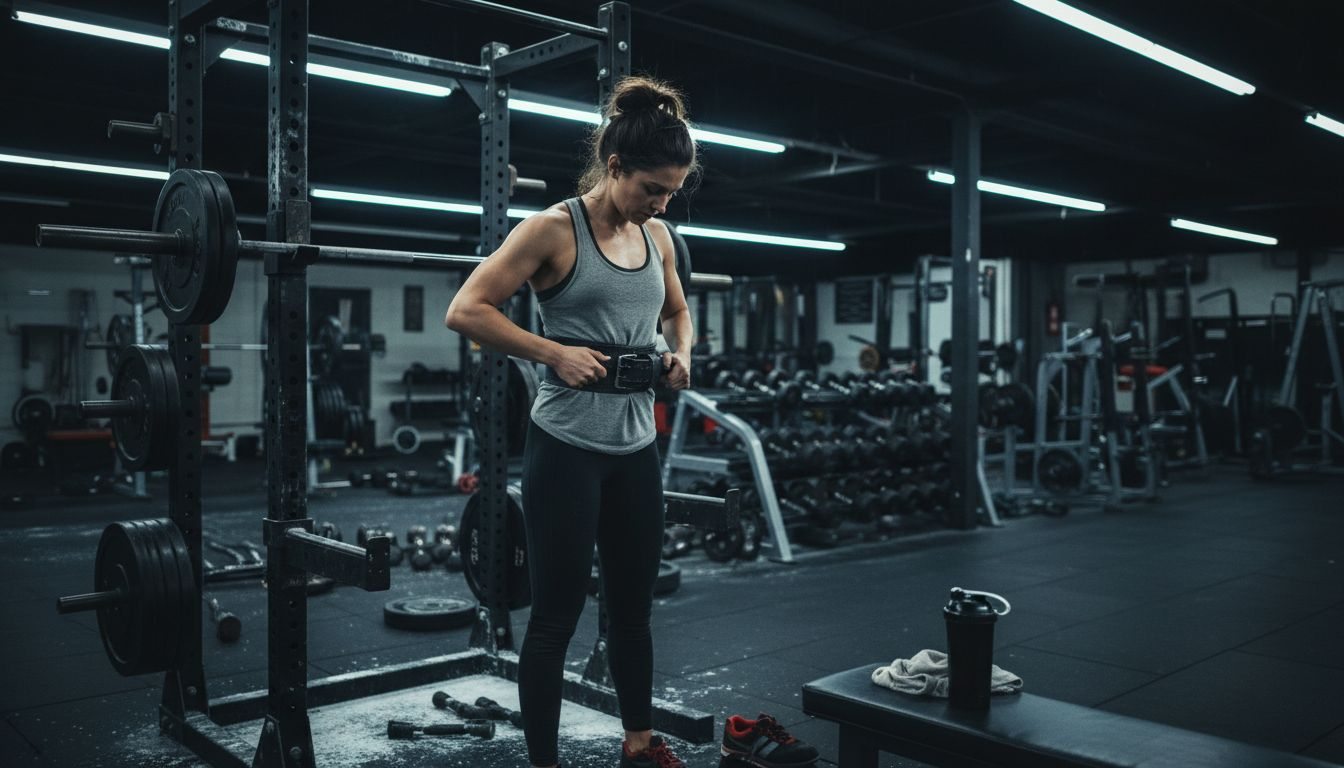
Competition-specific equipment includes a lifting singlet that allows judges clear visibility of your body positioning throughout each lift. The barbell, plates, and platform used in competitions are all calibrated and standardized to ensure consistent conditions across all athletes. Proper equipment specifications and safety standards ensure that your gear meets regulation requirements and provides the protection your body needs. Using approved equipment isn’t just about following rules, it’s about ensuring the equipment has been tested and proven safe for heavy lifting. When you’re loading hundreds of pounds onto your shoulders, you want equipment that won’t fail or slip unexpectedly.
Below is a summary of essential equipment functions and their main benefits for lifters:
| Equipment | Primary Function | Key Performance Benefit |
|---|---|---|
| Lifting shoes | Stabilizes foot and stance | Better force transfer, safe depth |
| Weight belt | Supports trunk, increases pressure | Safer heavy squats and deadlifts |
| Knee sleeves | Compresses and warms joints | Reduces knee injury risk |
| Wrist wraps | Stabilizes wrists | Prevents wrist overextension |
| Chalk | Improves palm grip | Prevents bar slip under load |
Safety guidelines extend beyond just wearing the right gear. Gradual load increases and proper technique form the foundation of injury prevention. Never jump from lifting 225 pounds to 315 pounds without gradually building up. A thorough warm-up routine prepares your muscles, joints, and nervous system for heavy lifting. Start with bodyweight movements or light weights, then gradually increase the load as you prepare for your working sets. Always ensure equipment checks before lifting, especially when using gym equipment that multiple people share. Inspect the barbell for damage, verify that collars are secure on the plates, and confirm that benches are stable. Working with qualified coaches or experienced lifters helps you maintain proper form as fatigue sets in, which is when injuries often occur. Rest days are equally important as training days, allowing your muscles and central nervous system to recover.
Key Equipment Checklist for Training
- Lifting shoes with rigid sole and elevated heel
- Weight belt (4 to 6 inches wide)
- Knee sleeves or wraps for joint support
- Wrist wraps for bench press stability
- Chalk for improved grip
- Appropriate singlet for competition
- Access to calibrated barbells and plates
Pro tip: Invest in quality lifting shoes and a belt first, as these two items provide the most significant safety and performance benefits, then gradually add accessories like knee sleeves and wrist wraps as you increase your training volume and competition preparation.
Training Methods for Maximum Strength
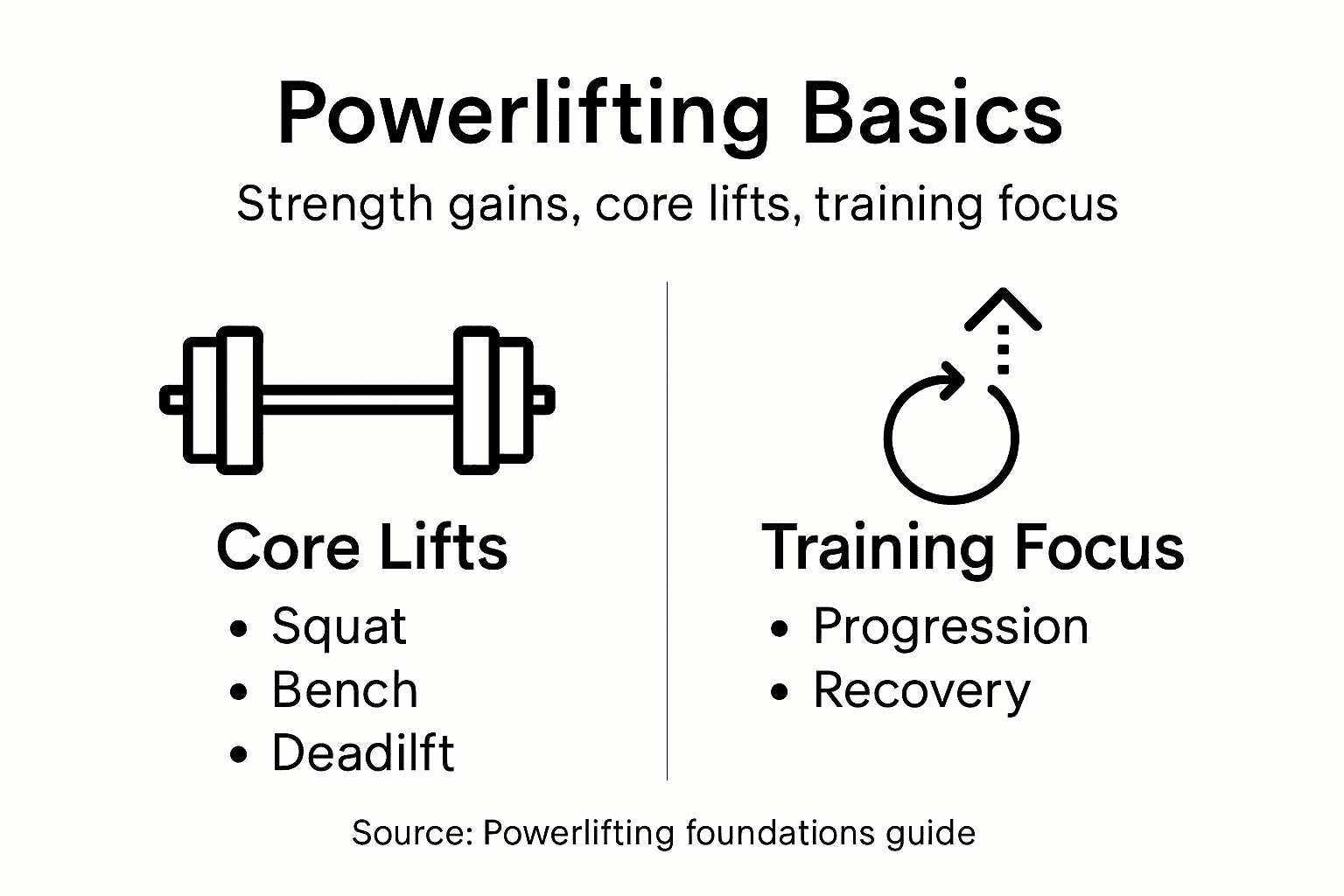
Maximizing strength in powerlifting requires a specific approach to training volume, intensity, and progression. The most effective method involves working with heavy loads at high effort levels. Research demonstrates that 3-6 working sets of 1-5 repetitions performed at loads above 80% of your one-repetition maximum (1RM) yield significant strength gains when performed 1-3 times per week per lift over a 6-12 week period. This means if your squat 1RM is 315 pounds, you’d be training with weights above 252 pounds. The low repetition range allows your nervous system to adapt to heavy loads while minimizing muscular fatigue, which is why powerlifters don’t perform endless sets of high repetitions like bodybuilders do. Training at these intensities doesn’t mean grinding out reps until failure. Instead, quality matters more than quantity. A single set of 2 repetitions at 90% of your maximum, performed with perfect technique and maximal effort, produces far better strength results than 5 sloppy reps at the same weight.
Progressive overload forms the foundation of any effective strength program. This principle means gradually increasing training demands above what your body has adapted to previously. You can increase overload through three main methods: adding more weight to the bar, performing additional sets or reps with the same weight, or increasing training frequency. Effective strength training emphasizes progressive overload, specificity, variation, and recovery to optimize adaptation. For a beginner, this might mean adding 5-10 pounds to your squat every two weeks. For an intermediate lifter, progress may slow to 2-5 pounds per week. The key is consistent, measurable progression. If you’re stuck at the same weights for 4 weeks straight, your body isn’t being challenged enough to adapt. Variation prevents plateaus by changing exercise selection, rep ranges, or training angles while maintaining your primary barbell lifts. Back-off sets, where you reduce the weight after your heavy working sets and perform moderate-load reps, enhance strength outcomes by allowing additional volume without excessive fatigue.
The Training Week Structure
A practical strength training week might look like this:
- Day 1: Squat focus (heavy singles and doubles)
- Day 2: Bench press focus (heavy triples and fives)
- Day 3: Recovery or accessory work
- Day 4: Deadlift focus (heavy singles)
- Days 5-7: Light training or complete rest
This structure distributes the nervous system demands across the week while allowing adequate recovery. Some lifters prefer a higher frequency approach, training each lift twice weekly at different intensities. The most important factor is consistency. Training the same lifts, at similar intensities, on a predictable schedule allows your body to adapt systematically. Consistency beats perfection every time. A solid 70% effort program performed consistently for 12 weeks outperforms a perfect program followed sporadically.
Recovery deserves equal attention as the training itself. Your muscles don’t grow or get stronger during the workout. They adapt during rest periods between sessions. Sleep quality, nutrition, and stress management all impact recovery capacity. Many intermediate lifters increase their strength more by improving sleep and reducing daily stress than by adjusting their actual training. Using proper technique and allowing adequate recovery alongside appropriate progression strategies optimizes strength development and minimizes injury risk. A beginner lifting with perfect form and full recovery beats an advanced lifter training inconsistently with poor technique.
Pro tip: Track your working sets and actual weights lifted in a simple spreadsheet, then focus on adding weight or reps to just one lift each week, which removes guesswork from progression and ensures you’re always moving forward.
Common Mistakes and How to Avoid Them
The path to strength gains becomes significantly shorter when you avoid the pitfalls that derail most beginners. One of the most destructive mistakes is letting ego override judgment. You see someone lifting 400 pounds, feel inspired, load up the bar to attempt the same weight, and end up with a lower back injury that sidelined you for months. This happens constantly in gyms worldwide. Common mistakes in powerlifting include attempting weights beyond your capability due to ego or peer pressure, which dramatically increases injury risk. The reality is unglamorous: start with weights you can control with perfect form. Your ego might take a hit initially, but your joints will thank you. A 225-pound squat performed with flawless technique teaches your nervous system far more than a 315-pound squat where you collapse forward at the bottom. Competition happens in controlled environments with judges and spotters present. Training alone in your garage demands even more caution and respect for the weight.
Another critical mistake involves neglecting the warm-up and cool-down phases of your session. Many lifters walk into the gym, load up their working weight, and start grinding reps immediately. Your muscles, joints, and connective tissue aren’t ready for heavy loading when cold. A proper warm-up gradually increases blood flow, elevates body temperature, and prepares your nervous system for the demands ahead. Start with five to ten minutes of light cardio, then perform dynamic stretches and mobility work. Follow this with lighter sets of the main lift, progressively adding weight until you reach your working loads. The warm-up doesn’t need to be complicated, but it’s non-negotiable. Similarly, inadequate warm-up and cool-down leading to injury combined with insufficient rest means your body never fully recovers between sessions. A five-minute cool-down with stretching helps transition your nervous system from high alert back to normal, reducing residual tension that accumulates over weeks of training.
Major Mistakes and Prevention Strategies
Overtraining without recovery represents another pervasive error. The mentality of “more is better” leads intermediate lifters to train every single day, perform too many sets, or add heavy sessions too frequently. Your body adapts during rest, not during the workout. Overtraining without proper recovery causes muscle strains and joint pain, while insufficient rest fundamentally prevents adaptation. If you’re training five days weekly at high intensity, you’re not giving your nervous system time to recover between sessions. Most lifters see better results training three days per week with full recovery than training six days per week exhausted. Rest days aren’t wasted days. They’re when your muscle fibers repair, your joints recover, and your strength actually develops. Some lifters plateau not because their program is wrong, but because they never rest long enough to adapt to the stimulus.
Poor lifting technique deserves special attention because it’s both preventable and common. Rounding your lower back during deadlifts, flaring your elbows excessively during bench press, or allowing your knees to cave inward during squats creates injury risk that compounds over time. Many lifters learn bad habits early and repeat them for years without realizing they’re creating movement dysfunction. Video recording your sets and comparing them to instructional content reveals technical flaws. Working with a qualified coach accelerates technique development tremendously. Focusing on correct form, adequate preparation, and gradual progression of weight loads prevents common injuries that otherwise sideline lifters. A single technique correction often produces immediate strength improvements because you’re finally engaging the right muscles and loading your skeleton safely.
Ignoring mobility and supplemental work creates imbalances that eventually cause problems. Powerlifting demands specific movement patterns repeatedly, which can create tightness in certain areas. Ignoring these mobility restrictions forces compensation patterns that lead to injuries in unexpected places. A tight thoracic spine doesn’t cause back pain directly, but it forces compensation in your lumbar spine during squats, which then hurts. Addressing mobility and performing accessory work prevents these cascading problems.
Pro tip: Film yourself performing each lift from multiple angles every week, then compare your form when fresh versus fatigued, which reveals technical breakdowns that happen under fatigue and shows exactly where your technique needs refinement.
Elevate Your Powerlifting Journey with the Right Gear
Powerlifting transforms strength through discipline, technique, and consistent progression but without quality equipment your performance and safety could be at risk. Whether you are focusing on mastering squat depth with stable lifting shoes or securing your core with a trusted weight belt Armageddon Sports offers a complete range of lifting equipment designed to support every phase of your powerlifting journey. From essential accessories like knee sleeves to wrist wraps and chalk our gear helps you train smarter and safer while pushing your limits.
Take control of your training progress today by choosing equipment that matches the intensity of your workouts. Shop now to experience durable gear that meets competition standards and ensures you can train with confidence. Begin building your strength with Armageddon Sports and explore everything from specialized lifting gear to fitness gloves that enhance grip and protect your hands. Visit Armageddon Sports and start equipping yourself for powerlifting success right away.
Frequently Asked Questions
What are the main lifts in powerlifting?
The three primary lifts in powerlifting are the squat, bench press, and deadlift. Competitors perform these lifts in that specific order during competitions.
What equipment is essential for powerlifting?
Essential equipment for powerlifting includes lifting shoes, a weight belt, knee sleeves or wraps, wrist wraps, and chalk for grip assistance. Competitions also require a lifting singlet for visibility.
How do powerlifting divisions work?
Powerlifting divisions are primarily based on weight classes and age categories. Athletes compete in categories such as Open, Junior, Masters, and Para Powerlifting, each with specific criteria and records.
What are common mistakes to avoid in powerlifting training?
Common mistakes in powerlifting training include lifting weights beyond your capability due to ego, neglecting to warm-up properly, and failing to allow adequate recovery. Proper technique and gradual progression are crucial for avoiding injuries.
Recommended
- Strength Training: Transforming Fitness at Home – Armageddon Sports
- How to Use Lifting Straps for Maximum Grip Strength – Armageddon Sports
- 7 Key Benefits of Weightlifting Belts for Athletes – Armageddon Sports
- How to Actually Use Weight Lifting Straps for Deadlift – Are Wrist Hoo – Armageddon Sports


