
Choosing the wrong powerlifting gear is not just a performance issue. It can get you disqualified before your first attempt, or worse, leave you injured under a loaded bar. With dozens of federations, each publishing their own approved equipment lists, and gear ranging from budget knockoffs to competition-grade tools, the margin for error is real. This guide walks you through every decision, from understanding federation rules to maintaining your gear long-term, so you step onto the platform confident, compliant, and ready to hit personal records.
Table of Contents
- Understand federation rules and competition requirements
- Powerlifting gear checklist: what you really need
- How to choose the right gear: features, materials, and fit
- Common mistakes and troubleshooting your gear selection
- Maximizing your investment: care, maintenance, and gear upgrades
- Find your perfect powerlifting gear at Armageddon Sports
- Frequently asked questions
Key Takeaways
| Point | Details |
|---|---|
| Check federation rules | Always verify your federation’s approved gear list before purchasing any equipment. |
| Prioritize fit and quality | The best gear is both competition-approved and tailored to your size for comfort and safety. |
| Invest for longevity | High-quality brands may cost more upfront but save you money and prevent injuries long-term. |
| Maintain and upgrade wisely | Routine care and timely upgrades keep your gear reliable and competition-ready. |
Understand federation rules and competition requirements
Before you spend a single dollar on gear, you need to know which federation you are competing in. The IPF (International Powerlifting Federation), USAPL (USA Powerlifting), and USPA (United States Powerlifting Association) all have different approved equipment lists, and what passes in one meet may get you red-lighted in another. This is not a minor detail. It is the foundation of your entire gear strategy.
The main categories of gear that federations regulate include:
- Lifting belts (thickness, width, and closure type are all specified)
- Knee sleeves and wraps (material, length, and stiffness limits apply)
- Wrist wraps (maximum length is strictly enforced)
- Singlets (must meet specific material and coverage requirements)
- Shoes (heel height and sole construction are regulated)
The USPA rulebook and the IPF equipment list are your primary references. Both publish updated approved equipment lists that name specific brands and models cleared for competition. Bookmark them now.
Compliance warning: Using non-approved gear at a sanctioned meet results in immediate disqualification of that lift or removal from the competition. Equipment checks happen before you ever touch the bar, so there is no fixing it on the day.
When shopping for approved weightlifting belts, always cross-reference the product against your federation’s current list. Lists update regularly, and last year’s approved belt may not make this year’s cut.
Powerlifting gear checklist: what you really need
Raw powerlifting (also called classic raw) means you lift without supportive suits or multi-ply equipment. Equipped powerlifting allows squat suits, bench shirts, and deadlift suits that provide mechanical assistance. Your gear list changes significantly depending on which style you compete in.
Here is a breakdown of what each division typically requires or allows:
| Gear item | Raw/classic raw | Equipped |
|---|---|---|
| Singlet | Required | Required |
| Lifting belt | Required | Required |
| Knee sleeves | Allowed | Allowed |
| Knee wraps | Classic raw only | Allowed |
| Wrist wraps | Allowed | Allowed |
| Squat suit | Not allowed | Required |
| Bench shirt | Not allowed | Required |
| Deadlift suit | Not allowed | Allowed |
| Lifting shoes | Strongly recommended | Required |
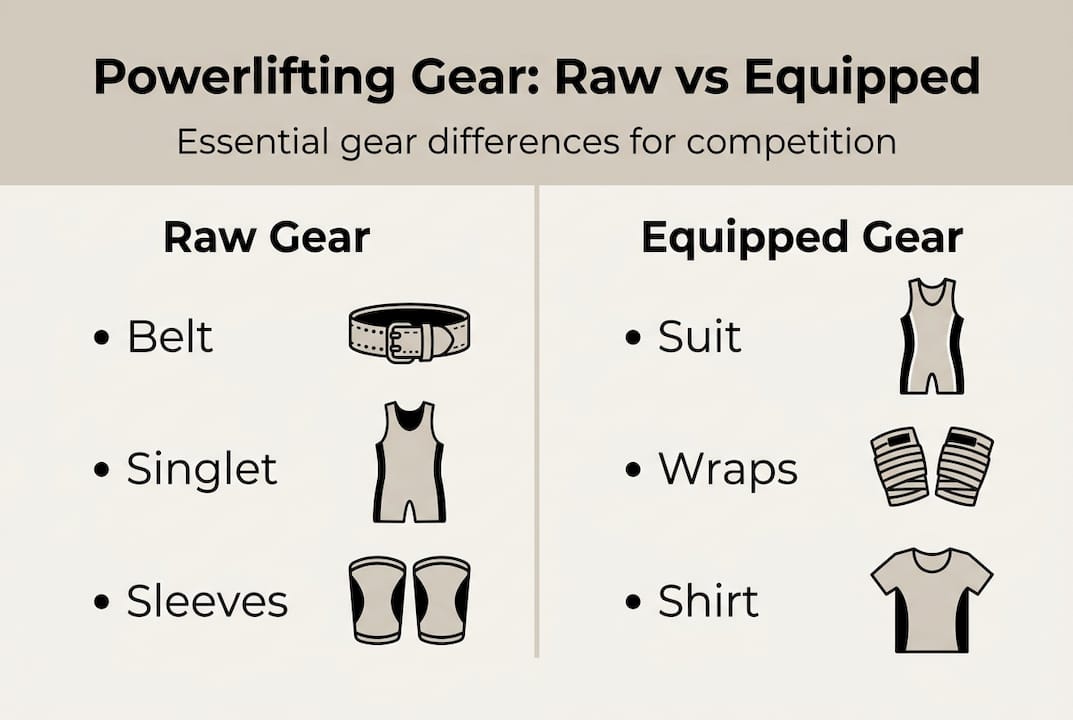
According to USPA division rules, knee wraps are only permitted in classic raw or equipped divisions, not standard raw. This catches a lot of newer lifters off guard.
For a deeper look at what each item actually does for your performance, the guide on essential powerlifting gear breaks it down lift by lift. And if you are unsure how fit affects safety, choosing gear for safety is worth reading before you buy anything.
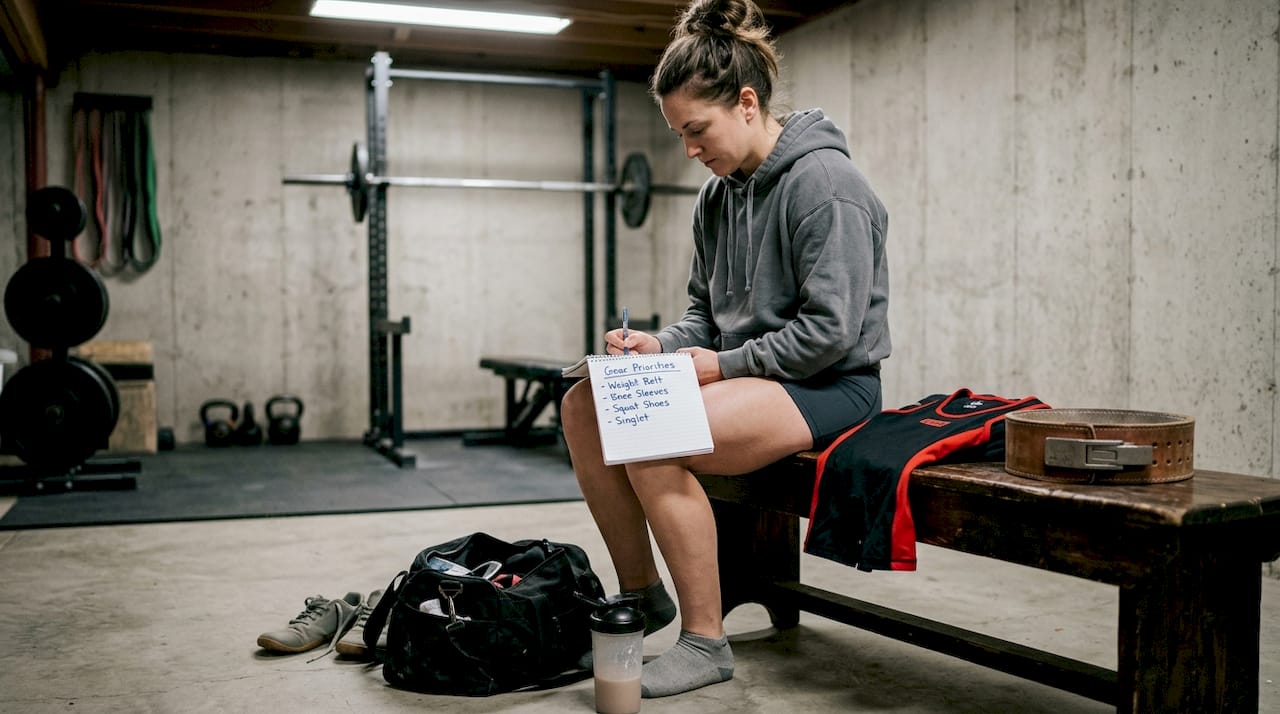
Pro Tip: If you are on a tight budget, prioritize a competition-approved belt and singlet first. Everything else can be added over time as you grow into the sport.
How to choose the right gear: features, materials, and fit
Knowing what gear you need is step one. Knowing what makes that gear actually good is step two. Here is a practical process to follow before any purchase:
- Measure yourself accurately. Belt sizing is based on your waist measurement at the navel, not your pants size. Sleeve sizing depends on your knee circumference. Get a tape measure and use it.
- Check the federation approved list. Before you fall in love with a product, confirm it is on your federation’s list. This takes two minutes and saves a lot of frustration.
- Evaluate key features. For belts, look at thickness (10mm or 13mm), width (up to 10cm for most federations), and closure type (lever or prong). For sleeves, check stiffness rating and material (neoprene is standard).
- Test the fit before competition. Wear your gear during training for several weeks. A belt that feels fine in the store may dig into your hips under a max squat. You need to know this before meet day.
- Choose reputable brands. Durable powerlifting brands like Inzer, SBD, A7, Titan, and Pioneer are consistently recommended for quality and longevity over cheaper alternatives.
For a broader look at how to evaluate fitness accessories before buying, the article on choosing fitness accessories covers the decision framework well. If you are specifically comparing leather belt options, top leather lifting belts gives you a focused comparison. And for grip support during accessory work, best training gloves is a useful reference.
Pro Tip: Lever belts are faster to put on and off between attempts, but prong belts are easier to adjust if your waist size fluctuates during a training cycle. Choose based on your actual training habits, not just what looks cool.
Common mistakes and troubleshooting your gear selection
Even experienced lifters make gear mistakes. Here are the most common ones and how to avoid them:
- Buying gear for the wrong federation. A belt approved by USPA may not be on the IPF list. Always verify against your specific federation before purchasing.
- Ignoring fit in favor of price. A belt that is too wide will bruise your hips. Sleeves that are too loose provide zero support. Fit is not optional.
- Skipping the approved equipment check. Many lifters assume a well-known brand is automatically approved. It is not. Specific models and colorways can be rejected.
- Buying equipped gear before mastering raw technique. Supportive suits change your movement patterns significantly. Build your raw foundation first.
- Waiting until the week before a meet to test gear. New gear needs to be broken in. Stiff leather belts, in particular, take weeks of use to mold to your body.
Safety warning: Showing up to a meet with non-compliant gear is not just an inconvenience. It can mean zero recorded lifts and a wasted entry fee. The USPA rulebook is explicit: equipment checks are mandatory, and non-approved items will be flagged.
If your gear is causing discomfort, leaving unusual marks, or failing equipment checks during training mock-ups, treat that as a red flag. The guide on choosing gear for safety walks through fit troubleshooting in detail. For broader gym setup decisions, selecting gym equipment is a solid companion resource. And if grip is failing before your gear does, improving grip strength addresses the root cause.
Maximizing your investment: care, maintenance, and gear upgrades
Good powerlifting gear is not cheap. Protecting that investment means cleaning and maintaining it properly, and knowing when it is time to replace something before it fails under load.
| Feature | Budget gear | Premium gear |
|---|---|---|
| Average cost | $20 to $60 | $80 to $250+ |
| Lifespan | 6 to 18 months | 3 to 10+ years |
| Competition approval | Often not approved | Usually approved |
| Performance impact | Minimal to moderate | Significant |
| Injury risk | Higher with poor fit | Lower with proper fit |
Maintenance tips by gear type:
- Leather belts: Wipe down with a damp cloth after each session. Apply leather conditioner every few months to prevent cracking. Store flat, not rolled.
- Knee sleeves: Hand wash with mild soap after heavy use. Air dry only. Never put them in a dryer.
- Wrist wraps: Machine wash on a gentle cycle. Lay flat to dry. Check velcro regularly for debris that reduces grip.
- Singlets: Follow the manufacturer’s washing instructions. Avoid high heat, which degrades elastic fibers.
Signs it is time to upgrade: your belt no longer holds its shape under load, your sleeves have lost their compression, or your gear fails a visual inspection at a meet. Premium powerlifting brands like SBD and Inzer are known for lasting years with proper care, making the upfront cost worthwhile over time.
For guidance on which belt styles hold up best over a long training career, reliable lifting belts covers the key differences. And if you want to understand how each piece of gear contributes to your total, gear for more performance ties it all together.
Find your perfect powerlifting gear at Armageddon Sports
You have done the research. You know your federation rules, your gear checklist, and what quality actually looks like. Now it is time to put it all together with equipment you can trust on the platform.
At Armageddon Sports, you will find a full lifting gear collection built for lifters who take their training seriously. Whether you need competition-ready weightlifting belts that meet federation standards or fitness gloves for your accessory work, the range covers every category covered in this guide. Quality, compliance, and value are all in one place, so you can focus on what matters: hitting the platform ready to perform.
Frequently asked questions
What gear is mandatory for powerlifting competitions?
At a minimum, an approved singlet, belt, and shoes are required at most meets. Items like knee sleeves or wrist wraps depend on your specific federation’s rules.
How do I know if my gear is approved?
Check your federation’s published approved equipment list before buying. The USPA rulebook and IPF list are updated regularly and name specific approved brands and models.
Does quality matter for beginner gear?
Yes. Quality gear provides better support, lasts significantly longer, and reduces injury risk. Reputable brands like Inzer and SBD cost more upfront but save money and protect you over a full training career.
Can I compete raw and use knee sleeves or wraps?
Most federations allow knee sleeves in raw divisions. Knee wraps, however, are only permitted in classic raw or equipped divisions per USPA division guidelines. Always verify with your specific federation.
When should I upgrade my powerlifting gear?
Upgrade when your gear fails fit checks, shows significant wear, or no longer meets federation standards. Premium gear from established brands typically signals when it needs replacing through visible wear patterns rather than sudden failure.