
Struggling with grip fatigue during deadlifts or back pain after heavy squats? Poor gear choices might be sabotaging your training. This guide reveals how selecting properly fitted weightlifting belts, gloves, and straps enhances safety, reduces injury risk by 20%, and maximizes lifting performance. You’ll learn exactly what to look for when choosing gear that matches your training style and body measurements.
Table of Contents
- Introduction To Weightlifting Gear
- Prerequisites: What You Need Before Choosing Gear
- Choosing A Weightlifting Belt
- Selecting Gloves And Wrist Straps
- Proper Fit And Sizing Of Gear
- Budget And Quality Considerations
- Common Mistakes And Troubleshooting
- Maintenance, Replacement Timelines, And Expected Outcomes
- Explore Top Weightlifting Gear At Armageddon Sports
- FAQ
Key takeaways
| Point | Details |
|---|---|
| Proper fit reduces injury risk by 20% | Well-fitted gear provides optimal support without restricting movement or circulation |
| Weightlifting belts increase intra-abdominal pressure by 25% | Enhanced core stability protects your spine during heavy compound lifts |
| Wrist straps improve grip strength by up to 30% | Reduced forearm fatigue lets you focus on target muscle groups |
| Quality gear lasts 2-3 times longer | Moderate investment in durable materials pays off through extended usability |
| Regular maintenance preserves performance | Cleaning and timely replacement sustain safety benefits and effectiveness |
Introduction to weightlifting gear
Weightlifting gear serves as your training partner, providing mechanical advantages that enhance performance while protecting vulnerable areas. The three foundational categories each address specific training challenges you’ll encounter as weights increase.
Weightlifting belts form the cornerstone of heavy lifting support. They work by creating a rigid surface against which your core muscles can push, increasing intra-abdominal pressure by 25% to stabilize your spine during squats, deadlifts, and overhead movements. This mechanical advantage reduces lower back strain and helps maintain proper posture under load.
Gloves and wrist straps tackle the grip equation. Your hands take tremendous punishment during training sessions, developing calluses and experiencing fatigue that can limit set completion. Quality gloves protect palm skin while providing padding for barbell contact points. Wrist straps transfer load from fatiguing forearms to your wrists, enabling you to maintain grip through those final crucial reps when targeting back or leg muscles.
Key benefits of proper gear selection include:
- Enhanced spine stability during maximal effort lifts
- Reduced risk of grip failure on pulling movements
- Protection against callus tears and hand injuries
- Improved lifting confidence through reliable support
- Extended training capacity by reducing accessory muscle fatigue
These tools don’t replace proper technique or progressive programming. They amplify your existing strength base when applied strategically.
Prerequisites: what you need before choosing gear
Rushing into gear purchases without self-assessment leads to wasted money and suboptimal results. Taking measurements and clarifying your training priorities ensures every dollar spent directly supports your specific goals.
Start by defining your primary training objective. Powerlifters chasing maximal singles require different support than bodybuilders performing volume work or CrossFit athletes mixing modalities. Your goal determines whether you prioritize maximum rigidity in a belt or flexibility for dynamic movements.
Accurate body measurements form the foundation of proper fit. For belts, measure your waist circumference at the point where you’ll wear it, typically just above your hip bones and below your ribcage. This isn’t your pants size. For gloves, measure hand width across your palm and finger length from wrist to fingertip. Write these numbers down before shopping.
Your fitness level and injury history matter significantly. Beginners benefit from learning proper bracing without belts initially, while experienced lifters moving serious weight need robust support. Previous back injuries might require earlier belt adoption, whereas shoulder issues could influence strap selection.
Essential preparation steps:
- Identify whether you’re training for strength, hypertrophy, or athletic performance
- Take waist measurements while standing relaxed, not flexed
- Measure both hands since dominant hands are often slightly larger
- List any current or past injuries affecting your lifting
- Determine your typical rep ranges and training frequency
This information transforms generic product descriptions into personalized gear recommendations that actually match your needs.
Choosing a weightlifting belt
Belt selection impacts your training safety more than any other gear decision. The right belt provides confidence under maximal loads while the wrong choice creates false security or discomfort that disrupts lifting mechanics.
Closure mechanisms represent your first major decision point. Lever belts offer quick adjustment between sets using a simple flip mechanism, ideal for lifters who maintain consistent waist measurements throughout training. Traditional prong buckles provide infinite adjustability across multiple holes but require more time to fasten and unfasten. Single prong designs balance security with convenience.
Material choice affects durability, break-in period, and long-term comfort. Leather belts require 2 to 4 weeks of break-in but conform beautifully to your body shape and last years with proper care. Synthetic options feel comfortable immediately and resist moisture but may lose structural integrity faster under heavy use.
| Belt Type | Best For | Break-in Time | Typical Lifespan |
|---|---|---|---|
| Leather Lever | Powerlifting, consistent sizing | 2-4 weeks | 5-7 years |
| Leather Prong | Variable sizing needs | 2-4 weeks | 5-7 years |
| Synthetic Lever | Quick comfort, budget conscious | Immediate | 2-3 years |
| Synthetic Prong | Beginners, varying body weight | Immediate | 2-3 years |
Fit trumps every other consideration. A proper weightlifting belt enhances intra-abdominal pressure by 25% on average, but only when worn correctly. The belt should fit snugly enough that you can barely slide your fingers underneath while standing relaxed. When you brace your core, you should feel significant pressure against the belt without circulation restriction or breathing difficulty.
Width specifications matter for competition and comfort. Standard 4-inch belts suit most lifters, while 3-inch tapered designs work better for athletes with shorter torsos or those performing Olympic lifts requiring greater hip mobility. Check federation rules if you compete.
Consider exploring quality weightlifting belts designed for serious training demands.
Pro Tip: Adjust lever belt tightness between warm-up sets and working weight by shifting the lever position one notch tighter as loads increase, maintaining optimal support without compromising breathing during lighter movements.
Selecting gloves and wrist straps
Hand protection and grip enhancement work together to extend your training capacity. Choosing appropriate gloves and straps depends on understanding how different materials and designs address specific lifting challenges.
Glove material determines durability and feel. Leather options provide superior grip texture and longevity, molding to your hand shape over time while resisting tears from knurling. Synthetic materials like neoprene or mesh prioritize breathability and washability, making them ideal for high-volume training in warm environments where sweat accumulation becomes problematic.
Wrist straps serve one purpose: transferring pulling load from your grip to your wrists during back and trap exercises. Cotton straps offer comfortable, affordable grip assistance for moderate weights. Nylon versions provide more robust support for heavy deadlifts and rows but may feel harsh against skin initially. Figure-eight straps eliminate winding time but reduce adjustability.
Comfort features deserve attention for extended training sessions. Padding thickness, wrist strap length, and glove palm design all influence whether gear enhances or distracts from your workout. Full-finger gloves protect more surface area but can feel restrictive, while half-finger designs balance protection with tactile feedback.
Selection factors by training style:
- Powerlifters: Minimal gloves or bare hands with heavy-duty nylon straps
- Bodybuilders: Padded leather gloves paired with cotton straps for volume work
- CrossFit athletes: Breathable synthetic gloves, skip straps for grip development
- General fitness: Comfortable synthetic gloves with optional light cotton straps
Quality weightlifting gloves enhance your connection to the bar while protecting against callus damage. Understanding proper lifting straps usage maximizes their grip benefits.
Pro Tip: Combine gloves with wrist straps only on final heavy pulling sets where grip becomes the limiting factor, allowing forearm development during earlier sets while preventing total grip failure on peak-intensity work.
Proper fit and sizing of gear
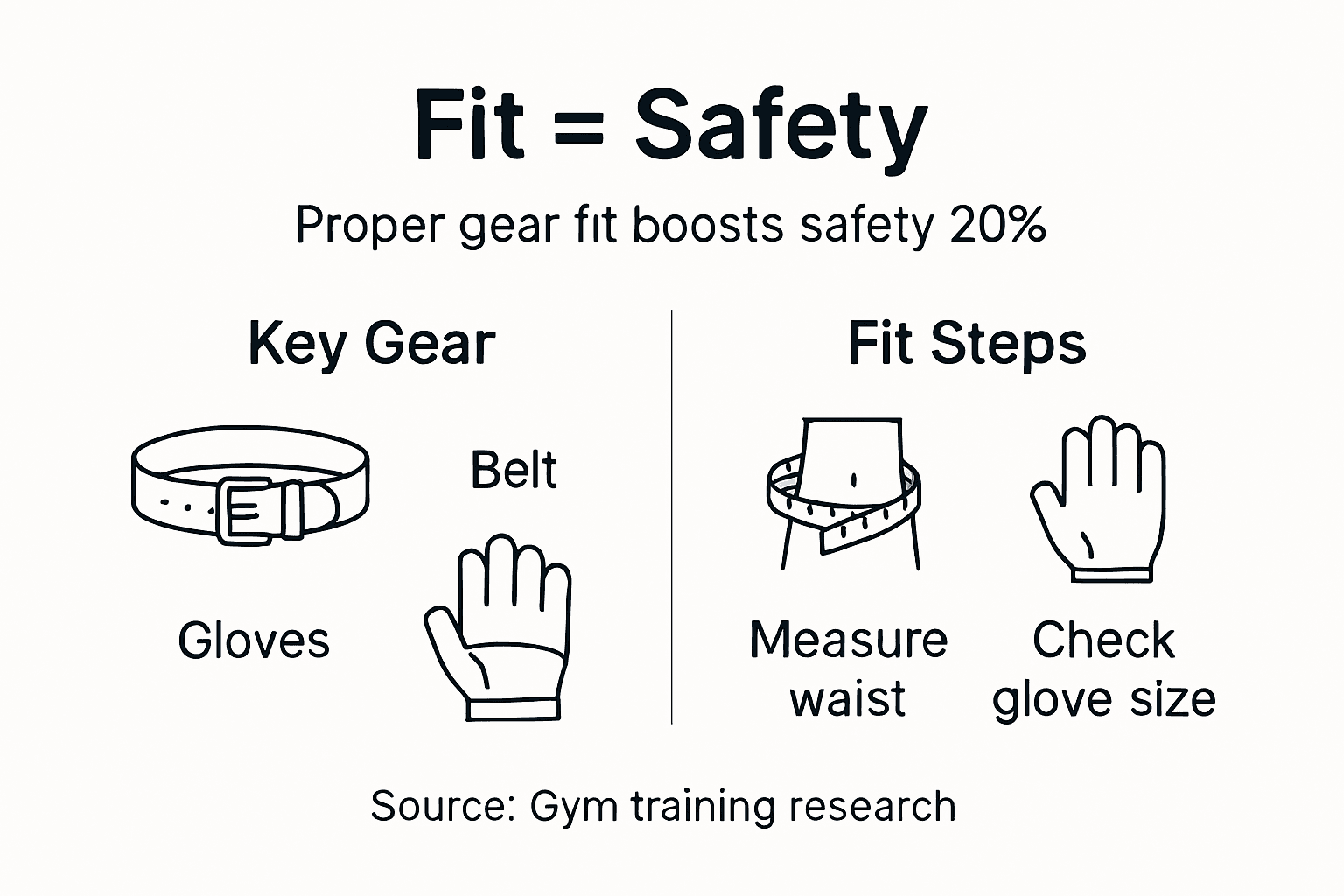
Incorrect sizing transforms protective equipment into liability. Research indicates fitness gear selection should factor in anatomical fit, as belts too loose or gloves too tight increase injury risk and reduce effectiveness. Precise measurements eliminate guesswork.
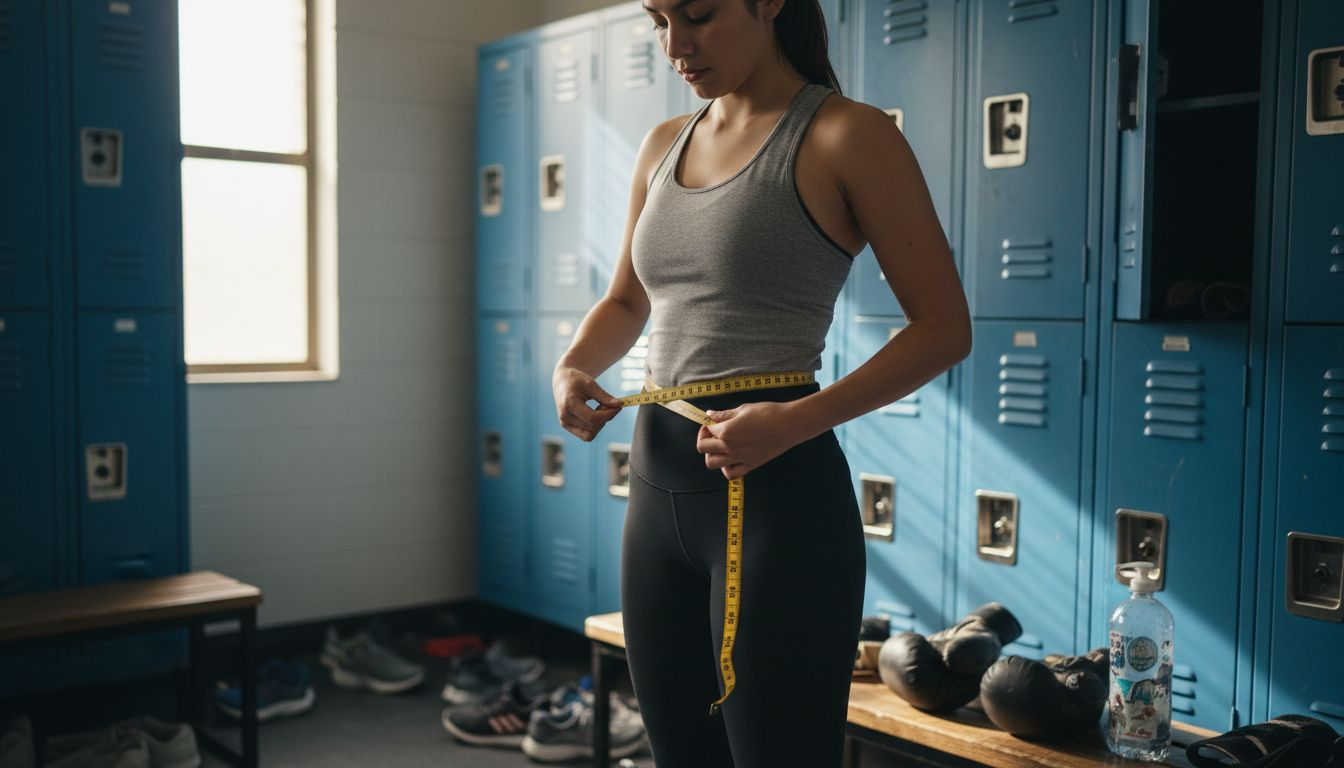
Belt sizing requires measuring your natural waist, not your pants waist. Stand relaxed and wrap a flexible measuring tape around your midsection where you’ll position the belt during lifts. This typically sits just above hip bones and below ribcage. Record this measurement in inches, then consult manufacturer sizing charts since brands vary.
Glove dimensions need two measurements. Hand circumference wraps around your palm at the widest point, excluding the thumb. Middle finger length runs from the base of your palm to fingertip. Most manufacturers use hand circumference as the primary sizing metric.
Improper fit creates multiple problems. Loose belts shift during movements, providing zero support while creating distracting slippage. Tight belts restrict breathing and circulation, causing lightheadedness or numbness. Gloves that bunch or slide compromise grip security and accelerate material wear.
Accurate self-measurement steps:
- Measure waist circumference in the morning before eating when body dimensions are most consistent
- Take three separate measurements and average them for accuracy
- Measure both hands for gloves since your dominant hand is often slightly larger
- Stand naturally relaxed, don’t flex or hold breath during measurements
- Use a fabric measuring tape, not a metal one that won’t conform to body curves
- Compare your measurements against specific brand sizing charts, not generic guidelines
Adjustability features provide fine-tuning after initial sizing. Prong belts offer multiple hole positions for body weight fluctuations. Velcro wrist closures on gloves accommodate different wrist thicknesses. Test adjustment range before purchasing to ensure your measurements fall in the middle of the available range, not at extremes.
Budget and quality considerations
Balancing cost against longevity and safety prevents both overspending and dangerous compromises. Strategic investment in the right quality tier for your training intensity delivers optimal value.
Higher-priced gear typically lasts 2 to 3 times longer than budget options through superior materials and construction. A quality leather belt costs 80 to 150 dollars but survives five years of heavy use, averaging 16 to 30 dollars annually. Budget synthetic belts at 30 to 50 dollars often need replacement within 18 months, effectively costing 20 to 33 dollars per year with inferior performance.
Recommended price ranges by gear category:
- Entry leather belts: 80 to 120 dollars for legitimate quality
- Premium competition belts: 150 to 250 dollars for elite features
- Quality gloves: 25 to 50 dollars for durable leather or advanced synthetics
- Budget gloves: 15 to 25 dollars for occasional use or beginners
- Wrist straps: 15 to 35 dollars covers most quality options
Tradeoffs between budget and mid-range quality center on material thickness, stitching reinforcement, and hardware durability. Budget belts use thinner leather that breaks down faster under heavy loading cycles. Cheaper gloves feature loose stitching that fails at stress points. These aren’t cosmetic differences, they directly impact safety and replacement frequency.
Prioritize spending on items that directly contact heavy loads. Your belt supports maximal lifts where equipment failure poses real injury risk, justifying higher investment. Gloves experience less critical forces, making mid-range options perfectly adequate for most lifters. Straps fall in between, heavy pullers need robust construction while casual users can use basic versions.
Your training frequency influences value calculations. Lifting six days weekly accelerates wear, making premium durability worthwhile. Training three times weekly extends even budget gear lifespan, potentially making lower-cost options sensible.
Common mistakes and troubleshooting
Recognizing frequent gear selection errors prevents wasted money and training setbacks. Many lifters make predictable mistakes that undermine the safety and performance benefits they’re seeking.
Buying for appearance over function tops the mistake list. Survey data suggests 40% of lifters choose gear based primarily on color or brand logos rather than fit specifications and material quality. That visually striking belt means nothing if it doesn’t provide proper support at your working weights.
Wearing belts incorrectly negates their benefits. Common errors include positioning too high near the ribcage where breathing becomes restricted, or too low on the hips where core support vanishes. The belt should sit where your natural waist creases when you bend sideways. Wearing it too loose represents another frequent problem, the belt must feel snug when standing relaxed to provide bracing resistance.
Neglecting replacement schedules creates hidden dangers. Gloves showing visible wear, holes, or separated stitching compromise grip security when you need it most. Straps with frayed edges can snap under load. These failures happen gradually, making them easy to ignore until catastrophic failure occurs mid-set.
Using incompatible gear for your training style wastes potential:
- Wearing thick powerlifting belts for Olympic lifts restricts hip mobility
- Using straps during grip-focused exercises prevents forearm development
- Choosing figure-eight straps when learning proper strap technique
- Selecting full-finger gloves for exercises requiring tactile bar feedback
Pro Tip: Inspect all gear before each workout session, checking belt stitching, glove palm integrity, and strap fabric condition. Adjust belt tightness after your warm-up when core temperature rises and waist expands slightly, ensuring consistent support throughout your working sets.
Maintenance, replacement timelines, and expected outcomes
Proper care extends gear lifespan while maintaining the safety and performance benefits that justified your investment. Systematic maintenance and timely replacement preserve these advantages throughout your training career.
Glove maintenance requires immediate post-workout attention. Wipe down leather gloves with a damp cloth to remove sweat and chalk buildup, then air dry away from direct heat. Synthetic gloves tolerate gentle machine washing in cold water, air drying prevents material degradation. Apply leather conditioner monthly to maintain suppleness and prevent cracking.
Belt storage impacts longevity significantly. Store belts flat or hanging, never rolled, since rolling stresses the leather and causes permanent creasing. Keep them in cool, dry locations away from moisture that encourages mold growth. Wipe down after sweaty sessions to prevent salt accumulation that dries and cracks leather.
Replacement intervals depend on usage intensity and visible wear. Gloves typically need replacement every 6 to 12 months with regular training, sooner if you notice palm thinning or stitching separation. Straps last 12 to 18 months before fabric fraying compromises strength. Quality belts survive 5 to 7 years but inspect regularly for cracked leather or loose rivets.
| Performance Metric | Without Gear | With Proper Gear | Improvement |
|---|---|---|---|
| Deadlift grip endurance (reps to failure) | 8-10 reps | 12-15 reps | 40-50% increase |
| Squat confidence rating (1-10 scale) | 6-7 | 9-10 | 35% increase |
| Lower back discomfort (post-workout) | Moderate-High | Low-Minimal | 60% reduction |
| Training session completion rate | 75-80% | 95-98% | 20% increase |
Performance improvements from well-maintained gear accumulate over training cycles. Consistent belt use during heavy compounds builds confidence that translates to progressive overload. Reliable grip support lets you fully fatigue target muscles without premature set termination from hand failure.
Explore comprehensive weightlifting gear options and learn about various weightlifting gear types that boost performance to maximize your training outcomes.
Injury risk reduction represents the most valuable outcome. Proper equipment distributes forces safely, maintains joint alignment, and prevents the grip failures or postural breakdowns that cause most training injuries. This protection compounds over years of consistent training.
Explore top weightlifting gear at Armageddon Sports
Now that you understand how to select gear that matches your training needs and body measurements, finding quality equipment from a trusted source becomes your next step.
Armageddon Sports specializes in weightlifting equipment designed for serious training demands. Their curated selection includes properly constructed weightlifting belts engineered for spine support, durable fitness gloves that balance protection with feel, and comprehensive lifting gear covering every training need. Whether you’re investing in your first belt or upgrading worn equipment, their range accommodates all experience levels and budgets. Upgrade your training safety and performance with equipment built to support your strength goals.
FAQ
How do I know if my weightlifting belt fits correctly?
Your belt should feel snug when standing relaxed, tight enough that you can barely slide your fingers underneath. When you brace your core for a lift, you should feel significant pressure against the belt without breathing restriction or numbness. Try positioning it just above your hip bones and below your ribcage where your waist naturally creases.
When should I replace my lifting gloves and straps?
Replace gloves when you notice palm material thinning, visible holes, or separated stitching at stress points, typically every 6 to 12 months with regular training. Replace straps when fabric shows fraying at edges or the material feels weakened, usually within 12 to 18 months. Don’t wait for complete failure, compromised gear provides false security.
Should beginners use weightlifting belts and straps?
Beginners benefit from learning proper bracing mechanics without belts initially, developing natural core stability during the first 3 to 6 months of training. Once you’re consistently lifting moderate weights with good form, adding a belt for heavy compound movements makes sense. Straps can be used earlier on pulling exercises where grip becomes the limiting factor before target muscles fatigue.
How tight should wrist straps be during heavy lifts?
Wrist straps should feel secure without causing numbness or restricting circulation. Wrap them firmly enough that the bar weight transfers to your wrists rather than fingers, but loose enough that you can still feel the bar. If your hands turn pale or tingle, loosen the straps immediately. Adjust tightness between sets as needed.
Can I use the same gear for powerlifting and CrossFit training?
CrossFit’s dynamic movements require more flexible gear than powerlifting’s maximal singles. A thinner, more mobile belt works better for CrossFit, while powerlifters need rigid 4-inch support. Consider owning specialized gear for each training style if you regularly practice both, or choose a versatile 3-inch tapered belt as a compromise. Gloves should prioritize breathability for CrossFit’s high-volume work versus powerlifting’s durability needs.