
TL;DR:
- Wrist wraps primarily provide stability and confidence, not increased strength or endurance.
- They should be used selectively for heavy lifts above 80% of one-rep max or when wrist stability is compromised.
- Proper application and understanding their purpose can prevent reliance and promote wrist development over time.
Most lifters assume wrist wraps are a shortcut to heavier lifts or better endurance. That assumption is wrong, and it leads to either over-relying on wraps or dismissing them entirely. A study on bench press performance found that wrist wraps improve perceived stability but not muscular endurance. That’s a critical distinction. The real value of wrist wraps lies in what they do for your joints, your confidence, and your injury risk during heavy training. This article breaks down the science, clears up the myths, and gives you a practical framework for using wrist wraps the right way.
Table of Contents
- Understanding wrist wraps: Purpose and misconceptions
- Evidence and expert perspectives: What the research says
- Comparing training scenarios: Who should use wrist wraps?
- Applying wrist wraps in your routine: Best practices
- Our take: What most lifters get wrong about wrist wraps
- Explore top wrist wraps and lifting gear
- Frequently asked questions
Key Takeaways
| Point | Details |
|---|---|
| Stability, not strength | Wrist wraps improve stability and confidence but do not increase muscle strength or endurance. |
| Selective use matters | Apply wrist wraps only for heavy lifts or when wrist support is needed to avoid dependency and encourage natural strength. |
| Injury prevention | Proper use of wrist wraps can help reduce wrist injuries, especially in challenging training scenarios. |
| Expert-backed guidance | Both research and coaches agree wraps are most helpful for stability, not for boosting performance. |
Understanding wrist wraps: Purpose and misconceptions
Wrist wraps are specialized strips of fabric, typically made from cotton, polyester, or elastic blends, that you wind tightly around your wrist joint before heavy lifts. They’re designed to limit excessive wrist extension and flexion under load, keeping the joint in a more neutral and stable position. That’s their core job. Not strength. Not endurance. Stability.
The problem is that most lifters walk into the gym expecting wraps to function like a performance enhancer. They think tighter wraps equal more reps or heavier sets. When that doesn’t happen, they either ditch the wraps entirely or keep using them without understanding why. Both outcomes are a missed opportunity.
Here’s what wrist wraps actually do for you:
- Stabilize the wrist joint during pressing, overhead, and pulling movements
- Reduce the risk of hyperextension under heavy loads
- Boost confidence when approaching maximal or near-maximal efforts
- Support recovery for lifters dealing with minor wrist discomfort or previous injuries
- Improve form consistency by keeping the wrist locked in a safer position throughout the lift
What they don’t do is add muscle activation, increase grip strength, or help you push out extra reps. Research confirms that wraps don’t improve muscular endurance, which surprises a lot of athletes who’ve been sold on the idea that more gear equals better output.
“Wrist wraps are a joint support tool, not a performance amplifier. Using them correctly means understanding what they protect, not what they add.”
For anyone serious about using wrist wraps properly, the first step is dropping the misconception that they’re a strength tool. Once you accept that their value is structural and psychological, you start using them at the right times and for the right reasons.
Evidence and expert perspectives: What the research says
The science on wrist wraps is more nuanced than most gym conversations suggest. Researchers have looked at how wraps affect bench press performance across different wrap types and between male and female lifters. The consistent finding is that perceptual benefits outpace measurable gains. Lifters feel more stable and more confident, but the numbers on reps, load, and endurance don’t shift significantly.
That’s not a knock on wrist wraps. It’s actually a strong argument for using them strategically. Confidence under a heavy bar matters. Feeling unstable at the wrist during a max bench press can cause you to bail early or lose form. Wraps remove that variable.
| Perceived benefit | Measurable outcome |
|---|---|
| Increased wrist stability | Confirmed by lifters across studies |
| Greater confidence under load | Reported consistently in research |
| Improved muscular endurance | Not supported by evidence |
| Strength increase | Not supported by evidence |
| Reduced injury risk | Supported through stability improvement |
Expert coaches echo this finding. The consensus is that wraps are a joint protection tool that belongs in your kit for heavy days, not a daily crutch for every warm-up set. Strength coaches who work with powerlifters and Olympic lifters consistently recommend saving wraps for working sets at 80% of your one-rep max or above.
Pro Tip: Reserve your wrist wraps for your heaviest sets where wrist stability is genuinely challenged. Using them on warm-up sets or light accessory work trains your wrists to rely on external support instead of developing their own strength.
For a deeper look at how wrist wraps for lifting fit into different training styles, it helps to think about them the same way you’d think about a lifting belt. You wouldn’t belt up for a 135-pound squat. The same logic applies here. If you want to explore how wraps fit alongside other workout accessories for efficiency, the principle is the same: use the right tool at the right time.
Comparing training scenarios: Who should use wrist wraps?
Not every lifter needs wrist wraps, and not every lift calls for them. The decision comes down to load, movement pattern, and individual wrist health. Understanding where wraps add real value helps you stop wearing them out of habit and start wearing them with purpose.
Lifters who benefit most from wrist wraps include:
- Powerlifters performing heavy bench press, squat, or overhead work
- Weightlifters executing cleans, snatches, or jerks with significant load
- Athletes recovering from wrist injuries who need extra support during the return-to-training phase
- Lifters with naturally hypermobile wrists that tend to collapse under load
- Anyone approaching a new personal record where joint confidence matters
The research backs this up. Wraps improve perceived stability, which directly reduces the chance of a form breakdown that leads to injury. That benefit is most relevant when the load is high and the margin for error is small.
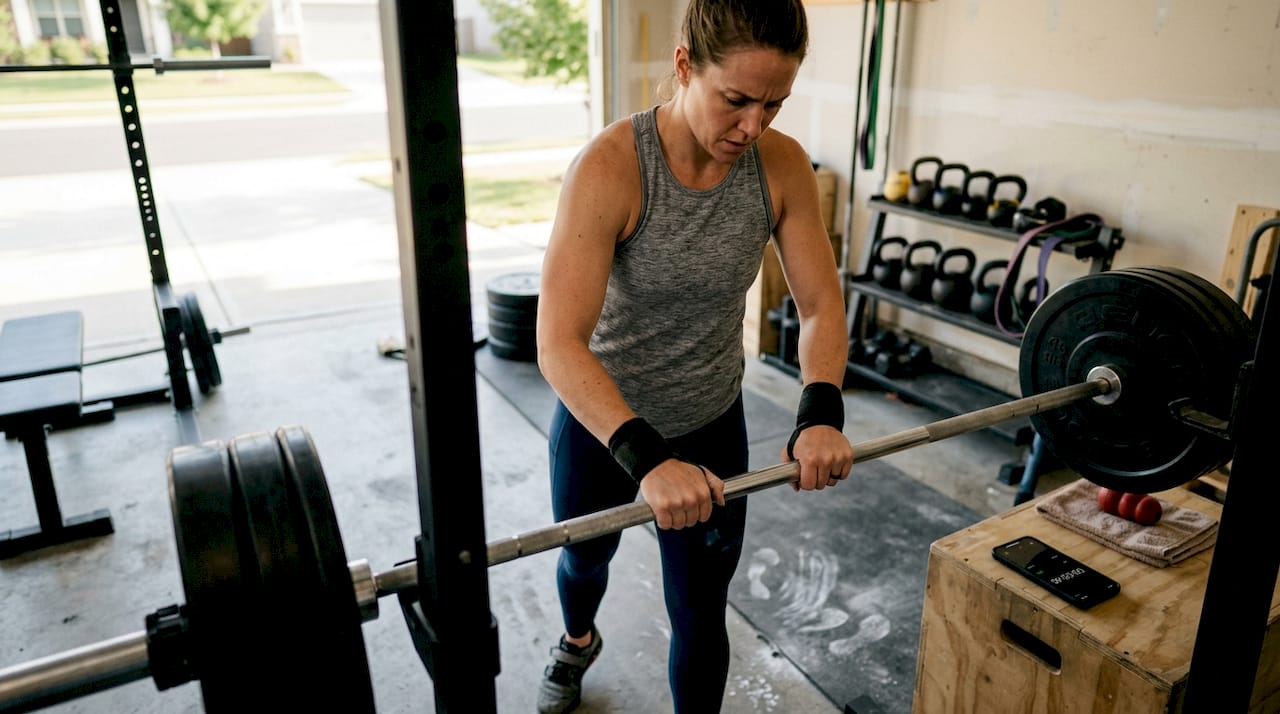
| Scenario | With wrist wraps | Without wrist wraps |
|---|---|---|
| Heavy bench press (85%+ 1RM) | Recommended | Higher injury risk |
| Overhead press at max load | Recommended | Wrist fatigue likely |
| Light accessory work | Optional | Preferred for wrist development |
| Warm-up sets | Not needed | Better for joint activation |
| Rehab or injury recovery | Highly recommended | Risky without support |
Here’s a quick decision process for when to reach for your wraps:
- Is the load above 80% of your one-rep max? Use wraps.
- Does the movement place your wrist in a compromised angle? Use wraps.
- Do you have an existing wrist issue or recent injury? Use wraps.
- Is it a light set or warm-up? Leave the wraps off.
- Are you doing grip-focused work like farmer carries? Leave the wraps off.
For guidance on proper wrist wrap use across different movements, or if you’re still figuring out which style suits your training, choosing wrist wraps that match your lift type and wrist width makes a real difference in how well they perform.
Applying wrist wraps in your routine: Best practices
Knowing when to use wraps is only half the equation. How you apply and manage them determines whether they actually protect your wrists or just give you a false sense of security.
Dos and don’ts of wrist wrap use:
- Do wrap snugly over the wrist joint, not the forearm
- Do position the wrap so it supports the base of the palm and the wrist crease
- Do remove wraps between heavy sets to let blood flow normalize
- Do wash your wraps regularly to maintain elasticity and hygiene
- Don’t wrap so tightly that your fingers tingle or go numb
- Don’t use wraps as a substitute for warming up your wrists properly
- Don’t wear wraps during every set as a default habit
A quick application protocol that works for most lifters:
- Hold the thumb loop and anchor the wrap around your thumb
- Wind the wrap around the wrist joint two to three times, moving slightly upward with each pass
- Secure the velcro closure firmly but without cutting off circulation
- Flex and extend your wrist once to confirm the fit feels supportive, not restrictive
- Unwrap immediately after completing your heavy set
Research supports the idea that wraps should be applied selectively, only when stability is genuinely compromised, not as a blanket habit for every set you do. This keeps your wrists developing naturally on lighter work while protecting them when the stakes are high.
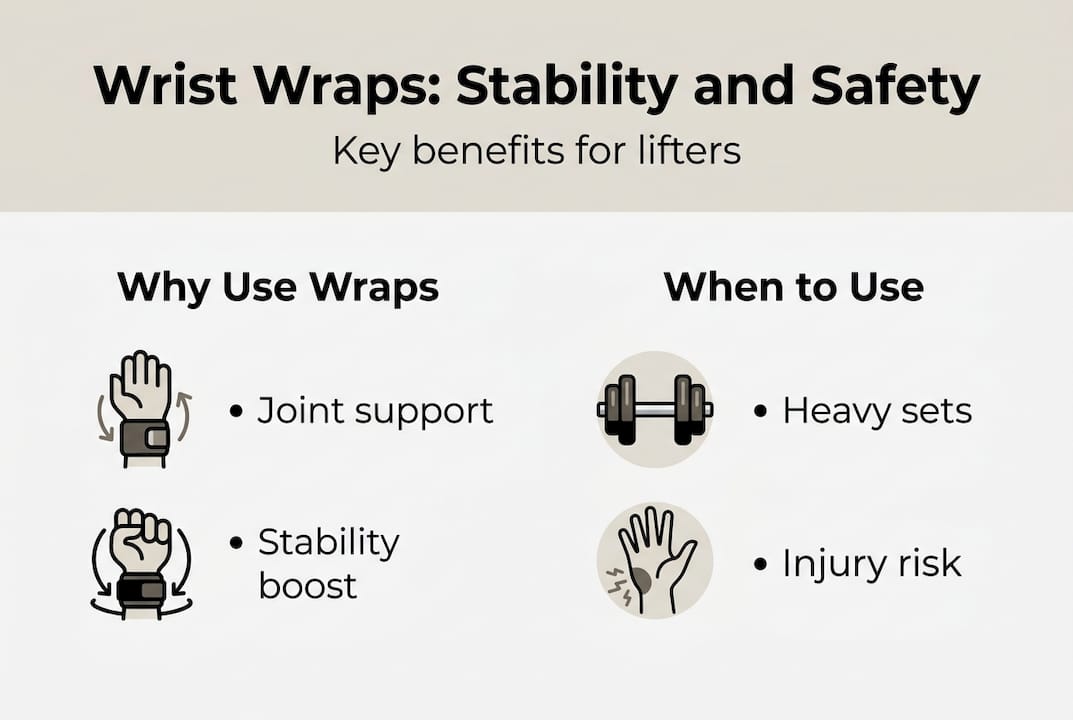
Pro Tip: On lighter sets and accessory movements, skip the wraps entirely. Your wrists need stress to adapt and grow stronger. Wrapping up for every exercise removes that stimulus and can leave your joints underprepared for the moments when wraps aren’t available.
For a full breakdown of technique, the wrist wrap application guide covers common errors in detail. If you want to pair wraps with complementary support gear, the fitness straps and wraps bundle is a practical starting point.
Our take: What most lifters get wrong about wrist wraps
After watching hundreds of lifters train, the most common mistake isn’t using the wrong wrap. It’s using wraps as a psychological crutch for every single set, regardless of load or movement. That habit quietly undermines wrist strength development over months of training.
The biggest value wrist wraps offer is actually psychological. When you’re stepping up to a near-max bench press or a heavy overhead set, feeling your wrists wobble introduces doubt. Wraps eliminate that doubt. That mental clarity is real and worth having. But it only matters when the load genuinely demands it.
We’ve seen experienced lifters who can’t train without wraps on even moderate weights because their wrists never had the chance to build baseline stability. That’s a training gap, not a gear solution. The smarter approach is to treat wraps the way elite athletes treat weightlifting gear essentials: purposeful tools for specific demands, not default equipment for every session.
Consistent, selective use beats frequent, indiscriminate use every time. Your wrists will be stronger, your confidence will be more genuine, and your wraps will actually mean something when you put them on.
Explore top wrist wraps and lifting gear
If this article has shifted how you think about wrist wraps, the next step is making sure your gear actually matches your training needs. Not all wraps are built the same. Stiffness, length, and material all affect how well a wrap performs across different lift types.

At Armageddon Sports, the lifting gear collection includes wrist wraps designed for real training demands, from heavy powerlifting sessions to high-rep functional work. If you’re also looking to round out your setup, the full range of fitness accessories covers everything from straps to belts to gloves. Gear that fits well and functions correctly makes a measurable difference in how safely and confidently you train.
Frequently asked questions
Do wrist wraps make you stronger or help you lift more weight?
No. Wraps don’t improve strength or endurance, but they help lifters feel more stable and confident under heavy loads, which can support better form.
When should you wear wrist wraps during weightlifting?
Use wrist wraps during heavy lifts, maximal efforts, or when wrist stability is a concern. Wraps should be applied selectively, not on every warm-up or light accessory set.
Can wrist wraps prevent injuries?
Yes, to a meaningful degree. Wraps improve perceived stability, which reduces the chance of form breakdown and joint stress during demanding movements.
How tight should wrist wraps be for training?
Wraps should be snug enough to feel supportive but not so tight that circulation is restricted or your fingers go numb. Adjust the tension based on the lift and your comfort level.
Are wrist wraps for beginners or advanced lifters?
Both can benefit, but wraps are most valuable for advanced lifters or anyone with prior wrist issues who is regularly training at higher loads where joint stability becomes a real factor.