
Most American adults living in cities believe that expensive gym memberships are necessary for quality workouts, yet over 60 percent have tried home fitness routines at least once. Urban home fitness is surging as people discover how affordable and space-saving gym equipment can fit into even the smallest apartments. This guide sheds light on the true variety of home gym gear and clears up common myths, helping you make smarter choices for strength training and muscle toning wherever you live.
Table of Contents
- Defining Home Gym Equipment And Common Myths
- Types Of Home Gym Equipment For Every Need
- Key Features And How Equipment Functions
- Safety, Maintenance, And Proper Use
- Weighing Benefits Against Costs And Space
Key Takeaways
| Point | Details |
|---|---|
| Home Gym Equipment is Accessible | Modern home gym equipment comes in various sizes and price points, making fitness achievable even in small spaces. |
| Myths About Effectiveness | Contrary to popular belief, home workouts can be just as effective as gym workouts with proper equipment selection and technique. |
| Safety and Maintenance Are Essential | Regular inspection and maintenance are critical for ensuring the longevity and safety of home gym equipment. |
| Financial Considerations Matter | Investing in home gym equipment can provide substantial long-term savings compared to ongoing gym membership fees. |
Defining Home Gym Equipment and Common Myths
Home gym equipment encompasses a diverse range of fitness tools designed for personal strength training and workout routines within residential spaces. These devices enable individuals to create effective exercise environments without the need for expensive gym memberships or extensive commercial facilities. Exercise equipment includes everything from compact free weights like dumbbells and kettlebells to more complex resistance machines and bodyweight training accessories.
Contrary to popular misconceptions, home gym setups do not require massive investments or dedicated rooms. Modern equipment comes in various sizes and price points, making fitness accessible for urban dwellers with limited space. Typical home gym configurations might include adjustable dumbbells, resistance bands, a pull-up bar, and a workout mat - all of which can easily fit into a small apartment or home office corner. The key is selecting versatile equipment that provides multiple exercise options without overwhelming your living space.
Some persistent myths about home gym equipment prevent potential fitness enthusiasts from creating their personal workout spaces. Many believe that home workouts are less effective than gym training or that quality equipment is prohibitively expensive. In reality, with strategic equipment selection and proper technique, home workouts can be equally challenging and productive as gym sessions. Portable, multifunctional tools like adjustable dumbbells or resistance bands can deliver comprehensive strength training comparable to complex gym machines.
Pro tip: Start with 3-5 versatile pieces of equipment that target multiple muscle groups, allowing you to build a functional home gym without significant financial investment.
Types of Home Gym Equipment for Every Need
Home gym equipment comes in a vast array of types designed to accommodate different fitness goals, space limitations, and personal preferences. Home gym equipment varies significantly depending on individual needs, ranging from compact accessories for small apartments to comprehensive setups for dedicated fitness enthusiasts. The key is understanding which equipment aligns best with your specific workout objectives and spatial constraints.
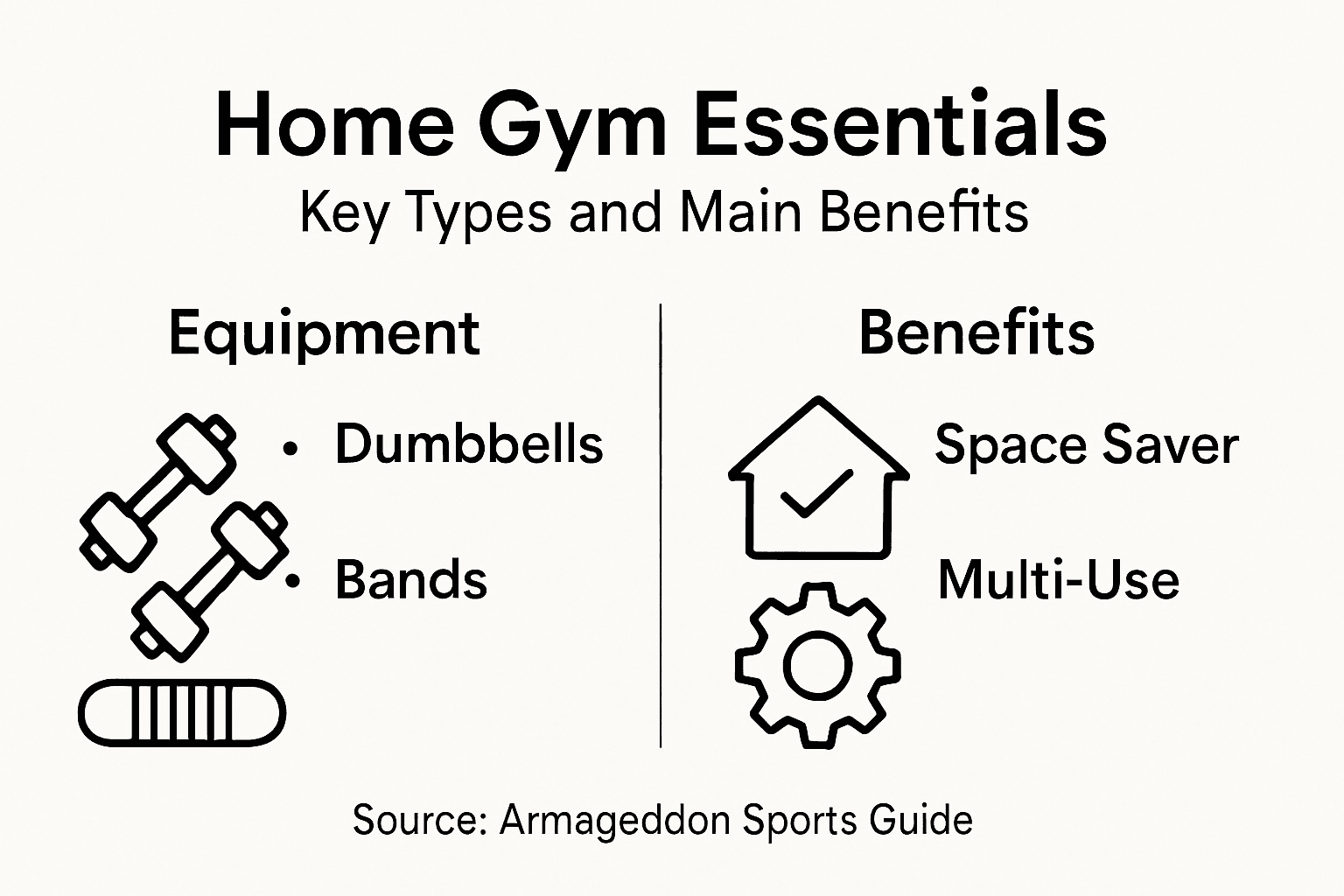
For individuals with limited space, essential equipment includes versatile and compact options like resistance bands, adjustable dumbbells, kettlebells, and suspension trainers. These tools provide full-body workout potential without requiring extensive room. Cardio enthusiasts can incorporate compact machines such as foldable rowing machines or mini steppers that easily store in closets or under beds. Strength training options for smaller spaces might include bodyweight equipment like pull-up bars, weighted medicine balls, and adjustable benches that maximize workout potential while minimizing spatial requirements.
Larger home gym configurations can accommodate more extensive equipment like barbells, power racks, multi-functional weight machines, treadmills, and elliptical trainers. These setups are ideal for serious athletes or individuals with dedicated workout spaces. Gym equipment types serve distinct fitness purposes, with cardio machines targeting endurance and heart health, while strength training equipment focuses on muscle development and overall body conditioning. The most effective home gyms combine multiple equipment types to create comprehensive, adaptable workout environments.
Pro tip: Invest in multifunction equipment that targets multiple muscle groups and can be easily adjusted or stored, maximizing your home gym’s efficiency and versatility.
Here’s a comparison of key home gym equipment categories, highlighting their benefits and space requirements:
| Equipment Type | Main Benefit | Space Needed | Example Use Case |
|---|---|---|---|
| Free Weights | Builds muscle and strength | Minimal | Full-body strength training |
| Cardio Machines | Improves cardiovascular fitness | Moderate to large | Home-based endurance workouts |
| Resistance Bands | Versatile resistance option | Very small | Travel or apartment workouts |
| Multifunction Machines | All-in-one training | Large | Dedicated home fitness area |
Key Features and How Equipment Functions
Home gym equipment is engineered with sophisticated mechanisms designed to provide targeted resistance, muscle engagement, and comprehensive fitness solutions. Exercise equipment functions through precise resistance technologies that enable users to build strength, improve cardiovascular health, and achieve specific fitness goals. The fundamental principle behind most equipment involves creating controlled physical challenges that stimulate muscle growth, enhance endurance, and support overall physical conditioning.
Different types of equipment utilize unique resistance mechanisms to challenge the body. Free weights like dumbbells and barbells rely on gravitational resistance, requiring users to overcome the weight’s downward force. Resistance bands provide elastic tension that increases difficulty as they stretch, creating variable resistance throughout movement ranges. Machine-based equipment often incorporates weight stacks, cable systems, or pneumatic resistance to deliver consistent, predictable muscle loading. These varied approaches allow individuals to target specific muscle groups with precision and adjust difficulty levels according to their fitness progression.
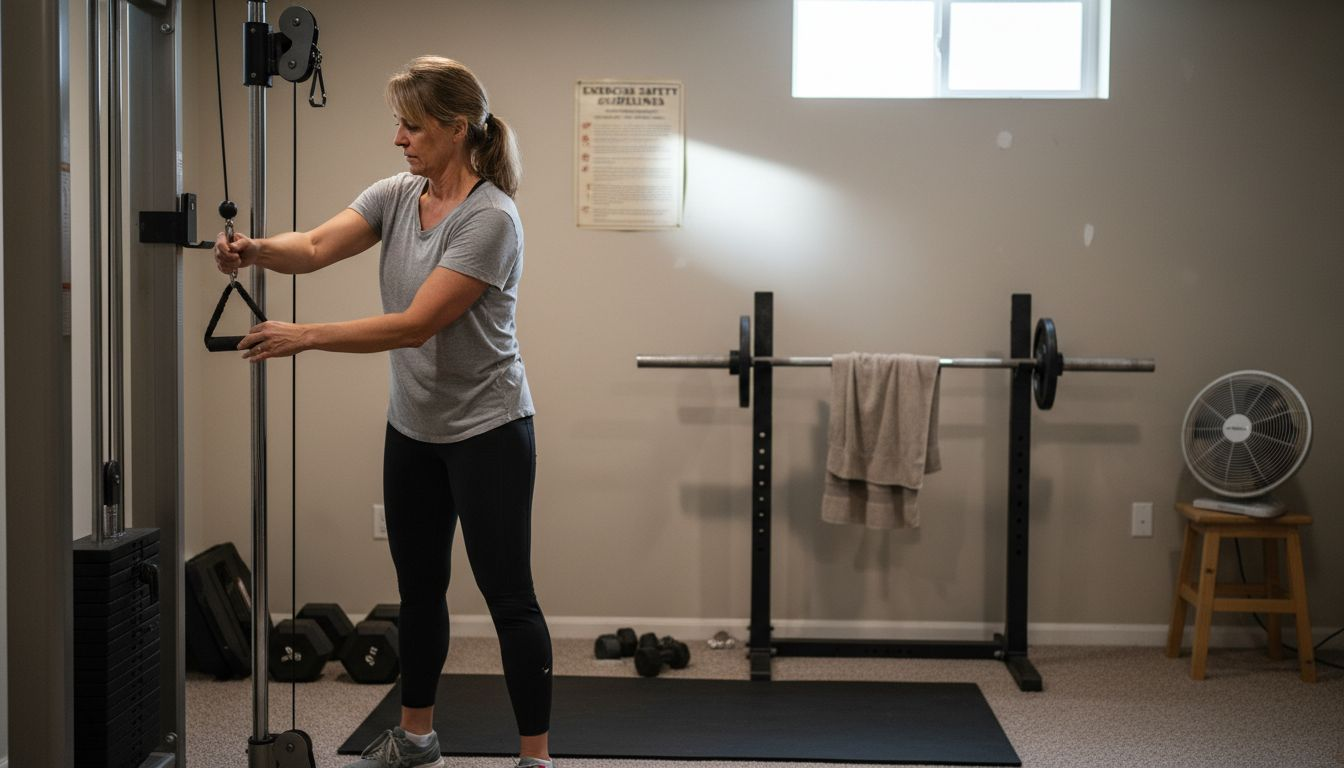
Gym equipment features prioritize user safety and performance, incorporating ergonomic designs that minimize injury risks while maximizing workout effectiveness. Advanced features typically include adjustable settings, padded contact points, smooth movement mechanisms, and integrated tracking technologies. Cardio machines like treadmills and ellipticals often include digital displays showing metrics such as heart rate, calories burned, and workout duration. Strength training equipment increasingly integrates smart technologies that allow users to track progress, customize workouts, and maintain proper form through guided movement patterns.
Pro tip: Select home gym equipment with multiple adjustment points and versatile resistance options to ensure long-term usability as your fitness levels evolve.
Safety, Maintenance, and Proper Use
Ensuring safety and maintaining home gym equipment requires a comprehensive approach that combines careful usage, regular inspection, and proactive maintenance strategies. Proper equipment handling begins with understanding fundamental safety principles, including correct form, appropriate weight selection, and methodical setup of workout spaces. Individuals must create dedicated workout areas with sufficient clearance, stable flooring, and minimal potential hazards that could compromise exercise performance or personal safety.
Maintenance of home gym equipment involves several critical practices to preserve functionality and extend equipment lifespan. Regular cleaning prevents bacterial buildup and reduces wear on mechanical components. Metal and rubber surfaces should be wiped down after each use, with special attention to areas prone to moisture accumulation. Moving parts like weight machines, cable systems, and adjustable benches require periodic lubrication and tension checks to ensure smooth operation. Users should inspect equipment for signs of wear, including frayed cables, loose bolts, cracked padding, or structural deformations that might compromise safety during intense workouts.
Practical usage demands understanding individual equipment limitations and personal fitness boundaries. Beginners should start with lighter weights, focus on proper form, and gradually increase intensity as strength and technique improve. Implementing a systematic warmup routine, using appropriate safety gear like weightlifting gloves and supportive footwear, and maintaining awareness of body mechanics can significantly reduce injury risks. 20-piece home workout equipment guides recommend progressive training approaches that prioritize technique over excessive weight or repetitions.
Pro tip: Create a monthly equipment inspection checklist to systematically assess your home gym gear for potential safety issues or maintenance requirements.
Weighing Benefits Against Costs and Space
Home gym investments require careful consideration of financial implications, personal fitness goals, and spatial constraints. Home gym equipment offers substantial long-term benefits that extend beyond immediate monetary calculations. While upfront costs might seem substantial, the potential savings on gym memberships, transportation expenses, and time efficiency can make home fitness equipment a strategic financial decision for dedicated fitness enthusiasts.
Space optimization becomes a critical factor when evaluating home gym feasibility. Urban dwellers with limited square footage can still create effective workout environments by selecting compact, multifunctional equipment. Adjustable dumbbells, resistance bands, foldable workout benches, and wall-mounted systems provide versatile solutions that maximize utility while minimizing spatial requirements. Individuals can strategically design workout zones in apartments, home offices, or small dedicated corners, transforming seemingly restrictive environments into dynamic fitness spaces.
Financial analysis of home gym investments involves calculating both direct and indirect costs. Monthly gym memberships typically range from $30 to $100, which can translate to $360 to $1,200 annually. By contrast, a comprehensive home gym setup might require an initial investment between $500 and $2,000, depending on equipment quality and complexity. Additional considerations include maintenance costs, potential equipment replacement, and the intangible benefits of convenience, privacy, and consistent access. The most cost-effective approach involves selecting durable, versatile equipment that supports multiple workout styles and can adapt to changing fitness levels.
The following table summarizes financial and practical trade-offs of home gym investments:
| Consideration | Home Gym | Commercial Gym |
|---|---|---|
| Upfront Cost | $500–$2,000 | Enrollment fees only |
| Ongoing Expense | Maintenance & upgrades | Monthly dues ($30–$100) |
| Convenience | 24/7 access at home | Limited by operating hours |
| Privacy | Personal space | Shared public environment |
| Long-Term Savings | Potential high if consistent | Lower if not frequently used |
Pro tip: Calculate your potential gym savings by tracking current membership, transportation, and associated fitness expenses, then compare against a strategic home gym equipment investment plan.
Build Your Ideal Home Gym Today with Armageddon Sports
Creating a home gym that fits your space and fitness goals starts with selecting the right equipment. Whether you are overcoming common myths around home workout effectiveness or managing limited space, Armageddon Sports offers versatile solutions that empower your strength training journey. From durable lifting equipment to multifunctional resistance training bands, our products are designed to provide the resistance and support you need for every workout.

Experience convenience and gain confidence by outfitting your personal gym with quality gear that adapts as you progress. Don’t let budget or space hold you back. Visit Armageddon Sports now to explore affordable options and enjoy exclusive deals that make home fitness practical and motivating. Take control of your health today by choosing equipment that delivers lasting results and fits your lifestyle perfectly.
Frequently Asked Questions
What is home gym equipment?
Home gym equipment refers to various fitness tools designed for strength training and workout routines within a residential space, including items like dumbbells, resistance bands, and cardio machines.
How effective are home workouts compared to gym workouts?
Home workouts can be just as effective as gym workouts if you choose the right equipment and maintain proper technique. Versatile tools like adjustable dumbbells and resistance bands can provide comprehensive strength training.
What types of home gym equipment are best for small spaces?
For small spaces, compact and versatile equipment like resistance bands, adjustable dumbbells, kettlebells, and suspension trainers are ideal, as they can provide full-body workouts without requiring extensive room.
How should I maintain my home gym equipment?
To maintain home gym equipment, regularly clean it to prevent bacteria buildup, inspect for wear, lubricate moving parts as needed, and create a monthly inspection checklist to ensure safety and functionality.


