
You don’t need to load the bar to its limit to build serious muscle. Blood flow restriction training allows light weights to drive muscle growth as effectively as heavy lifting, and that single fact rewrites everything most gym-goers believe about hypertrophy. BFR training uses partial vascular occlusion to create a powerful anabolic environment at loads as low as 20% of your one-rep max. This guide covers how BFR works, who benefits most, how to set it up safely, and the exact protocols you need to start seeing results.
Table of Contents
- What is blood flow restriction (BFR) training?
- How does blood flow restriction training build muscle?
- When does BFR outperform traditional training?
- How to use BFR: protocols, exercises, and pressure guidelines
- Is BFR training safe? Precautions and common mistakes
- Take your training further with Armageddon Sports
- Frequently asked questions
Key Takeaways
| Point | Details |
|---|---|
| Low-load, high-results | BFR training lets you build muscle and strength with lighter weights as effectively as traditional heavy lifting. |
| Joint-friendly & rehab | BFR is ideal for protecting joints or recovering from injury since it delivers gains without stressing tissues. |
| Protocols matter | Correct cuff pressure, exercise selection, and session structure make BFR safe and effective. |
| Personalization is key | Individualizing pressure and focusing on muscle fatigue gives optimal gains and minimizes risks. |
| Not for everyone | BFR isn’t suitable for complete beginners or those with certain health conditions—safety comes first. |
What is blood flow restriction (BFR) training?
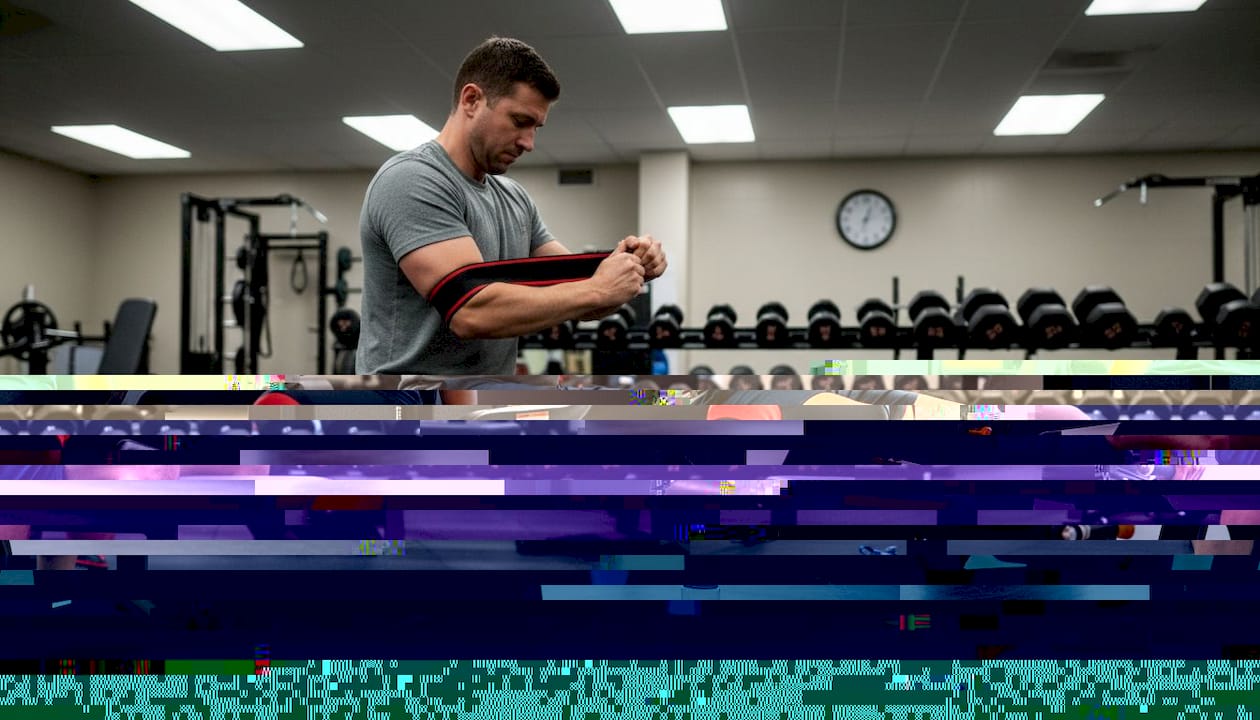
BFR training is a technique where you wrap a cuff or band around the upper portion of a limb, typically the upper arm or upper thigh, to partially restrict blood flow during resistance exercise. The wrap stays on throughout your set, creating a very specific physiological environment inside the working muscle.
The key word is partial. You are not cutting off circulation entirely. BFR uses cuffs or bands to partially restrict venous outflow while allowing arterial inflow, which induces hypoxia and metabolic stress inside the muscle belly. Blood flows in but struggles to flow out, causing a rapid buildup of metabolites like lactate and hydrogen ions.
Here is what that environment triggers inside your muscle:
- Fast-twitch fiber recruitment: Your body recruits high-threshold motor units much earlier than it would under normal low-load conditions
- mTOR pathway activation: The mechanistic target of rapamycin signals your cells to begin muscle protein synthesis
- Growth hormone spike: Metabolic stress drives a significant hormonal response, including elevated GH levels
- Hypoxic adaptation: Reduced oxygen availability forces the muscle to work harder and adapt faster
The practical result is that you can train with 20-40% of your 1RM and still stimulate the kind of muscle damage and metabolic stress normally reserved for heavy compound lifts. That is the core promise of BFR, and the research backs it up.
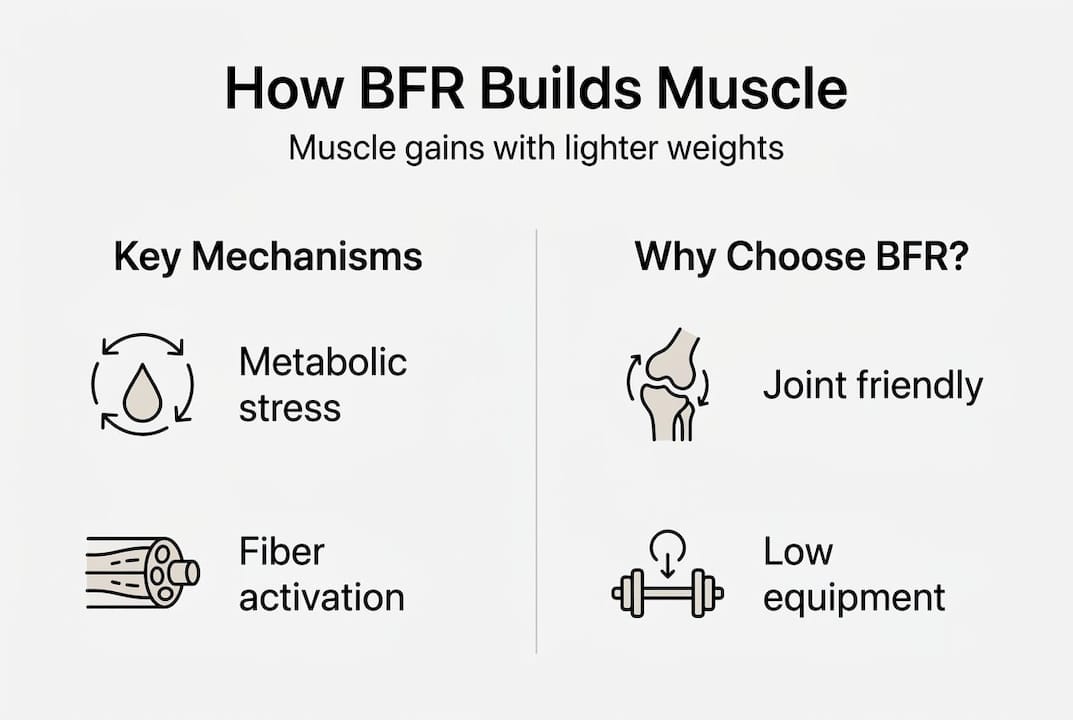
How does blood flow restriction training build muscle?
Once you understand the setup, the next question is obvious: why does trapping blood in a muscle actually make it grow? The answer comes down to three overlapping mechanisms that work together to create a powerful growth signal.
First, the accumulation of lactate and hydrogen ions creates intense metabolic stress. This stress is one of the three primary drivers of hypertrophy, alongside mechanical tension and muscle damage. BFR stacks metabolic stress on top of even modest mechanical tension, which is why the combination punches above its weight.
Second, the oxygen-depleted environment forces your nervous system to recruit Type II (fast-twitch) muscle fibers much sooner than it normally would. Under standard low-load training, your body saves those high-threshold fibers for heavier efforts. BFR removes that option, pulling in your most growth-prone fibers from the very first rep.
Third, and perhaps most importantly, BFR activates the mTOR signaling pathway, which is the primary molecular switch for muscle protein synthesis. Metabolic stress, hypoxia-driven growth factors, and mTOR activation are the key drivers of BFR’s muscle-building effect, and all three fire simultaneously during a properly executed BFR set.
BFR also appears to suppress myostatin, a protein that acts as a brake on muscle growth. Lower myostatin means fewer limits on how much new muscle tissue your body is willing to build.
Research consistently shows that BFR muscle growth mechanisms produce hypertrophy results comparable to traditional heavy resistance training, even when loads are a fraction of what you would normally lift.
For lifters dealing with joint pain, recovering from injury, or simply looking to add volume without beating up their connective tissue, that is a significant advantage.
When does BFR outperform traditional training?
BFR is not a replacement for every type of training. It is a tool, and like any tool, it works best in specific situations. Here is how it stacks up against standard resistance training:
| Training factor | BFR (low-load) | High-load traditional |
|---|---|---|
| Load required | 20-40% 1RM | 70-85% 1RM |
| Joint stress | Low | Moderate to high |
| Hypertrophy results | Comparable | Comparable |
| Strength gains | Moderate | High |
| Rehab suitability | Excellent | Poor to moderate |
| Equipment needed | Bands or cuffs | Heavy weights |
| Best for athletes | Endurance, rehab | Power, max strength |
BFR produces similar hypertrophy and strength gains as heavy training for most people, but it does not provide extra muscle growth in already well-trained athletes. Where it genuinely outperforms traditional lifting is in rehabilitation settings and for anyone who cannot safely handle heavy loads.
For competitive athletes, the picture is more nuanced. High-load BFR training can improve strength and power over high-load training alone, but it does not produce additional hypertrophy beyond what heavy lifting already delivers. That means BFR is best used as a complement to your existing program, not a wholesale replacement.
The clearest wins for BFR are during deload weeks, post-injury recovery, travel periods with limited equipment, and for older lifters managing joint wear.
How to use BFR: protocols, exercises, and pressure guidelines
Getting BFR right comes down to three variables: cuff placement, load selection, and rep scheme. Here is a step-by-step setup:
- Place the cuff at the top of the limb you are training. Upper arm for biceps and triceps work, upper thigh for quads and hamstrings.
- Set pressure to roughly 50% limb occlusion pressure (LOP) for arms and 80% LOP for legs. If you do not have a Doppler device, aim for a 7 out of 10 tightness, firm but not painful.
- Select your load at 20-40% of your 1RM. This feels light, and that is intentional.
- Follow the rep scheme: 30 reps on the first set, then 15 reps for three more sets, with 30-45 seconds rest between sets.
- Keep the cuff on throughout all four sets. Remove it only after your final set.
- Rest 1-2 minutes after removing the cuff before moving to your next exercise.
Here is a sample protocol breakdown:
| Variable | Arms (biceps/triceps) | Legs (quads/hamstrings) |
|---|---|---|
| Load | 20-30% 1RM | 30-40% 1RM |
| Rep scheme | 30-15-15-15 | 30-15-15-15 |
| Rest between sets | 30 seconds | 45 seconds |
| Cuff pressure (LOP) | ~50% | ~80% |
| Frequency | 2-4x per week | 2-4x per week |
Standard BFR protocol calls for 20-40% 1RM, a 30-15-15-15 rep scheme, individualized limb occlusion pressure, and 2-4 sessions per week. Stick to isolation movements like curls, triceps extensions, leg press, and leg extensions. These exercises keep the cuff placement clean and the target muscle isolated.
For more detailed guidance on structuring your sessions, check out these BFR protocols and tips and learn how to pick the right gear with this guide on choosing BFR cuffs.
Pro Tip: Chase the burn and pump sensation, not maximum tightness. If your limb goes numb or turns purple, the cuff is too tight. The goal is discomfort from metabolic buildup, not from cutting off circulation.
Is BFR training safe? Precautions and common mistakes
BFR has a strong safety record when used correctly. The research is clear that it is safe in healthy adults when pressure is individualized, and serious adverse events are rare. That said, there are real risks if you ignore the basics.
Who should avoid BFR:
- Complete beginners with no resistance training base
- Anyone with a history of deep vein thrombosis or blood clotting disorders
- People with uncontrolled hypertension or cardiovascular disease
- Pregnant individuals
- Anyone with open wounds or active infection in the limb
Signals to stop immediately:
- Numbness or tingling that does not resolve within seconds of removing the cuff
- Dizziness or lightheadedness during the set
- Sharp pain (not the expected burn from metabolic stress)
- Skin discoloration beyond a mild flush
The most common mistakes are over-tightening the cuff and placing it too far down the limb. Both errors increase injury risk without improving results. Cuffs go at the very top of the limb, and pressure should be firm, not crushing.
Pro Tip: Elastic or SEP-style cuffs are safer and more comfortable than rigid alternatives. They self-regulate pressure as the muscle pumps up, reducing the risk of accidental full arterial occlusion. For guidance on proper application, review this resource on safe BFR cuff application.
Take your training further with Armageddon Sports
BFR training delivers real results, but only when you have the right gear to execute it properly. Cuff quality, band elasticity, and adjustable pressure all directly affect both your safety and your gains.

At Armageddon Sports, we carry a full range of training bands, wraps, and fitness accessories built for serious lifters who want to train smarter. Whether you are adding BFR to your hypertrophy program or using it to stay strong through a recovery phase, our gear is designed to hold up under real training conditions. Browse our full selection and find the tools that match your training goals, because the right equipment makes every rep count.
Frequently asked questions
Can beginners safely use blood flow restriction training?
BFR is not recommended for complete novices, as professional LOP measurement is ideal for safe use. Experienced exercisers with a solid resistance training base can use it safely with proper guidance.
What equipment do I need for BFR training?
You need specialized BFR bands or cuffs that allow adjustable pressure. SEP-style cuffs like KAATSU limit risks compared to rigid alternatives by self-regulating as the muscle pumps.
How often should I do BFR workouts per week?
2-4 sessions per week is the standard recommendation, with at least one rest day between sessions targeting the same muscle group.
Can BFR help with recovery after injury?
Yes. BFR is effective for rehab and post-surgery muscle recovery, making it one of the best tools for rebuilding strength when heavy loading is not an option.
Is BFR better for muscle gain or fat loss?
BFR primarily targets hypertrophy and strength. It enhances endurance and strength as its main benefits, while fat loss is better addressed through nutrition and traditional cardio methods.
Recommended
- Body recomposition guide: Build muscle and lose fat in 2026 – Armageddon Sports
- Master BFR Training for Rapid Muscle Growth and Recovery – Armageddon Sports
- Blood Flow Restriction Training: Maximizing Muscle Gains Safely – Armageddon Sports
- Strength Training: Transforming Fitness at Home – Armageddon Sports