
Most serious weightlifters discover that grip fatigue can end a heavy set before muscle strength does. American lifters and athletes worldwide rely on lifting straps to push past grip limitations and tackle heavier weights safely. Choosing the right straps and mastering proper technique protects your wrists and maximizes pulling power. This guide shows how smart strap selection and setup can keep your grip strong and your performance consistent through every intense training session.
Table of Contents
- Step 1: Select The Right Lifting Straps For Your Workout
- Step 2: Position Your Hands And Straps Correctly On The Bar
- Step 3: Wrap The Straps Securely To Maximize Grip
- Step 4: Test Your Grip Strength And Adjust For Comfort
- Step 5: Perform Lifts Using Proper Strap Technique
Quick Summary
| Key Point | Explanation |
|---|---|
| 1. Choose straps based on lifting goals | Consider the type of lifting you perform when selecting strap length and width for optimal support and flexibility. |
| 2. Master hand positioning for safety | Proper hand and strap placement is crucial for weight distribution and preventing injuries during lifts. |
| 3. Securely wrap straps for grip strength | Achieving a snug wrap enhances grip security and prevents failures during heavy lifting sessions. |
| 4. Adjust grip strength based on lift | Regularly assess and fine-tune your strap fit to ensure maximum comfort and effective lifting performance. |
| 5. Maintain technique and equipment regularly | Regularly check your strap condition and practice lifting technique to ensure safety and optimal performance during workouts. |
Step 1: Select the right lifting straps for your workout
Choosing the perfect lifting straps can dramatically improve your weightlifting performance. Different materials and designs suit various training styles and lifting techniques, so understanding how to match straps to your specific workout needs is critical.
When selecting lifting straps, consider three primary factors: material durability, width, and grip style. Strength training accessories like lifting straps help serious athletes overcome grip limitations during heavy compound movements. Canvas and leather remain the most popular materials, offering robust construction that withstands intense training sessions. Look for straps with reinforced edges and smooth, uniform stitching that can handle repeated stress without fraying.
Your lifting goals determine the ideal strap design. Powerlifters typically prefer longer, wider straps that provide maximum bar support during deadlifts and rows. Olympic weightlifters might opt for shorter, more flexible straps that allow quicker hand repositioning. Remember that proper fit matters just as much as material quality. Straps should wrap comfortably around your wrists without restricting circulation or causing discomfort.
This summary highlights differences between powerlifting and Olympic lifting strap preferences:
| Attribute | Powerlifting Straps | Olympic Lifting Straps |
|---|---|---|
| Length | Longer for extra support | Shorter for flexibility |
| Width | Wider for added stability | Narrower for quick release |
| Typical Movements | Deadlifts, heavy rows | Cleans, snatches |
| Repositioning Speed | Slower, focused on grip | Faster, enables transitions |
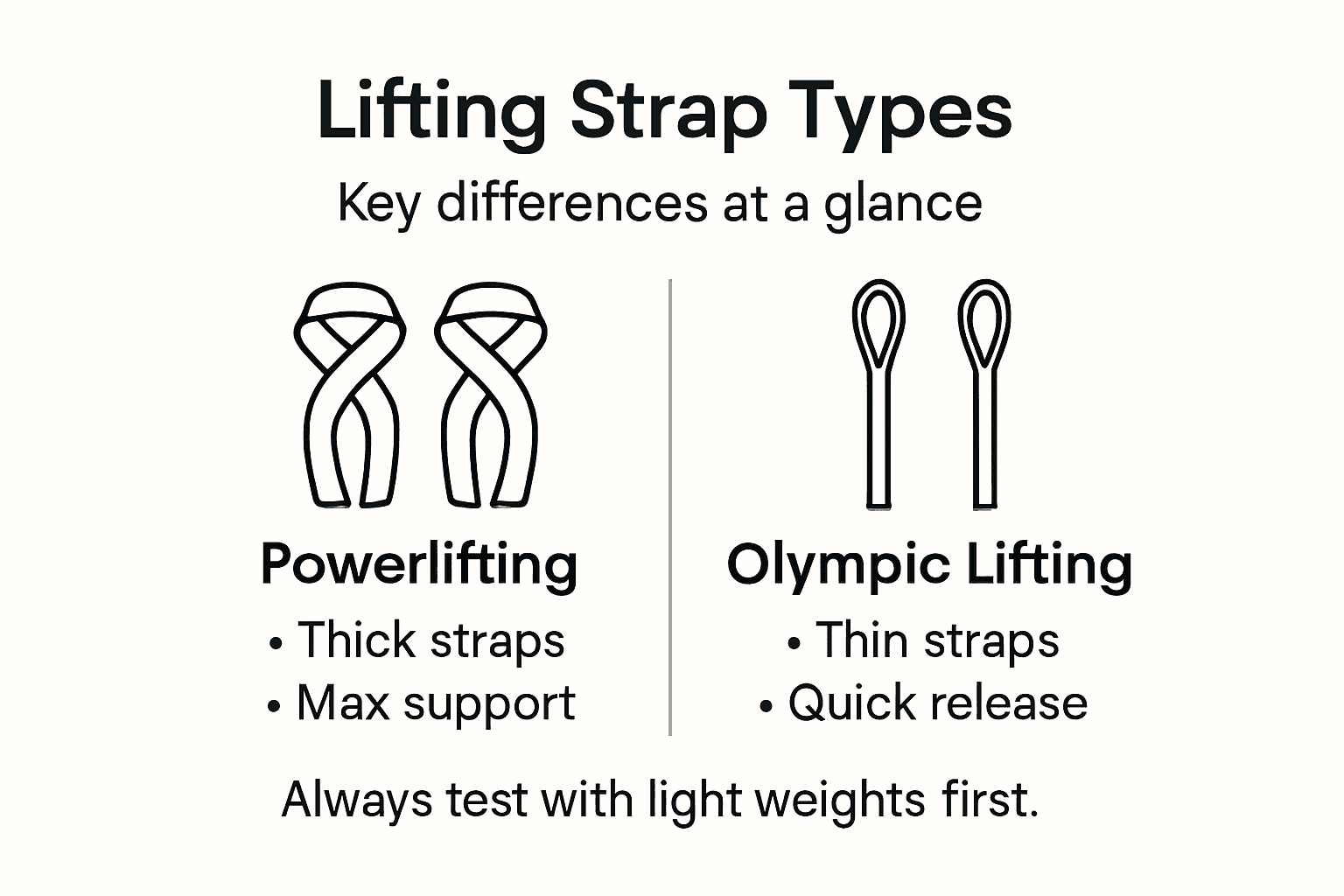
Pro tip: Always test new lifting straps with lighter weights first to ensure proper technique and comfortable fit before attempting maximum load lifts.
Here is a comparison of common lifting strap materials and their key characteristics:
| Material | Durability | Comfort Level | Typical Use Case |
|---|---|---|---|
| Cotton | Moderate | High | Light to moderate lifting |
| Canvas | High | Moderate | Heavy deadlifts, strongman |
| Leather | Very High | Moderate | Powerlifting, frequent heavy lifts |
| Nylon | High | Variable | Versatile strength training |
Step 2: Position your hands and straps correctly on the bar
Mastering the correct hand and strap positioning is crucial for maximizing your lifting performance and preventing potential injuries during weightlifting exercises. The right technique ensures you maintain control and distribute weight effectively across your grip and wrists.
To achieve optimal positioning, start by understanding ergonomic hand placement. Wrap the lifting straps around your wrists first, ensuring they are snug but not overly tight. The strap should sit just above your wrist bone, creating a secure anchor point. When gripping the bar, thread the loose end of the strap around the bar, creating a tight loop that connects your hand to the weight. For most compound lifts like deadlifts or rows, position your hands slightly wider than shoulder width to create a stable base and distribute the load evenly.
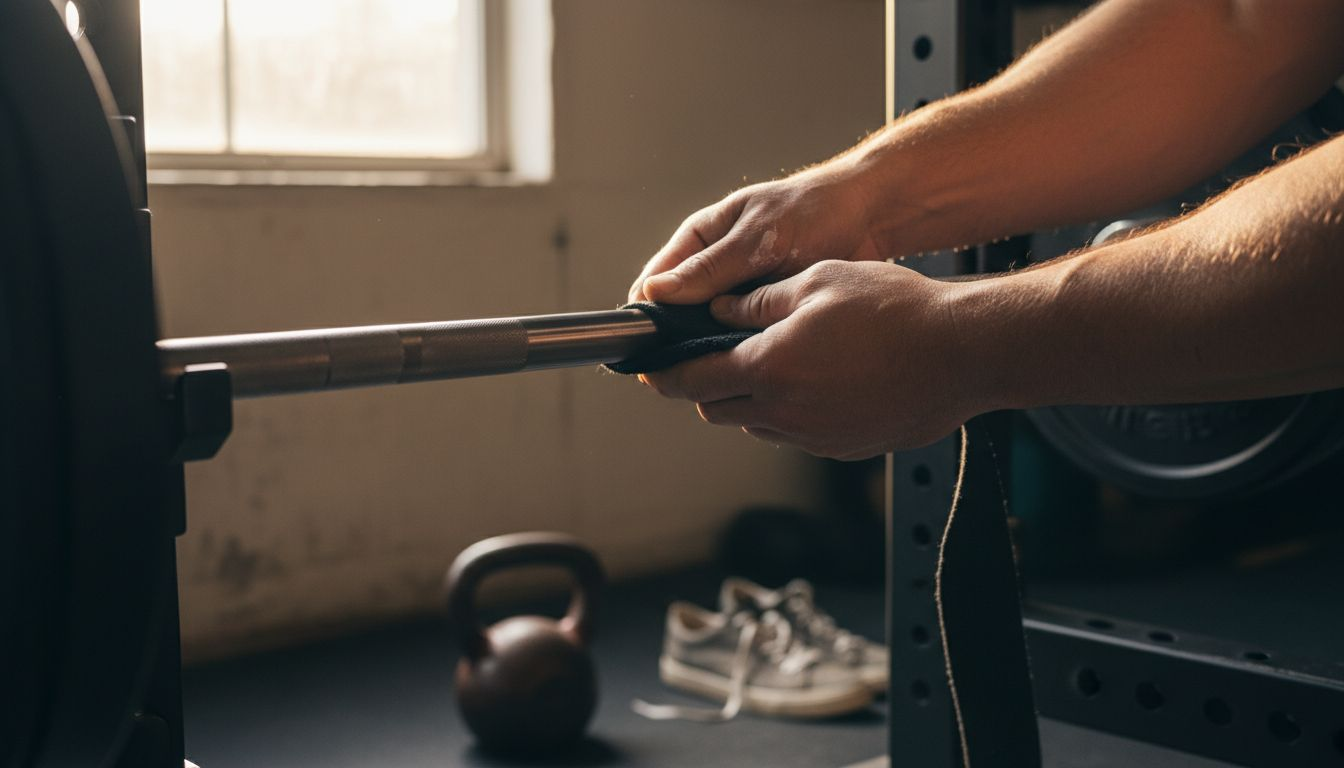
Pay close attention to symmetry when positioning your hands. Uneven grip can lead to muscle imbalances and potential strain. Ensure both straps are adjusted to the same length and tightness. Practice your grip technique with lighter weights first to develop muscle memory and confidence in your hand placement.
Pro tip: Rotate your lifting straps periodically to prevent uneven wear and maintain consistent grip performance.
Step 3: Wrap the straps securely to maximize grip
Securing your lifting straps correctly is a critical skill that can dramatically improve your weightlifting performance and prevent potential grip failures during intense training sessions. The right wrapping technique transforms your grip from vulnerable to rock solid.
Lifting strap techniques require precision and careful attention to detail. Start by placing the strap around your wrist with the loose end hanging toward your fingers. When gripping the bar, wrap the loose end around the bar, creating a tight loop that connects your hand to the weight. The key is achieving a snug fit that provides support without cutting off circulation. For most lifts, wrap the strap so it sits just above your wrist bone, creating a secure anchor point that distributes weight evenly across your grip.
Consider the type of lift you are performing when wrapping your straps. Powerlifting movements like deadlifts require a different wrapping technique compared to Olympic lifts or pulling exercises. Always ensure symmetry between both hands to prevent muscle imbalances. Practice the wrapping motion with lighter weights until the technique becomes second nature, allowing you to focus on your lift rather than adjusting your equipment.
Pro tip: Practice your strap wrapping technique in front of a mirror to ensure consistent placement and optimal grip alignment.
Step 4: Test your grip strength and adjust for comfort
Verifying your grip strength and fine tuning your lifting straps is crucial for maximizing performance and preventing potential injuries during weightlifting. Understanding how your straps interact with your natural grip can make a significant difference in your training effectiveness.
Grip strength assessment requires systematic evaluation and careful adjustment. Begin by performing a baseline grip strength test using a hand dynamometer or by doing a series of controlled lifts with progressively heavier weights. Pay attention to how your straps feel during these movements. The ideal strap setup should provide support without restricting your natural wrist mobility or creating uncomfortable pressure points. If you feel any pinching or excessive tightness, readjust the strap positioning to create a more comfortable fit.
Experiment with different strap tensions and positions across various lifting movements. What works perfectly for deadlifts might need modification for rows or pull ups. Focus on maintaining a consistent grip that allows you to maintain proper form while feeling secure. Start with lighter weights to develop muscle memory and confidence in your strap technique before progressing to heavier loads.
Pro tip: Record a video of your lifting technique to analyze your strap placement and grip mechanics from an objective perspective.
Step 5: Perform lifts using proper strap technique
Mastering the correct lifting technique with straps involves more than simply wrapping your hands around a bar. It requires precise body mechanics, controlled movements, and strategic positioning to maximize both safety and performance.
Lifting techniques for home caregivers emphasize maintaining a neutral spine and keeping the load close to your body. When using lifting straps, focus on smooth and controlled motions from start to finish. Begin by positioning yourself close to the weight, bending at your hips and knees instead of rounding your back. Ensure your straps are securely wrapped around both your wrists and the bar before initiating the lift.
For different lifting movements like deadlifts, rows, or pull ups, adjust your technique slightly. Keep your core engaged, shoulders pulled back, and maintain a consistent grip tension throughout the entire range of motion. Practice each lift with lighter weights first to develop muscle memory and perfect your strap technique. Pay attention to how the straps interact with your grip and make incremental adjustments to find your optimal positioning.
Pro tip: Periodically check your strap condition and replace them if you notice any signs of wear or stretching that could compromise your lifting safety.
Elevate Your Grip Strength with the Right Lifting Gear
Struggling with grip fatigue or uncomfortable lifting straps can hold back your progress and put your safety at risk. This article explains how proper strap selection, wrapping, and fit impact your grip strength and lifting performance. Don’t let poor equipment limit your potential. Armageddon Sports offers a carefully curated collection of durable and comfortable lifting accessories to help you master your lifts.
Explore top-quality options in our Buy Lifting Equipment- Armageddon Sports collection and discover supportive gear designed for serious lifters. For additional comfort and enhanced grip control, check our range of Fitness Accessories - Home Gym Equipment for Workout and Exercise | Armageddon Sports. Ready to upgrade your lifting routine today Visit Armageddon Sports now to find everything you need to lift more confidently and safely. Don’t wait until discomfort slows you down act now to experience the difference great equipment makes.
Frequently Asked Questions
How do I choose the right lifting straps for my workout?
To choose the right lifting straps, consider the material, width, and grip style. Look for durable options like canvas or leather, and select straps that match your lifting goals, such as longer straps for powerlifting or shorter straps for Olympic lifting. Test different styles to find one that feels comfortable and supports your grip effectively.
What is the correct way to wrap lifting straps around the bar?
To wrap lifting straps around the bar correctly, start by placing the strap around your wrist, then wrap the loose end around the bar to create a tight loop. Make sure the strap sits above your wrist bone for better support without cutting off circulation. Practice this technique with lighter weights to gain confidence and ensure a secure fit.
How can I test my grip strength while using lifting straps?
You can test your grip strength by performing a grip strength assessment with a hand dynamometer or gradually increasing the weight during controlled lifts. Notice how the straps feel during these tests; the ideal setup should support your grip without discomfort. Adjust strap positioning if you experience pinching or excessive tightness.
What should I consider when positioning my hands and straps on the bar?
When positioning your hands and straps on the bar, ensure they are symmetrical and slightly wider than shoulder-width apart for stability. Wrap the straps snugly around your wrists and the bar, maintaining an ergonomic grip. Start with lighter weights to practice your hand and strap placement for optimal lift technique.
How do I maintain proper form while using lifting straps?
To maintain proper form while using lifting straps, focus on keeping a neutral spine and engaging your core throughout the lift. Ensure your straps are securely wrapped and maintain control of the weight by keeping it close to your body. Practice with lighter weights to refine your technique and make adjustments as needed before progressing to heavier loads.
How often should I check my lifting straps for wear?
You should check your lifting straps for signs of wear, such as fraying or stretching, before every training session. If you notice any damage, replace them immediately to ensure your safety and grip performance is not compromised. Regular checks can help maintain a consistent grip and enhance your lifting technique.
Recommended
- How to Actually Use Weight Lifting Straps for Deadlift – Are Wrist Hoo – Armageddon Sports
- Weightlifting Gym Fitness Neoprene Padded Long Wrist Straps – Armageddon Sports
- Best Hanging Ab Straps—Pull-Up Bar Exercises To Train Your Abs [Guide] – Armageddon Sports
- Weight Lifting Gym Workout Wrist Straps Support Wirst Wraps Padded Deadlifting Straps – Armageddon Sports
- Grip Training Explained: Benefits, Types, and Tools - Gripnatic


