
Muscle tightness in the neck can derail even the strongest lifters, leaving discomfort that lingers through workouts and rest. Fitness enthusiasts from Canada to Australia search for non-invasive answers to keep training intensity high and mobility unrestricted. This guide breaks down key concepts about neck stretchers, clearing up common misconceptions and explaining their real benefits, so you can safely support your cervical spine and maximize performance.
Table of Contents
- Neck Stretcher Basics And Common Misconceptions
- Types Of Neck Stretchers And Their Key Differences
- How Neck Stretchers Work For Pain Relief And Posture
- Benefits For Fitness Enthusiasts And Athletes
- Risks, Safety, And Avoiding Mistakes
- Comparing Neck Stretchers With Alternative Solutions
Key Takeaways
| Point | Details |
|---|---|
| Functionality of Neck Stretchers | Neck stretchers relieve neck pain by gently separating vertebrae and reducing muscle tension through controlled traction. |
| Types of Neck Stretchers | Various models exist, including over-the-door systems, inflatable collars, foam wedges, and hammock slings, each tailored for specific user needs. |
| Integration with Other Treatments | Neck stretchers are most effective when used alongside proper exercise, ergonomic adjustments, and professional guidance for comprehensive pain management. |
| Safety and Precautions | Users should consult healthcare professionals before use and be mindful of their body response to avoid injuries and ensure effective relief. |
Neck stretcher basics and common misconceptions
Neck stretchers have become increasingly popular among fitness enthusiasts seeking non-invasive pain relief and improved mobility. These devices apply gentle traction to the cervical spine, designed to create space between vertebrae and alleviate muscle tension. Cervical spine decompression techniques can help individuals manage neck discomfort caused by poor posture, muscle strain, and repetitive stress.
Understanding how neck stretchers function requires recognizing their core mechanical principles. These devices work by:
- Gently separating vertebral segments
- Reducing compressive forces on spinal discs
- Promoting increased blood circulation
- Stretching tight neck and shoulder muscles
- Improving overall cervical spine flexibility
Contrary to popular belief, neck stretchers are not a universal solution for all neck-related issues. Cervical traction research indicates mixed clinical outcomes, suggesting they work best for specific conditions like muscular tension and minor postural problems.
Many users mistakenly assume neck stretchers provide instant, permanent relief. In reality, they are most effective when integrated into a comprehensive wellness strategy that includes proper exercise, ergonomic adjustments, and professional medical guidance. The key is understanding their limitations and using them as a complementary recovery tool.
Pro tip: Always consult a healthcare professional before incorporating neck stretching devices into your fitness routine to ensure safe and appropriate usage.
Types of neck stretchers and their key differences
Neck stretchers are diverse devices designed to provide targeted cervical spine relief, with multiple configurations addressing different user needs. Cervical traction devices come in several primary types, each offering unique benefits and addressing specific neck tension challenges.
The main types of neck stretchers include:
-
Over-the-Door Pulley Systems:
- Utilize adjustable weights and harnesses
- Provide strong, consistent traction
- Best for users seeking intensive stretching
- Require dedicated setup space
-
Pneumatic Inflatable Collars:
- Portable and lightweight
- Adjustable air pressure for customized tension
- Easy to use and transport
- Ideal for travelers and mobile professionals
-
Foam Ergonomic Wedges:
- Passive stretching method
- Support natural cervical spine curvature
- Low-cost option
- Suitable for gentle, consistent neck support
-
Hammock-Style Slings:
- Leverage gravity for spinal decompression
- Provide gentle, continuous stretch
- Minimal equipment required
- Good for home and office use
Neck stretching technology varies significantly in intensity and application. Professional athletes and fitness enthusiasts often prefer devices that offer precise tension control and targeted relief, while individuals managing chronic neck pain might prioritize comfort and ease of use.
Choosing the right neck stretcher depends on individual needs, physical condition, and specific neck issues. Factors like portability, intensity of traction, budget, and personal comfort play crucial roles in selecting an appropriate device. Consulting with a healthcare professional can help determine the most suitable neck stretcher for your specific requirements.
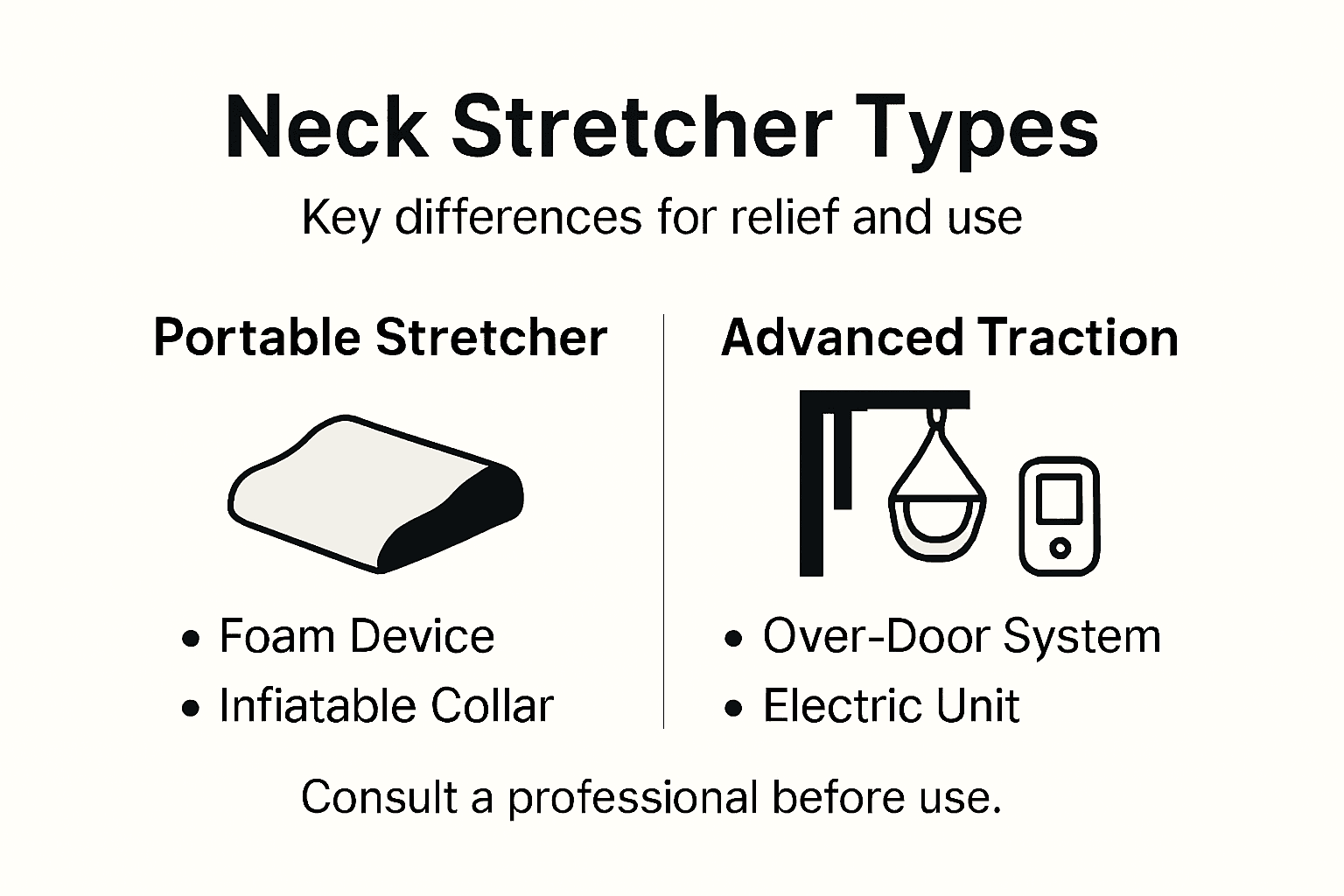
Here’s a quick comparison of neck stretcher types based on portability, intensity, and ideal users:
| Type of Neck Stretcher | Portability Level | Traction Intensity | Best For |
|---|---|---|---|
| Over-the-Door Pulley | Low (requires setup) | High, adjustable | Home users needing strong stretch |
| Pneumatic Collar | High (very portable) | Moderate, adjustable | Travelers needing flexible relief |
| Foam Wedge | High (compact) | Gentle, fixed | Individuals seeking mild support |
| Hammock Sling | Moderate (simple setup) | Gentle to moderate | Office/home users wanting ease |
Pro tip: Start with low-intensity stretching and gradually increase duration and tension to prevent potential muscle strain or discomfort.
How neck stretchers work for pain relief and posture
Neck stretchers are sophisticated therapeutic devices designed to address chronic neck discomfort and postural misalignments through precise mechanical intervention. Cervical spine decompression techniques involve applying gentle, sustained traction to create critical spacing between vertebrae, alleviating nerve compression and muscle tension.
The biomechanical process of neck stretching involves several key mechanisms:
-
Vertebral Separation:
- Creates micro-spaces between cervical vertebrae
- Reduces direct pressure on intervertebral discs
- Allows increased blood circulation
- Promotes natural spinal alignment
-
Muscle and Ligament Elongation:
- Gently stretches contracted neck muscles
- Reduces muscle spasms and chronic tension
- Improves overall neck flexibility
- Encourages more balanced muscle engagement
-
Nerve Pathway Decompression:
- Minimizes nerve root compression
- Reduces radiating pain and numbness
- Supports optimal neurological signaling
- Helps restore proper nerve function
Professional athletes and fitness enthusiasts recognize that neck stretching interventions can significantly improve posture by counteracting the effects of prolonged sitting, repetitive training, and poor ergonomic habits. The consistent application of controlled traction helps retrain muscle memory and spinal positioning.
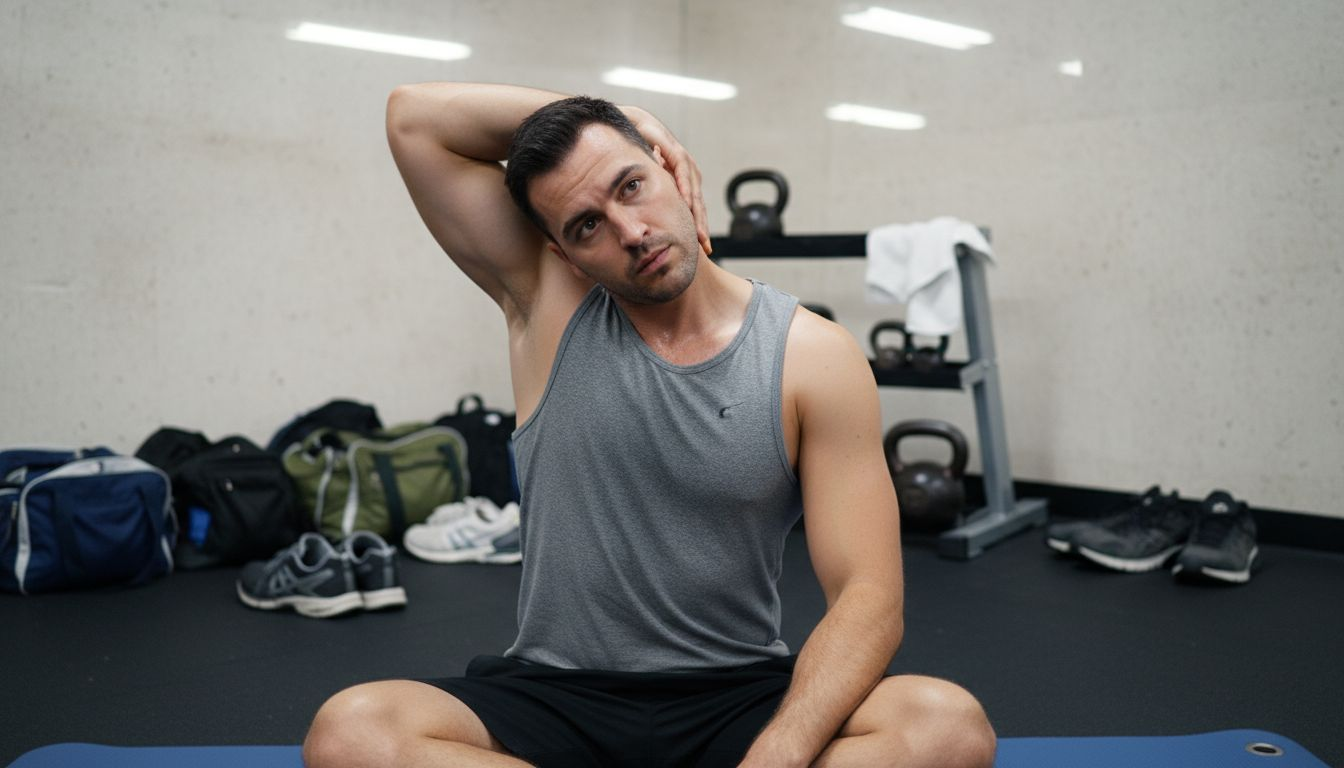
Understanding the nuanced mechanics of neck stretchers reveals their potential as more than just pain management tools. They represent a proactive approach to maintaining cervical spine health, addressing root causes of discomfort rather than merely treating symptoms.
Pro tip: Combine neck stretcher usage with targeted strength exercises to maximize long-term postural improvements and muscle balance.
Benefits for fitness enthusiasts and athletes
Neck stretcher interventions offer significant advantages for athletes and fitness enthusiasts struggling with muscular tension, mobility restrictions, and potential training-related injuries. These specialized devices provide targeted mechanical support to optimize physical performance and recovery strategies.
Key benefits for athletic populations include:
-
Performance Enhancement:
- Reduces muscle tension and stiffness
- Improves overall neck and shoulder mobility
- Supports faster muscle recovery
- Minimizes risk of training-related neck injuries
-
Biomechanical Advantages:
- Promotes optimal spinal alignment
- Supports balanced muscle engagement
- Helps correct postural imbalances
- Increases range of motion during training
-
Injury Prevention:
- Decreases accumulated muscular stress
- Supports neuromuscular rehabilitation
- Helps maintain cervical spine flexibility
- Reduces chronic pain development risks
Athletes across various disciplines recognize that neck muscle conditioning represents a critical yet often overlooked component of comprehensive training programs. Regular neck stretcher usage can significantly mitigate the cumulative physical stress experienced during intense training cycles.
Professional strength trainers and sports physiotherapists increasingly recommend neck stretching as a proactive approach to maintaining muscular health and preventing potential long-term mobility restrictions. By integrating these devices into regular training protocols, athletes can develop more resilient and adaptable musculoskeletal systems.
Pro tip: Incorporate neck stretcher routines during active recovery days to maximize muscular adaptation and minimize potential training-related strain.
Risks, safety, and avoiding mistakes
Neck stretcher safety protocols require careful consideration to prevent potential injury and ensure effective therapeutic intervention. Understanding the nuanced risks associated with these devices is crucial for responsible and beneficial usage among fitness enthusiasts and individuals managing neck discomfort.
Common risks and potential mistakes include:
-
Improper Device Selection:
- Choosing incompatible device for personal anatomy
- Ignoring individual medical history
- Selecting devices with inappropriate tension mechanisms
- Overlooking personal comfort and physical limitations
-
Incorrect Usage Techniques:
- Applying excessive traction force
- Maintaining incorrect head and neck positioning
- Extending stretching sessions beyond recommended duration
- Failing to monitor bodily response during stretching
-
Medical Contraindications:
- Using devices with active cervical spine injuries
- Stretching through acute inflammatory conditions
- Ignoring recommendations from healthcare professionals
- Attempting neck stretches with undiagnosed structural issues
Neck stretching safety guidelines emphasize the importance of gradual, controlled interventions. Users should approach neck stretching as a precise, measured therapeutic technique rather than an aggressive mechanical manipulation.
Professional medical guidance remains paramount, especially for individuals with pre-existing neck conditions, recent injuries, or complex musculoskeletal challenges. Careful assessment, professional consultation, and mindful implementation are essential for safe and effective neck stretcher usage.
Pro tip: Always start with low-intensity stretches and incrementally increase duration and tension while maintaining constant awareness of your body’s response.
Comparing neck stretchers with alternative solutions
Neck pain management strategies encompass a diverse range of approaches, each targeting different aspects of muscular and structural discomfort. Understanding the unique strengths and limitations of neck stretchers compared to alternative solutions is crucial for developing comprehensive treatment strategies.
Key alternative approaches include:
-
Physical Therapy Interventions:
- Targeted muscle strengthening exercises
- Comprehensive postural correction techniques
- Manual manipulation by professionals
- Personalized rehabilitation programs
-
Medication-Based Solutions:
- Anti-inflammatory pharmaceutical treatments
- Muscle relaxant prescriptions
- Pain management through pharmacological interventions
- Temporary symptomatic relief
-
Ergonomic Modifications:
- Workplace workstation redesign
- Specialized supportive equipment
- Posture-correcting accessories
- Reduced mechanical stress strategies
Cervical traction technologies distinguish themselves by offering direct mechanical intervention, providing unique benefits that complement but cannot entirely replace other treatment modalities. Neck stretchers excel in delivering consistent, controlled decompression that other methods cannot replicate.
Professional healthcare providers increasingly recommend integrated approaches that combine multiple strategies. While neck stretchers offer significant advantages, they are most effective when incorporated into a holistic treatment plan that addresses underlying biomechanical and physiological factors contributing to neck discomfort.
This table summarizes how neck stretchers complement common alternative solutions for neck pain:
| Solution Type | Unique Advantage | Limitation |
|---|---|---|
| Neck Stretchers | Direct mechanical decompression | Not suitable for all conditions |
| Physical Therapy | Custom rehabilitation programs | Requires professional oversight |
| Medication | Fast-acting symptom relief | Temporary, may cause side effects |
| Ergonomic Changes | Reduces repetitive strain | Needs long-term lifestyle change |
Pro tip: Consult healthcare professionals to develop a personalized treatment strategy that strategically combines multiple neck pain management approaches.
Discover Effective Neck Relief and Performance Gear Today
Struggling with neck tension, poor posture, or limited mobility can hold back your fitness goals and everyday comfort. The article highlights how neck stretchers provide precise mechanical traction to reduce muscle strain and support spinal alignment. For fitness enthusiasts and athletes aiming to enhance recovery and prevent injury, integrating neck stretching tools into your routine is vital. Empower your wellness journey with carefully selected equipment designed to complement this approach.

Explore premium options to support your neck health and overall fitness in our Health & Fitness Equipment collection. From versatile wellness devices to targeted fitness accessories, we have everything to enhance your workout efficiency and recovery. Don’t wait to take control of your neck health. Visit Armageddon Sports now and find the perfect gear that delivers relief and boosts your performance.
Frequently Asked Questions
What are the primary benefits of using a neck stretcher?
Neck stretchers provide several benefits, including reducing muscle tension, improving neck and shoulder mobility, enhancing overall spinal alignment, and supporting faster muscle recovery, making them advantageous for athletes and fitness enthusiasts.
How do neck stretchers work for pain relief?
Neck stretchers apply gentle traction to the cervical spine, creating space between vertebrae which reduces nerve compression and alleviates muscle tension. This process promotes better blood circulation and overall neck flexibility, contributing to pain relief.
Are there different types of neck stretchers and how do they differ?
Yes, neck stretchers come in various types, including over-the-door pulley systems, pneumatic inflatable collars, foam ergonomic wedges, and hammock-style slings. Each type offers different levels of traction intensity, portability, and suitability for specific user needs.
Can neck stretchers help with posture improvement?
Yes, regular use of neck stretchers can significantly improve posture by counteracting the effects of poor ergonomics and prolonged sitting, helping to retrain muscle memory and spinal positioning for better alignment.
Recommended
- Neck Traction Device: Enhancing Fitness Recovery – Armageddon Sports
- Neck Workout Guide - How to Train Your Neck Muscles? – Armageddon Sports
- Best Inflatable Neck Traction Pillow Cervical Spine Collar Device Shoulder Pain Relief – Armageddon Sports
- Posture Corrector Brace for Upper Back Rounder Shoulders Men and Women Anti Slouch – Armageddon Sports