
Strong forearms set elite athletes apart on competition day, yet many lifters struggle with grip fatigue and nagging aches. The right approach to forearm training matters for both safety and performance. By focusing on proper equipment selection, gradual muscle activation, and strategic accessory use, you can maximize grip strength and arm definition while preventing injury setbacks during intense sessions.
Table of Contents
- Step 1: Select Proper Equipment for Forearm Training
- Step 2: Warm Up and Mobilize Your Forearm Muscles
- Step 3: Perform Targeted Forearm Strength Exercises
- Step 4: Incorporate Grip-Enhancing Accessories
- Step 5: Assess Progress and Optimize Your Routine
Quick Summary
| Key Point | Explanation |
|---|---|
| 1. Choose Proper Equipment | Select tools with variable resistance and ergonomic designs to maximize muscle growth and prevent injuries during forearm training. |
| 2. Prioritize Warm-Up Routine | Engage in dynamic stretches before workouts to enhance flexibility, prevent injuries, and prepare forearm muscles for training challenges. |
| 3. Focus on Targeted Exercises | Incorporate specific exercises like Farmer’s walks and reverse curls to build strength and stimulate forearm muscle development through progressive overload. |
| 4. Use Grip-Enhancing Accessories | Select p accessories such as lifting straps and chalk to augment grip strength and improve the effectiveness of your forearm training sessions. |
| 5. Track Your Progress Systematically | Regularly assess performance metrics and document exercise details to optimize your training routine and foster continued muscle growth. |
Step 1: Select Proper Equipment for Forearm Training
Choosing the right equipment is crucial for effective and safe forearm training. Your gear selection directly impacts muscle growth, grip strength development, and injury prevention.
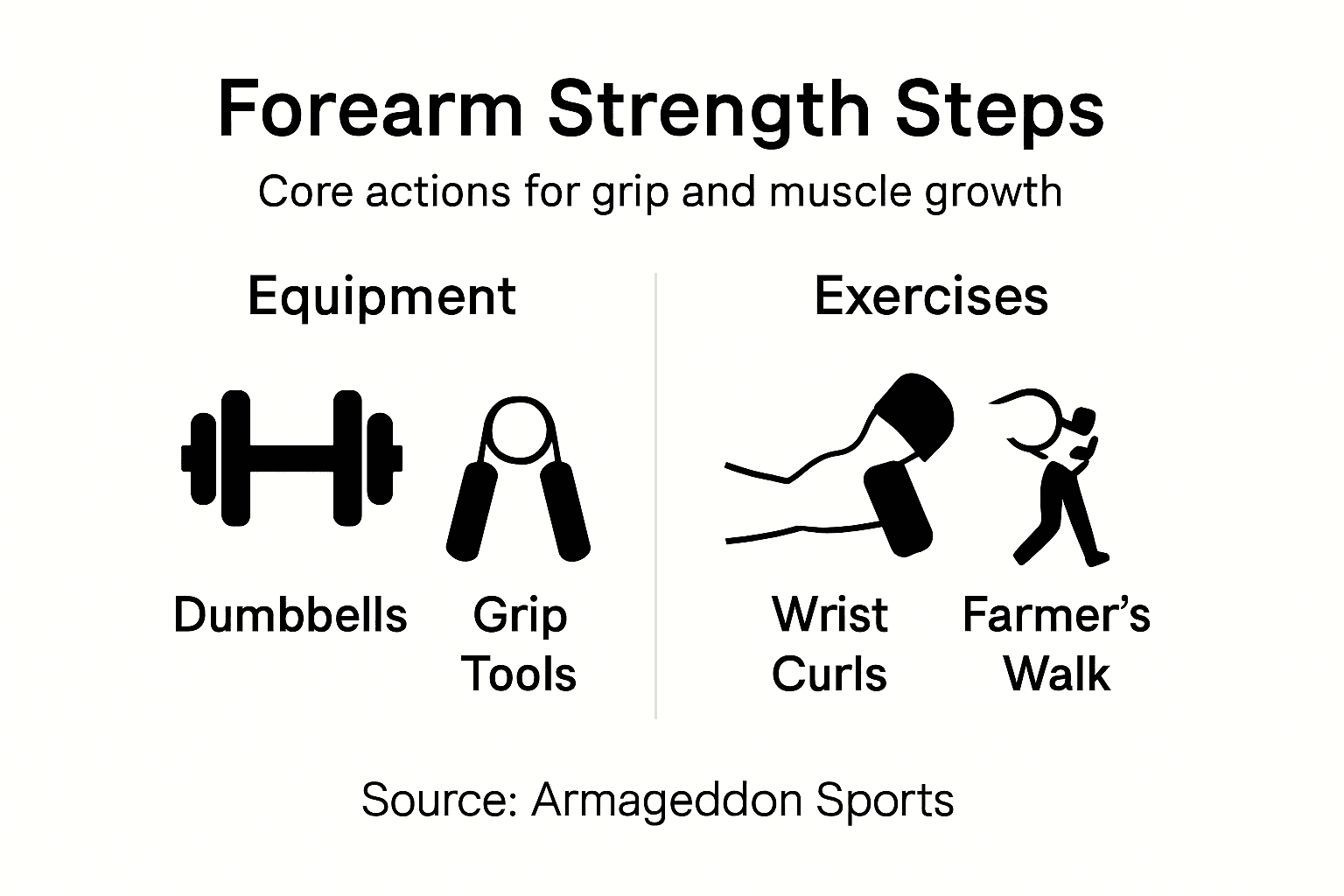
When selecting forearm training equipment, focus on tools that provide variable resistance and promote natural movement patterns. Ergonomic design considerations are essential for preventing musculoskeletal strain during workouts. Key equipment options include:
- Grip strengtheners: Hand-held spring-loaded devices
- Fat grip attachments: Rubber or silicone grips for barbells and dumbbells
- Forearm rollers: Leverage-based equipment for targeted muscle engagement
- Adjustable resistance bands: Versatile training tools for multiple grip exercises
Professional athletes and trainers recommend choosing equipment that challenges your current strength level while allowing progressive overload. Look for adjustable resistance mechanisms and ergonomic designs that support proper muscle recruitment.
Here’s how common forearm equipment supports various training needs:
| Equipment Type | Main Training Benefit | Adjustability | Ergonomic Impact |
|---|---|---|---|
| Grip Strengtheners | Improves crush grip power | Moderate | Supports hand alignment |
| Fat Grip Attachments | Increases muscle activation | Low | Requires secure grip setup |
| Forearm Rollers | Builds endurance and size | High | Promotes natural movement |
| Resistance Bands | Versatile strength options | Very High | Adapts to joint positions |
Proper equipment selection prevents injury and maximizes muscle development potential.
Pro tip: Invest in versatile equipment that allows multiple grip variations to prevent training plateaus and maintain muscle engagement.
Step 2: Warm Up and Mobilize Your Forearm Muscles
Preparing your forearm muscles for an intense workout requires strategic mobility and activation techniques. Understanding forearm muscle anatomy is crucial for creating an effective warm-up routine that prevents injury and maximizes performance.
A comprehensive forearm warm-up should include dynamic stretches and mobility exercises targeting multiple muscle groups:
- Wrist rotations: Gentle circular motions in both directions
- Finger fan stretches: Spread and contract fingers systematically
- Grip and release exercises: Using stress balls or grip strengtheners
- Arm swings: Pendulum-like movements to increase blood flow
Focus on gentle, controlled movements that gradually increase range of motion. Start with light tension and progressively increase intensity to prepare your muscles for more demanding exercises. Slow and controlled movements are key to preventing strain and promoting muscle readiness.
Dynamic warm-ups enhance muscle flexibility and reduce injury risk during forearm training.
Pro tip: Always perform warm-up exercises at a comfortable pace, listening to your body and stopping if you experience any sharp pain or discomfort.
Step 3: Perform Targeted Forearm Strength Exercises
Maximizing forearm muscle growth requires strategic exercises that challenge your grip and stimulate muscle development. Strength training techniques provide a systematic approach to building powerful forearm muscles through progressive resistance training.
Key targeted exercises for comprehensive forearm development include:
- Farmer’s walks: Carrying heavy weights while walking
- Plate pinches: Gripping weight plates between thumb and fingers
- Reverse curls: Targeting brachioradialis muscle
- Wrist roller exercises: Controlled up and down movements
- Hammer curls: Neutral grip dumbbell movements
Consistent performance requires careful attention to proper form and progressive overload. Start with lighter weights and gradually increase resistance as your strength improves. Focus on controlled, deliberate movements that engage the entire forearm muscle group, avoiding momentum-based lifting.
Targeted exercises stimulate muscle growth by creating microscopic tears that rebuild stronger and larger.
Pro tip: Incorporate varying grip techniques and equipment to prevent muscle adaptation and continuously challenge your forearm muscles.
Step 4: Incorporate Grip-Enhancing Accessories
Strategically selecting grip-enhancing accessories can dramatically improve your forearm training effectiveness. Grip-enhancing equipment standards provide critical insights into tools that maximize performance while maintaining safety and training integrity.
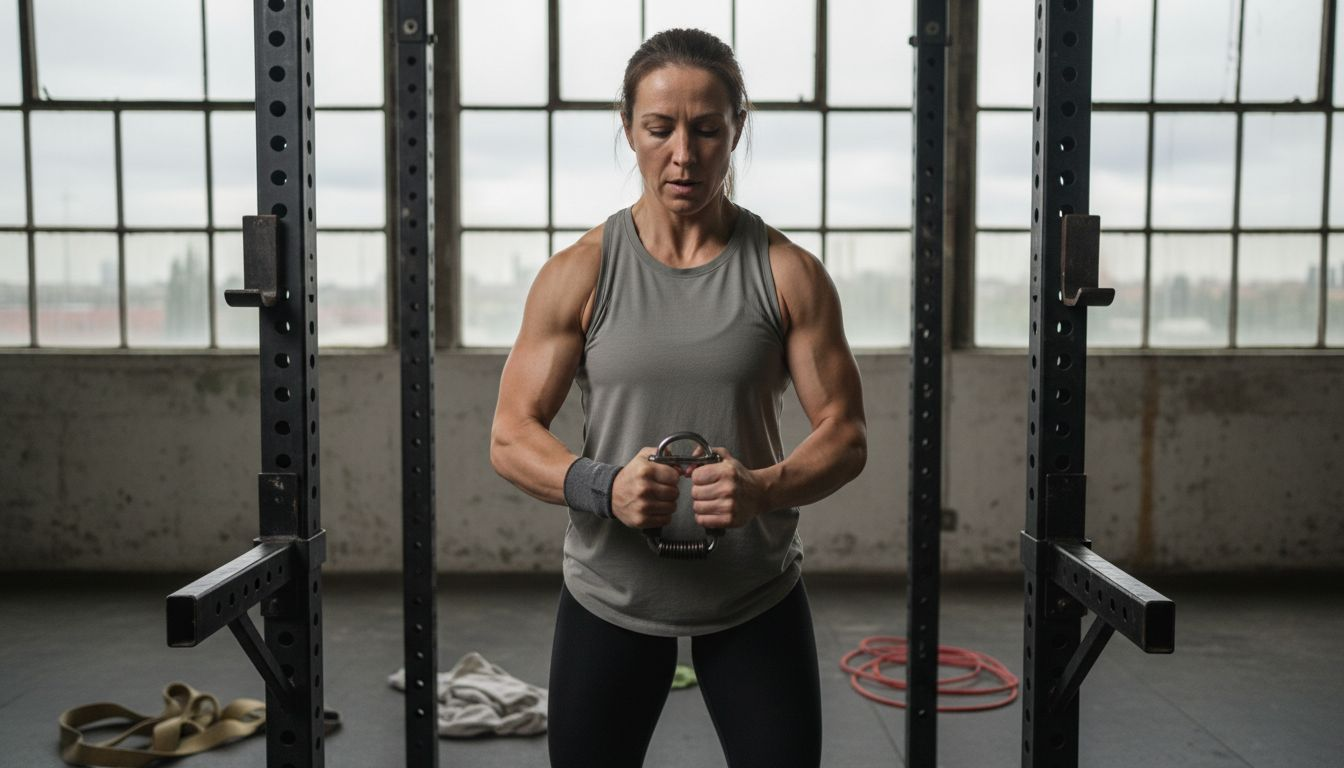
Essential grip-enhancing accessories include:
- Lifting straps: Provide additional grip support during heavy lifts
- Grip trainers: Handheld devices for targeted grip strength
- Chalk: Reduces moisture and improves friction
- Silicone grips: Add traction to barbells and dumbbells
- Compression sleeves: Support muscle engagement and reduce strain
Proper accessory selection depends on your specific training goals and current strength level. Experiment with different tools to find the combination that challenges your grip while preventing potential injury. Focus on accessories that provide natural resistance and promote muscle development.
Grip-enhancing accessories are strategic tools that extend your training potential beyond natural limitations.
Pro tip: Rotate between different grip accessories to prevent muscle adaptation and continuously challenge your forearm strength.
Step 5: Assess Progress and Optimize Your Routine
Tracking and evaluating your forearm training progress is crucial for sustained muscle growth and preventing plateaus. Effective activity tracking methods help you systematically monitor your strength gains and adjust your workout strategy.
Key progress assessment techniques include:
- Performance metrics: Measure grip strength with dynamometer tests
- Workout logs: Record weight lifted, repetitions, and exercise variations
- Body measurements: Track forearm muscle circumference changes
- Progress photos: Document visual muscle development
- Strength benchmarks: Test maximum lift capabilities quarterly
Consistent tracking enables intelligent routine optimization. Pay attention to your body’s response, noting improvements in strength, muscle definition, and overall performance. Be prepared to modify your training approach based on objective data and how your muscles feel during workouts.
This table summarizes optimal ways to measure forearm training progress:
| Progress Metric | What It Tracks | How Often to Assess |
|---|---|---|
| Grip Strength Test | Maximal grip force | Every 4 weeks |
| Forearm Measurement | Muscle circumference gains | Every 6 weeks |
| Exercise Volume Log | Improvements in load/times | Each session |
| Progress Photos | Visual muscle definition | Monthly |
Progress is not linear - intelligent adaptation separates successful athletes from average performers.
Pro tip: Create a digital or physical workout journal to maintain precise records and identify subtle patterns in your forearm muscle development.
Unlock Your Forearm Strength with the Right Gear from Armageddon Sports
Forearm workouts demand proper equipment to build maximum grip strength and muscle growth while avoiding injury. If you want to crush plate pinches, master wrist roller exercises, and improve your farmer’s walks, having ergonomically designed gear and versatile accessories is key. This guide highlights how the right tools support progressive overload and targeted muscle activation for noticeable results.

Get ready to elevate your forearm training by exploring our premium selection at Shop Arm Workout Equipment - Armageddon Sports and enhance your grip with specialized Fitness & Workout Gloves made for durability and comfort. Dont settle for less — visit Armageddon Sports now to access exclusive deals on high-quality fitness accessories designed to intensify your workout and accelerate muscle development. Take your grip strength to the next level today.
Frequently Asked Questions
How can I choose the right equipment for forearm workouts?
Selecting the right equipment involves focusing on tools that provide variable resistance and support natural movement patterns. Look for grip strengtheners, fat grip attachments, and adjustable resistance bands that match your current strength level to effectively target your forearms.
What warm-up exercises should I do before forearm training?
Perform wrist rotations, finger fan stretches, and grip-release exercises to prepare your forearm muscles. Aim to complete these dynamic stretches for about 5–10 minutes to enhance flexibility and reduce the risk of injury during your workout.
What are the most effective strength exercises for forearm muscle growth?
Key exercises for forearm growth include farmer’s walks, plate pinches, and wrist roller movements. Incorporate these exercises into your routine, aiming for 3 sets of 8–12 repetitions to effectively stimulate muscle development.
How can I improve my grip strength through training?
You can improve grip strength by regularly incorporating grip trainers and lifting straps into your workouts. Focus on performing exercises like deadlifts or pull-ups with these accessories, progressively increasing your weights every 2–3 weeks for continual improvement.
How do I track my progress in forearm training?
Track your progress by keeping a workout log noting metrics such as weight lifted and repetitions performed. Assess your grip strength and forearm measurements every 4–6 weeks to evaluate gains and adjust your training strategy accordingly.
Recommended
- How to Improve Grip Strength Naturally for Stronger Lifts – Armageddon Sports
- Thick & Fat Grips Bar Training Adapters Alternative Workout Forearms Strength Builder for Weights Barbell Dumbells Sillicone Rubber – Armageddon Sports
- Best Arm Blaster Biceps Curl Support Bicep Isolator Bar Bomber Arnold Machine – Armageddon Sports
- How to Use Lifting Straps for Maximum Grip Strength – Armageddon Sports