
You step on the scale and see a number you like, but your clothes still fit tight and your abs remain hidden. The problem? Weight alone tells you nothing about whether you lost fat or muscle. Body fat percentage reveals the real story by measuring how much of your weight comes from fat versus lean tissue like muscle, bone, and organs. This metric transforms how you approach fitness goals, giving you precise feedback on fat loss and muscle gain that the scale simply cannot provide. In this guide, you will learn how to measure body fat percentage accurately, understand healthy ranges for your age and gender, and use this knowledge to sculpt the physique you want.
Table of Contents
- Key takeaways
- What is body fat percentage and why it matters
- Common methods to measure body fat percentage
- Healthy body fat percentage ranges by age and gender
- How to use body fat percentage to improve your fitness and health
- Explore fitness accessories to support your body fat goals
- FAQ
Key Takeaways
| Point | Details |
|---|---|
| Body fat matters | Body fat percentage reveals how much of your weight is fat versus lean tissue, guiding smarter fitness goals. |
| BMI limitations | BMI can misclassify muscular people and miss visceral fat, making it unreliable for those who lift weights. |
| Measuring options | DEXA is highly accurate but costly, bioelectrical impedance scales are convenient but can vary with hydration, and the Navy circumference method is quick and low cost. |
| Consistency matters | Stick with one method and use it to monitor trends over time rather than chasing absolute numbers. |
What is body fat percentage and why it matters
Body fat percentage represents the proportion of your total body weight consisting of fat mass as opposed to lean mass. Lean mass includes everything that is not fat: skeletal muscle, bones, organs, connective tissue, and water. When you understand this distinction, you gain a powerful tool for assessing your true fitness level and health risks.
BMI has dominated health assessments for decades, but it fails miserably for anyone who lifts weights or carries significant muscle. A bodybuilder with 8% body fat might register as overweight on BMI charts simply because muscle weighs more than fat. Conversely, someone with little muscle but high fat stores might fall into the healthy BMI range while carrying dangerous visceral fat around organs. This is why distinguishing fat from muscle gives you far better insight into fitness progress and actual health status.
Your lean mass includes:
- Skeletal muscle tissue that moves your body and burns calories
- Bone density that protects against osteoporosis and fractures
- Organ tissue including heart, liver, kidneys, and brain
- Blood, lymph, and interstitial fluids that transport nutrients
- Connective tissues like tendons, ligaments, and cartilage
Understanding body fat percentage lets you set smarter goals. Instead of aiming to lose 20 pounds, you can target losing 15 pounds of fat while gaining 5 pounds of muscle. This approach preserves metabolic rate and creates the lean, defined look most people actually want.
The difference matters enormously for your training decisions. If your body fat percentage drops while weight stays stable, you are building muscle and losing fat simultaneously. If weight drops but body fat percentage stays the same, you are losing muscle along with fat and probably need to adjust your protein intake or resistance training. This precision transforms guesswork into a science.
Common methods to measure body fat percentage
You have several options for measuring body fat, each with tradeoffs between accuracy, cost, and convenience. The key is picking one method and sticking with it to track trends over time rather than chasing perfect accuracy.
| Method | Accuracy | Cost | Convenience | Best For |
|---|---|---|---|---|
| DEXA scan | ±1-2% | $50-150 | Low | Baseline measurements |
| Hydrostatic weighing | ±1-3% | $40-75 | Low | Accurate assessments |
| Bod Pod | ±2-3% | $40-75 | Medium | Lab testing |
| Skinfold calipers | ±3-4% | $5-30 | High | Home tracking |
| Navy method | ±3-4% | Free | High | Regular monitoring |
| BIA scales | ±4-8% | $30-200 | High | Daily trends |
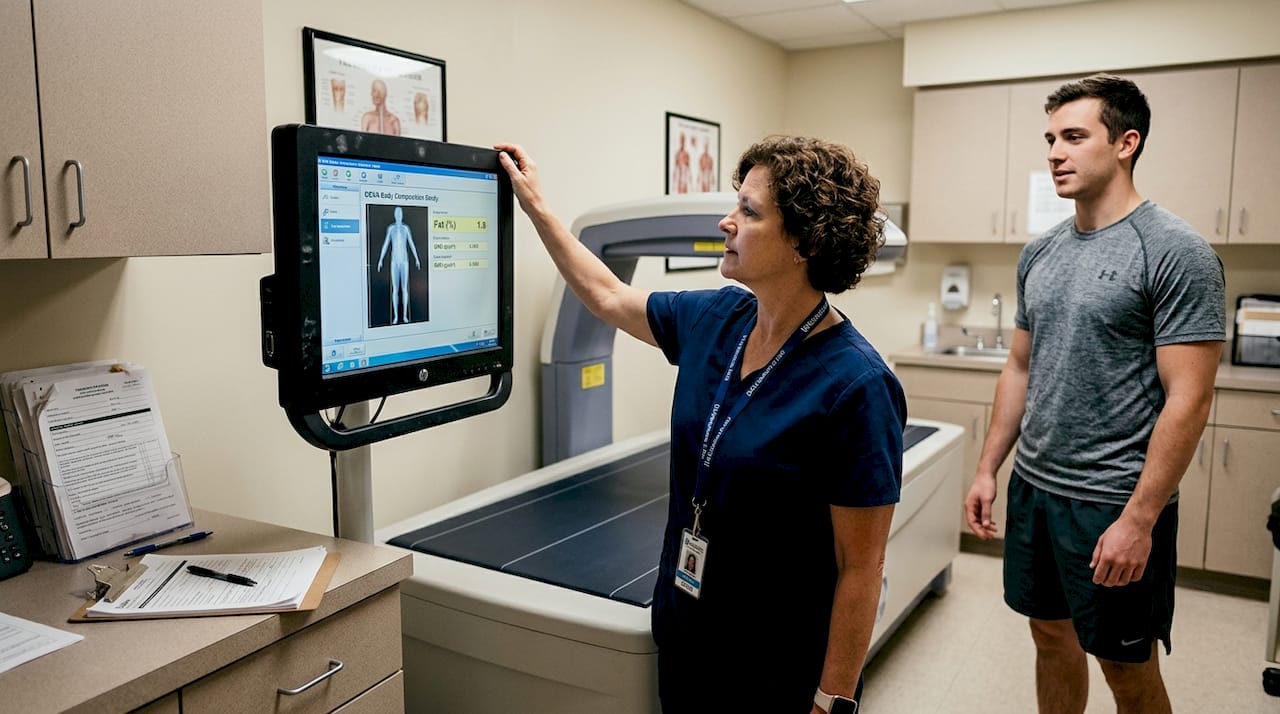
DEXA scans deliver gold standard accuracy at ±1-2% by using low dose x-rays to differentiate bone, lean tissue, and fat. You lie still for about 10 minutes while the machine scans your entire body. The detailed report shows exactly where you carry fat and how much muscle exists in each limb. This method works perfectly for establishing a baseline, but the cost and inconvenience make it impractical for weekly tracking.
Bioelectrical impedance scales send a harmless electrical current through your body and measure resistance. Fat resists electricity while water conducts it, allowing the device to estimate body composition. These scales cost anywhere from $30 to $200 and sit in your bathroom for daily use. The problem? Accuracy varies by ±4-8% depending on hydration, meal timing, and even whether you just exercised. Use them for tracking trends, not absolute numbers.
The Navy circumference method requires only a tape measure and takes two minutes. Men measure neck and waist circumference along with height. Women add hip circumference to the equation. You plug these numbers into a formula that estimates body fat percentage with ±3-4% accuracy. This approach costs nothing and works great for tracking body fat changes every two weeks.
Skinfold calipers pinch fat at specific body sites and measure thickness. A skilled practitioner can achieve ±3-4% accuracy, but self-measurement often produces inconsistent results. The seven-site protocol takes measurements at chest, abdomen, thigh, triceps, subscapular, suprailiac, and midaxillary locations. Learning proper technique requires practice, but once mastered, calipers provide reliable home tracking.
Pro Tip: Pick one measurement method and use it consistently under the same conditions. Measure first thing in the morning after using the bathroom but before eating or drinking. This consistency matters far more than absolute accuracy because you are tracking progress, not entering a science competition. Consider getting a professional DEXA scan every 6-12 months while using the Navy method or calipers weekly to monitor trends.
Hydrostatic weighing and Bod Pod offer laboratory accuracy but require special equipment and appointments. These methods work well for athletes who need precise data or anyone wanting to verify home measurements. For most people, the Navy method combined with periodic DEXA scans provides the perfect balance of accuracy and practicality. You can also explore collagen supplements that support recovery and joint health during your fitness journey.
Healthy body fat percentage ranges by age and gender
Your ideal body fat percentage depends on gender, age, and fitness goals. Healthy ranges vary significantly because women require more essential fat for hormonal function and potential pregnancy.
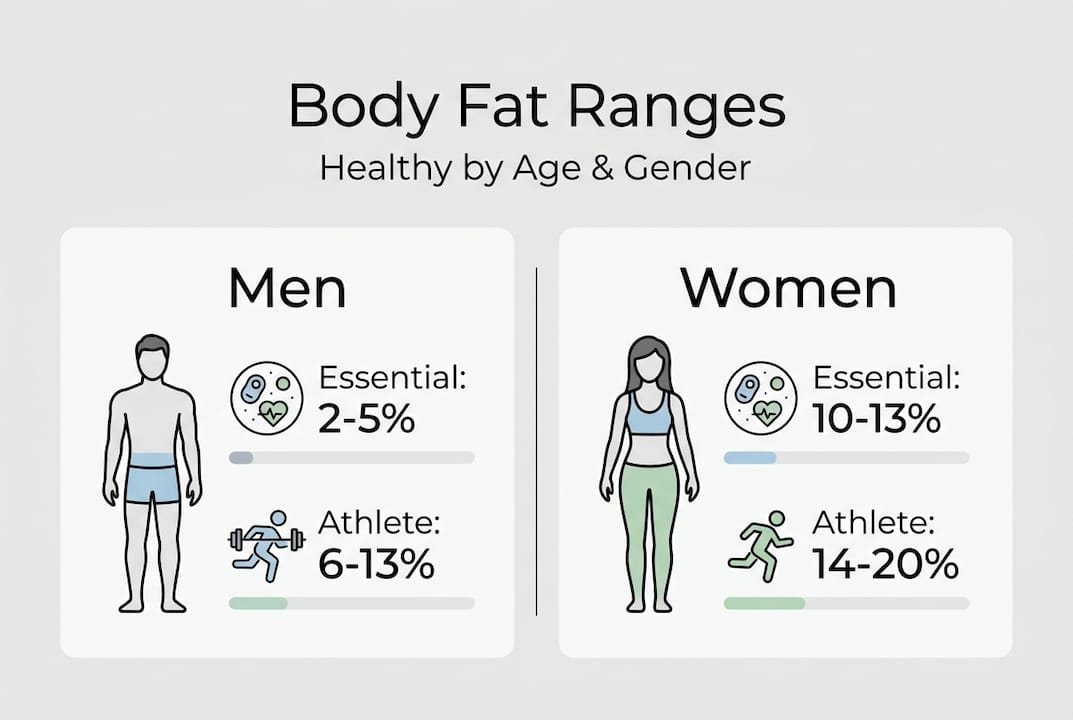
| Category | Men | Women |
|---|---|---|
| Essential fat | 2-5% | 10-13% |
| Athletes | 6-13% | 14-20% |
| Fitness | 14-17% | 21-24% |
| Average | 18-24% | 25-31% |
| Obese | 25%+ | 32%+ |
Essential fat represents the minimum needed for basic physiological function. Men store essential fat in bone marrow, organs, central nervous system, and muscles. Women store additional essential fat in breast tissue, pelvis, hips, and thighs to support reproductive function. Dropping below essential fat levels causes serious health problems including hormonal disruption, weakened immune function, and reproductive issues.
Age affects healthy ranges because metabolism slows and muscle mass naturally decreases over time. Body fat percentages for men aged 20-29 fall in the acceptable range of 14-24%, while men 40-49 see this range shift to 18-28%. Women aged 20-29 maintain healthy levels at 21-31%, increasing to 24-34% for ages 40-49. These shifts reflect normal physiological changes, not permission to let fitness slide.
Athletes training for performance typically maintain lower percentages. Male endurance athletes often sit at 6-10% while female endurance athletes range 14-18%. Strength athletes and bodybuilders may go even lower during competition prep, but sustaining extremely low percentages year-round creates health risks. Your body needs fat for hormone production, vitamin absorption, temperature regulation, and organ protection.
Key health considerations at different ranges:
- Below essential fat: Hormonal disruption, amenorrhea in women, weakened immunity, organ stress
- Athletic range: Peak performance, visible muscle definition, requires disciplined nutrition
- Fitness range: Healthy appearance, sustainable lifestyle, good energy levels
- Average range: Generally healthy, lower disease risk than obesity, room for improvement
- Obese range: Increased cardiovascular risk, metabolic syndrome, joint stress
Pro Tip: Focus on sustainable ranges that support your health and lifestyle rather than chasing the lowest possible number. A man maintaining 12-15% body fat year-round will look great, feel strong, and avoid the hormonal crashes that come from staying contest-lean. Women thriving at 20-24% enjoy visible muscle tone, regular menstrual cycles, and the energy to train hard without constant hunger. Extremely low body fat looks impressive in photos but often comes with fatigue, irritability, and obsessive food thoughts that destroy quality of life.
The difference between fitness and average ranges might seem small on paper, but it shows dramatically in the mirror. At fitness levels, muscle separation becomes visible, abs show definition, and your physique clearly reflects your training. Average ranges look healthy in clothes but lack the sculpted appearance most gym-goers pursue. Understanding where you fall and where you want to be helps set realistic timelines and expectations.
How to use body fat percentage to improve your fitness and health
Knowing your body fat percentage transforms vague fitness wishes into concrete, measurable goals. Body fat percentage accounts for muscle mass, making it superior to BMI for tracking progress toward weight loss and muscle definition.
Visible muscle definition requires specific body fat ranges. Men typically need to reach 10-15% to see abs clearly, with the six-pack becoming prominent around 10-12%. Women require slightly higher percentages due to essential fat needs, usually seeing ab definition at 16-20%. These numbers explain why someone can do thousands of crunches without visible results. The abs are there, just hidden under a layer of fat that only proper nutrition can remove.
Follow this step-by-step approach to leverage body fat data:
- Establish your baseline with a DEXA scan or consistent home measurement method
- Set a realistic target based on healthy ranges and your personal goals
- Calculate a timeline assuming 0.5-1% body fat loss per month for sustainable progress
- Track measurements every 2-4 weeks under identical conditions
- Adjust calorie intake and training based on whether fat loss is too fast, too slow, or on track
- Reassess goals every 8-12 weeks and celebrate non-scale victories
Your tracking strategy matters as much as the measurement itself. Choose one method and stick with it religiously. Measure at the same time of day, ideally first thing in the morning after using the bathroom. Take progress photos in the same lighting and poses. Record how your clothes fit and how you feel during workouts. These qualitative measures often reveal progress that numbers miss.
Practical applications for different goals:
- Fat loss: Aim to lose 0.5-1% body fat per month while preserving muscle through resistance training and adequate protein
- Muscle gain: Accept small body fat increases while focusing on strength gains and measurements showing muscle growth
- Recomposition: Maintain weight while decreasing body fat percentage through strategic nutrition timing and progressive overload
- Maintenance: Keep body fat within a 2-3% range through consistent habits without obsessive tracking
Pro Tip: Stop obsessing over exact numbers and focus on trends plus how you look, feel, and perform. Your body fat percentage might fluctuate 1-2% based on hydration, sodium intake, hormonal cycles, and measurement error. If your 12-week trend shows steady progress, your clothes fit better, and strength keeps climbing, you are winning regardless of weekly fluctuations. The goal is building a body that serves you well for decades, not achieving a specific number for a single photo.
Choosing consistent methods for tracking trends matters more than absolute accuracy. DEXA scans work perfectly for quarterly check-ins, while the Navy method or quality BIA scale handles weekly monitoring. Combine body fat data with strength benchmarks, energy levels, sleep quality, and how you feel mentally. A holistic approach prevents the trap of sacrificing health for aesthetics.
Remember that body fat percentage represents just one health marker among many. Someone at 18% body fat who lifts heavy, eats nutritious food, sleeps well, and manages stress effectively is far healthier than someone at 10% who achieved it through extreme restriction and overtraining. Use body fat percentage as a tool for progress, not a measure of worth.
Explore fitness accessories to support your body fat goals
Achieving your ideal body composition requires consistent training, and the right gear makes every workout more effective. Quality fitness accessories protect your hands during heavy lifts, support proper form, and help you push harder without injury. Whether you are tracking body fat changes through strength training or cardio work, having reliable equipment removes excuses and keeps you focused on results.

Armageddon Sports offers everything you need to maximize your training sessions. Durable fitness gloves prevent calluses and improve grip during pull-ups, rows, and deadlifts. Professional lifting equipment including belts and straps lets you handle heavier loads safely, building the muscle mass that transforms your body composition. Browse the complete collection to find accessories that match your training style and support your journey toward your target body fat percentage.
FAQ
What is a healthy body fat percentage for men?
Healthy body fat for men generally ranges from 10-20% depending on age and fitness level. Essential fat sits at 2-5%, athletes typically maintain 6-13%, fitness enthusiasts fall into 14-17%, and average healthy men measure 18-24%. These ranges shift slightly higher with age as metabolism slows and muscle mass naturally decreases.
How can I accurately measure my body fat at home?
The Navy circumference method provides reliable home measurements using only a tape measure. Men measure neck and waist while women add hip measurements, then use an online calculator to estimate body fat percentage. Skinfold calipers offer another option if you learn proper pinching technique. Consistency matters more than absolute accuracy, so measure under identical conditions and track trends over weeks rather than obsessing over daily fluctuations.
Why is body fat percentage more useful than BMI?
Body fat percentage distinguishes fat from muscle, unlike BMI which only considers weight and height. A muscular athlete might register as overweight on BMI despite having low body fat and excellent health. Conversely, someone with little muscle but high fat stores might fall into the healthy BMI range while carrying dangerous visceral fat. This distinction helps you assess true fitness levels and health risks related to excess fat mass.
What body fat percentage is needed for visible abs?
Men generally require 10-15% body fat for abs to show clearly, with definition becoming prominent around 10-12%. Women need slightly higher percentages due to essential fat requirements, usually seeing ab definition at 16-20%. Individual genetics affect where you store fat, so some people reveal abs at slightly higher percentages while others need to go lower. Core strength training builds the muscles, but reducing body fat through proper nutrition makes them visible.
Recommended
- Understanding body composition: a 2026 fitness guide – Armageddon Sports
- Body recomposition guide: Build muscle and lose fat in 2026 – Armageddon Sports
- What is functional fitness: guide to practical strength 2026 – Armageddon Sports
- Home workout equipment ideas 2026: save 85% space – Armageddon Sports
- What Is Fitness Recovery? Collagen Boosts Results 40% Faster