
Stress and physical strain are a daily reality for many clients, making effective recovery strategies a top concern for every fitness trainer and wellness coach. The search for methods that truly calm the nervous system and promote resilience has never been more important. Exploring the power of vagus nerve massage, you’ll discover actionable steps for creating a calming environment, precise massage techniques, and ways to personalize relaxation rituals that help clients bounce back stronger in every session.
Table of Contents
- Step 1: Gather Essential Tools And Create A Calming Environment
- Step 2: Locate The Vagus Nerve And Prepare Targeted Areas
- Step 3: Apply Gentle Massage Techniques For Nerve Stimulation
- Step 4: Monitor Relaxation Response And Adjust Pressure
- Step 5: Evaluate Results And Optimize Future Sessions
Quick Summary
| Key Point | Explanation |
|---|---|
| 1. Create a Calming Environment | Prepare a quiet, comfortable space that minimizes distractions and promotes safety for effective vagus nerve massage. |
| 2. Identify the Vagus Nerve’s Location | Focus on key areas like the neck and behind the ears for targeted massage techniques that stimulate the nerve. |
| 3. Use Gentle Massage Techniques | Apply soft, rhythmic motions with light pressure to avoid discomfort and effectively stimulate the vagus nerve. |
| 4. Monitor Your Body’s Response | Pay attention to physiological signs like breathing rate and muscle tension to adapt your massage technique accordingly. |
| 5. Evaluate and Optimize Sessions | Record your experiences and results to track progress and refine your massage approach for better outcomes. |
Step 1: Gather essential tools and create a calming environment
Preparing for a successful vagus nerve massage starts with creating the right environment and assembling your stress-relief toolkit. You’ll want to curate a space that promotes relaxation and supports your nervous system reset.
Begin by selecting a quiet area where you won’t be interrupted - perhaps a corner of your bedroom, home office, or a peaceful living room nook. Designing a calming environment involves minimizing external distractions and creating a sensory experience that signals safety and relaxation to your nervous system.
Here are the key tools and environmental elements you’ll want to gather:
- Soft, comfortable mat or yoga mat
- Lightweight blanket or throw
- Supportive pillow
- Timer or gentle meditation app
- Optional: Essential oils like lavender or chamomile
- Warm socks or comfortable clothing
- Water bottle for hydration
Pay special attention to temperature and lighting. Soft, warm lighting or natural daylight creates a soothing atmosphere. Ensure the room is comfortably warm but not hot, allowing your body to feel relaxed and secure.
Creating a consistent, peaceful environment signals to your nervous system that it’s safe to transition into a relaxed state.
Consistent practice matters more than perfection. Start with what you have and gradually refine your space as you become more comfortable with vagus nerve massage techniques.
Pro tip: Invest 5-10 minutes before each session preparing your space, treating it as a ritual that signals your body and mind are about to enter a healing, restorative mode.
Step 2: Locate the vagus nerve and prepare targeted areas
In this step, you’ll learn how to precisely identify and prepare the key areas for an effective vagus nerve massage. Understanding the nerve’s anatomical pathway is crucial for targeted stimulation and achieving optimal stress relief.

Tracing the vagus nerve’s complex route reveals its intricate journey through the body. The nerve originates in the brainstem and travels down both sides of the neck, making the neck region the most accessible area for external massage and stimulation. Anatomical pathways reveal key stimulation points that can help activate the parasympathetic nervous system.
Key areas to focus on during vagus nerve massage include:
- Neck region, particularly along the carotid sheath
- Behind and below the ear
- Lower sides of the neck
- Upper chest area
- Base of the skull
When preparing to locate these areas, use gentle palpation to find soft, responsive regions. Start by placing your fingertips lightly along the side of your neck, tracking the nerve’s path with careful, mindful touch.
Gentle, consistent pressure is key - the goal is stimulation, not deep tissue manipulation.
Practice identifying these areas with slow, deliberate movements. Over time, you’ll develop a more intuitive sense of the vagus nerve’s precise location and how to effectively stimulate it.
Pro tip: Use a handheld mirror to help you visually map and locate the exact areas where you’ll be performing the massage, ensuring precision and comfort.
Step 3: Apply gentle massage techniques for nerve stimulation
Now that you’ve located the key vagus nerve areas, you’ll learn precise massage techniques to activate your parasympathetic nervous system and promote deep relaxation. Targeted nerve stimulation techniques can dramatically reduce stress and enhance overall nervous system function.
Start with these foundational massage approaches:
- Soft circular motions using fingertips
- Light pressure along nerve pathways
- Gentle upward stroking movements
- Rhythmic tapping techniques
- Slow, deliberate pressure point activation
When applying massage, remember that less pressure is more. You want to stimulate, not compress. Begin with extremely light touch - imagine you’re touching a delicate flower petal. Precise massage points require a nuanced approach that respects the nerve’s sensitivity.
The goal is gentle stimulation that signals safety to your nervous system, not deep tissue manipulation.
Move slowly and mindfully, paying close attention to your body’s response. Some areas might feel more responsive than others, so take time to explore and understand your unique nerve pathways.
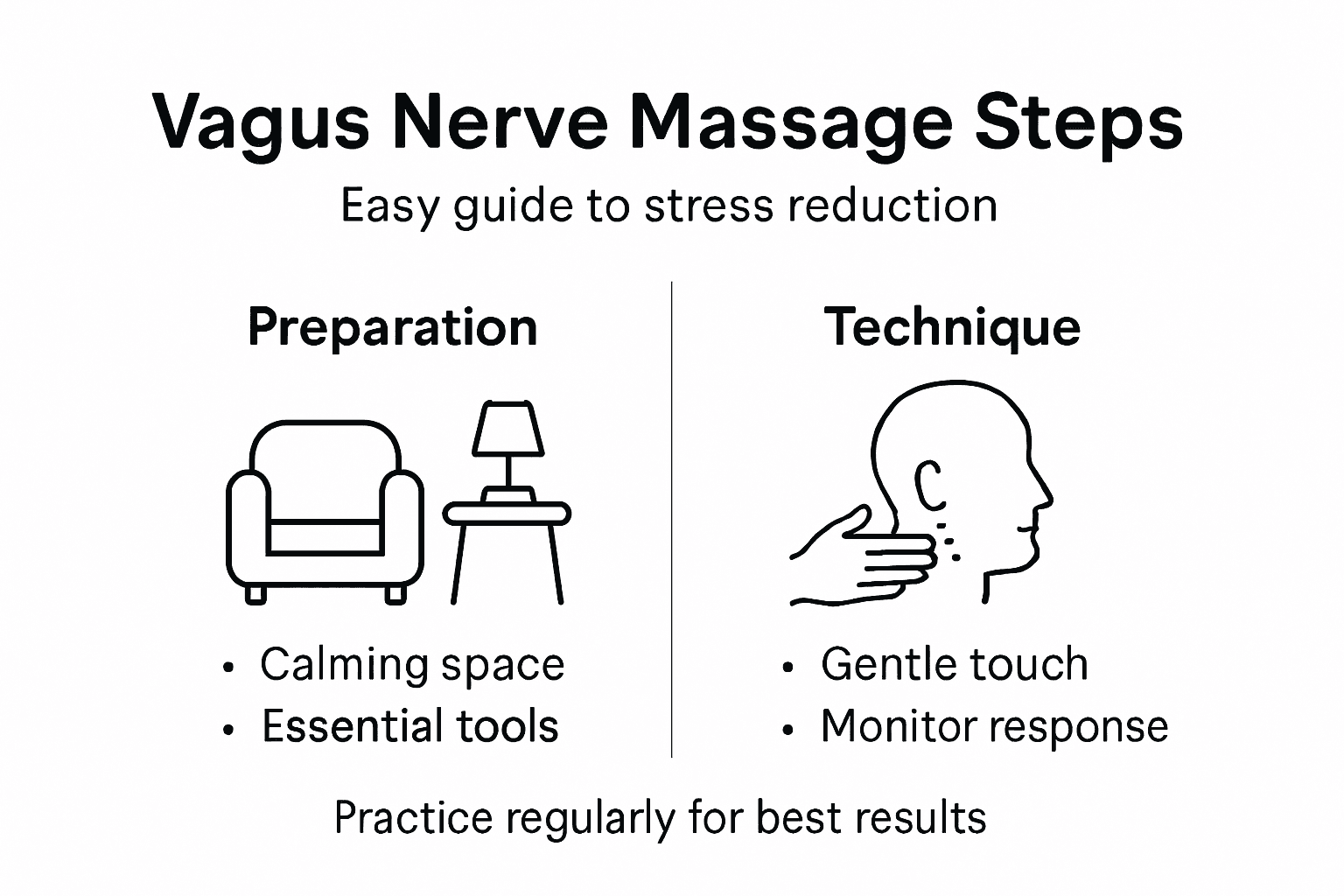
Pro tip: Practice your massage technique on the back of your hand first to calibrate the right pressure - if it feels too intense there, it’s definitely too strong for vagus nerve stimulation.
Here’s a comparison of common vagus nerve massage techniques and their best use cases:
| Technique | Best Use Case | Key Benefit |
|---|---|---|
| Soft circular motions | Starting a session | Gently initiates relaxation |
| Light pressure along nerve | Stress relief focus | Activates parasympathetic system |
| Upward stroking movements | Neck or chest tension | Eases muscle tightness |
| Rhythmic tapping | Mid-massage reset | Enhances sensory awareness |
| Slow pressure point holding | Deep relaxation goal | Calms overactive nerves |
Step 4: Monitor relaxation response and adjust pressure
As you continue your vagus nerve massage, your body will provide critical feedback about the effectiveness of your technique. Tracking physiological relaxation signals becomes essential for creating a personalized, responsive massage experience.
Key physiological indicators to monitor include:
- Breathing rate becoming slower and more rhythmic
- Heart rate gradually decreasing
- Muscle tension visibly reducing
- Sense of calm spreading through your body
- Decreased stress sensations
Pay attention to your body’s subtle signals. If you feel discomfort, tingling, or sudden tension, that’s your cue to immediately adjust your pressure or technique. Parasympathetic response monitoring helps ensure you’re stimulating the nerve effectively without causing stress.
Your body communicates - learning to listen is the most important part of vagus nerve massage.
Remember that everyone’s nervous system responds differently. What works for one person might feel uncomfortable for another. Stay patient and curious about your unique physiological responses.
Pro tip: Keep a small journal to track your massage experiences, noting pressure levels, duration, and how you felt afterward to develop a personalized understanding of your vagus nerve stimulation.
Step 5: Evaluate results and optimize future sessions
After completing your vagus nerve massage, it’s crucial to systematically assess the effectiveness of your technique and plan future improvements. Clinical outcome evaluation techniques can help you refine your approach and maximize stress relief benefits.
Key evaluation metrics to track include:
- Stress level before and after massage
- Duration of relaxation feeling
- Quality of sleep that night
- Overall mood improvement
- Physical tension reduction
Document your experiences consistently. The more data you collect, the more precisely you can customize your vagus nerve massage technique. Mood recovery assessment reveals that personalized approaches yield the best results.
Small, consistent improvements compound into significant long-term benefits for your nervous system.
Remember that your body’s response will evolve. What works perfectly today might need adjustment in a few weeks. Stay flexible and attentive to your body’s changing needs.
Pro tip: Create a simple spreadsheet or use a notes app to track your massage sessions, recording pressure, duration, and subjective feelings to identify patterns and optimize your technique.
Consider these sample evaluation metrics to track your progress after each massage session:
| Metric | What to Record | Why It Matters |
|---|---|---|
| Pre/post stress level | Numerical scale (1-10) | Tracks reduction in stress |
| Relaxation duration | Minutes of calm experienced | Measures massage effectiveness |
| Sleep quality | Nightly rating (poor/great) | Detects lasting relaxation value |
| Mood improvement | Brief mood notes | Identifies emotional benefits |
| Physical tension change | Areas less tense afterward | Pinpoints physical improvements |
Enhance Your Relaxation Routine with Quality Fitness and Recovery Gear
Mastering vagus nerve massage is a powerful way to reduce stress and promote nervous system balance. Yet, achieving deep relaxation and long-term recovery often requires supporting tools and a dedicated approach to wellness. If you are focused on calming your nervous system while optimizing physical recovery, having the right accessories can make all the difference. Key goals like effective nerve stimulation, muscle tension relief, and longer-lasting relaxation depend on comfort, support, and consistent practice.

Armageddon Sports offers a wide selection of fitness accessories built to complement your relaxation efforts such as supportive mats, muscle stimulators, and recovery equipment. These products help enhance your parasympathetic activation by providing the comfort and aid necessary during massage and recovery sessions. Don’t wait to upgrade your self-care routine. Start creating your ideal stress relief environment today by exploring Armageddon Sports and discover gear designed for fitness enthusiasts and wellness seekers alike. Check out our fitness accessories and take control of your stress relief with tools tailored to your goals.
Frequently Asked Questions
What tools do I need for vagus nerve massage?
To effectively perform a vagus nerve massage, gather a soft mat, a blanket, a supportive pillow, and a timer. Consider optional items like essential oils for added relaxation, and prepare your environment by making it calming and free of distractions.
How can I locate the vagus nerve for massage?
Locate the vagus nerve by focusing on areas like the neck, behind the ears, and the upper chest. Use gentle palpation; start with your fingertips lightly placed along the side of your neck and track the nerve’s path for better stimulation.
What massage techniques should I use for vagus nerve stimulation?
Use techniques such as soft circular motions, light pressure along nerve pathways, and gentle upward strokes. Apply these with mindful touch; remember that less pressure is usually more effective to stimulate the nerve safely and gently.
How do I know if my vagus nerve massage is working?
Monitor your body’s relaxation response by observing changes in your breathing rate, heart rate, and muscle tension. Tracking these physiological signals can help you evaluate if your massage is effectively stimulating the vagus nerve and promoting relaxation.
How can I improve my vagus nerve massage sessions over time?
Evaluate the results of each massage session by documenting your stress levels, relaxation duration, and overall mood changes. Adjust your techniques and pressure based on your observations to optimize future sessions for enhanced stress relief.
What should I do if I feel discomfort during a vagus nerve massage?
If you experience discomfort during the massage, immediately adjust your pressure or technique. Listen to your body’s signals and modify your approach to ensure a comfortable experience that promotes relaxation.
Recommended
- TENS & PMS, Transcutaneous Electronic Nerve Stimulator, EMS Foot Massage for Muscle Relaxation – Armageddon Sports
- Reflexology: Boosting Fitness Recovery Naturally – Armageddon Sports
- Neck Stretcher Benefits: Relief and Performance Impact – Armageddon Sports
- EMS Foot Massager Mat: Fast Relief for Athletes – Armageddon Sports
- Wasserstrahl-Massageliege - ACTIVITY | Für das Beste im Leben, deinen Körper!
- Dihanje na kvadrat oziroma t.i. “box breathing”