
Snoring can disrupt sleep and recovery, holding back even the most dedicated fitness enthusiasts from reaching their peak. Improving sleep quality matters for anyone aiming to maximize muscle repair and athletic performance. Research from the Centers for Disease Control confirms that fitness and wearable devices monitoring sleep patterns and breathing help guide behavior changes to reduce snoring and promote better rest. Discover how targeted lifestyle adjustments and sleep technology can support clearer breathing and deeper sleep, fueling your goals night after night.
Table of Contents
- Step 1: Assess Lifestyle Habits Impacting Snoring
- Step 2: Adjust Sleep Position for Clearer Airways
- Step 3: Incorporate Fitness Devices to Enhance Breathing
- Step 4: Optimize Bedroom for Better Sleep Quality
- Step 5: Test Results and Track Nightly Improvements
Quick Summary
| Key Insight | Explanation |
|---|---|
| 1. Maintain a Healthy Weight | Excess weight narrows airways, worsening snoring. Aim for a healthy weight to reduce snoring severity. |
| 2. Prioritize Side Sleeping | Sleeping on your side prevents airway obstruction. Make this change for clearer breathing at night. |
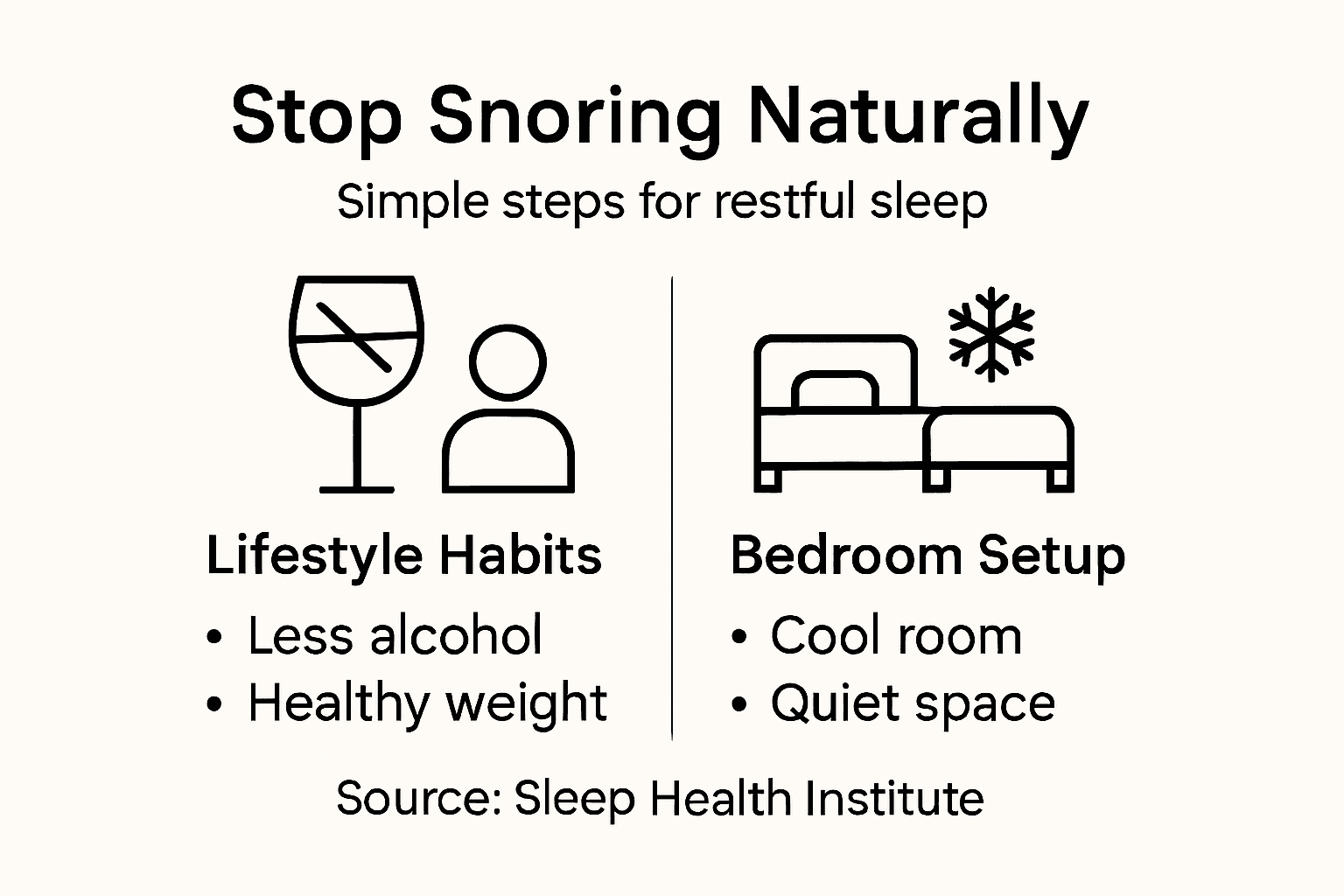
| 3. Limit Alcohol Intake | Alcohol relaxes throat muscles, increasing snoring. Reducing evening alcohol can improve sleep quality. |
| 4. Optimize Your Sleep Environment | A well-designed bedroom reduces disruptions. Control temperature, light, and sound for better rest. |
| 5. Track Your Progress | Consistently monitor sleep habits and snoring. Use tools like diaries or apps to identify patterns and improvements. |
Step 1: Assess Lifestyle Habits Impacting Snoring
Identifying and modifying lifestyle habits is crucial for reducing snoring and improving overall sleep quality. Understanding how daily behaviors influence your nighttime breathing patterns can help you develop targeted strategies for better rest.
Several key lifestyle factors directly contribute to snoring intensity and frequency. Sleep behavior research indicates that multiple interconnected habits impact respiratory health:
- Body weight: Excess weight increases soft tissue around the throat, narrowing airways
- Sleep position: Back sleeping tends to worsen snoring compared to side sleeping
- Alcohol consumption: Relaxes throat muscles, increasing obstruction potential
- Smoking: Causes inflammation and mucus buildup in respiratory passages
- Sleep schedule: Irregular bedtimes disrupt natural breathing rhythms
The National Heart, Lung, and Blood Institute confirms that lifestyle modifications can significantly impact sleep apnea and related breathing interruptions. Tracking these habits requires honest self-assessment and potentially keeping a sleep diary to identify patterns.
Here is a summary showing how different lifestyle factors can influence snoring severity:
| Lifestyle Factor | Potential Snoring Impact | Action for Reduction |
|---|---|---|
| Body weight | Higher tissue obstruction | Maintain healthy weight |
| Sleep position | Increased airway collapse | Prioritize side sleeping |
| Alcohol consumption | Relaxed throat muscles | Limit evening alcohol |
| Smoking | Inflamed airways | Cease or reduce smoking |
| Irregular bedtime | Disrupted breathing rhythms | Establish consistent schedule |
Consistent lifestyle tracking is your most powerful tool in understanding and reducing snoring.
Pro tip: Create a weekly log documenting your sleep position, alcohol intake, and bedtime to recognize potential snoring triggers.
Step 2: Adjust Sleep Position for Clearer Airways
Reducing snoring starts with understanding how your sleep position impacts airway obstruction. Changing how you position your body during sleep can dramatically improve breathing and reduce nighttime noise.
Healthy sleep research reveals that sleep positioning plays a critical role in maintaining open airways. Side sleeping emerges as the most effective strategy for minimizing snoring:
- Side sleeping: Prevents tongue and soft tissues from blocking airways
- Elevated head: Reduces neck compression and promotes better breathing
- Avoid back sleeping: Increases risk of airway collapse
To successfully transition to side sleeping, consider these techniques:
- Use a supportive body pillow to maintain side position
- Place a tennis ball in your back pocket when sleeping to discourage rolling onto your back
- Invest in a contoured pillow that supports neck alignment
Consistently maintaining a side sleeping position can significantly reduce snoring and improve overall sleep quality.
Pro tip: Experiment with different side sleeping positions and pillow configurations to find the most comfortable arrangement that keeps your airways open.

Step 3: Incorporate Fitness Devices to Enhance Breathing
Modern fitness technology offers powerful tools to help you understand and reduce snoring by tracking your sleep patterns and breathing quality. Fitness device research demonstrates how wearable technology can provide critical insights into your nighttime respiratory health.
Consider integrating these advanced fitness devices into your anti-snoring strategy:
- Sleep tracking smartwatches: Monitor breathing patterns and oxygen levels
- Breathing rate sensors: Detect irregular respiratory rhythms
- Position tracking devices: Alert you when sleeping on your back
- Pulse oximeters: Measure blood oxygen saturation during sleep
Key features to look for in sleep monitoring devices include:
- Real-time breathing pattern analysis
- Sleep position tracking
- Oxygen level monitoring
- Smart alarm systems that adjust based on sleep cycles
The National Heart, Lung, and Blood Institute supports technological advances in sleep monitoring that offer personalized interventions for improved breathing.
Technology transforms snoring management from guesswork to precise, data-driven solutions.
Pro tip: Sync your fitness devices with smartphone apps to create a comprehensive sleep improvement strategy that tracks and analyzes your breathing patterns over time.
Step 4: Optimize Bedroom for Better Sleep Quality
Creating the ideal sleep environment is crucial for reducing snoring and achieving restful nights. Healthy sleep habits emphasize the importance of a carefully designed bedroom that supports uninterrupted breathing and relaxation.
Key elements to transform your bedroom into a snoring-prevention sanctuary include:
- Temperature control: Maintain room temperature between 60-67 degrees Fahrenheit
- Sound management: Use white noise machines or earplugs to minimize disruptive sounds
- Light reduction: Install blackout curtains or use sleep masks
- Bedding quality: Choose breathable, hypoallergenic materials
Specific strategies for bedroom optimization:
- Install a humidifier to prevent airway dryness
- Use orthopedic pillows that support proper neck alignment
- Remove electronic devices that emit blue light
- Consider air purifiers to reduce allergens
The Centers for Disease Control recommends creating sleep-conducive environments that support overall respiratory health and minimize potential breathing obstructions.
A meticulously designed sleep environment can be your most powerful weapon against snoring.
Pro tip: Conduct a comprehensive bedroom audit every six months, systematically eliminating potential sleep disruption sources to maintain an optimal rest environment.
Step 5: Test Results and Track Nightly Improvements
Track your progress systematically to understand how effectively you are reducing snoring and improving sleep quality. Sleep monitoring techniques provide critical insights into your breathing patterns and overall respiratory health.
Develop a comprehensive tracking strategy using these methods:
- Sleep diary: Record nightly snoring frequency and intensity
- Audio recordings: Document snoring sounds for objective assessment
- Morning check-in: Note energy levels and sleep quality
- Breathing pattern logs: Track respiratory interruptions
Key tracking tools and techniques:
The table below compares key sleep tracking tools and their optimal use for snoring reduction:
| Tool | Main Benefit | Ideal For |
|---|---|---|
| Sleep diary | Tracks daily snoring fluctuations | Identifying habit patterns |
| Audio recording | Provides objective snoring data | Monitoring noise intensity |
| Pulse oximeter | Monitors blood oxygen during sleep | Detecting breathing disruptions |
| Wearable device | Analyzes sleep and breathing trends | Continuous nightly tracking |
- Use smartphone apps designed for sleep tracking
- Invest in wearable devices with respiratory monitoring
- Take weekly measurements of your progress
- Compare baseline data with current results
Consistent monitoring allows you to:
- Identify specific triggers that worsen snoring
- Measure the effectiveness of implemented strategies
- Adjust your approach based on empirical evidence
- Celebrate incremental improvements
Small, consistent tracking creates significant long-term health improvements.
Pro tip: Create a digital spreadsheet to visualize your sleep improvement data, making trends and progress immediately apparent.
Take Control of Your Snoring and Sleep Better Tonight
Struggling with snoring can feel frustrating and exhausting because it disrupts your deep restful sleep and leaves you drained during the day. This article highlights key lifestyle changes like adjusting your sleep position and tracking your breathing patterns to naturally reduce snoring and reclaim peaceful nights. If you want to complement these steps with trusted tools designed to enhance your sleep quality and overall wellness explore our collection of Health & Fitness Equipment at Armageddon Sports.

Experience the difference targeted fitness and wellness accessories can make in supporting your nighttime breathing and daily energy levels. From ergonomic pillows to fitness devices that monitor your sleep patterns, our range offers solutions tailored to boost your restful sleep journey. Don’t wait for another restless night Visit Armageddon Sports now and invest in your health with products designed to help you stop snoring naturally and wake up refreshed.
Frequently Asked Questions
How can I assess my lifestyle habits to reduce snoring?
Identifying lifestyle habits that contribute to snoring is key to improvement. Track factors like body weight, sleep position, and alcohol consumption to recognize patterns. Start by documenting your daily habits for at least a week to pinpoint potential triggers.
What is the best sleep position to minimize snoring?
Side sleeping is the most effective position for reducing snoring as it keeps airways open. Try transitioning to side sleeping using supportive pillows or a body pillow for comfort.
How can fitness devices help in reducing snoring?
Fitness devices can track sleep patterns and breathing quality, providing insights into snoring. Utilize a sleep tracking smartwatch or a breathing rate sensor to gather data that can inform your strategies for improvement.
What steps should I take to optimize my bedroom for better sleep?
Creating an optimal sleep environment can greatly reduce snoring. Control your bedroom’s temperature, minimize noise and light, and invest in breathable bedding to foster a restful sleeping space.
How do I track my improvements in reducing snoring?
Develop a tracking system using a sleep diary, audio recordings, or wearable devices to monitor snoring frequency and intensity. Evaluate your progress weekly to recognize patterns and celebrate improvements, adjusting your strategies as needed.
Recommended
- [The Best Ways to Stop Snoring anti-snoring nose clip + things you can – Armageddon Sports
- Best Anti Snoring Neck Pain Orthopedic Pillow - Stop Snore - Apnea Relief and Solution – Armageddon Sports
- Anti Snoring Device - Aids to Stop Snoring - Clipple Nose Clip Snore Solution and Relief - Vent Calm Plug – Armageddon Sports
- Anti Snore Stop Snoring Chin Strap Device Solution Anti Apnea Sleep Support Sleeping Care – Armageddon Sports