
Struggling to maintain a solid grip and steady form during hanging core exercises is a challenge faced by many in the fitness and bodybuilding world. The need for greater stability, comfort, and muscle isolation often leaves athletes searching for better solutions. Hanging abdominal straps offer unique advantages, including reduced strain on shoulders and wrists, increased core engagement, and adaptable designs that support a wide range of movements and body types. Discover how these supportive tools can transform your approach to hanging exercises while helping you build grip strength and unleash your true core potential.
Table of Contents
- Abdominal Straps For Hanging Explained
- Types Of Hanging Ab Straps Compared
- How Hanging Straps Enhance Core Training
- Safe Attachment And Correct Usage Methods
- Common Mistakes And Injury Prevention Tips
Key Takeaways
| Point | Details |
|---|---|
| Core Engagement | Abdominal straps allow for enhanced isolation of core muscles, reducing strain on shoulders and wrists during exercises. |
| Safety Considerations | Proper attachment and equipment checks are crucial to prevent injuries and ensure effective workouts with hanging ab straps. |
| Injury Prevention | Focus on controlled movements and core strength to avoid common mistakes that could lead to joint strain or fatigue. |
| Type Selection | Choose hanging ab straps based on materials and features that align with your workout needs and comfort preferences. |
Abdominal Straps for Hanging Explained
Abdominal straps are specialized fitness accessories designed to revolutionize core workouts by transforming traditional hanging exercises. These innovative tools allow athletes to perform targeted core movements with enhanced stability and reduced strain.
When using ab slings for core training, fitness enthusiasts can expect significant advantages over conventional ab exercises. The unique design provides critical benefits:
- Reduced shoulder and wrist strain during workouts
- Increased muscle isolation for core engagement
- Comfortable neoprene padding for extended exercise duration
- Adaptable to different body heights and weights
- Enables complex movements like leg raises and twists
The primary mechanism of abdominal straps involves securing your arms in padded slings attached to a pull-up bar. This setup allows for precise targeting of core muscle groups while minimizing potential injury risks associated with traditional hanging exercises. Specialized support straps create a stable platform that helps athletes maintain proper form and maximize muscle activation.
How Ab Straps Work
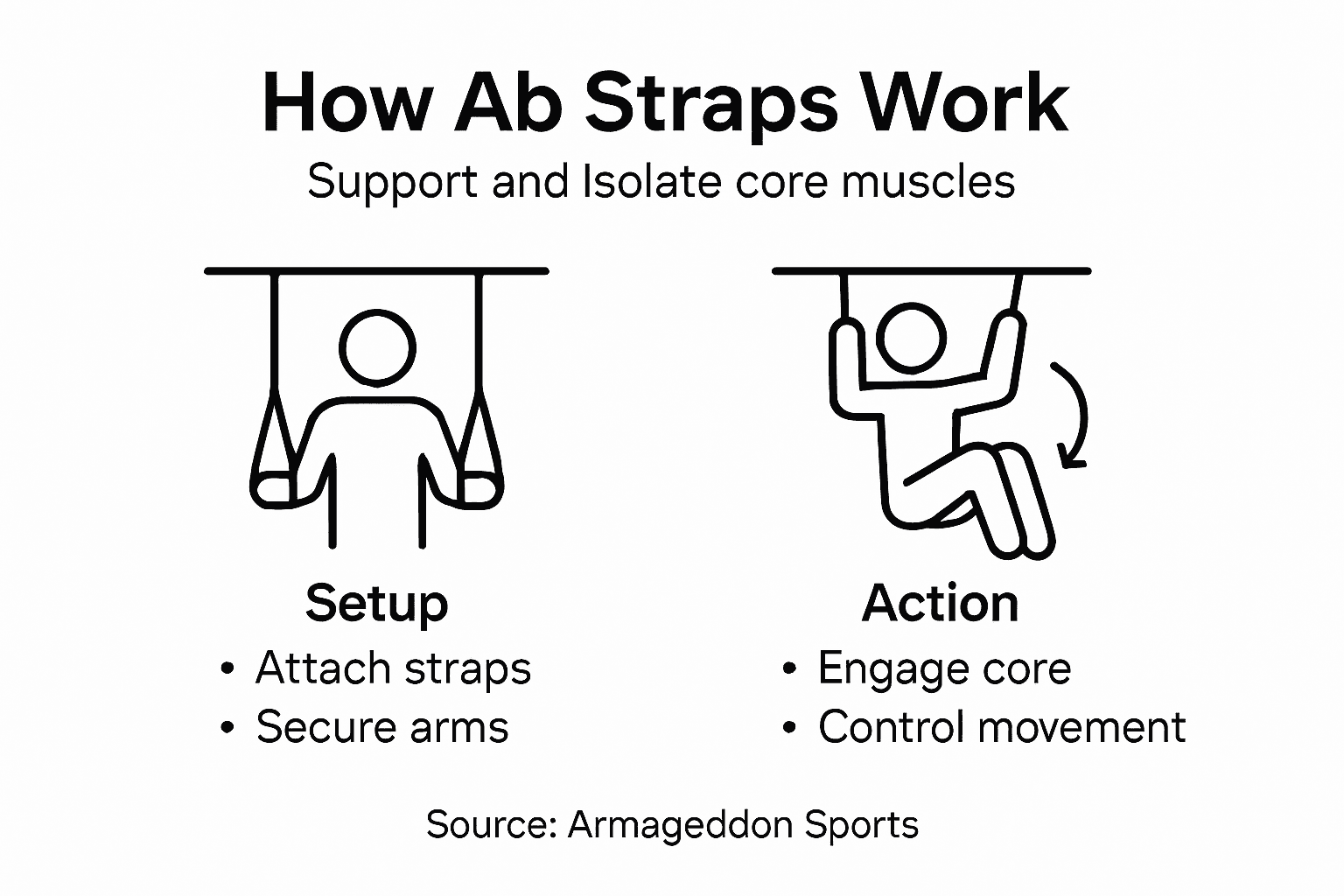
Core muscle engagement occurs through controlled movements that leverage body weight and gravitational resistance. The straps distribute weight evenly, allowing practitioners to focus intensely on abdominal muscle groups including rectus abdominis, obliques, and hip flexors.
Pro tip: Start with shorter hanging durations and gradually increase exercise complexity to build core strength safely and effectively.
Types of Hanging Ab Straps Compared
Hanging ab straps come in diverse designs, each tailored to meet specific workout requirements and athlete preferences. Comparing different ab strap types reveals critical variations in material, functionality, and performance that can significantly impact core training effectiveness.
Key types of hanging ab straps include:
- Neoprene Padded Straps: Prioritize comfort with soft, cushioned material
- Heavy-Duty Webbing Straps: Emphasize durability and weight capacity
- Adjustable Length Straps: Offer customizable height and fit settings
- Cam Buckle Straps: Provide quick and precise adjustment mechanisms
The most sophisticated ab straps incorporate advanced features designed to enhance user experience. Innovative ab strap designs typically focus on key performance attributes such as:
- Enhanced arm padding to reduce discomfort
- Robust weight support capabilities
- Flexible sizing accommodations
- Advanced attachment mechanisms
Athletes should evaluate ab straps based on critical factors including material quality, weight limit, comfort level, and compatibility with their specific training equipment. Pricing can vary significantly, with more expensive models typically offering superior durability and ergonomic design.
Here’s a clear comparison of popular hanging ab strap types and their ideal use cases:
| Strap Type | Best For | Typical Material | Adjustment Capability |
|---|---|---|---|
| Neoprene Padded Strap | Comfort, longer workouts | Neoprene padding | Limited |
| Heavy-Duty Webbing | High weight, durability | Reinforced webbing | None |
| Adjustable Length | Multiple users, gyms | Mixed synthetics | Full |
| Cam Buckle Strap | Quick setup, precision fit | Nylon with steel | Precise |
Pro tip: When selecting ab straps, prioritize comfort and stability over price to ensure safe and effective core training.
How Hanging Straps Enhance Core Training
Hanging ab straps revolutionize core training by transforming traditional abdominal exercises into more targeted, efficient muscle-building experiences. Core muscle engagement techniques demonstrate how these innovative tools dramatically improve workout effectiveness.
The primary advantages of hanging ab straps include:
- Reduced strain on arms and grip muscles
- Enhanced isolation of abdominal muscle groups
- Improved range of motion for core exercises
- Better muscle activation and recruitment
- Minimized risk of premature muscle fatigue
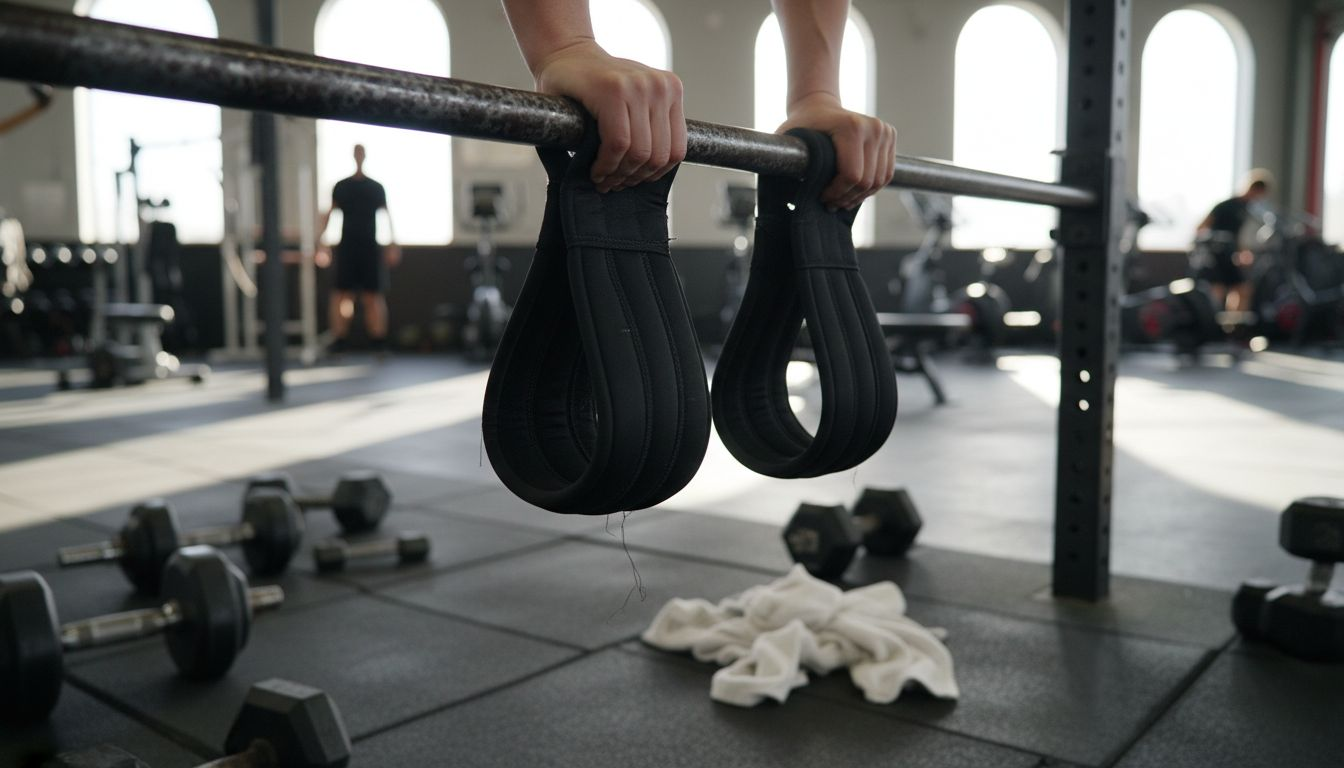
By supporting the arms in padded loops, hanging straps allow athletes to concentrate entirely on core muscle contraction. This unique design enables more precise and controlled movements, targeting difficult-to-engage muscle groups like lower abdominals and obliques with unprecedented accuracy.
Biomechanical Benefits
Traditional ab exercises often rely on momentum or compromise form, but hanging straps create a stable platform for pure muscle engagement. Athletes can perform exercises with greater range of motion and less risk of injury, making core training more effective and sustainable.
Hanging ab straps transform core workouts by eliminating peripheral muscle fatigue and focusing energy directly on abdominal muscle groups.
Pro tip: Start with shorter hanging durations and gradually increase time to build core strength and adapt to the unique muscle engagement.
Safe Attachment and Correct Usage Methods
Hanging ab straps require precise installation and careful technique to ensure maximum safety and effectiveness during core workouts. Safe ab strap attachment techniques demand attention to multiple critical factors that prevent potential injuries.
Key safety considerations for ab strap installation include:
- Select a sturdy, weight-rated pull-up bar
- Use high-quality carabiners with secure locking mechanisms
- Check hardware for signs of wear or damage before each use
- Ensure straps are symmetrically positioned
- Verify maximum weight capacity of all attachment points
Proper Entry and Positioning
Correct usage begins with controlled entry into the ab straps. Athletes should enter smoothly, maintaining core engagement and avoiding sudden movements that could cause instability. Proper positioning involves keeping arms relaxed within the padded loops while maintaining tension through the core muscles.
Consistent form and controlled movements are the foundation of safe ab strap training.
Critical technique points involve minimizing unnecessary swinging, maintaining straight arm positions, and focusing on deliberate muscle contractions rather than momentum-based movements.
Pro tip: Always perform a visual and physical equipment check before starting your hanging ab strap workout to prevent potential accidents.
Common Mistakes and Injury Prevention Tips
Hanging ab straps demand precise technique and careful execution to prevent potential workout-related injuries. Injury prevention strategies are critical for maintaining safe and effective core training.
Common mistakes athletes frequently make include:
- Relying too heavily on arm strength instead of core engagement
- Using jerky, uncontrolled movements
- Skipping proper warm-up routines
- Failing to check equipment before use
- Attempting advanced exercises without foundational strength
Physical risks associated with improper technique can range from minor muscle strains to more serious joint stress. Beginners should focus on developing fundamental core strength and maintaining controlled, deliberate movements throughout their hanging ab strap workouts.
Proper coaching and gradual progression are essential for safe and effective core training with hanging ab straps.
Successful injury prevention requires a methodical approach that emphasizes form, controlled movements, and progressive skill development. Athletes should prioritize technique over intensity, building a solid foundation of core strength before attempting more complex exercises.
Below is a summary of common mistakes and prevention strategies for safe ab strap training:
| Mistake | Potential Risk | Prevention Strategy |
|---|---|---|
| Overusing arm strength | Joint strain | Focus on core engagement |
| Sudden movements | Loss of stability | Use slow, controlled motion |
| Skipping equipment check | Gear failure | Inspect before each session |
| Unprepared for intensity | Muscle fatigue | Gradually progress training |
Pro tip: Consult a fitness professional to assess your current core strength and learn proper hanging ab strap techniques before independent training.
Elevate Your Core Workouts with Quality Abdominal Straps from Armageddon Sports
Struggling to maximize core engagement without risking wrist or shoulder strain is a common challenge highlighted in “Abdominal Straps for Hanging: Boosting Core Workouts”. These straps help you isolate abdominal muscles effectively while maintaining safety and comfort through features like neoprene padding and sturdy attachments. If you’re serious about boosting your core strength with controlled, efficient training equipment that reduces peripheral fatigue, investing in the right ab straps is essential.

Explore our premium range of Fitness Accessories designed to support safe and targeted core exercises. At Armageddon Sports, you will find durable abdominal straps tailored for stability and comfort alongside other essential gear to improve your workout quality. Don’t wait—take the next step toward stronger, injury-free core training today by visiting Armageddon Sports and equip yourself with the best fitness tools available.
Frequently Asked Questions
What are abdominal straps for hanging?
Abdominal straps for hanging are specialized fitness accessories designed to enhance core workouts by providing support during hanging exercises, allowing for targeted muscle engagement.
How do I use hanging ab straps correctly?
To use hanging ab straps, secure your arms in the padded slings attached to a pull-up bar, engage your core, and perform controlled movements such as leg raises or twists while maintaining stability.
What types of hanging ab straps are available, and how do they differ?
There are several types of hanging ab straps, including neoprene padded straps for comfort, heavy-duty webbing straps for durability, adjustable length straps for versatility, and cam buckle straps for quick adjustments. Each type has unique features that cater to different workout needs.
What are the benefits of using abdominal straps compared to traditional ab exercises?
Using abdominal straps minimizes strain on the shoulders and wrists, allows for increased isolation of core muscles, enhances exercise range of motion, and effectively activates difficult-to-engage muscle groups like the lower abdominals and obliques.
Recommended
- Best Hanging Ab Straps—Pull-Up Bar Exercises To Train Your Abs [Guide] – Armageddon Sports
- Premium Hanging Ab Straps, Ab Slings Leg Raise | Armageddon Sports
- 8" Wide Contoured Workout Weight Lifting Belt Neoprene Back Support Gym – Armageddon Sports
- 7 Key Benefits of Weightlifting Belts for Athletes – Armageddon Sports