
More than 60 percent of American adults want stronger abs but struggle to see results with basic workouts. For home fitness fans and dedicated bodybuilders worldwide, weak core muscles can limit progress in every area of training. Ab machines have changed the way people in the United States and beyond shape their midsection by offering focused resistance that traditional crunches cannot match. Explore how choosing the right machine can power up your core and give you a leaner, more defined look without the gym price tag.
Table of Contents
- What Is An Ab Machine And Why Use One?
- Types Of Ab Machines For Home Workouts
- Key Features And How Ab Machines Function
- Maximizing Core Results With Proper Technique
- Common Risks And How To Avoid Injury
- Cost, Alternatives, And Buying Considerations
Key Takeaways
| Point | Details |
|---|---|
| Ab Machines Enhance Core Training | Specialized ab machines target specific core muscles effectively, minimizing injury risks and maximizing muscle engagement. |
| Variety of Options Available | Different types of ab machines cater to various training needs, such as crunching, rotation, and stability, making them suitable for home workouts. |
| Focus on Technique and Safety | Proper technique is crucial when using ab machines to prevent injuries; maintaining proper form and gradually increasing resistance is recommended. |
| Cost Considerations and Alternatives | Ab machines range from budget-friendly to premium options; consider alternatives like stability balls and resistance bands for effective core training on a budget. |
What Is an Ab Machine and Why Use One?
An ab machine is a specialized fitness equipment designed to target and strengthen core muscle groups through controlled, biomechanically precise movements. These machines offer a strategic approach to abdominal training, providing targeted muscle activation that traditional exercises cannot consistently replicate.
These dedicated fitness tools work by creating specific resistance patterns that isolate abdominal muscles, minimizing strain on surrounding body parts like the lower back and neck. Unlike free-form exercises such as standard crunches, ab machines guide users through precise motion ranges, ensuring muscle engagement without unnecessary joint stress. The controlled mechanics help athletes and fitness enthusiasts develop stronger, more defined core muscles with reduced injury risk.
Ab machines come in multiple variations, including crunch machines, rotational trainers, and decline bench systems. Each design focuses on different aspects of core development - from rectus abdominis strengthening to oblique muscle engagement. By providing consistent resistance and maintaining proper body alignment, these machines enable users to progressively overload muscles, a critical factor in muscle growth and strength development.
Pro tip: Start with lighter resistance settings and focus on maintaining perfect form, gradually increasing intensity as your core strength improves.
Types of Ab Machines for Home Workouts
Home fitness enthusiasts have several ab machine options that can transform core training without requiring extensive space or expensive equipment. Home workout equipment includes compact and versatile ab training tools designed to maximize muscle engagement while minimizing workout complexity.
The primary types of ab machines for home workouts include:
- Crunch Machines: Stationary devices that provide controlled resistance for traditional abdominal crunching movements
- Rotational Ab Machines: Equipment that enables twisting motions to target oblique muscles and improve core rotation
- Decline Bench Ab Trainers: Adjustable benches that create increased difficulty for core exercises by changing body angle
- Cable Machines with Ab Attachments: Versatile systems allowing multiple core exercise variations
- Roller Wheel Devices: Compact tools that challenge core stability through rolling movements
Each ab machine type offers unique benefits and targets different muscle groups within the core. Crunch machines isolate the rectus abdominis, rotational machines enhance lateral core strength, and decline benches increase overall core muscle engagement by creating gravitational challenges. The key is selecting equipment that matches your fitness level and specific training objectives.
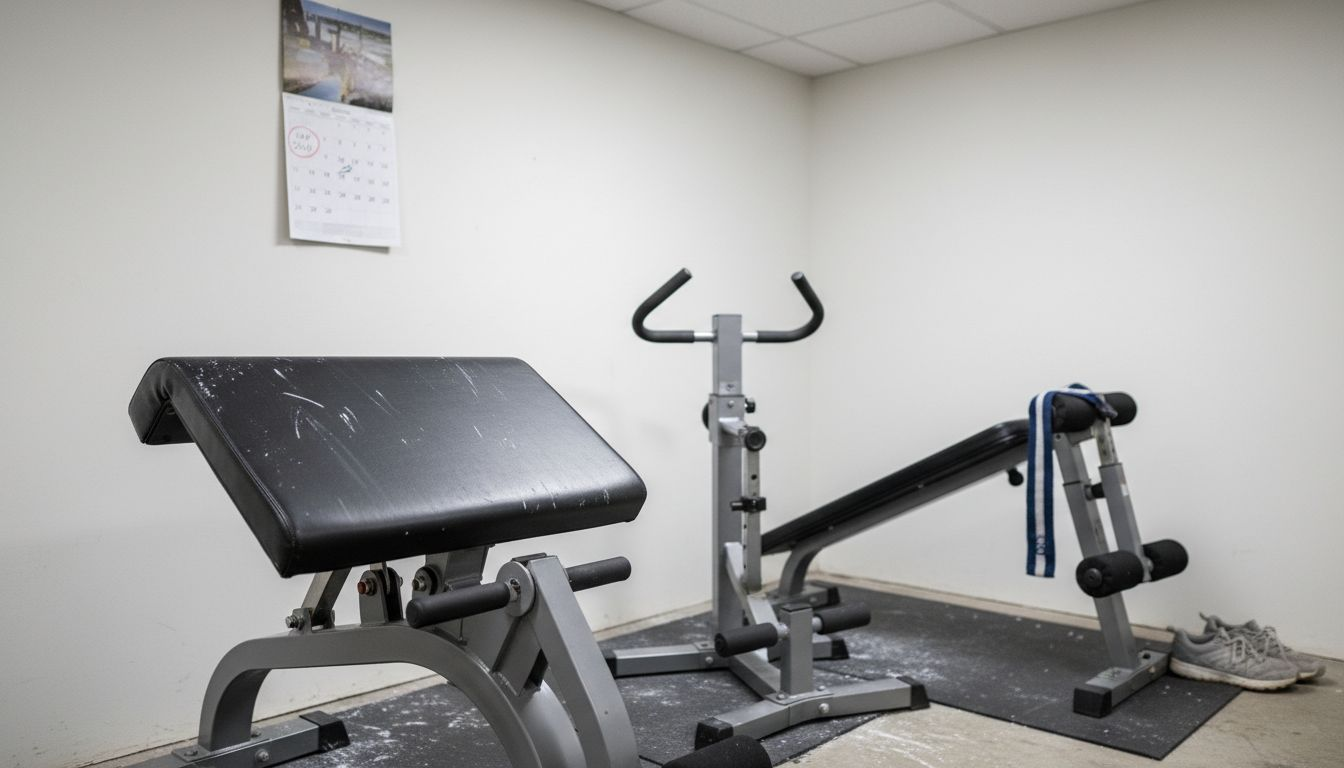
Here’s a summary of common types of ab machines and their primary focus:
| Machine Type | Main Muscle Targeted | Typical Home Use Benefit |
|---|---|---|
| Crunch Machine | Rectus abdominis | Simple, guided ab contractions |
| Rotational Ab Machine | Obliques | Improves twisting core strength |
| Decline Bench Trainer | Entire core | Enhances intensity by body angle |
| Cable Machine Attachment | Multiple core muscles | Allows for versatile ab exercises |
| Roller Wheel Device | Deep stabilizer muscles | Challenges balance and stability |
Pro tip: Rotate between different ab machine types to prevent muscle adaptation and maintain consistent core development challenge.
Key Features and How Ab Machines Function
Ab machines are sophisticated fitness devices engineered to deliver precise core muscle training through advanced biomechanical principles. Controlled resistance mechanisms enable targeted muscle engagement while minimizing potential injury risks associated with traditional free-weight exercises.
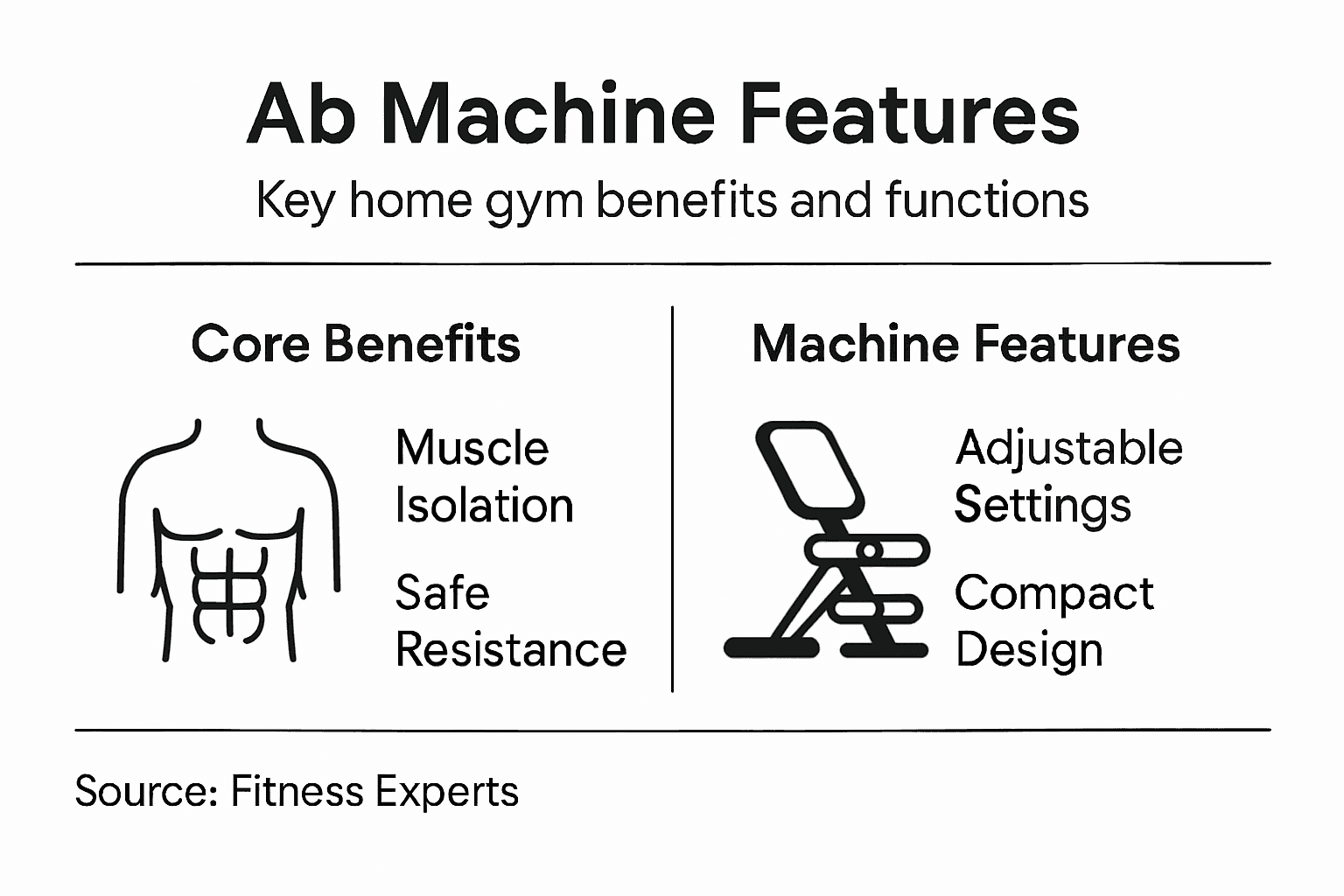
The key functional features of ab machines include:
- Adjustable Resistance: Allows progressive muscle overload
- Fixed Motion Paths: Maintains proper spinal alignment
- Ergonomic Design: Reduces strain on neck and back muscles
- Consistent Tension: Provides uniform muscle activation throughout exercise range
- Muscle Isolation: Targets specific core muscle groups with precision
These machines utilize sophisticated engineering principles like leverage, rotational axis design, and dynamic resistance technologies. Weight stacks, pulleys, and hydraulic systems create nuanced resistance curves that challenge muscles more effectively than conventional bodyweight exercises. By controlling the mechanics of movement, ab machines ensure that core muscles receive optimal stimulation while protecting surrounding muscle groups from unnecessary strain.
Pro tip: Adjust machine settings to match your current fitness level, gradually increasing resistance as your core strength improves to maximize training effectiveness.
Maximizing Core Results With Proper Technique
Core muscle training demands precision, and ab machines offer a strategic approach to achieving optimal results. Proper technique fundamentals transform ordinary workouts into powerful muscle development sessions by emphasizing controlled movements and targeted muscle engagement.
The critical components of effective ab machine technique include:
- Neutral Neck Position: Prevent unnecessary neck strain
- Controlled Breathing: Exhale during contraction, inhale during release
- Smooth Motion: Avoid jerky or momentum-driven movements
- Full Range of Motion: Engage muscles through complete exercise cycle
- Mind-Muscle Connection: Focus mentally on core muscle activation
Progressive overload is the cornerstone of effective core training. Start with lower resistance settings to master proper form, gradually increasing difficulty as your strength improves. Combining ab machine workouts with complementary bodyweight exercises can create a comprehensive core development strategy that challenges muscles from multiple angles and prevents adaptation plateaus.
Pro tip: Record your ab machine workouts using a smartphone to analyze and refine your technique, ensuring consistent muscle engagement and proper form.
Common Risks and How to Avoid Injury
Core training with ab machines carries potential risks that can be mitigated through informed and strategic approach. Common workout machine risks include neck strain, lower back discomfort, and potential muscle imbalances that can emerge from improper technique or over-reliance on machine-based exercises.
The primary injury risks associated with ab machines involve:
- Neck Hyperextension: Placing excessive strain on cervical vertebrae
- Lower Back Compression: Causing unnecessary spinal stress
- Momentum-Based Movements: Reducing muscle engagement effectiveness
- Improper Machine Adjustment: Misaligning body mechanics
- Overtraining: Neglecting complementary muscle group development
To minimize injury potential, fitness enthusiasts should implement a comprehensive approach that includes proper machine setup, gradual resistance progression, and balanced core training strategies. This means starting with lower resistance settings, maintaining strict form, and incorporating supplemental bodyweight exercises that develop stabilizer muscles and overall core strength. Listening to your body, maintaining neutral spine alignment, and avoiding jerky or uncontrolled movements are critical components of safe ab machine training.
Pro tip: Consult a fitness professional to perform an initial technique assessment and develop a personalized ab machine training protocol that matches your current fitness level and prevents potential injury.
Cost, Alternatives, and Buying Considerations
Navigating the world of ab machines requires strategic financial planning and understanding of available options. Core training equipment costs vary dramatically, ranging from budget-friendly options under $50 to sophisticated multi-functional machines exceeding several hundred dollars.
Buyers should consider multiple alternatives and purchasing factors:
-
Price Range Options:
- Budget Tier: $50-$150
- Mid-Range: $150-$300
- Premium: $300-$1000
-
Key Buying Considerations:
- Machine durability
- Resistance adjustability
- Space requirements
- Targeted muscle groups
- Portability
Alternative core training methods offer cost-effective solutions for those seeking budget-friendly options. Stability balls, resistance bands, ab rollers, and bodyweight exercises can provide comparable muscle engagement at significantly lower price points. However, dedicated ab machines offer structured resistance and biomechanical advantages that can accelerate muscle development and provide more consistent training experiences.
The following table compares alternative core training options versus dedicated ab machines:
| Training Method | Cost Range | Structure Provided | Suitable For Beginners |
|---|---|---|---|
| Ab Machines | $50–$1000 | Highly structured | Yes, with proper setup |
| Stability Ball | Under $50 | Moderate structure | Yes |
| Resistance Bands | Under $40 | Flexible structure | Yes |
| Ab Roller | $10–$30 | Minimal structure | Intermediate users |
| Bodyweight Exercises | Free | User-directed | Yes, but needs guidance |
Pro tip: Compare multiple equipment options, read user reviews, and prioritize machines with adjustable resistance and solid construction to maximize your long-term fitness investment.
Strengthen Your Core At Home With the Right Tools
Building a strong and defined core is essential for overall fitness but it can be challenging to find equipment that offers targeted resistance, proper support, and injury prevention all in one. This article highlights how ab machines provide precise muscle isolation, controlled motion paths, and adjustable resistance to maximize core development safely. Whether you struggle with neck strain or want to avoid lower back discomfort, choosing the right ab machine is key to consistent progress.
Take the next step to transform your home workouts by exploring premium fitness accessories and equipment at Armageddon Sports. Find durable and versatile tools that complement your ab machine training, including supportive belts, gloves, and muscle stimulators. Act now to take advantage of our exclusive discounts and build a strong core foundation with confidence. Start your core strength journey today by visiting our site and discover the difference quality makes.
Frequently Asked Questions
What are the benefits of using an ab machine for home workouts?
Ab machines provide targeted muscle activation, reduce strain on surrounding body parts, and guide users through precise motion ranges, enhancing core strength and definition while minimizing injury risk.
How do I choose the right type of ab machine for my core training?
Select an ab machine that matches your fitness level and specific training goals. Crunch machines isolate the rectus abdominis, while rotational machines target obliques. Decline benches increase core engagement through body angle adjustment.
What are some key features to look for in an ab machine?
Look for features like adjustable resistance, fixed motion paths for spinal alignment, ergonomic design to reduce strain, and consistent tension for uniform muscle activation. These features enhance the effectiveness of your workouts.
How can I maximize my results when using an ab machine?
To maximize results, focus on maintaining proper technique, use controlled movements, and gradually increase resistance. Incorporate diverse core exercises and ensure a balanced training approach to prevent muscle adaptation.
Recommended
- 20 Pieces of Home Workout Equipment You Need in Your Home Gym – Armageddon Sports
- Unveiling the Transformative Power of ABS Electric Toner: Your Secret – Armageddon Sports
- Home Workout vs. Training at the Gym – Where and How to Exercise? – Armageddon Sports
- Ultimate Abs Muscle Stimulator Ab Toner Abdominal Toning Machine – Armageddon Sports
- What is Lean Muscle? Understanding Its Importance and Function – MyGymSupplements


